Standards
Aligning PE Lessons with SHAPE America
To align PE lessons with SHAPE America standards without adding paperwork, pick one standard per lesson, write an objective you can…
PE assessment is the evidence you collect about what students can do, know and choose to do in class. Most of it can come from activity you already run: a clipboard, a short checklist, one question at the door. Collected that way, it leaves activity time intact and gives you notes to grade from.
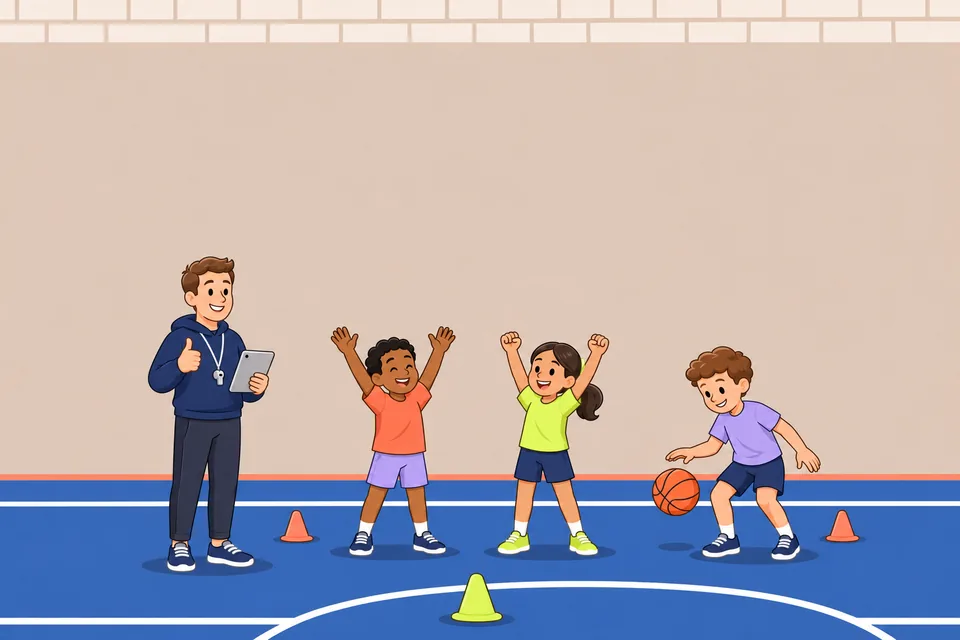
Collect evidence while students are already moving. Choose one skill or concept from the day's objective, watch a handful of students against a short checklist, and finish with a one-question exit ticket. Save the graded summative check for the end of the unit and score it with a rubric students saw at the start.
An assessment should tell you whether students learned what you set out to teach. In physical education that usually covers four areas: motor skills, knowledge of concepts and tactics, activity and fitness habits, and how students treat teammates and equipment.
Start from the lesson objective. If the objective is passing to a moving partner with a step and a follow-through, you look for a step and a follow-through. Who has the strongest arm doesn't matter. Tell students the two or three cues before they start the task.
Time disappears when assessment means a separate test day for every skill. Most evidence can be gathered while students practice: you walk the space, tick a checklist, and they keep moving. Save whole-class tests for the end of a unit and keep them few.
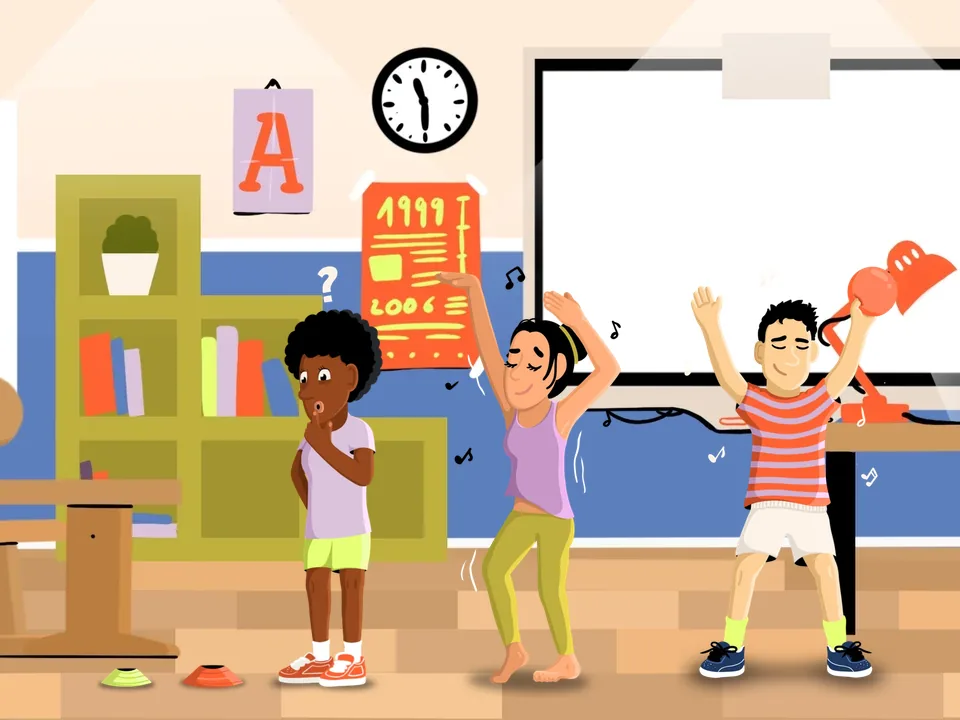
Formative assessment happens during a unit and guides your next move. Summative assessment happens at the end of a unit or grading period and judges what students have learned.
| Feature | Formative | Summative |
|---|---|---|
| When | During the unit, often mid-lesson | End of a unit or grading period |
| Purpose | Adjust teaching and give feedback | Judge what students have learned |
| Typical evidence | Quick skill check, partner card, exit question, finger self-rating | Skill rubric, quiz on rules and tactics, fitness plan |
| Counts toward the grade | Often not, or lightly | Usually yes |
In practice, a summative assessment in PE is usually one or two tasks that close a unit: a skill performance scored with a rubric, a short quiz or oral check on rules and tactics, or a personal fitness plan. The task should resemble the practice students did. After two weeks of passing in pairs and playing small-sided games, assess those, not a drill they have never seen.
Formative checks do most of the work. When your notes already show where a student stands, the summative task confirms it. Grading policies differ by district, so check whether formative evidence counts toward the grade where you teach.
Each of these runs inside an activity you already teach and is scored on the cues you named at the start.
Rotate through the roster instead of watching everyone at once. In a class of 28, watching seven students per lesson covers everyone in four lessons.
These four need little more than a pencil and a short list of cues.
A rubric for the partner pass above could look like this:
| Criterion | Emerging | Developing | Proficient |
|---|---|---|---|
| Step and follow-through | Steps on some passes; arms stop short | Steps on most passes; arms extend | Steps and extends on nearly every pass |
| Accuracy | Partner has to move to reach most passes | Partner reaches about half the passes without moving | Partner can usually catch in place |
The PhysEdPrep app for iOS & Android keeps class lists with private notes per student, a place for an observation after class. The Differentiated Phase Timer lets you name each phase, give it its own time and repeat the sequence, so you can run a station rotation on set times while you stay at one station. The Countdown Timer ends with a whistle. All 6 are listed under Gym Tools.
Fairness starts with what you score. Score the cue you taught, such as stepping into a throw, and leave out how far or hard the ball went, which depends on size and experience as much as on learning.
Gather several observations over a unit, since one off day says little. Assess while the whole class is active so nobody has to perform alone in front of peers. For students who need modified assessment, plan with your adapted PE or special education colleagues, and see our guide to planning for every student in adaptive PE.
The five National Standards work as a coverage check. In short, S1 is motor skills and movement patterns, S2 is concepts, strategies and tactics, S3 is health-enhancing activity and fitness, S4 is responsible personal and social behavior, and S5 is valuing physical activity. Each pairs with a kind of evidence:
Tag each assessment with the standard it serves. If a unit has no evidence for S3, you see the gap while there is still time to fill it. The grade-level outcomes under each standard describe what students should show at each level. For mapping lessons step by step, see how to align PE lessons with SHAPE America standards.
In medicine, PE usually means pulmonary embolism, a blockage in an artery of the lungs, most often from a blood clot. Clinicians decide how to look for it, using blood tests and imaging chosen for the individual patient. In this guide PE means physical education, where no single test applies and you pick checks that match your objective. In a medical emergency, call 911.
PERC stands for Pulmonary Embolism Rule-out Criteria. Clinicians, typically in emergency settings, use it when their overall suspicion of a pulmonary embolism is already low, to help decide whether further testing can be skipped. It is a tool of medical practice and has no role in teaching, grading or screening students. Questions about a specific person belong with a clinician.
Raw scores reflect growth, maturity and starting point as much as effort, so many teachers weigh goal setting, effort, understanding of training principles and personal progress more heavily than the number. Your district's grading policy has the final say. Run any fitness test with enough space, a suitable surface, a warm-up and supervision, and let students pace themselves and stop if they feel unwell.
Yes, mainly for feedback. Give the partner a card with two or three observable cues, model how to use it, and ask for one thing done well and one thing to try. Treat peer marks as formative information. For a grade, confirm with your own observation, since friendship and skill level can color a partner's ratings.
To align PE lessons with SHAPE America standards without adding paperwork, pick one standard per lesson, write an objective you can…
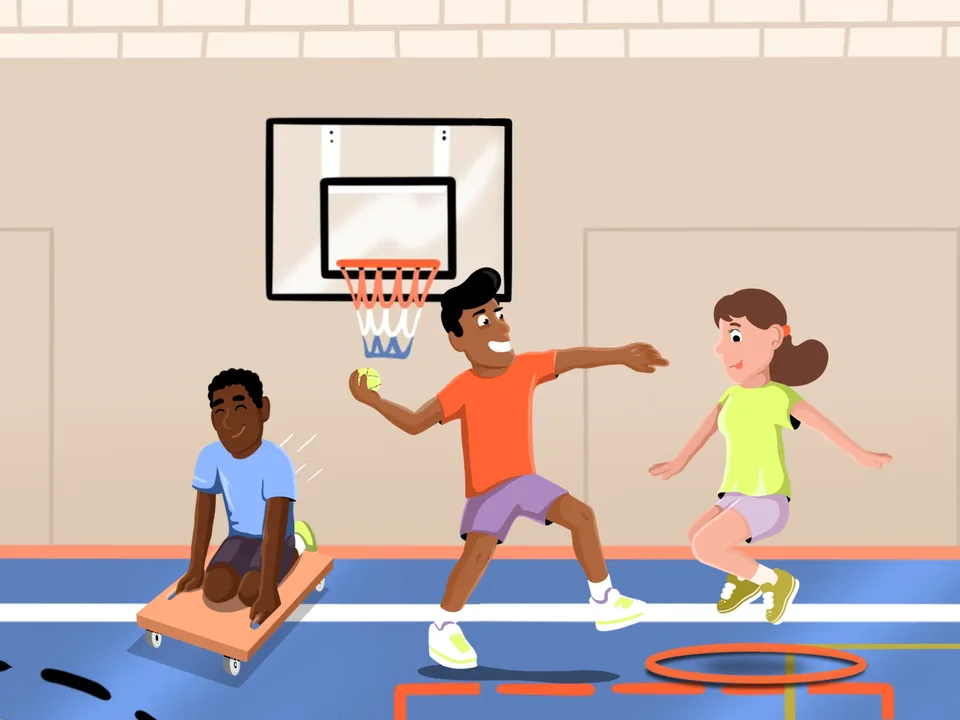
When you plan inclusive and adaptive PE modifications K-12, you work with four things: the space, the task, the equipment, and the groups.
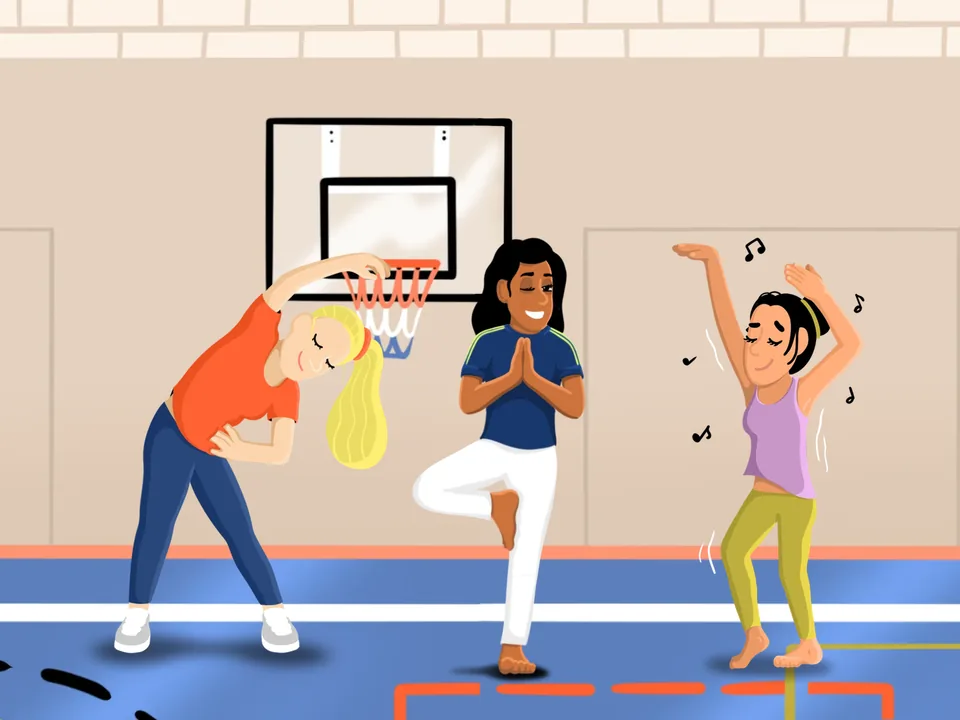
These PE classroom management strategies are built for a gym with echo, open floor and balls within reach.
The 3 free units need no account. When you are ready for more, yearly plans start with a 7-day free trial, and the pricing page lists current plans.
App for iPhone, iPad and Android.