Gym tools
Fair Ways to Pick Teams Without Captains
When captains pick teams one student at a time, it eats class time and often leaves the same kids standing there last.
PE games usually fall apart for two reasons: students spend too much time waiting, and the rules or the space don't fit the group. The games below come with complete rules for each stage from kindergarten to high school, plus changes for mixed-ability classes and small spaces.
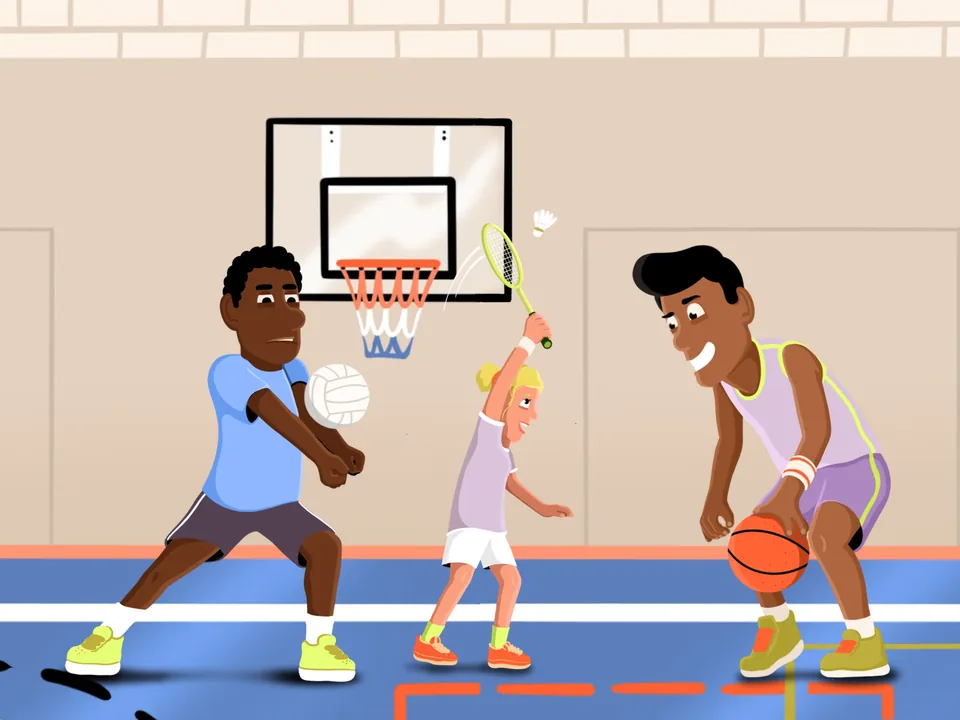
Good PE games have simple rules, small groups and little waiting. In Grades K–2, use freeze and locomotor games such as Red Light, Green Light. In Grades 3–5, add tag games with clear boundaries and roles. Middle school classes often take to Capture the Flag with touch tags. High schoolers buy in with small-sided games such as Ultimate and a visible score.
A game earns its minutes when most students are moving most of the time. During round one, look at who is standing by the wall: if several students sit out, wait in a long line or watch two players, change the structure.
Decide how a round ends before you start: a time limit, a target score or everyone across the floor.
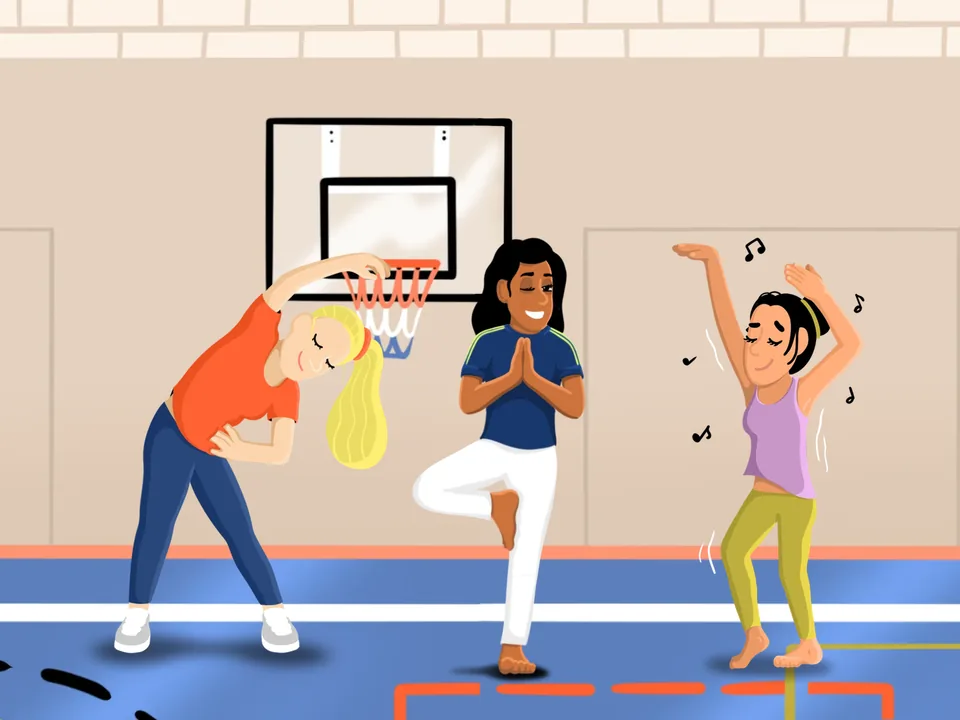
In Kindergarten through Grade 2, games work best with one movement skill at a time and rounds short enough to restart quickly.
Goal: be the first student to tap the caller. Students stand on a start line while you or a student caller stands on the far side, back turned. On “green light,” students walk or tiptoe forward. On “red light,” everyone freezes in a balanced pose and the caller turns around. Anyone seen moving takes three giant steps back. The first student to tap the caller becomes the next caller, everyone returns to the start line and a new round begins. No points are kept. Indoors, keep it to walking speed and leave clear floor behind the caller.
A cooperative game: the whole class has to fit on the islands. Scatter hoops, roughly one for every two students. While music plays, students travel around the hoops with the skill you call. When it stops, everyone gets at least one foot into a hoop, and sharing is fine if nobody pushes. Remove a hoop or two each round. A student left out joins a neighbor, so nobody is eliminated. Stop after a set number of rounds or when the remaining hoops get too crowded. Have students step into hoops rather than dive or slide, since hoops move on smooth floors.
In Grades 3–5, gym class activities can include roles and boundaries, so tag games with a clear rule for tagged players work well. Sharks and Minnows fits a gym or a marked field.
Goal: reach the opposite end line without being tagged. Mark two end lines and the side boundaries with cones, and leave open floor between them. A minnow who runs out of bounds becomes seaweed. One or two sharks stand in the middle, and the minnows line up on one end line. On your call, all minnows run to the other line. Those who make it wait there and cross back on the next call. A tagged minnow becomes seaweed: feet stay planted, and seaweed can tag minnows who pass within arm's reach. The round ends when every minnow is seaweed. The last minnow tagged becomes the shark, and everyone lines up again.
Sharks tag with one hand on the back or shoulder, with no pushing or grabbing. Set end lines well away from walls and stop play on a whistle.
Middle school classes often take to games with strategy and a way to rescue teammates. Capture the Flag with touch tags suits a gym or a field with clear boundaries.
Goal: carry the other team's flag into your own half. Split the space with a center line. Each team places a flag, such as a pinny, in its back area, with a marked circle around it that defenders stay outside of. Mark a jail square in the back corner of each half. A player can be tagged only in the opponent's half and goes to that half's jail. A teammate frees a jailed player with a tag, and both walk back to their own half. A tagged flag carrier drops the flag, which returns to its spot. A team scores when its carrier crosses the center line with the flag. After each point, reset the flags, empty the jails and restart from your own halves. Play to a time limit; the most points wins.
Tags are a one-hand touch on the back or shoulder. Grabbing, diving and tackling are out, and boundaries stay clear of walls and equipment.
High school students tend to invest when they have a say and a visible score, and when the game looks like something they play outside school. Small-sided Ultimate with a soft disc fits well. Try 4 against 4 on half a basketball court as a starting point.
Goal: score a point by catching the disc in the opponent's end zone. Mark an end zone at each end with cones. Flip a coin for first possession. Nobody runs with the disc: the thrower keeps one foot planted, and if a defender counts to ten out loud before the disc is thrown, it is a turnover. A drop, interception, out-of-bounds throw or throw to the floor is also a turnover, and the other team restarts where the disc stopped. After a score, the team that was scored on starts with the disc at its own end line. Play to a time limit or target score. Defenders stay an arm's length away and never hold or bump, and boundaries sit away from walls on a dry surface.
Try two courts at once: one with score and self-called fouls, one casual. Let students switch between rounds and hand out jobs like scorekeeper or referee.
Change one thing at a time and watch the next round.
In a classroom, hallway or small gym, switch to walking or stationary versions, shrink the boundaries, use foam balls and beanbags, push desks to the walls and check the floor for slick spots. Keep students an arm's length from walls and furniture.
Form teams before class or at the door and hand out pinnies as students walk in. Keep the same teams for several sessions so you sort once, then rotate jobs. For more ways to pick teams without captains, browse the PE Guides.
For station rotations, use one signal, one direction and a task at each station that students can start without asking you. For scoring, assign a student scorekeeper and agree on the tiebreaker before play starts.
In the PhysEdPrep app for iOS & Android, the Team Creator makes fair teams in one tap, random or balanced by skill, from your saved class rosters. The Differentiated Phase Timer lets you name every phase and give it its own time, for as many rounds as you need. The Scoreboard & Game Counter shows points and game time for two teams. These are three of the 6 gym tools.
Red Light, Green Light needs only a start line, and Sharks and Minnows needs floor lines or a few cones. You can also call a pathway of movements, such as hop or slide, and have students freeze in a balance on your stop signal. Keep clear space around the boundaries.
Use a light one-hand touch on the back or shoulder, say who can tag whom and where, and keep boundaries away from walls and equipment. Stop play on a whistle if tags get hard, restate the rule and restart. If contact keeps escalating, switch to a lower-contact version, such as pulling a flag from a belt.
Pick one main focus per game and tell students before play. Tag and locomotor games mostly address S1, motor skills and movement patterns. Capture the Flag and Ultimate bring in S2, strategy and tactics, and S4, responsible personal and social behavior. Units in the PhysEdPrep app are mapped to the SHAPE America National Standards (S1–S5).
When captains pick teams one student at a time, it eats class time and often leaves the same kids standing there last.
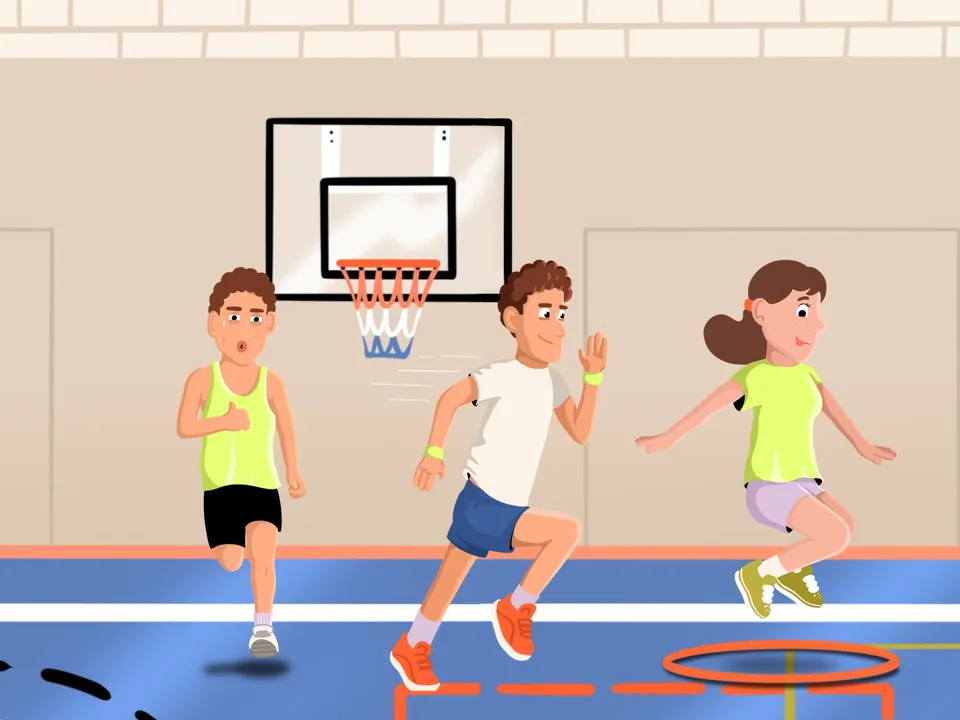
PE warm-up games without equipment need floor space and a signal everyone knows, nothing else.
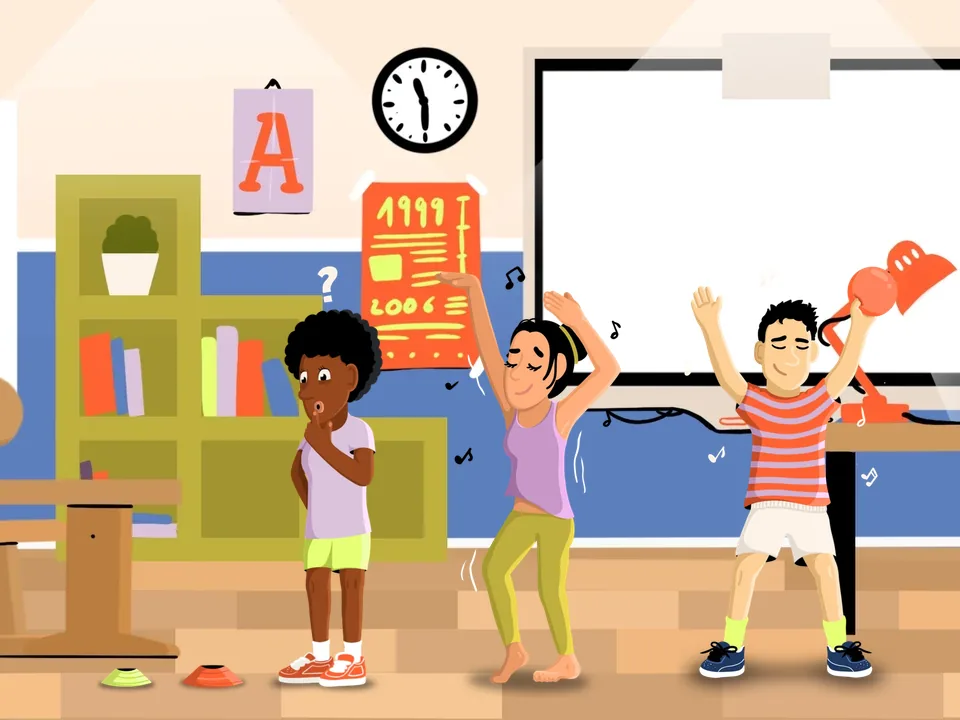
Rainy day indoor PE games classroom teachers can run need a clear patch of floor and rules that are quick to explain.
Open the 3 free units, no account needed. Yearly plans and 12-month plans start with a 7-day free trial.
App for iPhone, iPad and Android.