Standards
Inclusive PE Modifications for Grades K–12
When you plan inclusive and adaptive PE modifications K-12, you work with four things: the space, the task, the equipment, and the groups.
An adaptive physical education curriculum connects your school's general K–12 movement scope and sequence with the motor goals in each student's IEP or 504 plan. Every unit breaks locomotor and object-control skills into graded task levels with matching equipment options and paraprofessional cues. Students practice the same unit theme alongside peers while you track individual progress with a four-level rubric.
An adapted physical education curriculum aligns your school's K–12 PE standards with the motor and fitness goals in each student's Individualized Education Program (IEP) under IDEA. You follow the general class unit calendar and break each movement skill into three to four graded task steps, adjusting equipment weight, target distance, court size, and rules for inclusive or small-group PE.
The difference is scope. A curriculum sets the order of skills, equipment steps, and assessment checkpoints for the whole year. Swapping a regulation basketball for a beach ball during warm-up is a single-lesson modification inside that plan. IDEA includes adapted physical education (APE) in its definition of physical education (34 CFR 300.39), and 34 CFR 300.108 requires schools to provide specially designed PE when a student's IEP prescribes it. The IEP team decides service minutes and placement.
In practice, an adapted program runs parallel to your general physical education curriculum so students with disabilities learn the same unit themes as their peers in the least restrictive environment. When a fourth-grade class begins a striking unit, your map defines three to four skill tiers aligned with SHAPE America's 2024 National Physical Education Standards (four standards, S1–S4, covering motor skills, movement and fitness concepts, social skills, and personal skills for US K–12 PE, replacing the 2013 five-standard S1–S5 edition).
You can pair this multi-week structure with inclusive and adaptive PE modifications for K–12 so daily adjustments build across a four- to six-week progression.
Building your yearly map starts with the present levels of performance and annual motor goals written in your students' IEPs before you lock in the sport calendar. In a self-contained adapted PE class or an inclusive gym period, five students may have five distinct targets, from two-handed catching at a 6-foot distance to continuous wheelchair propulsion for 5 minutes.
Do this before the grading period begins:
Where a health plan sets limits, the school nurse and the student's physician have the final word on activity.
For curriculum reviews, cross-reference each cluster with how to align PE lessons with SHAPE America standards to keep IEP documentation consistent.
A balanced K–12 adapted program builds fundamental motor skills in Grades K–5 (see elementary PE lesson plans for Grades K–5), moves into modified sport units in middle school (see middle school PE unit plans), and shifts toward lifetime recreation and fitness in high school (see the high school physical education curriculum guide). The Physical Activity Guidelines for Americans (HHS, 2nd edition) recommend 60 minutes or more of daily moderate-to-vigorous physical activity (MVPA) for ages 6–17.
Four core unit domains look like this across three support tiers:
| Unit Domain | Tier 1: High Support / Seated | Tier 2: Modified Equipment | Tier 3: Small-Sided Play |
|---|---|---|---|
| Locomotor & Pathways | Wheelchair push or assisted travel along high-contrast floor tape | Seated scooter board travel or paced walk between cones (about 15–20 ft) | Agility ladder footwork, skipping, and non-elimination tag |
| Target & Rolling | Tabletop ramp bowling toward light plastic pins at 4–6 ft | Two-handed underhand roll with an 8-inch foam ball to spots at 10–12 ft | Boccia or lane bowling with peer scorekeeping |
| Net & Striking | Striking a tethered balloon or 16-inch beach ball across a floor line | Short-handled foam paddle hitting a high-bounce ball over a 30-inch low net | 2v2 pickleball where the ball may bounce twice before each return |
| Cooperative & Rhythm | Seated parachute grip waves and rhythm scarf patterns to a 90-BPM beat | Partner parachute dome games and visual-cue fitness stations | Small-group transport challenges and interval circuits |
When one class includes wheelchair users, students who need predictable sensory routines, and ambulatory learners building coordination, start with parallel skill stations and finish with a zoned game where each floor area has its own rules.
For net units, run Zone Beach-Ball Volley on a badminton-sized court (a doubles court is about 20 by 44 feet) with the net lowered to about 36 inches:
Under adult supervision, keep roughly 5 feet of clear, dry floor between the court lines and any walls, benches or ball baskets so wheelchairs can turn safely, cover net bases with flat mats, and prohibit overhead smashes.
Daily adapted PE lesson plans need a station format that paraprofessionals and peer buddies can read in about ten seconds. If you start from free PE lesson plans, check that they tell aides when to prompt and when to step back.
Build four things into your adaptive PE lesson plans:
In the PhysEdPrep app for iOS & Android, you can save private notes per student in your class lists and time rotations with the Differentiated Phase Timer.
Standardized fitness batteries compare everyone against a single norm table, which rarely reflects progress on an IEP goal like propelling a wheelchair 100 feet or catching a bounce pass from 8 feet away. For a formal baseline, APE teams often use a criterion-referenced fitness test such as the Brockport Physical Fitness Test or a motor skill test such as the TGMD-3 (Test of Gross Motor Development). For day-to-day tracking, score both skill execution and the level of support or equipment adaptation using a four-level rubric during regular stations (swap in the trial counts from each IEP goal where they differ):
Observe three to four students per rotation while the Countdown Timer or Structured Interval Timer runs on your tablet. To report the rubric alongside cognitive and affective goals, see Head, Heart, Hands assessment in PE. You can test this setup with the 3 free units and use the 6 gym tools on the gym floor to manage station timing and rosters.
The IEP team sets the number: it writes any specially designed PE service minutes, and general PE time follows your state's requirement. SHAPE America recommends 150 minutes per week of instructional PE for elementary students and 225 minutes for middle and high school students. Beyond school classes, federal HHS guidelines recommend 60 minutes or more of daily moderate-to-vigorous physical activity for youth ages 6–17.
Yes, in many districts a general PE teacher teaches students with adapted PE goals in inclusive classes, but your state's licensure rules and the service delivery model in the IEP decide who delivers specially designed APE minutes. Some states require an adapted PE endorsement or credential for direct service. A common model is that general K–12 PE teachers instruct students with mild to moderate motor needs inside inclusive classes with consultation from an APE specialist, while direct or self-contained IEP service minutes go to a state-endorsed APE specialist.
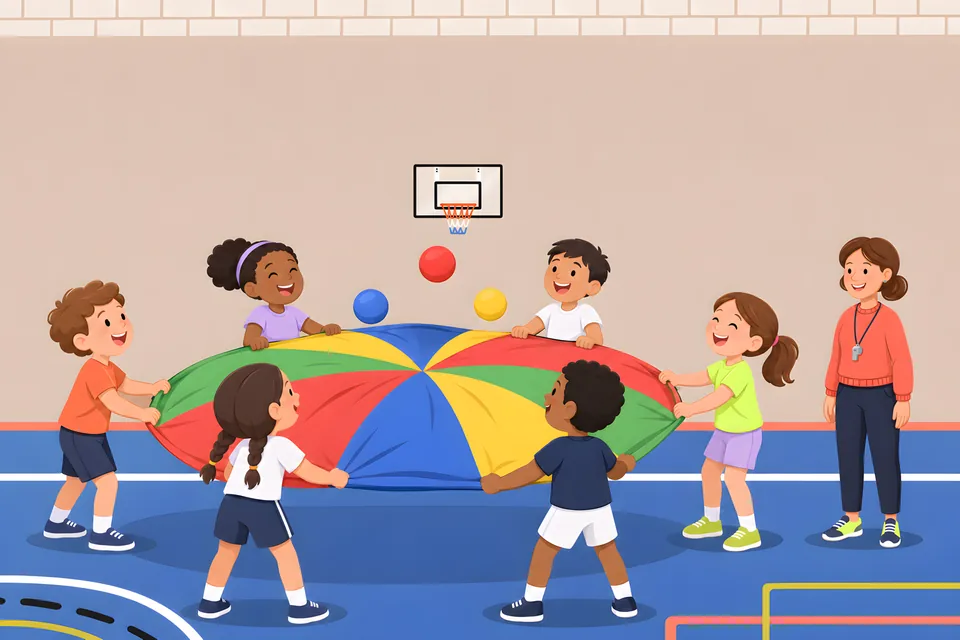
You can try 3 free units without an account on PhysEdPrep (Basketball: Shooting, Passing & Dribbling for Grades 5–7, Parachute Games from grade 1, and Classroom Brain Breaks with 13 movement breaks). These are general PE units and a classroom sample pack, not a separate adaptive set, so you apply the task tiers from this guide yourself, for example by running parachute games with students seated.
PE departments, principals, and districts can request a custom quote for a School & District License by emailing support@physedprep.com. A school license gives access to the whole PE department, including substitutes and classroom teachers who teach PE, on one invoice with purchase orders (PO) accepted and tax forms available on request, while individual teachers can see current prices in the app.
A student qualifies when the IEP team finds, after a motor assessment, that the disability affects their performance in general PE enough to need specially designed instruction. Many states use a standardized test such as the TGMD-3 and set a cutoff, for example about 1.5 standard deviations below age norms. The team also weighs teacher observations, health information and how the student functions in class. Your state's eligibility criteria set the exact cutoff.
When you plan inclusive and adaptive PE modifications K-12, you work with four things: the space, the task, the equipment, and the groups.
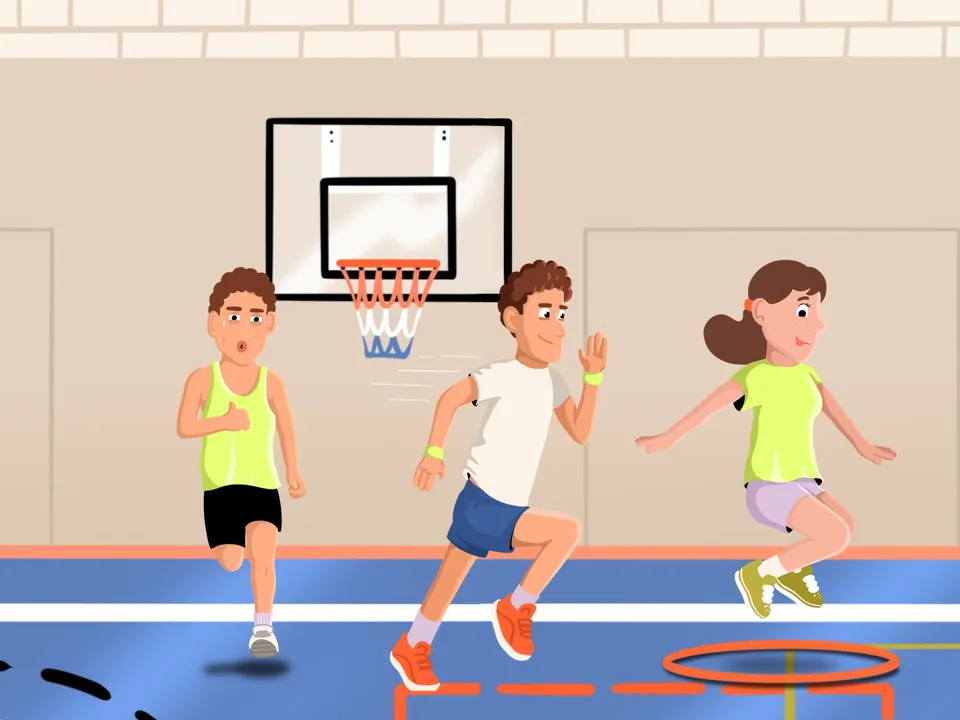
Good elementary PE lesson plans K-5 share the same few parts: one objective, a floor setup, a skill focus, a game that uses the skill, and…
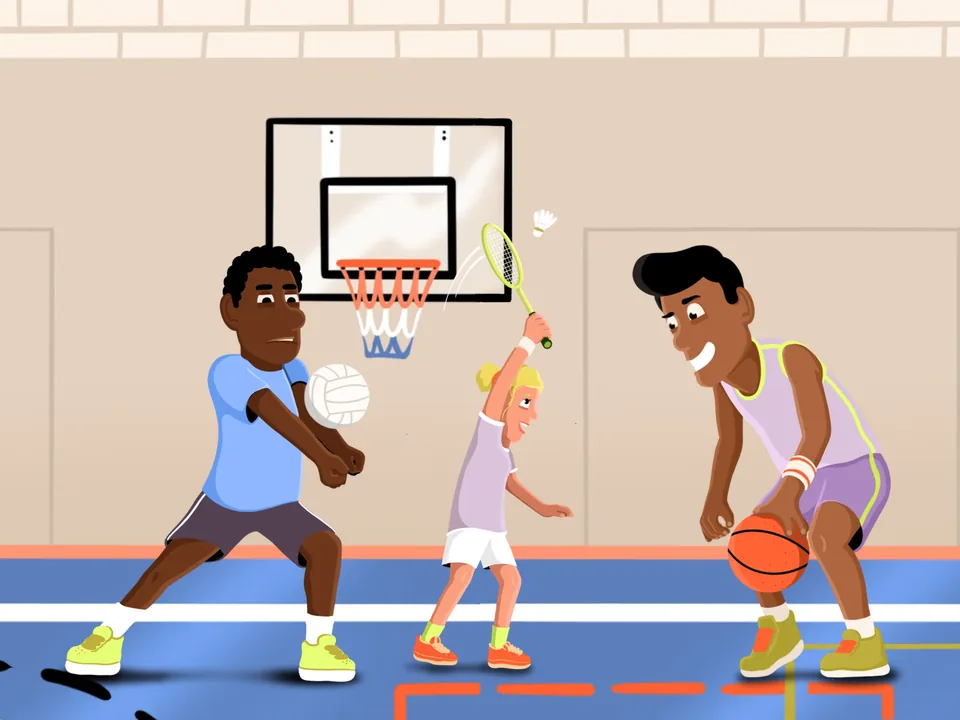
A high school physical education curriculum has to fit one gym, a bell schedule and students with very different skill levels.
Start with 3 free units (Parachute Games, Classroom Brain Breaks, and Basketball for Grades 5–7) with no account needed at physedprep.com/free/. Download the PhysEdPrep app for iOS & Android at physedprep.com/get-the-app/ to access all 40+ K–12 unit plans and 6 gym tools with a 7-day free trial on yearly plans (see current prices in the app).
App for iPhone, iPad and Android.