Standards
Assessing PE Class Without Losing Time
PE assessment is the evidence you collect about what students can do, know and choose to do in class.
Grading purely on athletic talent leaves out students who understand game tactics and support their teammates every day. A head heart hands pe assessment splits your gradebook into cognitive knowledge, social behavior, and physical execution so every K–12 student gets fair feedback. Observable gym criteria and a table of common grading traps keep clipboard time short.
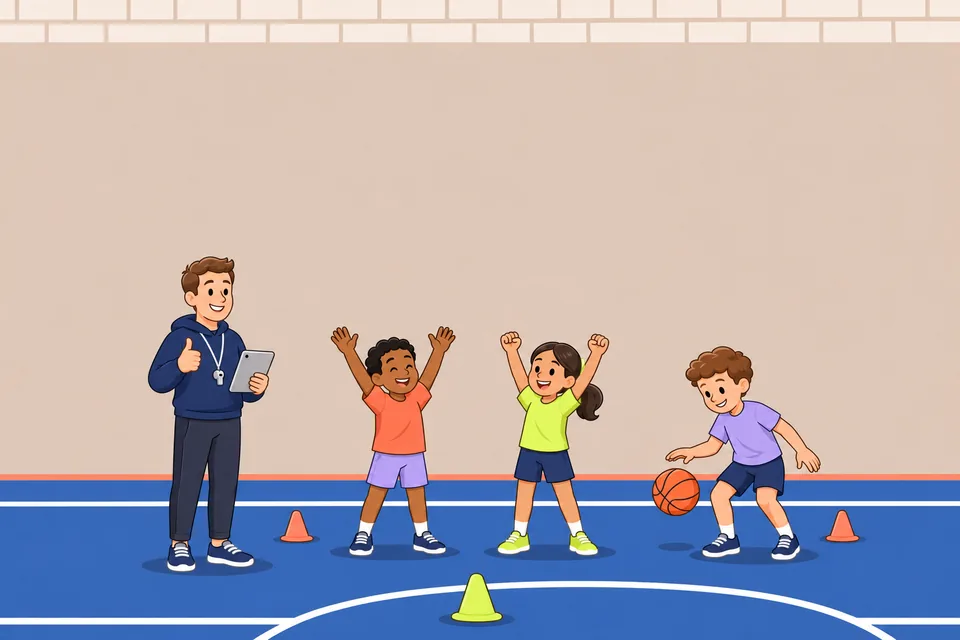
The Head, Heart, and Hands model evaluates physical education students across three learning domains: Head measures cognitive understanding of rules, tactics, and health concepts; Heart measures social behavior, teamwork, and effort; and Hands measures physical motor skills and fitness execution. By observing one domain at a time, PE teachers grade the whole student and keep checks short enough to protect SHAPE America's recommended 50 percent of class time in moderate-to-vigorous physical activity.
The Head, Heart, and Hands model translates academic learning domains into plain language that students from kindergarten through high school understand on the gym floor. The phrase goes back to the Swiss educator Johann Heinrich Pestalozzi, who argued that good teaching engages head, heart, and hand. Some UK secondary schools use it in their Key Stage 3 (KS3) trackers, and it lines up with the cognitive, affective, and psychomotor domains of learning, often traced to Benjamin Bloom and colleagues, that US PE teachers use when they write objectives.
When you post the three words on a gym whiteboard, students know what counts toward their progress during a lesson. You can combine this three-part structure with fast routines for assessing PE class without losing activity time so the clipboard stays out of the way of the game.
| Assessment Area | Learning Domain | Observable Student Evidence | Grade-Span Example |
|---|---|---|---|
| Head | Cognitive | Explains rules, identifies open space, applies safety cues, and selects tactics | Grades K–5: names two balance cues; Grades 6–12: calls out defensive rotation |
| Heart | Affective and Social | Shares equipment, resolves disputes, encourages partners, and persists after misses | Grades K–5: takes turns with cones; Grades 6–12: officiates fairly in small-sided games |
| Hands | Psychomotor | Performs locomotor skills, controls implements, maintains pace, and executes tactics | Grades K–5: slides low inside boundaries; Grades 6–12: completes three give-and-go passes |
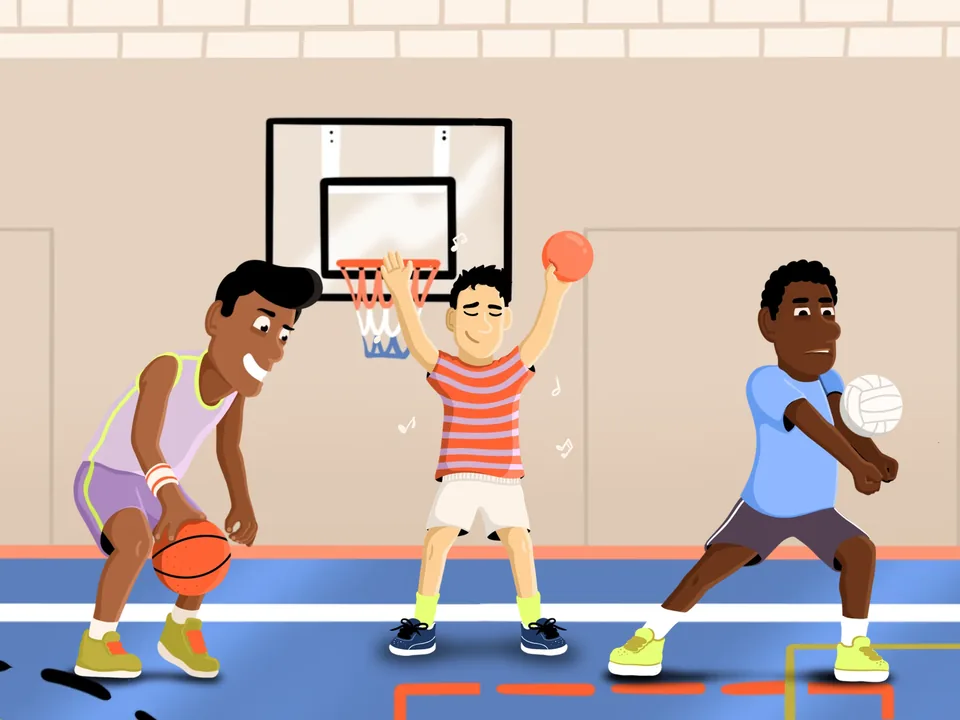
A Head check measures a student's understanding of rules, spatial tactics, biomechanics, and safety procedures during active class time. Written tests eat up valuable gym minutes, so effective cognitive checks happen orally or visually in about 60 to 90 seconds during water breaks or station transitions. Keeping cognitive checks brief helps you meet the guideline from SHAPE America's dodgeball position statement, which cites the recommendation of moderate- to vigorous-intensity physical activity for 50 percent of PE class time.
Focus on five to six students per class period during these micro-checks. At six students per class period, five periods cover a class of 30 while keeping play moving.
Assessing the Heart domain works fairly when you grade observable actions toward classmates, equipment, and self-control instead of judging a student's personality or volume. Quiet students can lose points on vague participation rubrics just because they do not cheer loudly, even when they pass the ball willingly and follow every safety rule.
To make your rubric defensible in parent conferences, translate every social expectation into a visible behavior that any observer in the gym can verify. New educators preparing for formal evaluations can combine these behavior indicators with our student teacher PE lesson plan guide to document affective growth clearly.
| Vague Grading Trap | Why It Fails in the Gym | Observable Heart Criterion |
|---|---|---|
| Grades enthusiasm or smiling | Penalizes quiet or anxious students who work hard silently | Starts station tasks within 15 seconds of the whistle and stays on task |
| Deducts points for losing a game | Ties affective grades to opponent skill level instead of effort | Uses rock-paper-scissors within 5 seconds to settle disputed line calls |
| Uses a blanket sportsmanship score | Gives students no specific feedback on how to improve | Passes to at least two different teammates before attempting a shot |
| Marks down students who struggle physically | Confuses motor coordination with perseverance | Adjusts target distance or ball type after two misses and continues practicing |
Assessing the Hands domain measures motor skill process cues and tactical application during small-sided play. Watching two specific movement cues during a structured 3v3 game lets you see how students control the ball when a defender is present. For a student with an IEP or 504 plan, score the same cues against the adapted equipment or modified goals in that plan; the guide to inclusive PE modifications for Grades K–12 lists common adjustments.
You can run Four-Goal Corner Keep-Away with Grades 4–10 in groups of six (3v3) on a 30-by-30-foot court marked with flat cones at least 6 feet clear of gym walls, stages, and bleachers on a dry, swept floor under direct teacher supervision. Use a soft foam ball in Grades 4–5 or a low-bounce indoor ball in Grades 6–10, and keep every pass below shoulder height. The goal is to complete three consecutive passes and pass the ball through any of the four 4-foot corner cone gates to a teammate waiting on the far side for 1 point, and the other team restarts with a free pass from the center. If the ball goes out of bounds, hits the floor on an aerial hand pass, or gets intercepted, possession switches immediately and the other team restarts with a free pass from that spot while defenders step 3 feet back. Physical contact is a foul that awards a free restart. A round ends after 3 minutes or at 5 points, and the team with more points wins it.
Trying to grade all three domains for about 28 students in a single class period leaves you staring at a clipboard instead of teaching. A practical head heart hands pe assessment schedule assigns one primary domain per class visit across a multi-week unit so you only look for one or two criteria at a time. If you plan the whole year at once, mark the main domain of each unit on your yearly K–5 PE curriculum map so Heart does not get assessed only in the spring.
Timing rotations and splitting teams are the jobs that pull you away from the clipboard, so hand them to a tool. Using the 6 gym tools inside the PhysEdPrep app for iOS and Android lets you launch a Differentiated Phase Timer for station rotations, build balanced rosters in Team Creator, or generate round-robin schedules for 2 to 10 teams on up to 4 courts in the Tournament Planner. While teams play, you can jot down private notes per student in your saved class lists.
The three assessment areas map roughly onto national standards (a rough match, so check your district's standards wording), so you can use kid-friendly posters on the gym wall while entering standards-based grades in your district software. Released in March 2024 for US K–12 programs, SHAPE America's 2024 National Physical Education Standards group learning into four standards (S1–S4): motor skills, movement and fitness concepts, social skills, and personal skills. These replace SHAPE America's 2013 National Standards, which used five standards (S1–S5) that some state frameworks and district report cards may still reference.
If your school is updating its curriculum map, read our guide on aligning PE lessons with SHAPE America standards for step-by-step mapping examples, or see how PE lesson plans reference the SHAPE standards when you write objectives. In PhysEdPrep, units are mapped to the SHAPE America National Standards (2013 edition, S1–S5) with compact outcome tags you can use in curriculum reviews, and you can try the 3 free units without an account.
Start with equal weights of about one-third (33 percent) per domain in Grades K–8, because that values knowledge, social behavior, and motor execution equally. In Grades 9–12 you might weight Hands at 40 percent and Head and Heart at 30 percent each to reflect advanced skill rubrics. Check your district's grading policy before you set the weights.
You can adapt a UK Key Stage 3 (KS3) tracker for US Grades 6–8 by replacing UK National Curriculum headers with SHAPE America Standards S1–S4 and swapping UK sport examples for American units such as basketball, pickleball, or flag football. Keep or add four-level progression descriptors (such as emerging, developing, proficient, and advanced) so students can track their own growth across quarters.
You score the Hands domain for a student with an Individualized Education Program (IEP) or 504 plan by measuring progress against the modified motor goals and adapted equipment specified in their accommodation plan. For example, if a student uses a lighter paddle or a seated push pass, you grade their execution of those adapted movement cues on the same 1-to-4 scale used for the rest of the class. Confirm the goals with the student's special education team first.
A three- or four-level scale suits elementary students in Grades K–5 because they can distinguish between beginning, developing, proficient, and advanced performance during a 30-second check. For kindergarten through second grade, use three picture levels at the gym exit, and let students tap the Head, Heart, or Hands card for the area they practiced most that day.
No, Head, Heart, Hands is a school-level assessment framework, not a SHAPE America framework. SHAPE America's 2024 National Physical Education Standards use four standards (S1–S4), and many districts still report against the five 2013 standards. Use the three words as student-friendly labels and record grades under the standard codes your district requires.
Most teachers use four levels: emerging, developing, proficient, and advanced. For Hands, emerging might mean the student performs the cue only in isolated drills, and advanced means they perform it under defensive pressure in a game. For Heart, emerging means following rules with reminders, and advanced means helping peers settle disputes without teacher help. Write one observable sentence per level and domain.
PE assessment is the evidence you collect about what students can do, know and choose to do in class.
A PE lesson plan has to work while you stand in a gym with a whistle around your neck, so one page beats three.
To align PE lessons with SHAPE America standards without adding paperwork, pick one standard per lesson, write an objective you can…
Open one of the 3 free units in the PhysEdPrep app for iOS & Android without an account and pick one domain to observe per class visit. A 7-day free trial on a yearly plan opens the full library (see current prices in the app). Need access for your whole PE department? Request a custom quote for a School & District License at support@physedprep.com.
App for iPhone, iPad and Android.