Games & warm-ups
Christmas PE Games for Winter Break
The weeks before winter break mean shortened classes, assemblies and students with energy to spare.
Christmas brain breaks give restless December classes a one-to-three-minute outlet for extra energy, then bring them back to the work. Most of these breaks fit beside a row of desks, a few settle the room for the afternoon, and the theme stays welcoming to families who celebrate differently.
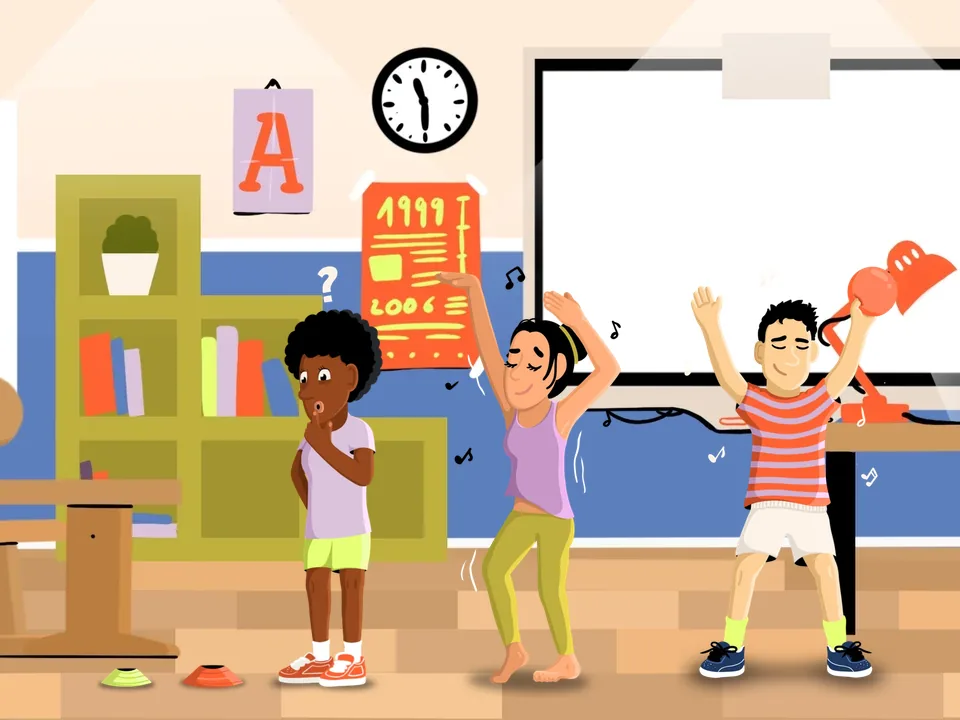
A good Christmas brain break lasts about one to three minutes, needs little or no equipment, and works in the space beside a desk. Match the energy to the moment: Santa Says or a freeze dance to burn off energy, snowflake breathing to settle the room. Keep the theme to winter and giving so more students feel included.
Pick the break by what the room needs. Before lunch or after a long seated task, energy needs to go out. Late in the day or before a quiz, it needs to come down.
| Break | Focus | Energy | About how long |
|---|---|---|---|
| Santa Says | Concentration | High | 2 min |
| Reindeer freeze dance | Coordination | High | 2–3 min |
| Present pass | Communication | Medium | 2 min |
| Santa's list | Memory | Medium | 2 min |
| Snowflake breathing | Relaxation | Low | 30–60 sec |
| Melting snowman | Relaxation | Low | 30–60 sec |
The Physical Activity Guidelines for Americans advise 60 minutes or more of moderate-to-vigorous activity a day for ages 6–17. A two-minute break is a small slice of that, so it adds to PE and recess and does not replace them.
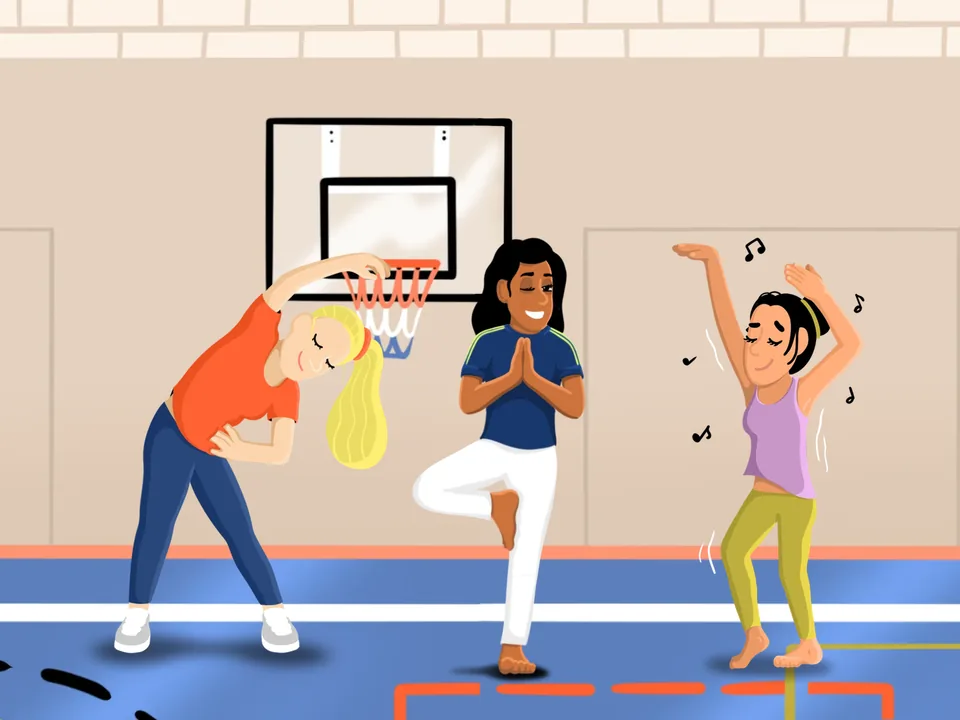
These three breaks need almost no setup and run beside the desks. Each has a clear end, and nobody is eliminated.
The class follows only the commands that start with “Santa says.” The teacher calls about ten commands: prance like a reindeer, ring jingle bells overhead, stack presents, shiver like a snowman. A command without the phrase means stay still. A student who moves anyway shakes out both hands for three seconds and stays in. The class earns a point for each command everyone gets right, and the round ends after the tenth command. A student can take over as Santa for the next round.
Students stand beside their desks and move as reindeer while the music plays: prance in place, paw the floor, wave antlers made of hands above the head. When the music stops, the teacher calls a shape such as a snowman, a wrapped present or a tree, and the class holds it for three seconds. A wobble costs nothing. Restart the music and go again. The round ends after six to eight pauses.
Each row works as a team to pass one soft present, a beanbag or a pair of rolled socks, to the back and return it. Students stand in line beside their desks. The first student passes the present overhead, each student passes it on, and the last student turns and sends it back at waist height. Pass it, never toss it, so it never flies toward a face. A student who drops it picks it up and play continues from that spot. The row calls “Delivered!” when the present reaches the first student again. Rows try to beat their own time on a visible timer instead of racing each other.
After lunch recess or a class party, a quiet break gives the room a way down. These three run seated or standing, with the music off.
Each student holds one hand up with the fingers spread and traces it with the other index finger. Breathe in while tracing up a finger and out while tracing down. Five fingers make five slow breaths, about 30 seconds. Repeat on the other hand if the room is still loud.
Students sit tall with arms overhead and shoulders tight, like a frozen snowman. Over about ten seconds, narrate the melt: fingers soften, arms drift down, shoulders drop, chin settles toward the chest. Anyone who feels dizzy keeps the head up and only melts the arms. End with one big breath.
This memory break needs almost no space. The teacher calls three actions, such as clap twice, tap both knees, touch your nose, and the class repeats them in order. Each round adds one action. If the class loses the order, the teacher repeats the list slowly and the round restarts from the last action everyone had right. The game ends at six actions or when the stop cue sounds, whichever comes first.
Rows leave narrow aisles, so keep every move in place and set the ground rules before the first break. A supervised class needs a ten-second space check: chairs pushed in, bags off the floor, shoes on, and roughly an arm's length of clear space around each student. No running, no throwing, soft objects only.
Teach one start cue and one stop cue, such as a chime and a raised hand, in a practice round on a calm day. Then use the same cues for every break. Each break above has a seated version for students who use a wheelchair or can't stand: arms for the prancing, shoulders for the freeze, hands for the passing. Any student can pick the small version.
| Problem | Likely cause | Fix |
|---|---|---|
| Students bump desks and each other | Chairs out, bags in the aisle | Run the space check first and keep moves in place |
| Noise keeps climbing after the break | No practiced stop cue | Teach a chime or hand signal and end with one slow breath |
| A few students sit out | The move feels silly or hard | Offer a seated or small version and let students choose |
| The break takes ten minutes | Too many rounds, hunting for music | Set a visible timer and queue the music beforehand |
Not every family celebrates Christmas. Some celebrate another winter holiday and some celebrate none, and a student should be able to join a break without feeling pulled into someone else's holiday. Keep the theme to winter and giving, and check your school or district's policy on holiday activities, since those policies differ.
Do not take a break away as a consequence. SHAPE America's position statement on physical activity as punishment calls withholding PE or recess as a consequence inappropriate, and a wound-up class is often the one that needs the break. For students who need adapted movements all year, plan the seated and small versions with the student's IEP or 504 team and your adapted PE teacher.
If you teach PE, hand classroom teachers a half-page list of the breaks you like to use between subjects in December. The same moves scale up in the gym.
Reindeer freeze dance becomes a locomotor freeze: students skip, gallop or slide around the space with room between them, then freeze on the stop cue. Santa Says works as a warm-up with commands like “gallop like a reindeer” or “jump like a snowman” on a clear floor. Keep the themed warm-up short. SHAPE America recommends moderate-to-vigorous activity for 50 percent of PE class time (see its 2017 dodgeball position statement), so the main activity should fill most of the period.
For that main activity in the last weeks of December, see Christmas PE Games for Winter Break and Christmas Stations for PE Class. Earlier in the season, Thanksgiving Brain Breaks cover the short week in November. After the break, Winter Brain Breaks keep the snow theme going into January without the holiday, and Brain Breaks and Classroom Games, K–5 gives you a set for the rest of the year.
Yes, if you preview the video first and it fits your school's screen and holiday policies. Some holiday movement videos run 10 minutes or longer, which is far more than a brain break, so cue a short segment or stop after one freeze round. Check that students have clear space around the desk and keep the volume low enough to hear your stop cue.
Start with about two or three a day and add one when the room gets restless. Good moments are after a long seated task and in the last stretch of the afternoon. More than that can eat into instruction, so set a timer and end every break on a signal.
Yes, with a change of tone. Older students usually respond better to short challenges than to character voices. Run Santa Says as a speed round with faster commands and let students call them, or turn Santa's list into a partner challenge where each student adds one action. Keep each break to one or two minutes.
Yes. Use a chime, a clap pattern or your voice as the freeze cue, or raise your arm and have students freeze when it goes up. Silent breaks suit students who are sensitive to noise and keep the sound from carrying into the next classroom. The calm breaks above already run without music.
For kindergarten, use one-step breaks: the reindeer freeze dance, melting snowman and snowflake breathing work best. Keep each break to about one minute. Show every move yourself before the class tries it. Hold off on Santa's list until students can remember three actions. In Santa Says, give only one or two commands without the phrase, because five-year-olds often move on every call.
The weeks before winter break mean shortened classes, assemblies and students with energy to spare.
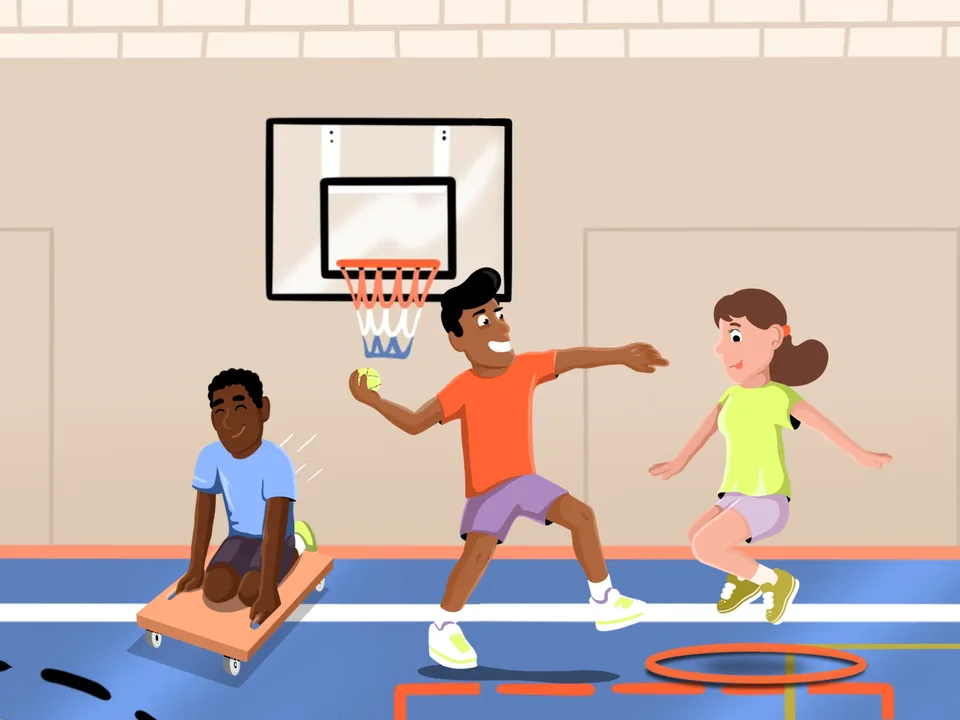
Christmas PE stations work best when the theme sits on top of equipment and routines your class already knows.
The week before Thanksgiving brings shortened schedules, early dismissals and students who are already halfway out the door.
Start with the 3 free units, including the Classroom Brain Breaks pack, no account needed. Then add your December theme to the breaks your class likes best.
App for iPhone, iPad and Android.