Games & warm-ups
Brain Breaks for Grades K–5
A good brain break needs a clear stop signal, a bubble of space for each child, and a game students can learn fast.
When snow, ice, and freezing wind chills push recess indoors for weeks at a time, elementary students lose their main outlet for physical movement. Short, structured winter brain breaks let you channel that restless energy right beside student desks without rearranging furniture.
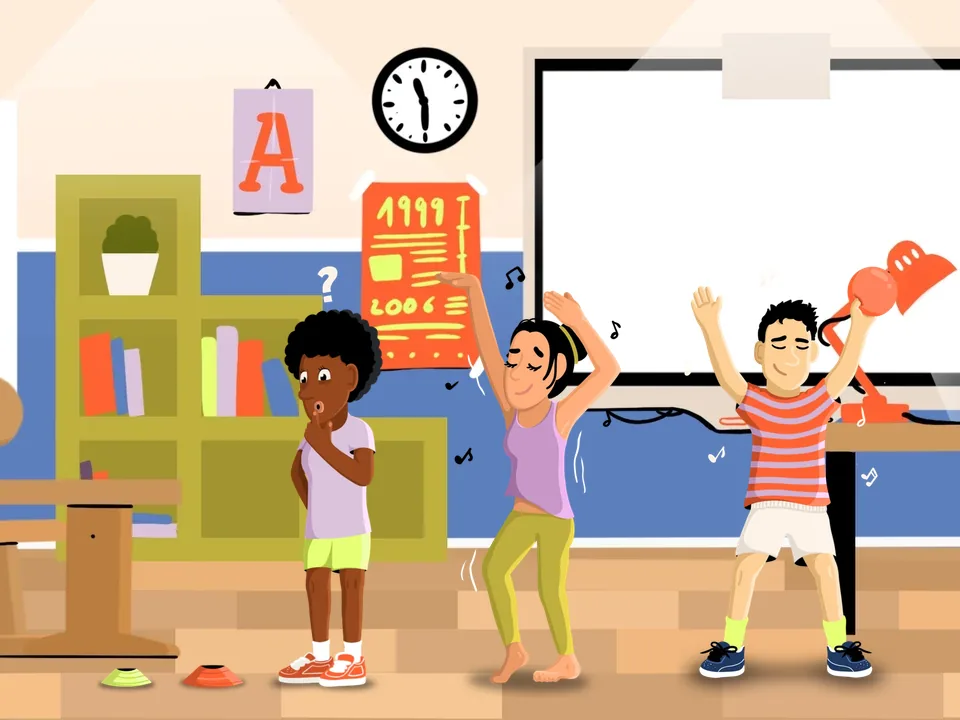
Effective winter brain breaks are 3-to-5-minute movement activities performed in the aisles beside student desks when cold weather cancels outdoor recess. Combining 2 to 3 minutes of stationary cardio or coordination games with a 30-second breathing cool-down helps students in Grades K–5 release pent-up energy, work toward their recommended 60 minutes of daily physical activity, and return to seatwork calmly.
Recess is often the largest window for unstructured movement in an elementary school day. According to the Physical Activity Guidelines for Americans from the U.S. Department of Health and Human Services, children and adolescents ages 6 through 17 need 60 minutes or more of moderate-to-vigorous physical activity daily. On days when outdoor recess moves into a crowded classroom, sitting through back-to-back reading and math blocks often leads to fidgeting and side conversations.
Adding two or three short movement breaks of about 3 to 5 minutes each across the school day gives your class a predictable physical outlet right beside their desks. Even when behavior gets restless during a long indoor stretch, keep movement positive and inclusive: SHAPE America's 2021 position statement on physical activity and behavior management states that withholding PE or recess as a consequence, or using exercise as punishment, is inappropriate. If you teach younger elementary classes year-round, you can combine these seasonal ideas with our guide to brain breaks and active classroom games for Grades K–5.
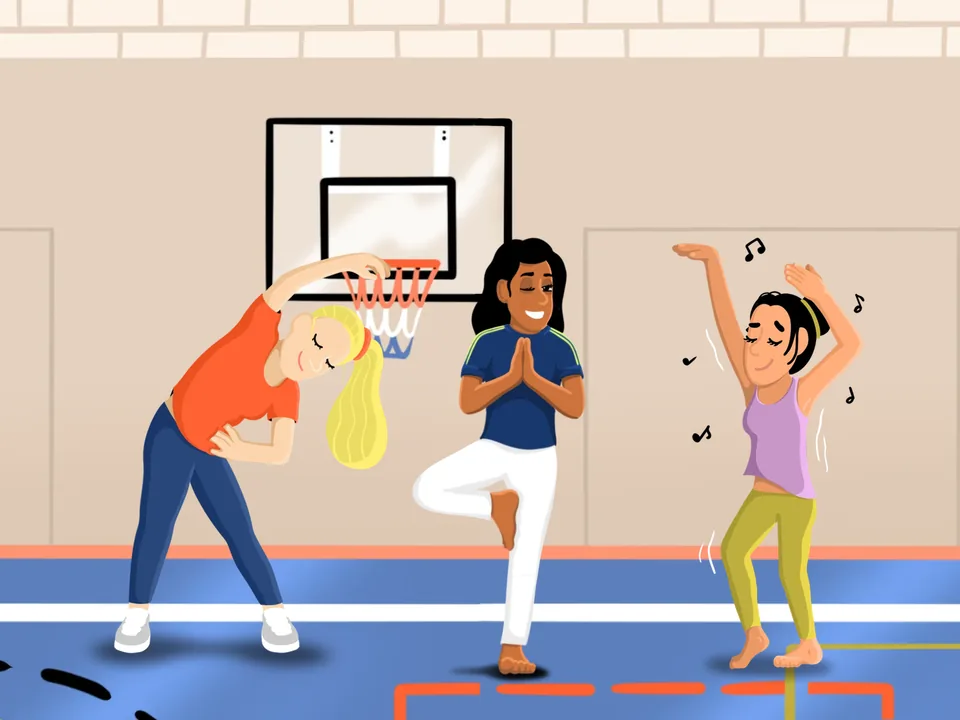
Snow-themed activities work best in tight classrooms when every student stays in a single floor space beside their pushed-in chair. Before starting, verify that the floor is dry and free of pencils or backpacks, maintain active teacher supervision, and give Grades K–5 students about 3 feet of arm-length clearance.
The goal is to build bilateral coordination and rhythm while earning class snow miles. Students stand in their desk aisle and shift one foot slightly forward and the other back in a low scissor stance, switching feet on each beat while swinging opposite arms, for about 20 seconds, then hold a two-foot downhill squat for 10 seconds. For scoring, every 30-second cycle that the whole class completes in rhythm adds 1 snow mile on the whiteboard toward a goal of 4 miles. If a student loses balance, steps out of their lane, or bumps a desk, they stop, place both feet flat, recheck their arm-length spacing, and rejoin at the start of the next glide. The round ends after 4 cycles, or about 2 minutes.
The goal is to practice hand-eye control using one crumpled scrap-paper ball per student. Students stand behind their chairs and follow your verbal sequence, such as tossing the paper ball straight up with the right hand, tapping the left knee, and catching with both hands, or balancing the ball on the back of one hand while rising onto tiptoes. Tosses always go straight up, never toward a neighbor. Each student tracks their own clean catches up to 10 points. If the paper ball drops, the student waits until neighbors finish their toss, picks it up without diving under desks, and restarts at their current score. A round ends after about 3 minutes or when a student reaches 10 points.
Once December ends, you still face weeks of cold weather when holiday songs and Santa games no longer fit. For festive December movement in the room, see our Christmas brain breaks for December classrooms. For the gym, see our guide to Christmas PE games for the last weeks before winter break. For January and February, secular games focused on ice, wind, and winter sports are easy for every student to join and can connect to SHAPE America's 2024 National Physical Education Standards (S1–S4), covering motor skills, movement and fitness concepts, social skills, and personal skills.
The goal is to build balance and partner focus in silence. Paired students stand facing each other across a desk row on a clear floor with about 3 feet of space. Partner A moves slowly for about 15 seconds like an ice sculptor, while Partner B mirrors every arm and leg angle. Both partners freeze on your chime. Pairs score 1 point for each 5-second freeze held without wobbling or talking. If a student speaks or grabs a desk, both partners take a breath, tap their shoulders, and restart the next 15-second turn with roles switched. The round ends after 4 turns, or about 2 minutes.
The goal is to train reaction speed and working memory. Teach 3 cues: "Icicle" means stand tall with arms overhead, "Blizzard" means march in place for 5 counts, and "Hibernate" means sit quietly with hands folded. Then call all 3 cues in any order, such as "Icicle, Blizzard, Hibernate", and students perform the actions in reverse order. Each clean sequence earns the class 1 weather point toward a goal of 5 points. If students mix up the order, everyone performs two slow shoulder rolls and restarts with a 2-cue round. The game ends after 5 sequences, followed by one last "Hibernate" call so the class is seated.
By mid-afternoon on a dark January day, students often need a brisk pulse raiser followed by a structured cool-down. Snow Shovel Squats fit in the desk aisle: students squat, scoop an imaginary shovel of snow and toss it slowly over one shoulder, switching sides with each rep. Run about 20 seconds of work and 10 seconds of rest for 4 rounds, then finish with the Seated Icicle Stretch. Keep feet flat on a dry floor and the arm swing inside each student's 3-foot space. In the PhysEdPrep app for iOS & Android, the 13 brain breaks for the classroom are organized into 5 categories: concentration, coordination, relaxation, communication and memory. You can try the Classroom Brain Breaks sample pack right away among the 3 free units unlocked without an account. To keep intervals crisp, use the Countdown Timer (quick picks for 1, 3, 5, 10 or 15 minutes with a whistle at the end) or the Structured Interval Timer (equal rounds of work and rest with prep time and a progress ring) from the 6 gym tools in the PhysEdPrep app.
| Activity Type | Category | Space Needed | Noise Level | Reset If Too Loud |
|---|---|---|---|---|
| Cross-Country Ski Glide | Coordination | About 3 ft in desk aisle | Low | Pause in a silent 10-second downhill squat |
| Snowball Balance Catch | Concentration | Standing behind chair | Low | Switch to one-hand balance holds on tiptoes |
| Ice Sculpture Mirror | Communication | Partner view across row | Silent | Restart turn with slow-motion arm movements |
| Arctic Weather Forecast | Memory | Desk and chair space | Moderate | Call the Hibernate cue for a seated breath |
| Seated Icicle Stretch | Relaxation | Seated at desk | Silent | Hold a 5-count inhale and slow exhale |
A fixed routine keeps transitions short, with a target of under 30 seconds from the first cue to everyone seated. When students know what starts an activity and what signals the return to work, movement breaks stop eating into the next lesson.
When severe weather cancels a full PE period and you have to teach movement in the classroom for 30 minutes or more, pair these short resets with our guide to indoor PE activities for days without the gym.
Winter clothing creates extra tripping hazards in an elementary classroom. Wet snow boots, heavy parkas, umbrellas, and dangling backpack straps narrow the walking lanes between desks, while melted snow makes tile floors slick. Before calling students to stand, run a 20-second floor check under your direct supervision.
You can download the PhysEdPrep app for iOS and Android to have the classroom brain breaks and timers on your phone or tablet at the front of the room.
A classroom movement break works best at about 3 to 5 minutes for Grades K–5, depending on student age and how long the class has been seated. Kindergarten and first-grade classes often do best with a 3-minute reset after a stretch of seatwork, while third through fifth graders can handle a 5-minute coordination or fitness sequence between instructional blocks.
End every movement break with a built-in 30-second cool-down cue that requires quiet posture before anyone speaks. In games like Arctic Weather Forecast, make the final call a slow seated breath or shoulder roll so heart rates drop while students are already in their chairs. Using a visible countdown with a single end whistle also helps prevent drawn-out transitions.
No, teacher-led movement breaks work without a screen, projector, or internet connection and often start faster than video follow-alongs. Verbal call-and-response games, partner mirroring, and rhythm challenges let you watch student spacing and adjust the pace immediately for your room size. They also keep students looking at each other and listening to cues rather than staring at a smartboard.
Provide a parallel upper-body or seated version for every cue before the activity begins so all students move at the same time. For example, during Cross-Country Ski Glide, students who remain seated can perform alternating arm swings and torso twists while keeping their feet flat. Check each student's IEP or 504 plan in advance, or ask your special education team, to align movements with their accommodations.
Your district's policy sets the cutoff, and many schools base it on the wind chill rather than the air temperature. The National Weather Service wind chill chart shows that frostbite can set in within about 30 minutes at a wind chill near -20°F. Many schools move recess inside well before that point, especially for younger students or when the playground is icy.
A good brain break needs a clear stop signal, a bubble of space for each child, and a game students can learn fast.
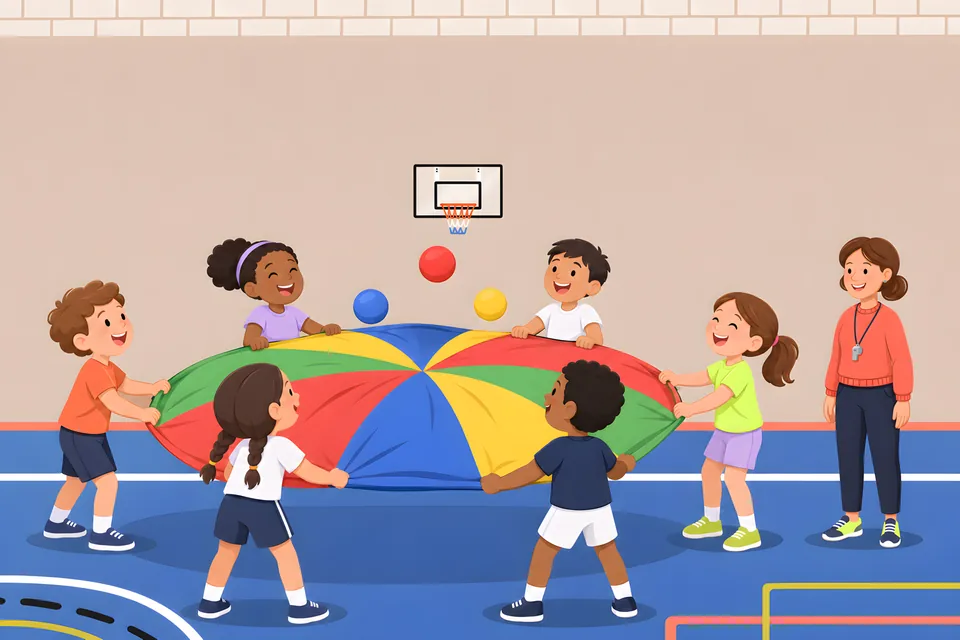
Christmas brain breaks give restless December classes a one-to-three-minute outlet for extra energy, then bring them back to the work.
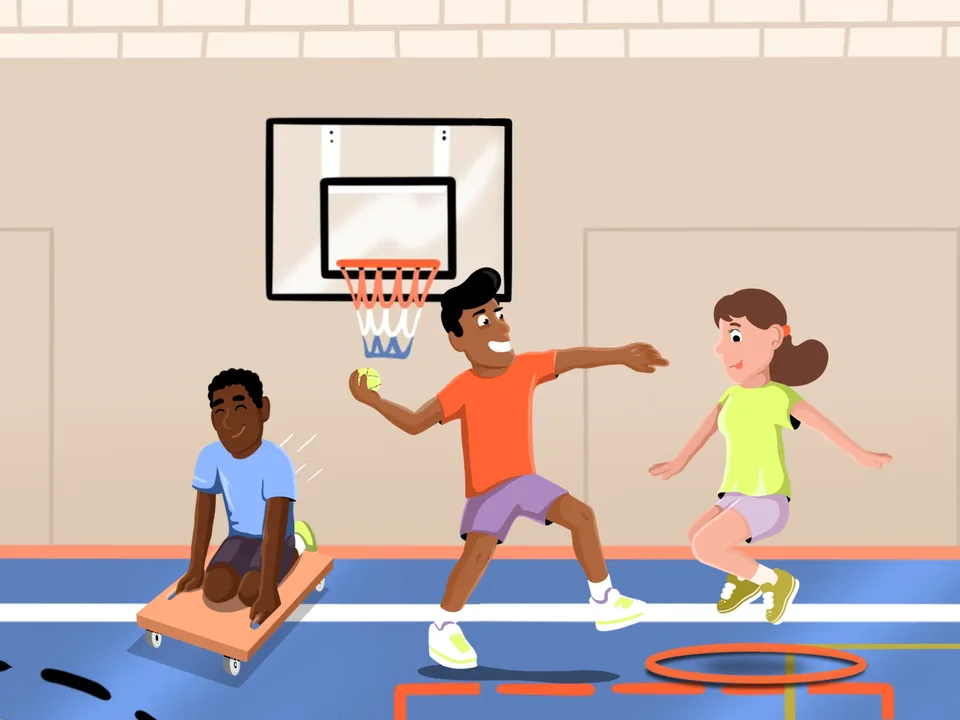
With clear floor boundaries and modified rules, you can run indoor PE activities that keep students moving safely without knocking over…
Start with 3 free units in the PhysEdPrep app for iOS & Android (no account needed), including the Classroom Brain Breaks sample pack with 13 movement breaks. When you want all 40+ unit plans, 240+ lessons, and 6 gym tools for all grades K–12, see current prices in the app and start with the 7-day free trial on the yearly plan.
App for iPhone, iPad and Android.