PE Goal Setting Sheet and Examples
Teachers in Grades K–12 can set up goal setting in PE with a goal sheet to copy, example goals for each grade band, a check-in routine…
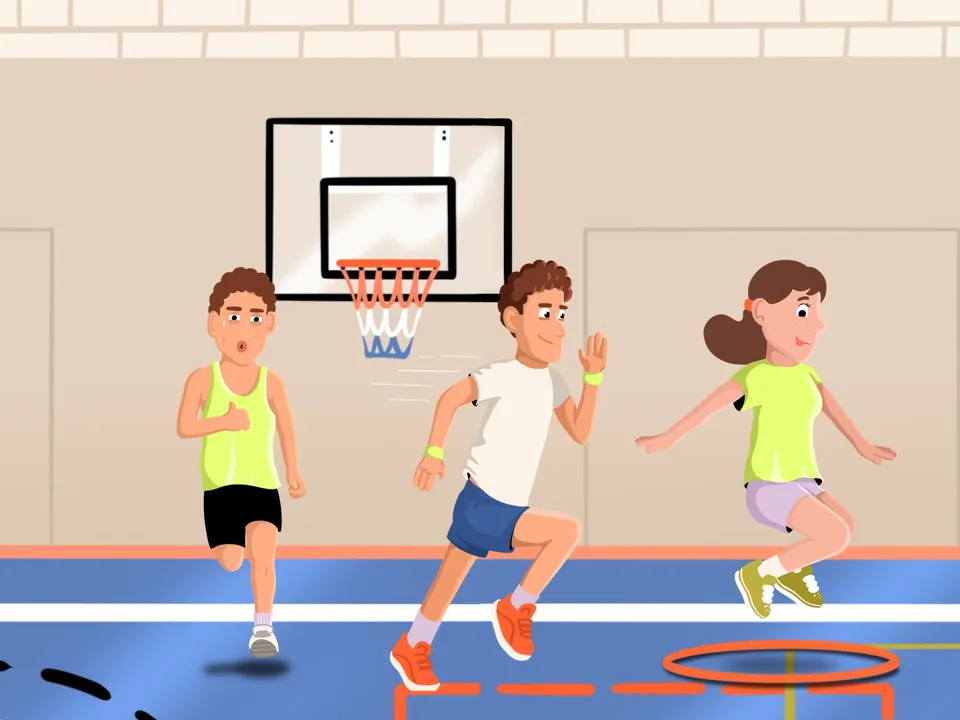
Change one variable at a time, such as space, task or equipment, and keep the learning goal the same for every student. Those three need little more than cones, floor tape and a second ball type. Add grouping, time and scoring changes once students know the routines. Let students choose their level and move up or down without penalty.
Some students in your class have played a sport for years, and others are touching it for the first time. Below are ten setups with rules and scoring, a table of common mistakes with fixes and three signals for checking that every student is still challenged. They fit PE specialists, secondary teachers and classroom teachers who teach PE.
Differentiation in PE means adjusting how students reach one learning goal, so a beginner and an experienced player each practice at a level that fits. The goal comes from your standard, for example Standard 1 of the 2024 SHAPE America National Standards: "Develops a variety of motor skills." The route to it changes from student to student.
A common planning aid is the STEP model from the Youth Sport Trust, which Activity Alliance describes as changing "one or more elements of the activity": Space, Task, Equipment and People. The ten strategies below use those four levers and add time and scoring.
In a basketball unit, for example, everyone practices the same pass-and-move pattern. Beginners use a lighter ball and a shorter distance, and experienced players add a defender who may take only one step.
| Strategy | Lever | Works for | What you need |
|---|---|---|---|
| Tiered throwing lanes | Space | Pairs | Three floor lines, soft balls, wall target |
| Two-grid keep-away | Space, people | Groups of 4 | Cones, one ball per group |
| Choose-your-level stations | Task | Groups of 3–5 | Level signs at each station |
| Rule add-ons | Task | Teams of 3–4 | Nothing extra |
| Equipment menu | Equipment | Individuals or pairs | Two or three versions of one item |
| Balanced teams | People | Whole class | Roster and a quick skill rating |
| Peer coaching pairs | People | Pairs | One cue per skill |
| Named phases with an extension task | Time | Whole class | Timer, posted extension task |
| Same interval, different reps | Time | Individuals | Interval timer, room around each student |
| Personal-best scoring | Scoring | Individuals | Score sheet or notebook |

Two strategies change the playing space: tiered throwing lanes and a two-grid keep-away game.
Pairs throw soft balls at a wall target from a near line (1 point), a middle line (2 points) or a far line (3 points). Each thrower gets 6 throws, then swaps with the partner, and a miss scores 0. Students move up a line after hitting 4 of 6. Keep the wall area clear, have the waiting partner stand behind the throwing line and fetch balls only after both partners finish a round.
Groups of 4 play 3v1 keep-away in a large or small cone grid and pick their own size. The three passers count consecutive passes while the defender keeps hands low with no contact. A touched or dropped pass ends the count, the passer who lost it swaps with the defender, and play restarts at once. Groups switch to the small grid after beating their best count twice. A round ends when everyone has defended once. Leave a clear aisle between grids.
Two strategies change the task: leveled stations and rule add-ons.
Post each station's skill at three levels labeled green, blue and black, because those labels rank students less than "easy" and "hard" do. At a dribbling station for 3–5 students, green is dribbling in place with each hand, blue is dribbling around cones at a walk and black is a crossover at each cone at a jog. Students move up after two clean runs and drop back at will. Space cones so jogging students don't cross paths. Rotation ideas are in the station setups for PE class.
Teams of 3–4 play a small-sided game you already teach, such as 3v3 half-court basketball, with extra rules that spread the action: every player touches the ball before a shot counts, and a regular basket scores 1 point while a non-dominant-hand basket scores 2. Experienced players may also stay an arm's length from the ball handler until the first pass. The other team gets the ball after a basket or turnover, and the first team to 8 points wins.
Three strategies change the equipment and the groups: an equipment menu, balanced teams and peer coaching pairs.
Offer two or three versions of one item for the same task, such as a beach ball, a volleyball trainer and a regulation volleyball for forearm passing. Students choose, and must try the next version up once per class. Use soft balls wherever a hit to the head is possible, and check that the floor is dry.
Rate each student 1 to 3 on the game skill after a short warm-up drill, then build teams with a similar mix of ratings. The Team Creator in the PhysEdPrep app offers random, balanced-by-skill and gender-split modes from your saved class rosters. Keep ratings private and rebuild teams every unit. More in the guide to random teams by skill.
Pair a student who is still learning with a more secure partner and give them one cue per skill, such as "step with the opposite foot" for an overhand throw. One student makes 5 attempts while the partner watches for the cue and says "yes" or "not yet" after each, then they swap. The coach watches and speaks but does not take the equipment. Change partners every unit.
Three strategies change time, reps and scoring: named phases with an extension task, the same interval with different reps, and personal-best scoring.
Name each phase in the Differentiated Phase Timer, such as practice, challenge and reflect, and give each its own time; the sequence repeats for as many rounds as you need. Students who reach the day's target early go to a posted extension task, such as throwing from a farther line, instead of waiting. A class new to a skill gets a longer practice phase.
Everyone follows the same rounds on the Structured Interval Timer, which runs equal rounds of work and rest with prep time, but each student picks the exercise version: wall push-ups, push-ups from the knees or push-ups from the toes. Students count reps and try to beat their own count. A student whose form breaks down switches to the easier version within the round. Leave room around every student. More in the interval timer guide for PE fitness stations.
Students record their own score for a skill or fitness task on a score sheet or in a notebook. The target is their previous best plus one: a student who matches it keeps the target, and one who beats it sets a new one. Add a class total if you want a shared score. For report cards, see fair PE grading for report cards.
Five mistakes are easy to make when you differentiate, and each has a quick fix.
| Mistake | Cause | Fix |
|---|---|---|
| Levels labeled "easy" and "hard" | Students rank themselves against classmates | Use colors or letters and let students choose |
| Beginners always pick the lowest level | Fear of failing in front of peers | Require one try at the next level per class and practice in pairs |
| Advanced students wait for others | No extension task is posted | Post one extension task at each station before class |
| Long lines for equipment | Too few items per group | Use one ball per pair and a second copy of the busy station |
| Teams stay the same all unit | Week-one ratings never get updated | Re-rate and rebuild teams every unit |
Watch three signals: how often each student succeeds, how much each student moves and how long each student waits.
Waiting time matters because SHAPE America recommends moderate to vigorous physical activity for 50 percent of PE class time (position statement, 2017). If a setup creates lines, shrink the groups or add a second copy of the station. Start with one lever per unit, such as equipment or space, and add groupings after the routines are familiar.
The four types are content, process, product and learning environment. In PE, content is the version of the skill students practice, process is the practice format such as pairs or stations, product is how students show what they learned, and environment is the space and equipment around them. The strategies above touch all four.
One common count of seven combines the four types of differentiation (content, process, product and learning environment) with three student traits: readiness, interest and learning profile. Readiness, a student's current skill and fitness, is the trait you can see fastest in the gym, so it drives most level choices. Interest guides game and activity options, and learning profile covers how students prefer to practice.
Five levers cover most of what PE teachers change: space, task, equipment, people and time. The STEP model supplies the first four, and time is the fifth. The ten strategies in this article add scoring as a sixth lever. Authors count differently, so check which list your school or district uses for evaluations.
Grade every student against the same criteria, such as skill cues, effort and improvement, and do not let the chosen level cap the grade. List the cues for each level on your rubric and give credit when a student moves up. Personal-best scores make progress visible for students at any starting point.
Yes, because space and task changes need only floor tape, cones and signs. Tiered lines, two grid sizes and leveled station signs work with one ball per pair. Add an equipment menu only for items you already own, and keep stations to 3–5 students so nobody waits in a long line.
Teachers in Grades K–12 can set up goal setting in PE with a goal sheet to copy, example goals for each grade band, a check-in routine…
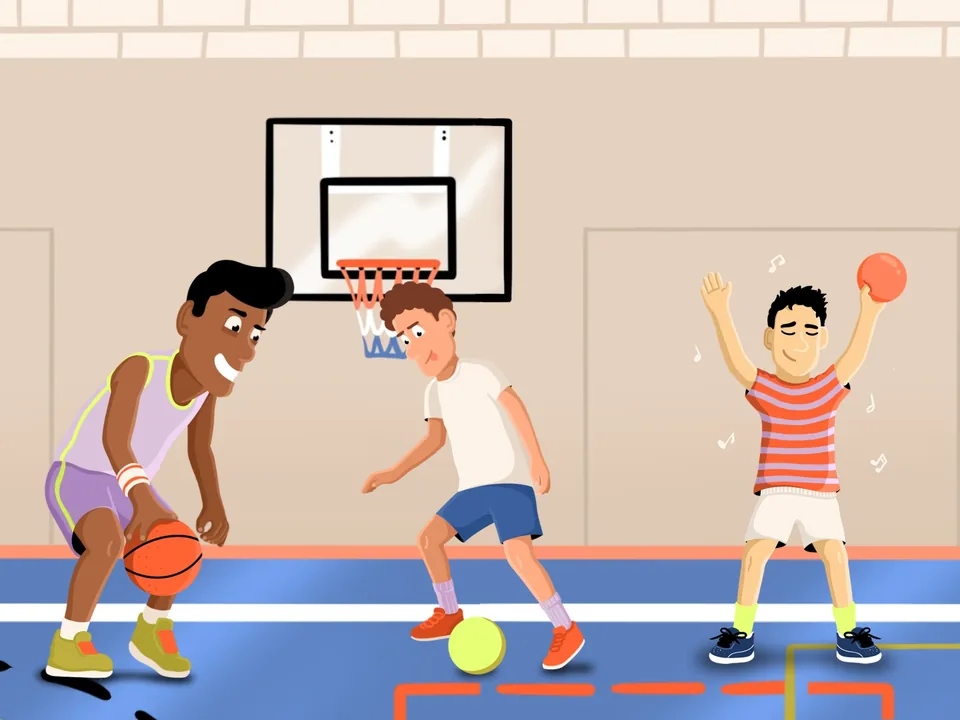
PE stations split a class into small groups that rotate through different tasks, so more students handle equipment and fewer stand in line.
Try 3 free units without an account. Yearly plans start with a 7-day free trial that opens all 6 gym tools, including the Team Creator and the Differentiated Phase Timer; see current prices in the app.
App for iPhone, iPad and Android.