Games & warm-ups
Station Setups for PE Class
PE stations split a class into small groups that rotate through different tasks, so more students handle equipment and fewer stand in line.
Halloween stations work when every student is moving at once and the gear comes from your own closet. Eight spooky ideas run on bean bags, cones, hoops, jump ropes and scooter boards, with versions for K–2 and older students. A rotation plan keeps lines short, and a safety check comes before the first group moves.
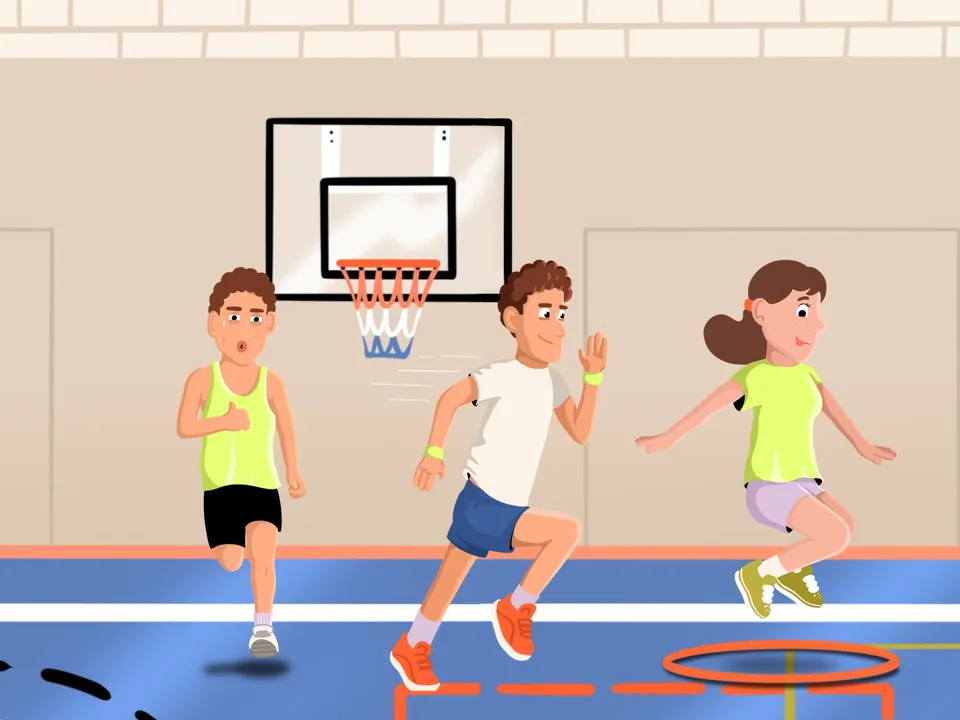
Build Halloween PE stations from gear you already own: give each station a spooky name and one skill task, using bean bags, cones, hoops, jump ropes and soft balls. Plan one station per group of about 3 to 5 students, let everyone move at the same time, and rotate every group on one signal. Skip real candy, masks and hard balls.
A good station takes a skill you already teach, such as rolling, tossing, catching, hopping or balance, and gives it a spooky name. Put one task and one scoring rule on a one-page sign you draw or print yourself. Add a picture so non-readers can follow it.
Every student should be moving at the same moment. SHAPE America recommends moderate to vigorous activity for 50 percent of PE class time (a figure cited in its dodgeball position statement), and a station where three of four students wait eats into that share fast. The same statement calls traditional elimination dodgeball inappropriate for K–12 PE, so the throwing stations below aim at targets and never at classmates.
Scoring stays cooperative. Each group adds up one number per station, and the class total becomes the shared goal. A miss scores zero and the student tries again, so nobody is out.
If you tag lessons for curriculum reviews, these stations practice motor skills and cooperation, which line up with standards 1 (motor skills) and 3 (social skills) of SHAPE America's 2024 National PE Standards.
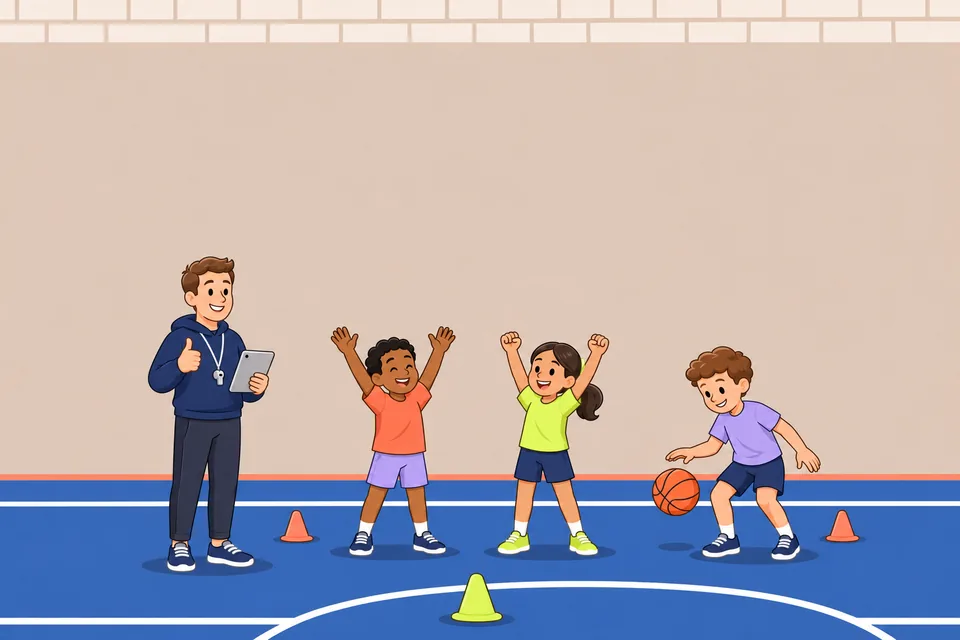
These four run on gear most gyms already own. Each round ends at the rotation signal, and the group writes its count on a tally card before moving on. Distances are starting points; shorten them for K–2.
Tape paper skulls to six cones and set them in a triangle at the end of a lane. From a line about 15 feet back, each student rolls a soft ball twice, counts the cones down and stands them up for the next roller. Two lanes keep four students busy. Balls roll along the floor, never toward people, and are fetched only after both rollers finish.
Set three hoops or buckets at different distances, worth 1, 2 and 3 points, and use bean bags as the candy. Each student tosses five bags underhand from behind a line. Bags stay where they land until the whole group has thrown, then the group retrieves them together. That keeps runners out of the throwing lane.
Partners stand about 8 feet apart with a two-cone gate between them and roll an orange playground ball through it. They count rolls in a row that pass through the gate. A miss resets the streak to zero, and the partner who missed picks up the ball. Each pair records its best streak.
Every student gets a white scarf, tosses it up and catches it before it touches the floor. A drop restarts the count at zero. The best streak goes on the card.
These four need more floor space, so give each its own lane and point the lanes away from other groups. As before, each round ends at the rotation signal and the group writes its count on the tally card.
Lay jump ropes flat in a crisscross grid on the floor, with the ends taped down and no loops or knots that can catch a toe. Students hop from space to space without touching a rope. A touch means "stuck in the web": the student goes back to the last clear space and continues. Each clean crossing earns a tally mark. Two students can cross at once, and the web always stays on the floor.
Each student carries a table-tennis ball on a plastic spoon along a short cone path and drops it into a shared hoop "cauldron". Everyone walks, never runs. A ball that falls off is picked up right away, because a loose ball underfoot is a slip hazard, and goes back on the spoon where it fell. Everyone carries at once, one ball per trip, and the group counts the balls in its cauldron when the signal sounds.
Two students ride at a time, each in a separate lane, seated and pushing with their feet, hands on the board edges and away from the wheels, around their own line of cones to a hoop of bean bag "bones" and back with one bone. The other group members count bones, stand up knocked cones and return bones to the hoop. Riders swap with the counters after each trip.
Write six moves on a poster: zombie walk (stiff-arm march), bat flaps (fast arm circles), spider crawl (crab walk for 8 steps), mummy march (high knees in place), witch hops (two-foot hops along a line) and ghost float (tiptoe walk, arms overhead). Partners share a die. One rolls, both do the move for 10 repetitions or 8 steps, then the other rolls. The pair counts completed rolls until the signal.
Lines form when a station has fewer working pieces than students. Before class, count what each station gives a student to do at one time. If a station keeps only two of four students busy, add a second lane, hand the other two a job (counter, resetter, retriever), or send three students there instead of four.
Groups of about 3 to 5 work well, and you need one station for each group. Walk the whole class through every station once without gear, then rotate all groups in the same direction on one signal. A workable range is about 2 to 3 minutes per station for kindergarten and 4 to 6 minutes for older elementary students, as laid out in our guide to running PE stations. Leave about 20 to 30 seconds between stations so the last group can stand pins back up and return balls to the lane.
Tally cards give the class one total to chase, which keeps groups from racing each other. For signal and timer setups, see how a station timer with rotation alerts works. For classes of 30 or more, see our guide to PE games for large classes; for a half gym, see PE games for small spaces.
Change one variable at a time: distance, target size, number of tries or the student's job. Two versions side by side, such as a near line and a far line, let students pick their own level.
| Station | K–2 | Grades 3–5 and up |
|---|---|---|
| Skull bowling | Lane about 10 feet, large soft ball | Lane 15–20 feet, call the cones you aim for |
| Trick-or-treat toss | Wide hoops worth 1 and 2 points, closer line | Smaller targets, add a 4-point far bucket |
| Pumpkin roll | Partners about 5 feet apart, wide gate | About 10 feet apart, narrow gate |
| Spider web hop | Two-foot hops, wide grid | One-foot hops, switch feet every space |
| Witch's brew | Bean bag on a paper plate | Table-tennis ball on a spoon, longer path |
| Monster dice | 5 repetitions per move | Students invent the move for a "6" |
If you want to see how a complete unit is laid out before building your own stations, the 3 free units open without an account.
Some families skip Halloween for religious, cultural or personal reasons, and the stations above do not depend on the holiday. The simplest fix is a neutral theme for the whole class, so no student sits out of PE or has to explain why. Rename skull bowling "night bowling," trick-or-treat toss "target toss," witch's brew "harvest soup," ghost scarf catch "cloud catch" and monster dice "creature dice," and keep every rule the same.
Your principal or district policy may set rules for holiday-themed lessons, so check it before you plan, and consider a short note home that names the stations. For a December version, see our guide to Christmas PE stations.
Seven stations for groups of four. If you have gear for only four stations, run two identical circuits of four, with 14 students in each circuit split into groups of three or four. Smaller groups also mean more turns per student.
Yes, with three or four simple stations and an adult at each one. Choose big movements such as pumpkin rolling, scarf tossing and two-foot spider hops, show each station once to the whole group, and use picture signs. Skip table-tennis balls and other small items for children who still put things in their mouths.
No, skip it. Food allergies are a common reason, and many schools limit food rewards, so check your school's policy first. Bean bags and tally marks work as candy in the toss station, and a class treat total gives students something to cheer for without any food.
Choose the low-footprint stations: ghost scarf catch, pumpkin roll between seated partners, monster dice and a short-range bean bag toss. Drop the scooter slalom and spider web hop where there is no room for a clear lane. Run three or four stations with groups of four to five and aim every lane at a wall.
PE stations split a class into small groups that rotate through different tasks, so more students handle equipment and fewer stand in line.
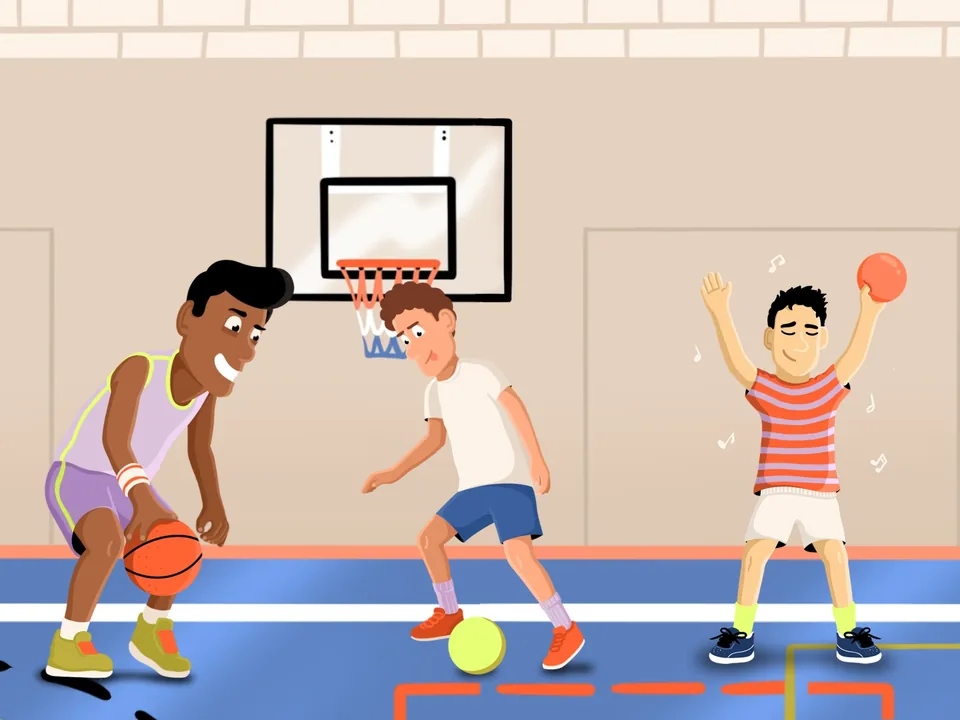
A station rotation only works when every group stops and moves at the same moment.
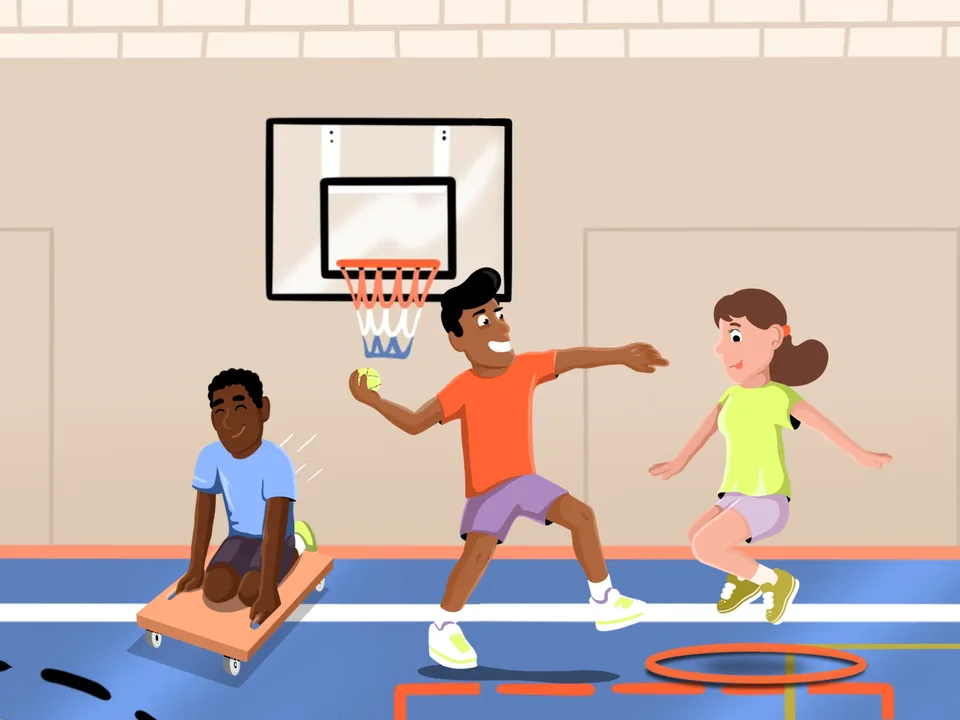
Christmas PE stations work best when the theme sits on top of equipment and routines your class already knows.
Download the free PhysEdPrep app for iOS & Android, split your class roster into station groups with Team Creator and run each rotation on the Countdown Timer or the Differentiated Phase Timer. Yearly plans start with a 7-day free trial; see current prices in the app.
App for iPhone, iPad and Android.