Games & warm-ups
Spring Brain Breaks for Testing Season
Built for K–5 classroom teachers and PE specialists whose classes get restless once the weather warms and testing starts.
A typical school panel asks around 10 questions across four areas: gym safety, standards-based planning, inclusion for students with IEPs, and school-wide teamwork. Answer each question with a real example naming your grade band, your class routine, and the student outcome. When you describe lesson flow, cite SHAPE America's recommendation of moderate-to-vigorous activity for 50 percent of class time.
Elementary, middle, and high school PE interviews test how you run an open gym or field with 30 moving students. Certified specialists and first-year teachers often face both a 30- to 45-minute panel conversation and a live demo lesson. These 10 interview questions for a PE teacher pair typical gym scenarios with common mistakes and day-of prep.
Hiring panels commonly probe these skills: active supervision in open spaces, standards-aligned unit progression, task modification for mixed abilities, instructions kept to about a minute, and steady communication with families and colleagues. Many administrators have a classroom background, so your answers to PE teacher interview questions need to connect gym routines to student safety and measurable learning.
Hiring committees often include the principal plus an assistant principal, athletic director, or classroom or special education teacher, though the makeup varies by district. Across a 30- to 45-minute interview, panelists listen for proof that your gym runs on predictable systems instead of improvisation. Candidates finishing certification can check the steps to becoming a PE teacher to confirm state certification requirements and CPR or First Aid cards before interview week.
| Evaluation area | Skills tested | Proof to share |
|---|---|---|
| Safety and flow | Perimeter scanning, fast transitions | Freeze signal, equipment home base |
| Curriculum | Unit progression, quick checks | Skill cues, 50 percent active time |
| Inclusion | IEP and 504 adaptations | Modified balls, choice of distance |
| School culture | Parent contact, building teamwork | Field Day planning, ready sub folder |
Management and safety questions often come first because an unorganized gym creates immediate injury risk and lost learning time. Share routines that specify floor boundaries, supervision lines of sight, and age-matched equipment rules.
Describe your entry routine, three-second freeze signal, and equipment home base. Students enter into an instant warm-up, stop on a whistle or music pause, and set balls at their feet during instructions that last about a minute, as shown in our guide to classroom management in a loud gym.
Name physical conditions first: check for dry floors, place cones clear of walls and bleachers, scan from the perimeter, and match gear to age, like soft foam balls below shoulder height and seated-only scooter boards. Cite SHAPE America's 2017 position statement on dodgeball, which calls traditional elimination dodgeball (players hit out with a ball) inappropriate for K–12 PE, and offer pin-knockdown games with soft balls aimed at pins, not people.
Speak privately to spot anxiety, missing shoes, or peer issues, then offer a low-pressure role. Reference SHAPE America's 2021 position statement against exercise as punishment to confirm you never assign laps or push-ups or withhold recess.
Curriculum questions verify that you teach progressive motor skills tied to standards instead of disconnected games. Frame your answers around multi-week skill progression, high movement time, and quick observational grading.
Start with the end-of-unit outcome and build from partner control tasks to 3v3 or 4v4 small-sided games where everyone touches the ball often. Move from an instant entry activity to one clear cue and station play, aiming for the 50 percent of class time in moderate-to-vigorous activity that SHAPE America recommends. Running rotations with an interval timer app for PE fitness stations keeps groups moving smoothly.
Pair your state standards with SHAPE America's 2024 National Physical Education Standards, which organize K–12 learning into four standards (S1–S4): motor skills, movement and fitness concepts, social skills, and personal skills. Noting that the March 2024 update replaced the 2013 five-standard edition (S1–S5) shows you track curriculum updates.
Grade on observable skill cues, effort, and growth instead of raw athleticism. Use a two- or three-cue checklist on a clipboard or tablet and watch six to eight students per rotation while everyone stays active.
Inclusion questions check whether every student in a mixed-ability class participates safely and with dignity. Show the panel how you adjust equipment, space, rules, and group sizes so nobody sits on the bleachers.
Review each student's written IEP, Section 504 plan, or health plan with the case manager, adaptive PE specialist, and school nurse before the unit starts. Build universal options into every station: provide lighter larger-diameter balls alongside standard ones, lower net heights or allow a bounce in volleying games, add high-contrast floor markers, and build in self-paced water breaks. For asthma, heat, or other medical needs, follow the student's written health plan and the school nurse's guidance.
Replace full-court games dominated by a few athletes with cooperative tasks and parallel stations offering three challenge levels at the same cone. Let students choose their target distance, form balanced teams yourself instead of using student captains, and praise personal cue progress over scoreboard totals. If you interview for Grades 6–8, name one or two low-pressure options from a list of junior high PE activities so the panel hears a concrete example.
Questions about duties beyond the gym check whether you treat K–12 physical education as your primary teaching job and contribute across the building. Principals look for coaches who organize school-wide events without letting varsity sports overshadow daily PE classes.
Explain that varsity practice prepares selective athletes for competition, whereas PE class builds foundational motor skills and confidence for every student across Grades K–12. Give one example of breaking a sport skill into beginner partner progressions so non-athletes get equal feedback.
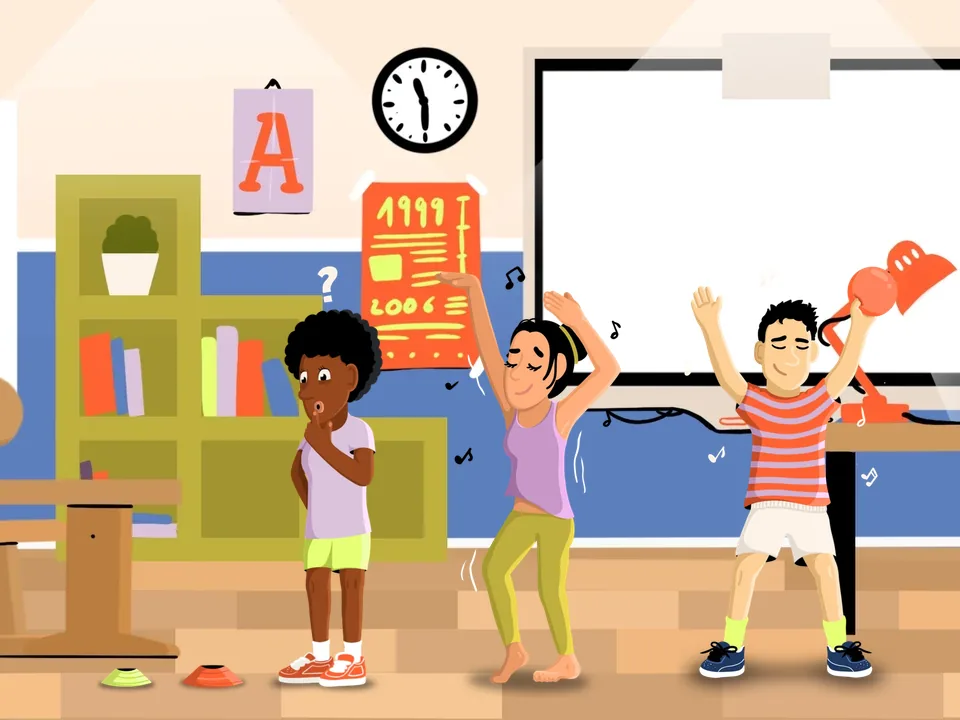
Highlight concrete building contributions: running Field Day stations, sharing brief classroom movement breaks such as spring brain breaks for testing season before testing weeks, reinforcing grade-level math or vocabulary during warm-up games, covering recess or bus duty reliably, and keeping emergency PE sub plans for Grades K–12 ready for unplanned absences.
| Common mistake | Why panels flag it | Stronger response |
|---|---|---|
| Focusing on varsity wins | Hints daily PE gets little prep | Lead with beginner PE progressions |
| Saying "just have fun" | Lacks safety rules and standards | Pair fun with one standard and routine |
| Laps for misbehavior | Contradicts SHAPE America's position | Use calm private behavior resets |
| No sub plan sample | Risks chaos in a large space | Bring a low-equipment sub lesson |
Wear business professional or smart business casual attire to the panel interview, and pack clean athletic shoes, gym clothes, and a whistle in a bag in case the school adds a demo lesson. Arriving 15 minutes early with a slim folder shows organization before you answer a single question.
Put these in a slim folder:
Then prepare three questions for the committee:
For a callback demo lesson, ask 24 hours ahead for the grade, student count, space size, and gear. Exploring the 3 free units in the PhysEdPrep app for iOS and Android lets you review multi-week unit structures and gym floor setup diagrams on your phone or tablet.
Principals often mix a few building-wide teaching questions into a PE interview: how you communicate with parents, how you resolve a disagreement with a colleague, and why you chose their school. Connect your gym to building goals by mentioning positive parent notes, shared behavior expectations, and math or vocabulary warm-ups.
Elementary interviews tend to focus on locomotor skills, spatial awareness, shoe-tying or bathroom routines, and back-to-back transitions in Grades K–5. Middle and high school panels in Grades 6–12 ask more about locker room supervision, dress-out policies, grading rubrics, fitness self-assessment, and keeping reluctant teenagers active without turning class into varsity practice.
Draw directly from your student teaching placements, practicum hours, substitute days, or youth coaching, and describe the exact routine you will use on day one. Naming the grade level, what went wrong in a placement lesson, and what you adjusted the next day shows self-reflection and coachability.
Callback demo lessons often run roughly 20 to 30 minutes with an actual class from that school, so confirm the exact length when you are invited. Bring peel-and-stick name tags and thick markers so students write their first names on a tag and stick it to their shirts as they enter, or group students by pinnie colors so you can give personal feedback within minutes.
Give a philosophy of two or three sentences that names who PE serves and how you check it: every student builds motor skills, fitness knowledge and the confidence to stay active for life. Then back it with one gym routine and one assessment habit, such as a two-cue checklist, so the panel can picture how the philosophy looks during a normal class period.
Name one or two tools you already use and the problem each one solves. Interval or countdown timers keep station rotations moving, tablet video lets students compare their form to a skill cue, and heart rate monitors show effort for students who are not the fastest. Add your device rules: who holds the tablet, where phones stay, and that you follow the district's photo and video policy.
Built for K–5 classroom teachers and PE specialists whose classes get restless once the weather warms and testing starts.
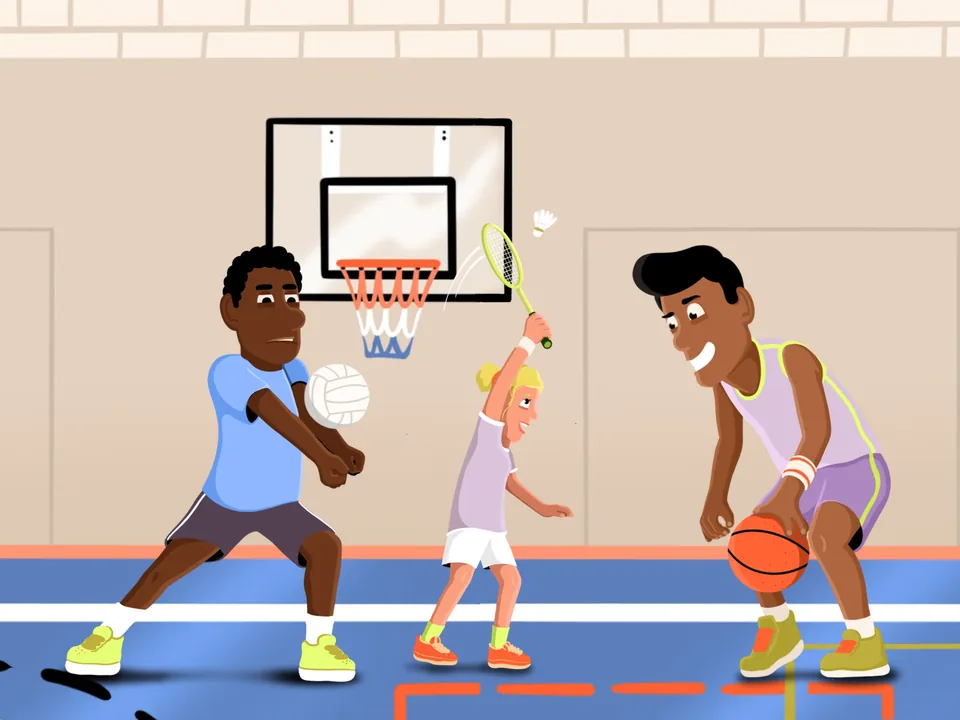
Junior high and middle school PE (Grades 6–8) means full classes, mixed ability and students who care what their peers think.
Download the free PhysEdPrep app for iOS and Android to open 3 free units without an account, including Basketball (Grades 5–7), Parachute Games, and Classroom Brain Breaks. When you land the job, start the 7-day free trial on the yearly plan to access all 40+ unit plans and 6 gym tools (see current prices in the app).
App for iPhone, iPad and Android.