Games & warm-ups
Brain Breaks for Grades K–5
A good brain break needs a clear stop signal, a bubble of space for each child, and a game students can learn fast.
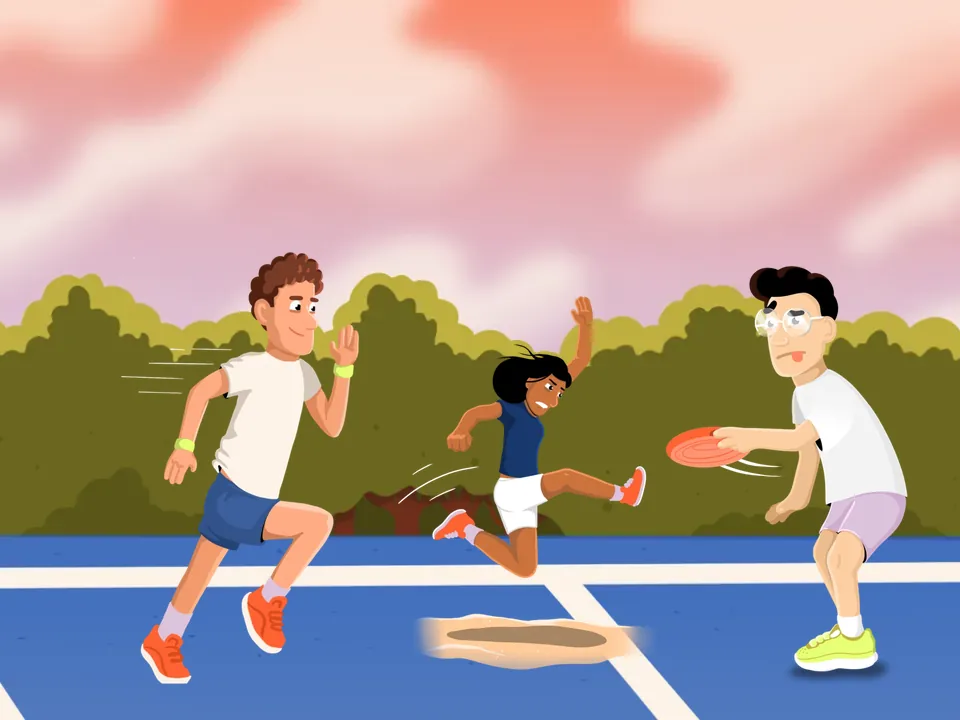
A good spring brain break takes about 2 to 3 minutes, needs no equipment and ends with a clear stop signal. Garden, weather and animal themes work for K–5: grow from seed to sunflower, act out a weather report, or freeze like a bunny. On test days, switch to seated, quiet versions and follow your state's test rules.
Built for K–5 classroom teachers and PE specialists whose classes get restless once the weather warms and testing starts. You get spring brain breaks with complete rules for garden, weather and animal themes, seated versions for test days, an outdoor checklist and ways to point the same breaks toward field day.
Spring stacks several attention drains onto the same weeks: longer daylight, open windows, state testing and field day planning. A break of about 2 to 3 minutes is a practical way to reset the room.
That is long enough to get every student out of the chair and back in without losing the lesson. Students in K–2 usually do best with one action at a time, while Grades 3–5 can follow a two-step pattern.
A break adds movement on top of PE and recess and replaces neither. The Physical Activity Guidelines for Americans call for 60 minutes or more of moderate-to-vigorous activity a day for ages 6 to 17, and a 2 to 3 minute break covers only a sliver of that. Don't take a break away as a consequence. SHAPE America's position statement on physical activity as punishment calls exercise as punishment, and withholding PE or recess as a consequence, inappropriate.
For a year-round bank of breaks, see Brain Breaks for Grades K–5.
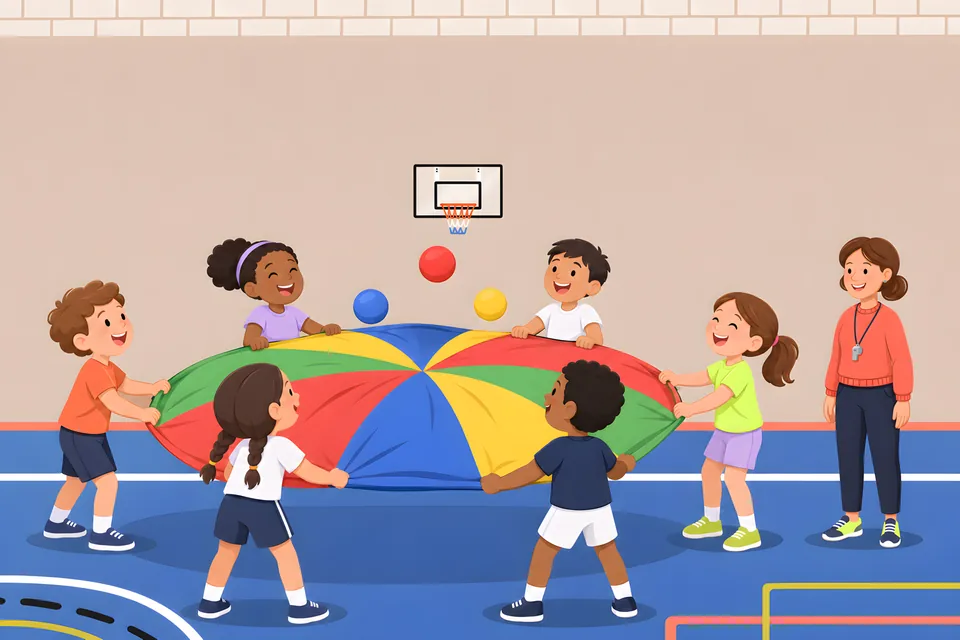
Two garden breaks and one weather break need no props, only your voice and some space. Give each student an arm's length of clear space and use a dry, non-slip floor.
The goal is to grow slowly together. Students crouch as seeds. You count to ten, and on each count they rise a little until they stand with arms overhead. Then they sway like a sunflower in the wind for three slow breaths. Everyone finishes together, so nobody wins and nobody is out. For a seated round, students lean forward as a seed, sit tall as the count rises and reach up. Run it again with a faster count if the class wants another round.
Students follow the gardener. You mime four moves in a row: dig, drop seeds, cover them, water, and the class copies each one. Then you repeat the row a little faster, three rounds in all. Anyone who misses a move picks up at the next one. End with “harvest”: everyone picks imaginary fruit overhead, then sits.
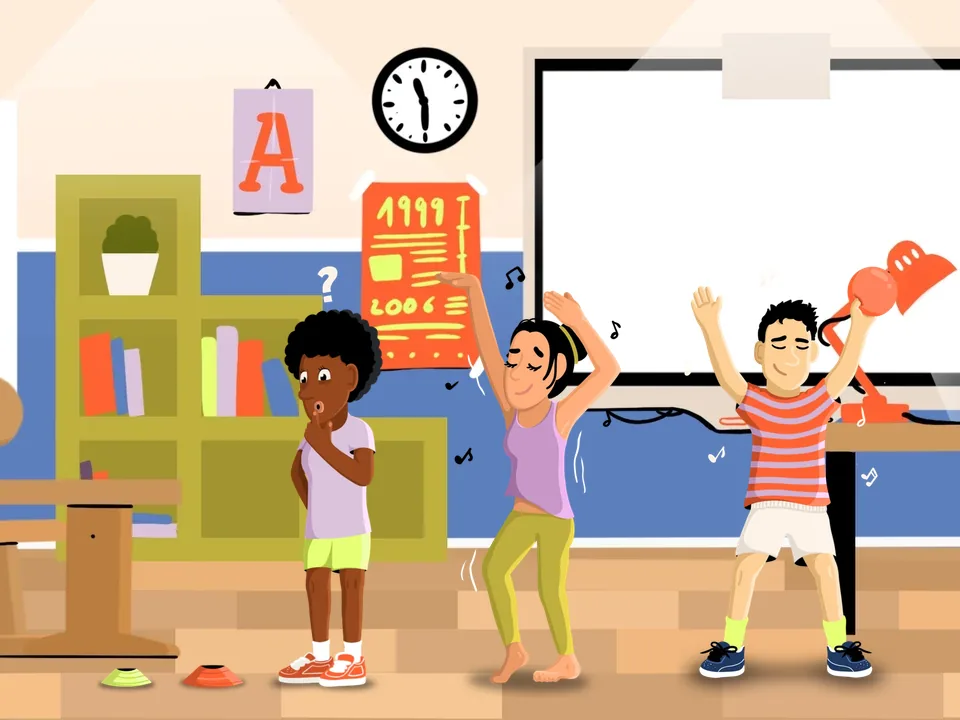
Students match each weather call with its motion. Drizzle means fingertips tapping the desk, rain means patting thighs, thunder means gentle foot stomps, sun means reaching high, wind means swaying. Call a new weather every few seconds and speed up gradually. A student who mixes one up simply joins the next call. End on “clear sky”: arms down and one slow breath.
Caterpillar to Butterfly and Bee Breath calm a class, while Animal Freeze burns off energy. Pick the one that matches the mood of the room.
The goal is to be still, then open up. Students curl small beside their desks or in their chairs, arms wrapped around themselves like a cocoon. They hold still for a slow count of five, then open their arms into slow butterfly wings for five flaps. Repeat once. Anyone who giggles just restarts the count with the class. Add Bee Breath when the room is wound up: breathe in through the nose and hum out slowly, three rounds. A student who feels dizzy goes back to normal breathing.
This is a freeze dance without a video. Video-led versions are popular, but they need a screen, sound and a working connection. This one needs only your voice and a two-clap signal. Pat a steady beat on your thighs and name an animal every few seconds: bunny means low hops in place, duck means a waddle in a small squat, butterfly means slow arm sweeps, snail means slow motion. Two claps mean freeze in the animal pose and hold for a count of three. Students who wobble keep playing, because no one is eliminated. After six animals, call “nap time” and everyone sits tall for one slow breath. Keep students an arm's length apart on a dry, non-slip floor with shoes on, or swap hops for arm movements when space is tight. More ideas: No-Video Dance Brain Breaks.
Between test sessions, run seated, quiet breaks of about 2 to 3 minutes, and only where your state's test rules allow a break. Test administration manuals differ by state and by test, and some limit what students may do or say during breaks. Ask your test coordinator first. This is general information, not guidance on your specific test. Students whose IEP or 504 plan lists extra breaks follow that plan.
| Moment | Goal | Break |
|---|---|---|
| The day before testing | Learn the routine | Run Bee Breath and a seated Seed to Sunflower once |
| Before the first session | Arrive calm | Bee Breath, then Caterpillar to Butterfly at the desk |
| Between sessions, if your rules allow it | Reset shoulders, eyes and breathing | Seated Planting Rows, silent |
| After the last session | Release energy | Animal Freeze or Weather Report, outside if the schedule allows |
Skip breaks where students talk to each other until the last session is over. For more quiet options, see Calm Brain Breaks for Classrooms.
Take a break outside only after a quick check of the ground, the air and the sky, and keep the group inside a boundary you can see from end to end.
One outdoor break needs no props: the Spring Signs Walk. The goal is five signs of spring per student, such as buds, a bird or a puddle. Students walk a loop inside the boundary, no running, and count their signs on their fingers. Anyone who reaches five stands still and waits. The break ends when everyone has five or when you give the stop signal. For longer sessions, see outdoor PE games when the gym is closed.
Each break rehearses one habit that field day runs on: stopping on one signal, listening to changing instructions or slowing down between stations. Practiced in the classroom, they cut the explaining you do on the day.
| Break | Habit | Field day use |
|---|---|---|
| Animal Freeze | Stopping on one signal | Rotating stations on the whistle |
| Weather Report | Listening to changing calls | Following a station leader's next instruction |
| Seed to Sunflower | Slow, controlled movement | Cooling down at the water station |
| Bee Breath | Slowing the breath | Resetting between stations |
Two Gym Tools help on the day itself. In the PhysEdPrep app, the Team Creator makes fair teams in one tap (random, balanced by skill or split by gender) from your saved class rosters. The Countdown Timer has quick picks for 1, 3, 5, 10 or 15 minutes with a whistle at the end. Station layouts and rotation are covered in field day stations; a longer outdoor unit is in spring track and field.
Five problems come up often when you run these breaks, and each has a quick fix.
| Mistake | Cause | Fix |
|---|---|---|
| The class gets louder afterward | The break ended on high energy | End every active break with one slow breath and a seated count |
| Students ignore the stop | No fixed signal | Pick one signal, such as two claps or a chime, and use it every time |
| A few students sit out | Elimination rule, or movement that is too hard | Never eliminate; offer a seated version of every break |
| The break keeps growing | “One more!” requests | Name the number of rounds before you start, such as six animals |
| The outdoor break turns into recess | No boundary or goal | Mark the boundary and state the goal before leaving the door |
Offer a seated version of every break and let students pick the version that works for them, so nobody is singled out. Reaching, tapping, swaying and breathing cover most of the moves above. Students with an IEP or 504 plan follow what the plan says, and your school team can advise on individual needs.
Two or three a day is a workable plan for most K–5 classes: one when energy sags in the morning, one after lunch or recess, and a third between sessions on test days if your state's rules allow it. At about 2 to 3 minutes each, that is roughly 4 to 9 minutes of your day.
Usually not, as long as you give them a job. Let students call the weather in Weather Report, add a second action to each animal in Animal Freeze, or invent a new garden move for Planting Rows. Keep the pace brisk and let them own part of the break.
A good brain break needs a clear stop signal, a bubble of space for each child, and a game students can learn fast.
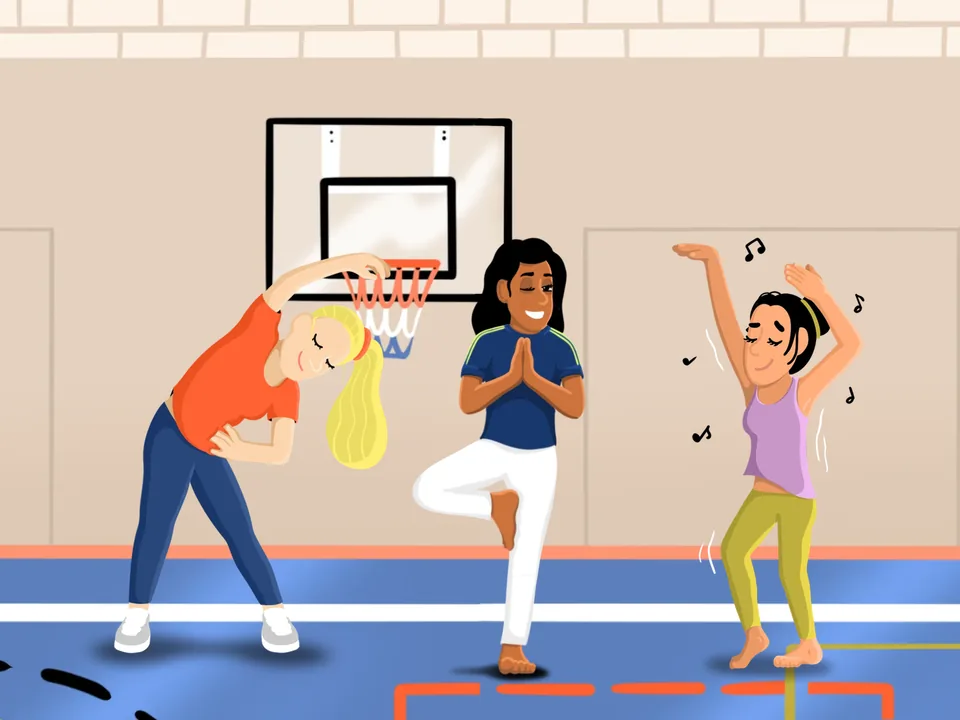
When students return from outdoor recess or a loud hallway transition with racing voices, jumping straight into a lesson rarely works.
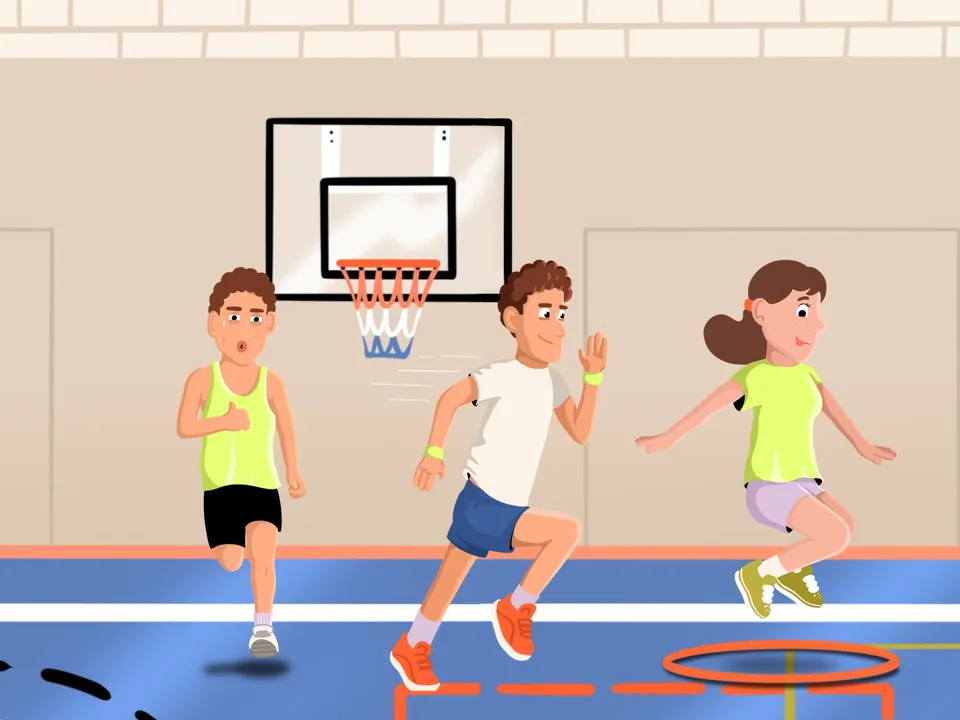
Loading a follow-along video on the projector can take longer than the movement break itself.

Outdoor PE games when the gym is closed need different planning than gym games: no walls, no painted lines and a surface you did not pick.
Open the Classroom Brain Breaks pack free, no account needed, and keep it on your phone or tablet for test week. The app for iOS & Android is a free download.
App for iPhone, iPad and Android.