PE Central & OPEN PhysEd Alternatives
Elementary specialists, secondary coaches, classroom teachers covering PE, and department chairs face different constraints when…
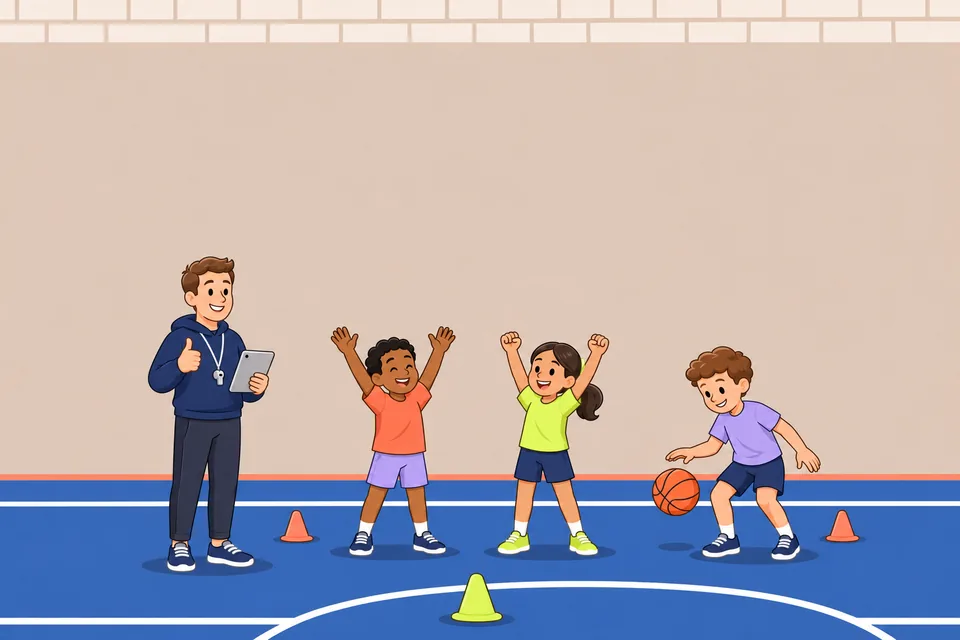
A PE lesson is ready to teach only if one page gives you the equipment list, a gym setup diagram, the rules and a safety note. The 3 free units at physedprep.com/free/ need no account; the template below turns any game you know into the same page. Classroom teachers without a PE degree can use the Elementary (K–5) lessons, which explain each game step by step.
This guide is for elementary classroom teachers, PE specialists covering an extra class and student teachers who get a gym schedule with a day's notice. It adds a fill-in lesson page, a worked example with a setup diagram and a checklist for keeping backup lessons on hand.
You have three realistic sources: people in your building, free lesson libraries and a lesson app. Judge each one by the same test: does the lesson give you an equipment list, a setup diagram, the rules and a safety note?
| Source | Works well for | Check before you rely on it |
|---|---|---|
| PE specialist or district curriculum | Lessons that match what students already know | Where the equipment is stored and when the gym is free |
| Free lesson libraries and PDFs | One lesson tonight at no cost | Format varies page to page; see how to judge free PE lesson plans |
| A lesson app with a fixed format | Many lessons laid out the same way | Whether it covers Grades K–5 and shows setup on your phone in the gym |
Free libraries cost nothing but take time to sort through. The guide to PE Central and OPEN PhysEd alternatives explains what to look for in a lesson app. A paid app costs a subscription and saves that sorting.
The PhysEdPrep app for iOS & Android has 40+ unit plans and 240+ lessons, with setup diagrams and an equipment checklist inside the lessons. The 3 free units are real units from the app and need no account, so you can test the format with your own class first. The Elementary (K–5) page lists the topics.
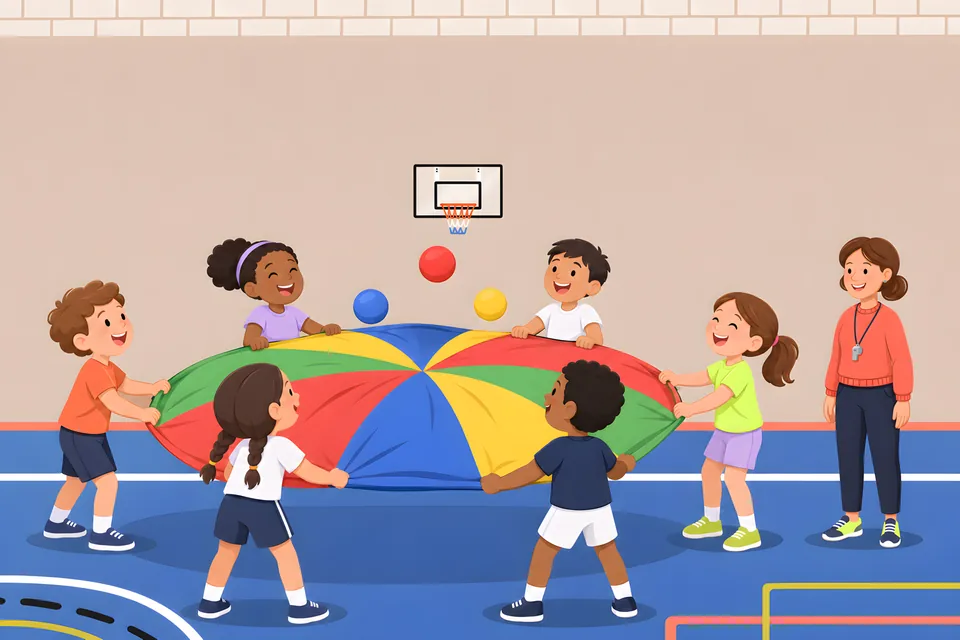
A lesson page you can teach from has nine fields, and each needs a line or two. Copy the first two columns into a document and fill in your own game; the last column shows Sharks and Minnows filled in.
| Field | What to write | Example: Sharks and Minnows |
|---|---|---|
| Grade and class size | Grade band, number of students, who needs support | Grades 2–4, about 24 students |
| Objective and standard | One movement students can show, plus the SHAPE America standard | Change direction to dodge; S1, motor skills |
| Space | Gym, field or blacktop, boundaries, surface | Open dry gym floor, run-out space behind both end lines |
| Equipment list | Each item with a count | 4 cones, 2 pinnies, 1 whistle |
| Setup diagram | Lines, cones, groups and running paths | Start line, safe line, shark zone in the middle |
| Rules and scoring | Goal, what counts, what happens after a mistake, when the round ends | Cross without a tag; tagged minnows become sharks; round ends when all have crossed or been tagged |
| Safety notes | Surface, spacing, contact rule, supervision | Gentle one-hand tag, no pushing, teacher at the edge of the area |
| Cues and signals | Two short cues, start signal, stop signal | “Eyes up, light feet”; “Swim!” starts the minnows; whistle means freeze |
| Differentiation and check | One easier and one harder version; one question for the end | Walk or gallop, or jog; “Show me how you changed direction.” |
SHAPE America's 2024 National PE Standards have four standards, S1 to S4, and replace the 2013 edition with five. The guide to aligning PE lessons with SHAPE America shows how to match a game to one.
Sharks and Minnows needs two end lines, four corner cones, two pinnies and a stop signal, and it runs on a dry gym floor or a clear, dry blacktop. Mark a start line and a safe line on opposite sides, put a cone at both ends of each line and leave run-out space behind them so no one stops against a wall. Two students in pinnies are the first sharks (a starting point for about 24 students) and stand in the middle. Everyone else is a minnow and starts behind the start line. Minnows who cross gather in the safe zone behind the safe line.
Tagged minnows turn into sharks instead of sitting out, which fits SHAPE America's recommendation of moderate-to-vigorous activity for 50 percent of class time.
Two routines carry most of a PE lesson: one stop signal and one place to line up. Choose a signal students can hear in your space, such as a whistle or a drum, and use the same one every class. Before each class, check that the floor is dry and clear, and stay where you can see the whole group. The guide to PE class routines and rules covers the first week in more detail.
| Mistake | Cause | Fix |
|---|---|---|
| Students keep running after the signal | The signal was never practiced | Run a freeze round first; restart only when everyone is still |
| The explanation drags and students drift | Too many rules at once | Teach the goal and the tag rule, demonstrate, add the rest in round two |
| Tagged students sit out | An elimination rule | Turn them into sharks or give them a role |
| Collisions at the end lines | Lines near a wall, full speed in a crowd | Move the lines in, leave run-out space, start at a walk |
| Laps or push-ups for talking | A quick way to regain attention | Pause the game and wait for quiet; SHAPE America calls exercise as punishment inappropriate |
Three finished lesson pages and one equipment bin are enough to start a backup bank. Fill in the template once for each of these:
Keep the bin stocked with cones, pinnies, a stop signal and printed copies of the three pages. The K–12 PE equipment list helps you check what your gym already has before you buy anything. After each class, add two lines to the page while you remember them: what ran well and what you would change. A substitute can teach from the same pages, and the guide to emergency PE sub plans shows what a sub needs to see. For more K–5 ideas, read Elementary PE Lesson Plans, K–5.
In many schools, yes, but who may teach PE depends on your state and district, so ask your principal or district office. Once you are cleared to teach it, a written lesson with an equipment list, rules and safety notes covers the daily work. Start with tag and cooperative games that need only cones and pinnies.
Many tag games run on cones, pinnies and a stop signal, so one bin covers a lot of lessons. Count the items on the lesson's equipment list the day before and look for substitutes then, not during class. Ball-based and station lessons need longer lists, so check the list before you commit.
They are Basketball: Shooting, Passing & Dribbling (Grades 5–7, 6 lessons), Parachute Games (from grade 1, 4 lessons) and Classroom Brain Breaks, a pack of 13 movement breaks. They need no account. In the app, tap “Try 3 Sample PE Units Free” on the login screen, or start from physedprep.com/free/.
Yes. Downloading is free, the 3 free units need no account, and the Yearly plan and the 12-month plan both start with a 7-day free trial. Monthly plans have no trial. Memberships are bought in the app, where you can see current prices. To avoid a charge, cancel before day 7 ends in the App Store or Google Play.
Change one thing at a time: how students travel, the distance between lines, the speed or the role. In Sharks and Minnows, students can walk, gallop or jog, the lines can sit closer together, and a student can give the start signal. Everyone plays the same game, and the stop signal stays the same.
Elementary specialists, secondary coaches, classroom teachers covering PE, and department chairs face different constraints when…
You inherited a half-empty gym closet, or you have one annual supply order to stretch across Grades K–12. Elementary specialists…
Open the 3 free units without an account and check the format on your own phone or tablet. For the full catalog, get the app for iOS & Android; the Yearly plan starts with a 7-day free trial, and you can see current prices in the app.
App for iPhone, iPad and Android.