Games & warm-ups
Fun Games for Every Grade, K–12
Games in PE class usually fall apart for two reasons: students spend too much time waiting, and the rules or the space don't fit the group.
Two or three of the 10 PE activities at home below add up to about 20 to 30 minutes of movement and need no gym. Four need only floor space, three use household items and three suit the whole family. Ask students to log what they did. No purchase, internet connection or camera should be required.
This list is for PE teachers and classroom teachers who must assign movement when school is closed or learning moves online. It covers what a fair assignment looks like, the rules for each activity, a safety table and a six-step packet you can build before the first storm.
The table lists all ten activities with players, time and gear, from no-gear floor games to a short walk in the snow. Two or three picks land at about 20 to 30 minutes. Older students can write their own bingo card or dice list, and the junior high PE activities guide has in-class activities for Grades 6–8.
| Activity | Players | Time | Gear |
|---|---|---|---|
| Animal Walk Hallway Relay | Solo or with a sibling | 5–10 min | None |
| Fitness Bingo Card | Solo | 10–15 min | Paper and pencil |
| Freeze Dance with Balance Cues | Solo or household | 5–10 min | Any music |
| Mirror Match | Pairs | 5 min | None |
| Balloon Keep-Up | 1–4 | 10 min | Balloon or beach ball |
| Sock Toss Target | Solo or 2 | 10 min | Socks, basket, tape |
| Living Room Obstacle Course | 1–3 | 10–15 min | Pillows, table, tape |
| Family Exercise Dice | 2–6 | 10–15 min | Two dice or paper slips |
| Movement Scavenger Hunt | 2–5 | 10 min | Light household items |
| Snow Walk Pattern Challenge | One student with an adult | 15 min | Warm clothing |
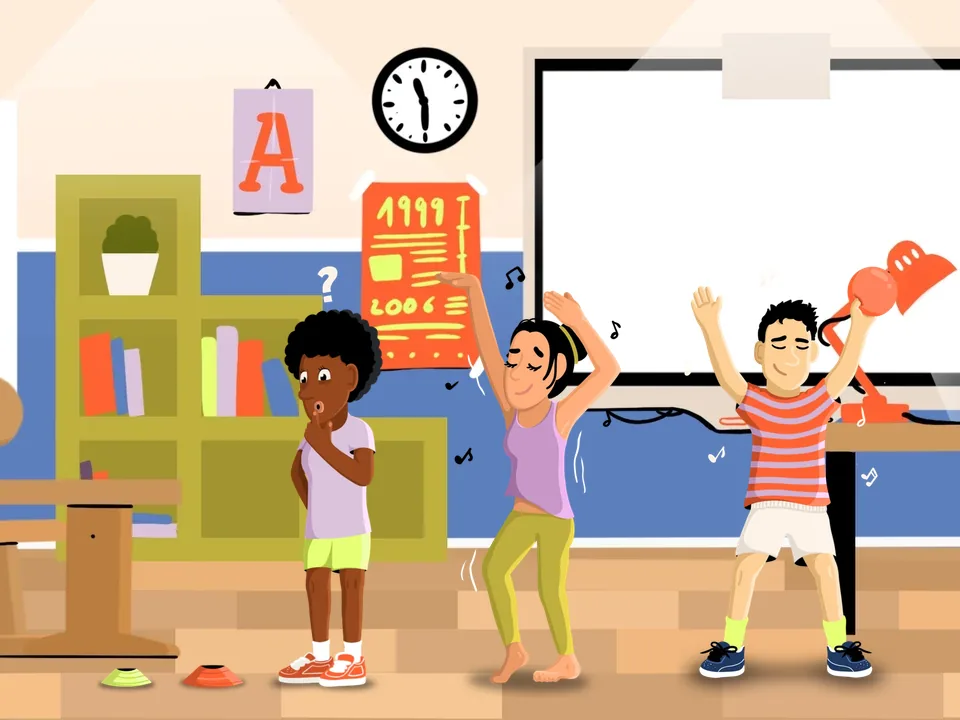
A fair at-home PE assignment asks for about 20 to 30 minutes of movement, needs nothing families must buy, and lets students choose between at least two activities.
Proof can stay light: date, activity, minutes and one sentence, initialed by an adult at home. A photo of a finished bingo card works if a family chooses to send one.
Four activities need only a clear strip of floor, such as a hallway or the gap between a couch and a wall.
Solo or with a sibling, 5–10 minutes, no gear. The student crosses the space eight times and switches animals on every crossing: bear crawl, crab walk, frog hop or bunny hop. A crossing counts when hands and feet reach the far wall without stopping, and a stop means redoing that crossing. Eight crossings end the round.
Solo, 10–15 minutes, paper and pencil. You send a 3 × 3 card of nine moves, such as 10 squats or a 20-second plank, and older students write their own card. A move gets crossed off only after it is finished. One full row, column or diagonal ends the game, and a student who wants more can fill the whole card.
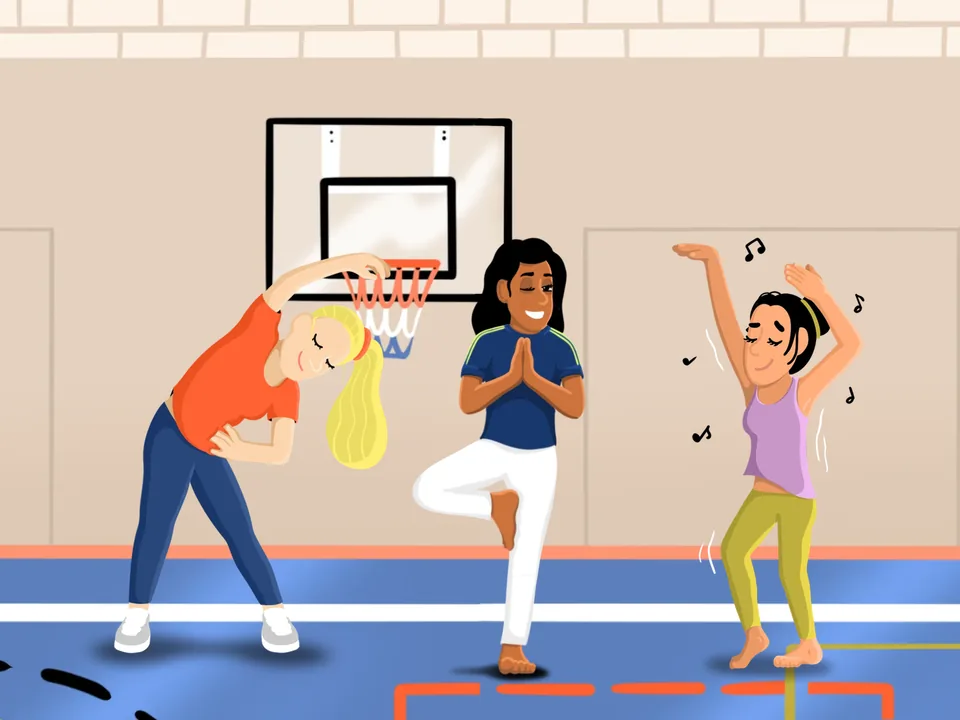
Solo or the whole household, 5–10 minutes, any music. Everyone moves while the music plays and freezes in a named balance when it stops, such as a one-foot stand. Holding the pose for a slow count of five earns a point and a wobble earns none, then the music restarts. The first player to reach five points ends the game.
Pairs, 5 minutes, no gear. One partner moves slowly through reaches, steps and balances while the other copies at the same time, and there is no score. If the copier loses the leader, both pause, face each other and restart. Partners swap roles every minute, and the game ends after five minutes.
Three activities use a balloon, socks, a laundry basket, pillows and a table, items most homes already have.
1–4 players, 10 minutes, one balloon or a lightweight beach ball. The team keeps the ball off the floor with hands only and counts touches aloud. When it lands, the count restarts at zero, and the best streak is the score. Two players can tape a line on the floor and play volleyball style across it. Skip latex if anyone at home has an allergy.
Solo or 2 players, 10 minutes, rolled socks, a laundry basket and tape. Put the basket on the floor and mark two tape lines to throw from, a near one worth 1 point per sock and a far one worth 3. A turn is ten underhand tosses, and only socks that stay in the basket score. After everyone's first turn, each player gets one more turn to beat their own total, and then the game ends.
1–3 players, 10–15 minutes, pillows, a sturdy table and tape. The path runs from the start spot over the pillows, under the table, along a tape line and to the finish spot. Players move slowly and never run, because control is the challenge. A knocked-over pillow gets set back up before play continues, and three laps end the game.
Three activities invite a parent, grandparent or older sibling, and that family member can also initial the log.
2–6 players, 10–15 minutes, two dice or numbered paper slips. List six exercises for the numbers 1–6 on the first die, and let the second die, multiplied by two, set the reps. Each player rolls on a turn and everyone does the exercise together. Anyone can swap in an easier move from the list, and each player rolling three times ends the game.
2–5 players, 10 minutes, light household items. The leader names five things to find, such as something soft, something round or something blue, plus a way to travel: hop, side shuffle or tiptoe. The hunter brings each item to a home base using that movement, and all five items finish the round. Then roles swap. Use only unbreakable items.
One student with an adult, 15 minutes, warm clothing. Go only when an adult confirms the conditions are safe and the route is a yard or cleared path away from roads and driveways. The student stamps a footprint pattern, such as two big steps, a hop and a turn, and the adult follows it exactly. A step outside a print restarts the pattern, and five patterns end the walk.
Tell families four conditions in writing: a cleared floor, bare feet or grippy shoes on dry floors, no climbing on furniture or activity on stairs, and an adult at home for younger children. The table covers five common problems and their fixes.
| Mistake | Cause | Fix |
|---|---|---|
| Slipping | Socks on hardwood or tile | Bare feet or sneakers on a dry floor, and no crab walks on slick surfaces |
| Hitting furniture | Course set up beside a coffee table | Clear a space where the student can stretch both arms out and turn around freely |
| Balloon trouble | Latex allergy, or broken pieces with young children | Use a beach ball, and let an adult pick up any pieces |
| Overdoing it | No water or rest between activities | Remind students to drink water, rest, and stop if they feel dizzy; students with a health plan follow it |
| Snow outing risks | Ice, cold and roads nearby | Adult present, dress for the weather, stay off roads and driveways, go inside if cold |
Build the packet in six steps before the first storm, so a closure needs only one message to families.
For an e-learning day with live video, plan a short follow-along warm-up and keep cameras optional. The guide to warm-ups with no equipment has no-gear warm-up games you can adapt for a follow-along, and indoor PE games adds more small-space games. A slow stretch from the cool-down activities guide gives the follow-along a calm finish. Store the packet next to your emergency PE sub plans, since both get used on short notice.
Students can walk, dance, play active games or do bodyweight moves such as squats and planks. The HHS guidelines call for 60 minutes or more of moderate-to-vigorous activity daily for ages 6–17, so a PE assignment of about 20 to 30 minutes covers only part of that. The same guidelines add muscle- and bone-strengthening activity on at least three days a week, which squats, hops and planks can cover.
Ten bodyweight exercises need no gear and fit on a clear, non-slip floor: squats, lunges, jumping jacks, high knees, plank, wall sit, glute bridge, mountain climbers, bear crawl and calf raises. Start with about 20 seconds of each, rest between moves and stop if a student feels dizzy or in pain. They also work as squares on a bingo card or entries on a dice list.
Balloon keep-up, sock toss, freeze dance with balance cues and the movement scavenger hunt are easy to play at home. They need a balloon, socks, music or a few light household items, and each one has a clear end, so a round finishes on its own.
Animal walk relays, cooperative balloon keep-up with a team goal, mirror match and freeze dance work well in PE class because they need little gear and keep every student moving when you split the class into pairs or small groups. Check for latex allergies before you use balloons. The PE games guide lists more games by grade.
Yes. Make cameras optional and let students follow along off screen, then record what they did in a paper or online log. Some students share a room or have no webcam, and a home camera shows family space, so a log is the fairer proof of participation.
A spot about as wide as the student's outstretched arms is enough for standing moves such as chair squats, wall push-ups, marching in place, one-foot balances and Mirror Match. Swap jumps for calf raises when neighbors live below, and let the student log the same minutes. Grade the log, not the size of the room.
Games in PE class usually fall apart for two reasons: students spend too much time waiting, and the rules or the space don't fit the group.
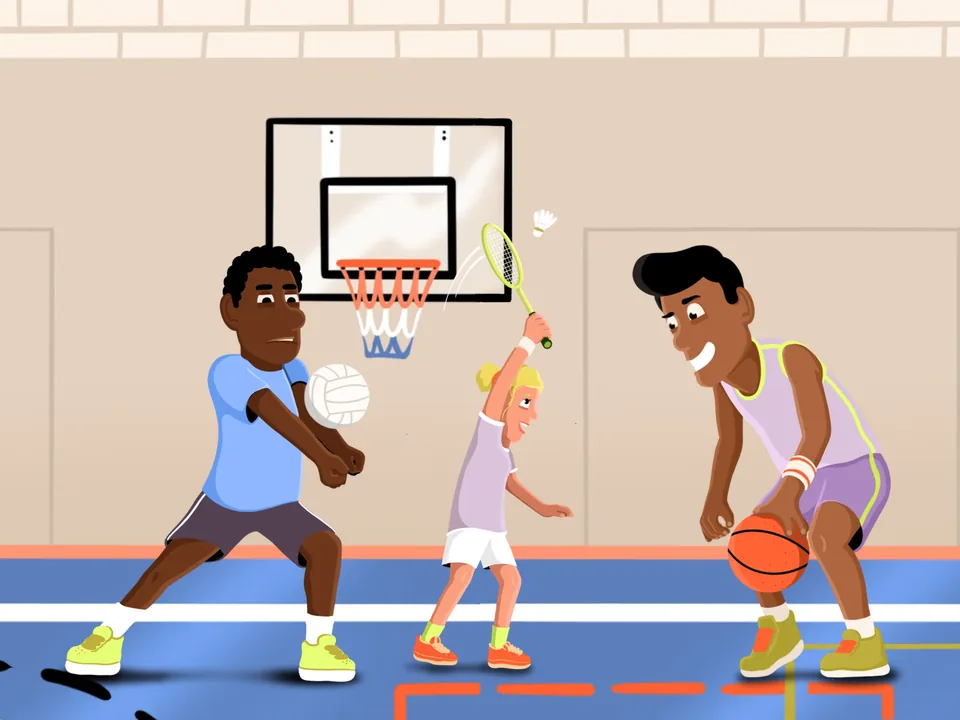
Junior high and middle school PE (Grades 6–8) means full classes, mixed ability and students who care what their peers think.
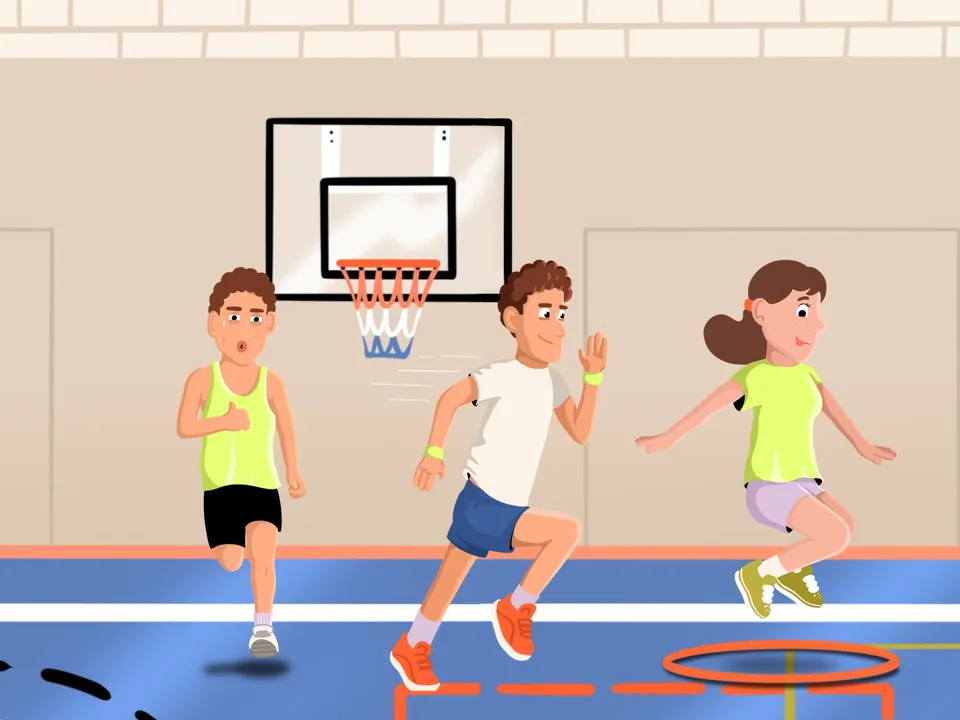
With clear floor boundaries and modified rules, you can run indoor PE activities that keep students moving safely without knocking over…
This list is for PE teachers who have a few minutes left and a gym full of sweaty, loud students.
Try 3 free units without an account, including a pack of 13 classroom brain breaks for the next indoor day, and pick the unit your class starts when school reopens. The app is free to download for iOS & Android.
App for iPhone, iPad and Android.