Cool-Down Activities for PE
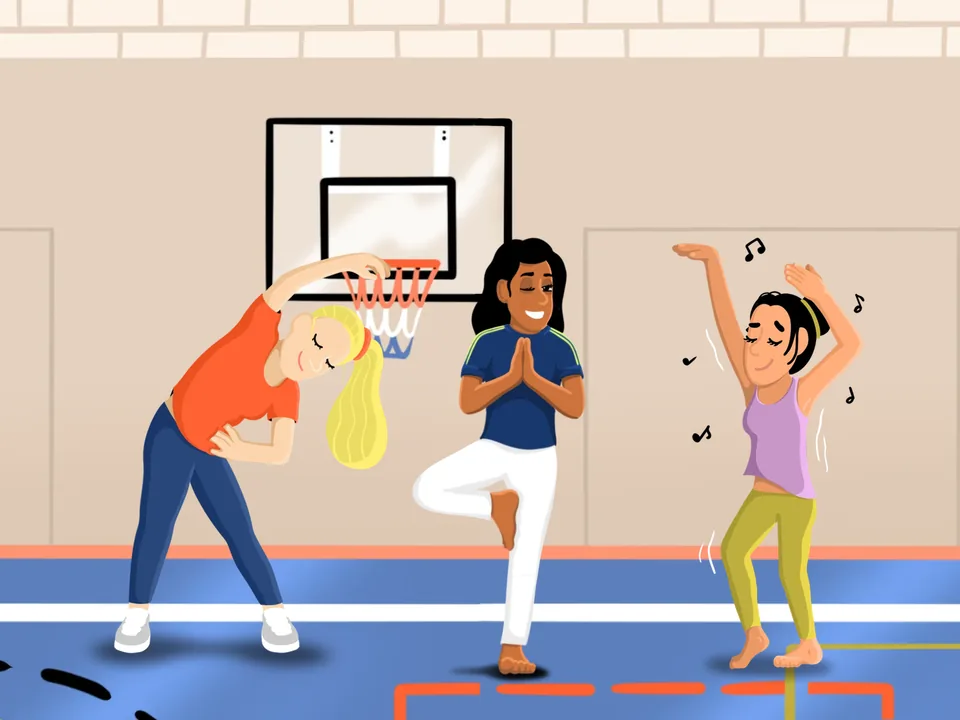
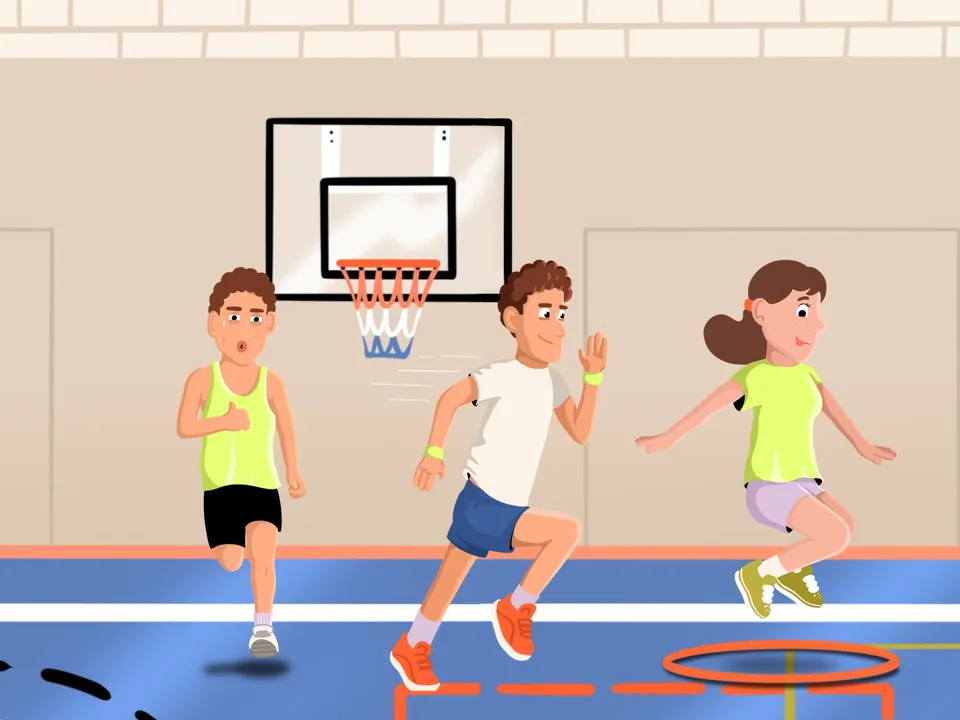
This list is for PE teachers who have a few minutes left and a gym full of sweaty, loud students.
Write each PE I can statement as one first-person sentence a student can show in a single lesson, then sort it under one of the four 2024 SHAPE America standards. Name one skill and one visible cue, such as “I can dribble with my fingertips and keep my head up while I walk.” The template adds grade span, a student check and a revisit point.
This guide is for PE specialists and classroom teachers who need I can statements for PE that students can read, say and rate. It has a fill-in template, 24 statements sorted by the four 2024 SHAPE America standards, a fix list for weak wording and a routine for posting targets in the gym.
A template needs six fields per row: standard, grade span, the statement, a success cue, a student check and a revisit point. Copy the first two columns into a document and make one copy per unit.
| Field | What to write | Filled-in example |
|---|---|---|
| Standard | S1, S2, S3 or S4 (2024 edition) | S1, develops a variety of motor skills |
| Grade span | K–2, 3–5, 6–8 or 9–12 | 3–5 |
| I can statement | One first-person sentence, one skill | I can dribble with my fingertips and keep my head up while I walk. |
| Success cue | Two or three things you can see | Fingertips on the ball, ball below the waist, eyes up |
| Student check | How a partner or the student confirms it | Dribble across the gym while a partner gives a thumb for each cue |
| Revisit | Where the target comes back | Opening round of the next three basketball classes |
Every I can statement should point back to one standard. SHAPE America's 2024 standards name four: S1 motor skills, S2 movement and fitness concepts, S3 social skills and S4 personal skills. Posters that call S3 fitness use the numbering of the 2013 edition, which had five standards. For state standards, swap the Standard column, as in the New York PE learning standards guide.
Standard 1 statements describe a movement you can watch, so each one names a single skill and the cue that shows it done well. SHAPE America words the standard as “Develops a variety of motor skills.” All 24 statements in this guide are original wording, so compare them with SHAPE America's indicators for your grade span before citing one in a curriculum review.
| Grade span | I can statement |
|---|---|
| K–2 | I can throw underhand to a partner with my opposite foot forward. |
| K–2 | I can jump and land softly on two feet with my knees bent. |
| 3–5 | I can dribble with my fingertips and keep my head up while I walk. |
| 6–8 | I can serve over the net and land 3 of my 5 serves in the court. |
| 6–8 | I can perform an eight-count dance sequence from memory, in time with the music. |
| 9–12 | I can use the skills of my chosen lifetime activity in a full game with control. |
Landing, rolling or balancing on equipment assumes mats, space between students and your supervision. Have students rate those targets only on your cue.
Standard 2 statements ask students to explain or apply an idea, so they start with verbs such as find, choose, describe or use. SHAPE America words it as “Applies knowledge related to movement and fitness concepts.”
| Grade span | I can statement |
|---|---|
| K–2 | I can move through general space without touching anyone. |
| 3–5 | I can find an open space on offense and stay between my partner and the goal on defense. |
| 3–5 | I can describe my own workout with FITT: frequency, intensity, time and type. |
| 6–8 | I can choose a tactic for an invasion game, such as spreading out to open a passing lane, and explain why it works. |
| 6–8 | I can find my pulse, count it for 15 seconds and multiply by 4 to get beats per minute. |
| 9–12 | I can design a four-week fitness plan with a goal and a way to track progress. |
Replace the generic wording with the game or activity in your unit, so the statement matches what students do that day.
Standard 3 statements name a behavior you can observe in a game or group task, such as sharing space, giving feedback or settling a rule dispute. SHAPE America words it as “Develops social skills through movement.”
| Grade span | I can statement |
|---|---|
| K–2 | I can take turns with equipment and share space with my group. |
| 3–5 | I can agree with my group on who does which job before we start. |
| 3–5 | I can use calm words to settle a disagreement about a rule. |
| 6–8 | I can give a teammate feedback that is specific and kind, and use the feedback I get. |
| 6–8 | I can accept a referee's call and keep playing by the rules when it goes against my team. |
| 9–12 | I can encourage teammates of every skill level during a game. |
Give students example wording, such as “nice try” or “good pass,” so a partner knows what to listen for.
Standard 4 statements ask students to reflect on, set goals for and choose physical activity, so the evidence is a sentence or a plan instead of a skill demonstration. SHAPE America words it as “Develops personal skills, identifies personal benefits of movement, and chooses to engage in physical activity.”
| Grade span | I can statement |
|---|---|
| K–2 | I can tell about one activity I like and how it makes my body feel. |
| K–2 | I can set a goal for today and tell my teacher if I reached it. |
| 3–5 | I can pick one activity to try outside of PE this week and report how it went. |
| 6–8 | I can name one thing that keeps me from being active and one way to get around it. |
| 6–8 | I can set a goal that fits my own ability and track my progress toward it. |
| 9–12 | I can list what I need to stay active after high school, such as time, a place, people and cost. |
Use an exit slip or a short journal line for these targets, because no partner can confirm a personal answer by watching. Students decide what to share aloud.
Write each statement as one observable action plus one cue, so a student or partner can answer yes or no after watching one attempt. Students rate themselves with the same three words every class: Not yet, Almost, Got it.
| Weak statement | Why it fails | Rewrite |
|---|---|---|
| I can understand dribbling. | “Understand” cannot be seen. | I can dribble with my fingertips and keep my head up while I walk. |
| I can play basketball. | Too big for one lesson. | I can pivot without moving my pivot foot. |
| I can be a good sport. | No cue to look for. | I can say “good game” to every opponent after the final whistle. |
| I can throw correctly. | “Correctly” names no cue. | I can throw overhand with my opposite foot forward and finish with my hand pointing at the target. |
| I can pass to a partner. | One level for the whole class. | I can pass to a standing partner. Next step: I can pass to a moving partner. |
In mixed-ability classes, write two or three steps of one skill and let students choose where to start; the guide to an adaptive PE curriculum goes further. Before you grade against a target, make sure the check matches it, and see the guide on PE assessment.
Post one target at student eye level where the class lines up, read it aloud at the start and rate it again at the exit. A short routine keeps students moving. SHAPE America recommends moderate-to-vigorous physical activity for 50 percent of PE class time (SHAPE America position statement, 2017), so keep reading and rating the target under a minute.
For K–2, add a picture of the skill and say the sentence together. The exit rating fits at the end of your PE cool-down, while students are already standing still. Keep a running list of the unit's targets, so you can bring an older one back in a later warm-up. To tie each target to a lesson, see PE lesson plans and the SHAPE standards and aligning lessons with SHAPE America.
Nearly. An I can statement is the student version of the teacher's learning objective. The objective “Students will dribble with their fingertips while walking” becomes “I can dribble with my fingertips and keep my head up while I walk.” Keep the skill and the cue, and change the voice.
Post one main target per class. Add a second only when the lesson has a separate social or personal goal, for example one S1 statement and one S3 statement. One target keeps the rating quick, so students spend most of class moving.
Yes. Keep the six template fields and put your state's standard code in the Standard column. The statement, the cue and the student check stay the same because they describe what students do in class.
Those posters use the numbering of the 2013 edition, where S3 was health-enhancing fitness and S4 was responsible personal and social behavior. In the 2024 edition, fitness knowledge sits under S2 and social skills under S3. The statements still work; relabel the Standard field to match the edition your district uses.
No. Treat the Not yet, Almost and Got it rating as feedback that tells you and the student where to practice next. If a target counts toward a grade, score it with a check that matches the target, such as a skills checklist you fill in while you watch one attempt per student.
A learning target says what students will learn, and success criteria say how they will know they got there. In the template, the I can statement is the target and the success cue is the success criteria, for example fingertips on the ball, ball below the waist, eyes up. Students rate themselves against those cues, not against the sentence.
This list is for PE teachers who have a few minutes left and a gym full of sweaty, loud students.
Good SHAPE America national standards PE lesson plans start with a clear objective taken from the four standards (S1–S4) and the…
Get the app for iOS & Android and open the 3 free units without an account to see how a unit builds lesson by lesson. Yearly plans start with a 7-day free trial; see current prices in the app.
App for iPhone, iPad and Android.