Games & warm-ups
PE Warm-Ups With Little or No Equipment
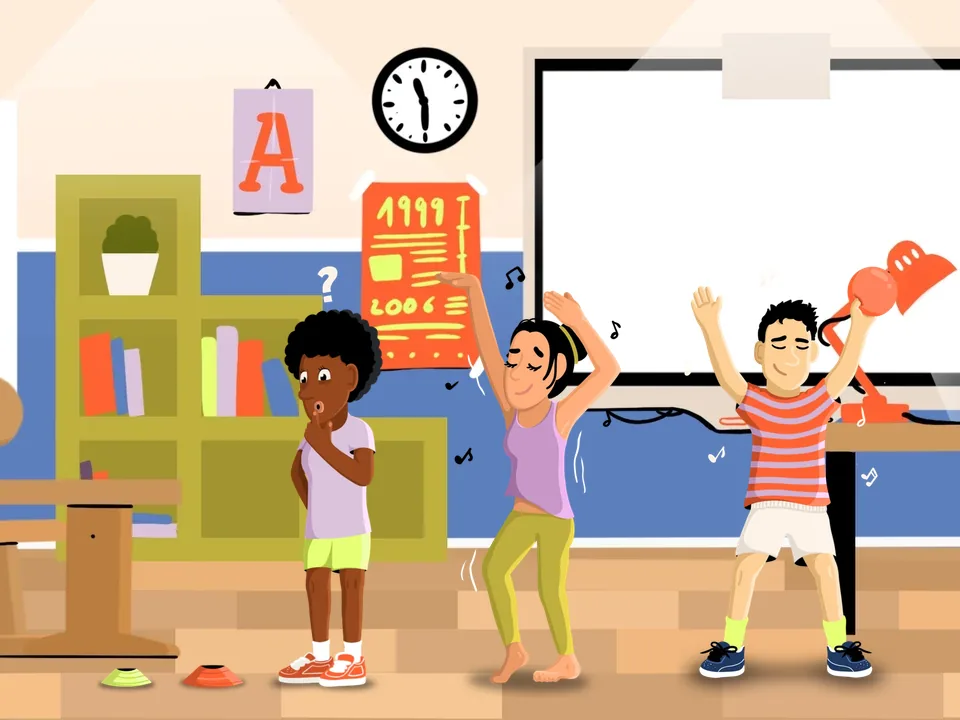
Students who start moving within a minute of walking in lose less class time to roll call and equipment setup.
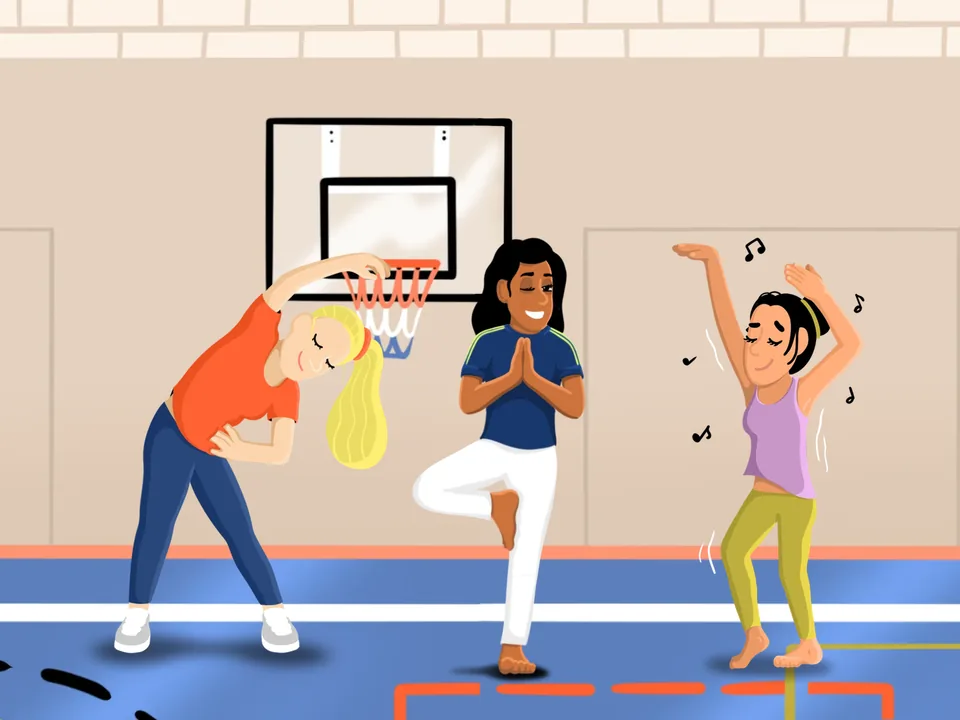
Pick two or three calm activities with little or no gear: a slow walk, static stretches held about 20 seconds, then one closing question. A cool-down is the low-intensity end of a lesson that slows breathing and heart rate and closes the class. When the class is still loud, add a calm game where nobody is eliminated and nobody runs.
This list is for PE teachers who have a few minutes left and a gym full of sweaty, loud students. Every entry gives grades, time, space and rules, so you can run it without prep. You also get a stretch menu, closure questions, a table of common mistakes and a way to hand a calm line to the classroom teacher.
Pick by grade, space and time left: each activity below takes 1 to 3 minutes, so two or three of them fit the end of class. Keep it short, because SHAPE America recommends moderate to vigorous activity for 50 percent of PE class time, and a long cool-down leaves less room for that share. For the other end of class, see PE warm-ups with little or no equipment, and for the active middle, these PE games for every grade.
| Activity | Grades | Time | Space and gear |
|---|---|---|---|
| Victory Lap Walk | K–12 | 2 min | Gym wall or field edge, no gear |
| Pulse Check | 3–12 | 2 min | Open floor, a timer |
| Belly Breathing | K–8 | 1 min | Own floor spot, no gear |
| Student-Led Stretch Circle | 2–12 | 3 min | Circle on the floor |
| Cat-Cow and Child's Pose | 3–12 | 2 min | Mats or clean, dry floor |
| Mirror Stretch | 1–8 | 2 min | Partners, open floor |
| Balance Statues | K–5 | 2 min | Open floor, no gear |
| Silent Ball | 2–8 | 3 min | Floor circle, one foam ball |
| Slow-Motion Replay | 3–12 | 2 min | Open floor, no gear |
| Question Line | K–12 | 2 min | A line spot near the door |
The floor-based entries (Belly Breathing, Cat-Cow and Child's Pose, Mirror Stretch, Silent Ball) also work in a cleared classroom. More indoor ideas are in these rainy day indoor PE games.
Slow movement first and breathing second bring heart rate down without a sudden stop. These three take 1 to 2 minutes each and need no gear. More quiet routines are in these calm brain breaks.
Students walk one slow lap around the gym wall or the field edge, arms swinging, no passing and no racing. Walk at the back to set the pace, and keep everyone at least an arm's length apart. The activity ends when the last student crosses the start line. On hot days, run it in shade after a water break.
Right after the hardest part of class, students find their pulse with two fingers on the wrist, count beats for 15 seconds while you time it, and multiply by 4. They repeat the count after the cool-down and compare the two numbers. If they use the side of the neck, they press lightly on one side only and switch to the wrist if they cannot find the pulse.
Students sit or lie on their own floor spot with one hand on the belly. They breathe in through the nose for a slow count of four, feel the hand rise, then breathe out through the mouth for four, for five or six breaths. A student who feels dizzy goes back to normal breathing.
Static stretches held about 20 seconds fit a cool-down, and students can lead them from a posted menu. In an eight-week trial with 237 primary schoolchildren, 4 minutes of hamstring stretching at the end of PE, twice a week, was the only timing that improved sit-and-reach scores significantly; each stretch was held 20 seconds.
The menu has ten moves: seated hamstring reach, butterfly, standing quad stretch, calf stretch against a wall, cross-body shoulder stretch, overhead triceps stretch, kneeling hip flexor stretch, seated spinal twist, cat-cow and child's pose. Students ease in until they feel a mild pull, never pain, and never bounce. Kneeling moves go on mats.
The class forms a circle with an arm span between neighbors. One student picks a move from the menu and shows it, and everyone holds it for a 20-second count said out loud together. The leader taps the next student, and the circle ends after three leaders.
On hands and knees on mats or a clean, dry floor, students round the back while breathing out and arch gently while breathing in, for six slow rounds. Then they sit back into child's pose for three slow breaths. More floor routines are in these yoga brain breaks.
Partners face each other an arm span apart. One leads a slow stretch from the menu, the other mirrors it with no touching or pulling, and they swap on your signal. The activity ends when each partner has led twice.
Calm games work when nobody can be eliminated and nobody runs, so use slow movement or one shared goal. Each of these three takes 2 to 3 minutes.
Students walk slowly around the open floor without touching anyone. On “freeze,” they balance on one foot with arms out and hold for a count of five, then walk again on “go.” Each freeze uses the other foot. Nobody is out: a student who wobbles simply starts the next freeze fresh, and the game ends after four freezes.
The class sits in a circle on the floor with one soft foam ball. Students roll or toss underhand, below chest height, to a classmate across the circle, with no talking. The goal is 15 clean passes in a row. A drop or a spoken word resets the count to zero, and play restarts with the student holding the ball. The game ends at 15 passes or when the 3 minutes are up.
Students replay one skill from the lesson at quarter speed, such as a dribble, a throw or a serve motion, without a ball or holding it still. Call one check point per replay, like “feet” or “follow-through.” There is no score, and it ends after three replays.
Ask one question tied to the day's objective while students are still catching their breath, and get an answer from every student before they leave. Keep questions short enough for a one-sentence answer:
Mark one spot near the door as the line. Students answer the closure question quietly to you or a partner, then step into the line, and the activity ends when the last student has answered. The classroom teacher at the door receives a quiet line, and you have heard one answer from every student. More on this is in the guide to classroom management in a loud gym.
Skipping the cool-down because the main activity ran long is the mistake to fix first. Here are five problems, each with a fix.
| Mistake | Cause | Fix |
|---|---|---|
| Cool-down gets cut | The main activity runs long | Run the main activity on the Countdown Timer, one of the six Gym Tools, so the whistle at the end tells you when to start the cool-down. |
| Laps as a consequence | Used to manage behavior | Keep the walk neutral; SHAPE America says exercise should not be used as punishment. |
| Bouncing in stretches | Students rush or get bored | Count 20 seconds out loud together and ease in to a mild pull. |
| Cool-down turns into tag | Energy is still high | Use a calm game with no elimination and no running, like Balance Statues. |
| Class arrives loud at the door | No closing routine | Run Question Line and hand over a quiet line. |
Start with a light jog or skipping lap, then dynamic moves such as arm circles, leg swings and high knees, then a simple tag game that raises heart rate step by step. Save long static holds for the cool-down. Most of these need no equipment and run in any gym or field space.
Tag games, relays, station circuits, jump rope and interval rounds are common exercise activities because they raise heart rate fast. Use them in the main part of class. For the last minutes, switch to the walking, stretching and calm games above so heart rate comes down before students leave.
Ten that fit a PE class: seated hamstring reach, butterfly, standing quad stretch, calf stretch against a wall, cross-body shoulder stretch, overhead triceps stretch, kneeling hip flexor stretch, seated spinal twist, cat-cow and child's pose. Hold each about 20 seconds with a mild pull, never pain, and no bouncing.
Offer seated versions: belly breathing, cross-body shoulder stretch, overhead triceps stretch, seated spinal twist and Mirror Stretch can all be done from a chair or wheelchair, depending on the student's range of motion. Ask the student which version they prefer and follow their IEP or 504 plan. An adapted PE teacher can advise on individual needs.
Plan about 5 minutes for the cool-down: two or three of the activities above, each taking 1 to 3 minutes. Use the shorter end after a light lesson. Use the longer end after sprints, tag games or hot weather, when breathing and heart rate need more time to come down before students line up.
Students who start moving within a minute of walking in lose less class time to roll call and equipment setup.
When students return from outdoor recess or a loud hallway transition with racing voices, jumping straight into a lesson rarely works.
Small classrooms and long stretches of sitting call for yoga breaks that need no mats and no extra floor space.
With clear floor boundaries and modified rules, you can run indoor PE activities that keep students moving safely without knocking over…
Get the app for iOS & Android and open the 3 free units without an account. Yearly plans start with a 7-day free trial that includes all 6 gym tools, such as the Countdown Timer; see current prices in the app.
App for iPhone, iPad and Android.