Black History Month PE Activities
These activities are for PE teachers planning February, from kindergarten freeze dance to high school tournaments.
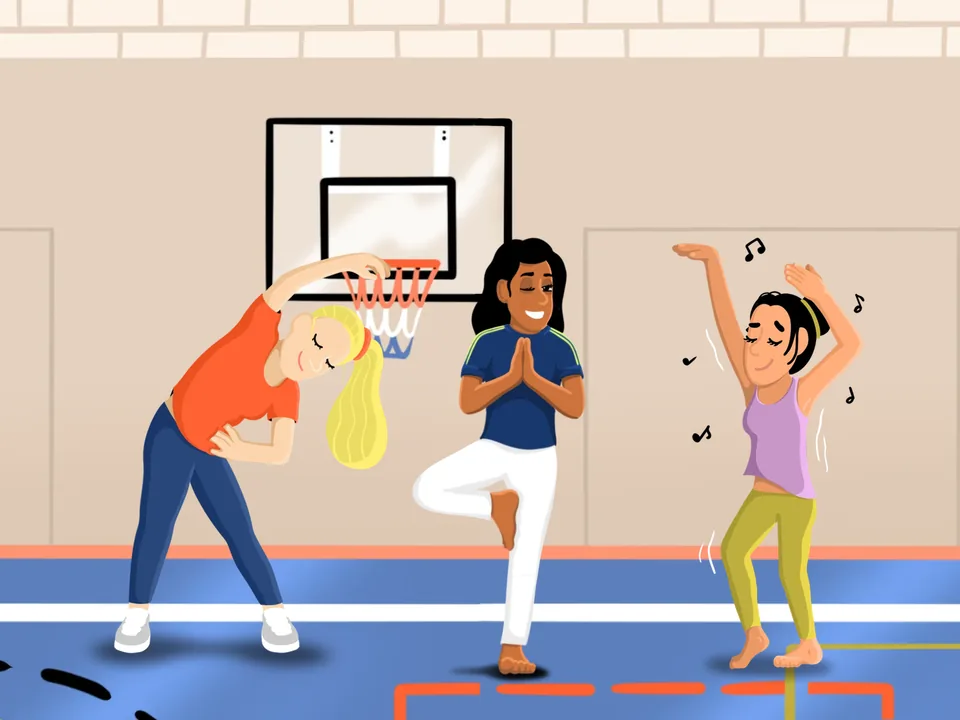
Nine MLK Day PE activities cover grades K–12 without eliminating a single player. Three are cooperative games, three are fair play challenges with rules to judge or change, and three connect movement to hopes, goals and service. Teach your picks the week before Monday, January 18, 2027, or in the days after, and close with one reflection question.
These Martin Luther King Day PE games are for specialists and classroom teachers planning around the January holiday. Rules and safety notes come with each activity. Cool-down questions are sorted by grade band, and the last section shows how to keep a civil rights theme from feeling forced or hurtful.
Pick by grade range, group size and gear: the table lists all three for each activity.
| Activity | Grades | Group | Gear |
|---|---|---|---|
| Helping Hands Beanbag Walk | K–3 | Whole class | Beanbags |
| Everyone Hits Keep-Up | 2–12 | 6–8 | Beach ball |
| Towel Team Catch | 3–12 | 6–8, in pairs | Towels, foam ball |
| Rule Council Soccer | 4–12 | 3v3 or 4v4 | Soft ball, cones |
| Choose-Your-Line Toss | K–8 | 4–6 | Beanbags, hoop, tape |
| All-In End Zone | 3–12 | 4v4 or 5v5 | Foam ball, cones |
| Dream Delivery Relay | K–5 | 4–5 | Cards, pencils, hoops |
| Goal Ladder | 3–12 | Pairs | Jump rope or ball |
| Service Role Circuit | 4–12 | 4 | Cones, soft balls, beanbags |
Live play asks students to cooperate and settle disagreements, and Standard 3 in SHAPE America's 2024 National PE Standards reads "Develops social skills through movement." MLK Day falls on the third Monday in January, and many schools close. Teach the theme the week before (Friday, January 15, 2027, is King's birthday) or just after. A 1994 federal law also made the holiday a national day of service, which connects well to helping roles in class.
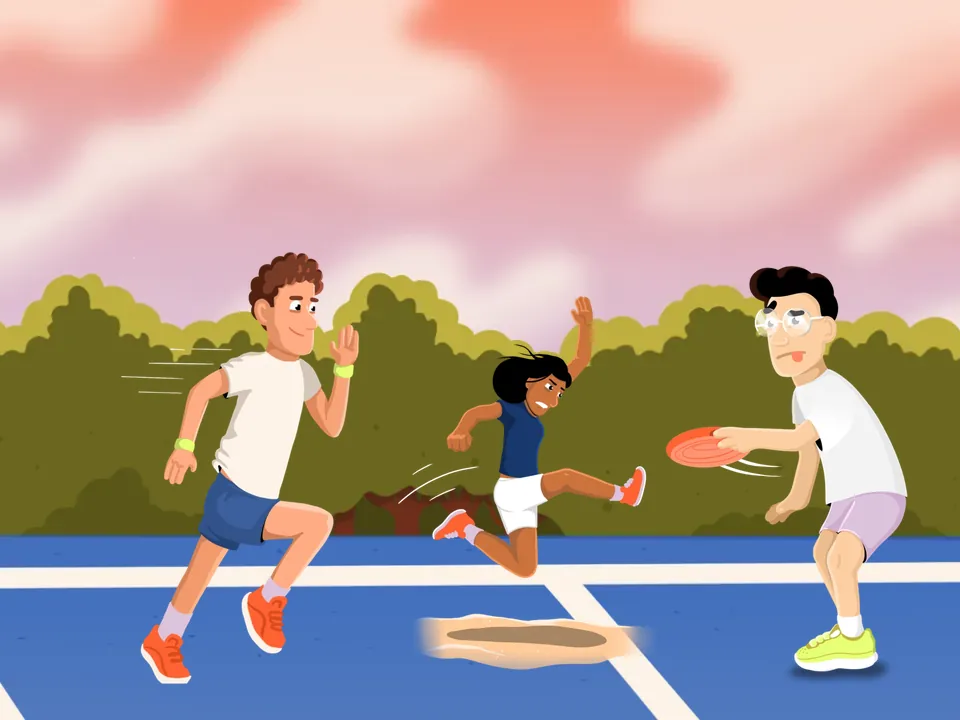
All three cooperative games score what classmates manage together, which gives you a concrete way to talk about community.
Grades K–3, whole class, one beanbag each. With a beanbag on their head, students walk (or use their wheelchairs) inside the boundaries and try to keep the class moving. No gripping the bag. If it falls, its owner freezes until a classmate picks it up and returns it without dropping their own. A helper who drops theirs freezes too. Each rescue scores a class point. Rounds last about two minutes, with an early restart if everyone freezes. Keep a walking pace, away from walls. Students who need another spot can carry it on a shoulder or the back of a hand.
Grades 2–12, groups of 6–8, one beach ball per group. Every player must hit the ball once before anyone hits it twice, and each completed cycle scores a point. A floor touch or an early second hit restarts the current cycle with a gentle toss, while earlier points stay. After about three minutes, groups try to beat their score in a second round. Space circles several steps apart. With older students, allow only volleyball passes.
Grades 3–12, three or four pairs per group, one towel per pair and one foam ball. Partners hold opposite ends of their towel and use it to catch the ball and launch it to another pair. Each clean catch adds one to the streak, and every pair receives once before any pair gets a second turn. A drop or early repeat resets the streak, and the nearest pair restarts. Stop at 10 or after about three minutes; the longest streak is the score. Leave wide gaps between groups.
Students test what fair means by changing a soccer rule, choosing a throwing line and voting on a passing rule.
Grades 4–12, 3v3 or 4v4, a soft ball and cone goals. Play three rounds of about three minutes on small, separated fields, with kicks below knee height and no slide tackles. A goal scores a point and the other team restarts at midfield. After a foul or a ball out, opponents pass in from that spot. Between rounds, the trailing team (coin toss if tied) proposes one change, such as wider goals. It applies if most players on each team vote yes. Safety rules never go to a vote, and the higher total after round three wins. At the end, ask who gained from the changes.
Grades K–8, groups of 4–6, three beanbags per student. Tape a 6-foot line, a 9-foot line and a 12-foot line from a floor hoop, all closer for kindergartners. One at a time, students throw underhand, from the 9-foot line in round one and from a line they pick in round two. A foot over the line voids the throw. The round ends when all have thrown. Count one team point for each bag lying fully inside the hoop, then let students collect the bags. Compare the two scores and ask which round felt fair, without commenting on anyone's choice.
Grades 3–12, 4v4 or 5v5, one foam ball. Mark end zones well short of the walls. Start with a pass from one end zone. A team earns a point for a catch in the end zone it attacks, but only if every teammate has touched the ball during that possession. Nobody runs with it, and defenders give the passer an arm's length with no contact. After a drop, interception or pass out of bounds, the other team takes over at that spot or the nearest sideline. The team scored on restarts from that end zone. The round ends after about five minutes, and the higher score wins. Teams then vote on the all-touch rule and say why. Drop it for a second round only if most players on each team want that.
Students deliver a hope on a card, chase a personal target and take turns in helping jobs.
Grades K–5, teams of 4–5, one card per student. Mention King's 1963 "I Have a Dream" speech, then have everyone write or draw a hope for the class, such as "invite someone new to play." One at a time, players skip to a team hoop about 10 yards away, drop in their card, skip back and tag the next teammate. Anyone who runs repeats the turn, and a dropped card is picked up right away and carried on. There is no race: the relay ends when every card is delivered, and the class counts them. Keep lanes wide.
Grades 3–12, pairs, a jump rope or a ball and wall. One partner picks rope jumps or wall passes and makes a first try while the other counts. The performer sets a target a few reps higher and gets three more tries, with one specific tip between them. Every try, including the first, ends at a miss or after about 30 seconds, and the next count starts at zero. The score is the best count compared with the student's first number. Partners then swap, and the game ends when both have finished. Allow room to swing or throw. A PE goal setting sheet can hold the numbers.
Grades 4–12, groups of 4, four stations. Set up soft-ball wall passes, line hops, beanbag tosses and cone shuttles, and add duplicate stations if you have more than four groups. Keep shuttle lanes clear of walls. One student performs for about 30 seconds while the others count, reset gear and encourage; then roles rotate. Each completed rep adds a point to the group total, and a miss doesn't count. Once all four have performed, the group moves on. After the fourth station, groups total their points and name the helping role that was hardest to do well.
One question is enough for the cool-down: ask it during a slow walk or stretch, let pairs talk first and allow anyone to pass.
Middle and high school classes can also work with the third of The King Center's six principles of nonviolence: "Nonviolence Seeks to Defeat Injustice, or Evil, Not People." Post it, then ask students what it looks like during a disputed call. For walk and stretch options, see these cool-down activities for PE class.
Share facts you can source, and never ask students to act out segregation or violence. The Anti-Defamation League's guidance on simulation activities advises against using them to teach historical atrocities because they trivialize victims' experiences and can upset students. Apply that caution here: don't hand one pinny color worse rules to imitate discrimination, and don't stage marches with police roles.
Keep the basics accurate: King was born in Atlanta on January 15, 1929. Check each quote against an archive before it goes on the wall. Put questions to the whole class so no student has to speak for a racial group. Leave out elimination games such as dodgeball, which send players to the sideline.
| Typical mistake | Cause | Fix |
|---|---|---|
| Long talk, little movement | Covering a whole biography | Give one or two facts before each game |
| Theme feels tacked on | No question after play | End with one specific cool-down question |
| Rule votes turn into arguments | No decision rule | Explain the majority rule before round one |
| A student is left over | Uneven numbers | Add a rotating substitute or counter role |
About two or three fit into a class of roughly 45 minutes, including warm-up and cool-down. Rule Council Soccer takes longer because of its three rounds and votes, so pair it with one shorter game. Plan one or two for a 30-minute class.
Choose-Your-Line Toss works best, since students stay in place and throw underhand. Shorten the distances to fit the room. Goal Ladder also fits if pairs switch to counting a one-foot balance in seconds, well clear of desks. Save soccer and the end zone game for open floor.
Adjust the equipment, distance or role so the student still affects the result. A beanbag can ride on a lap, a slow-moving beach ball gives more reaction time, and the toss line can move closer. Ask the student what works and follow any accommodations on file.
These activities are for PE teachers planning February, from kindergarten freeze dance to high school tournaments.
These social emotional learning games and activities are for K–12 PE teachers and classroom teachers who lead PE and want practice that…
For PE specialists and classroom teachers with a mixed-ability class and little planning time.
This guide is for PE specialists, secondary PE teachers, and classroom teachers who teach mixed-ability classes in Grades K–12. Beyond the…
Get the PhysEdPrep app for iOS & Android and try 3 free units without an account. Yearly and 12-month plans start with a 7-day free trial; see current prices in the app.
App for iPhone, iPad and Android.