Games & warm-ups
Bean Bag Games for PE
This list is for PE specialists and classroom teachers who run bean bag toss games for kids in Grades K–5, with a few options for Grades…
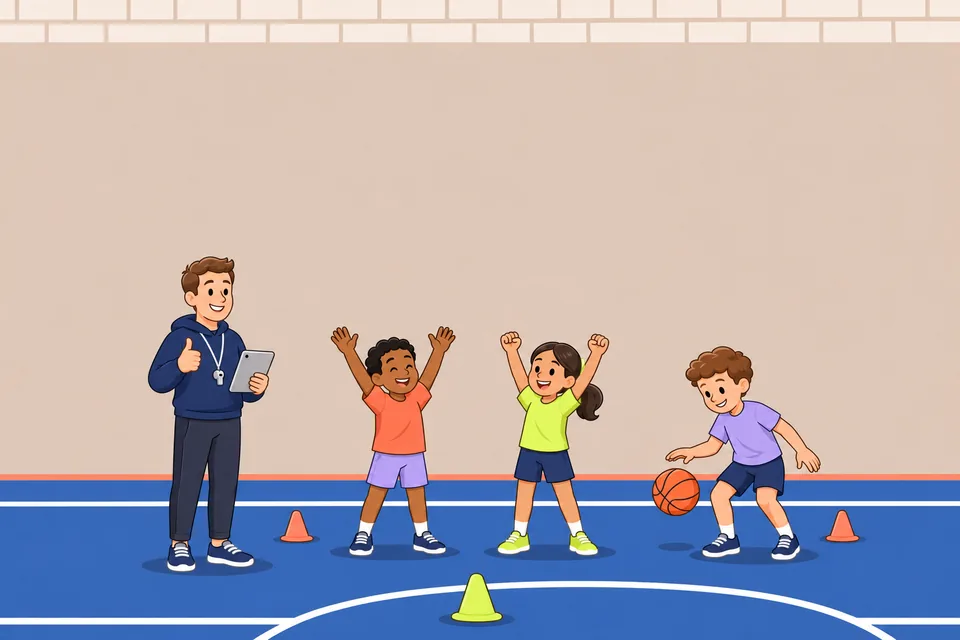
Teaching sportsmanship in PE can start with 8 short routines and games that take 1 to 10 minutes across Grades K–12. Pair brief pre-game handshakes, mistake cues, and a 10-second sideline dispute rule with fast-rotating games that reward honest calls. Students practice handling wins and losses in low-stakes rounds before keeping full tournament scores.
Disputed line calls and lopsided scores show up in any gym once a game turns competitive. This guide is for PE specialists, secondary PE teachers, and classroom teachers who teach mixed-ability classes in Grades K–12. Beyond the routines, you get a sideline dispute layout, rules for when to keep score, a mistakes table, and a three-level observation checklist.
Good sportsmanship in a gym shows up as observable actions: shaking hands, calling your own line faults, encouraging teammates after misses, and resetting play within seconds of a whistle. Vague reminders to "be a good sport" rarely stick because students need concrete cues practiced under movement pressure. Building sportsmanship lessons for PE on cooperative games for PE helps classes move from shared challenges into scored play.
Expectations can scale across Grades K–12. In Grades K–1, students practice taking turns, tagging gently, and clapping for peers. In Grades 2–5, learners call their own boundary faults and use recovery phrases after turnovers. By Grades 6–12, students self-officiate multi-court games and thank opponents without sarcasm. All 8 routines and games below build those habits in 1 to 10 minutes.
| Activity or Routine | Grades and Group Size | Where It Fits | Equipment |
|---|---|---|---|
| Captain Circle Handshake | Grades K–12, 8–32 students | Before the game | 4 boundary cones |
| Two-Clap Mistake Reset | Grades K–8, 6–30 students | After a mistake | None |
| 10-Second Rock-Paper-Scissors Booth | Grades 2–12, 4–36 students | During a dispute | 2 sideline cones |
| Talking Ball Shout-Out | Grades K–12, 10–32 students | After the game | 1 talking ball |
| Honest Call Four Square | Grades 3–8, 4–6 students per court | Main game | 1 rubber playground ball per court |
| Compliment Catch Bean Bag Relay | Grades K–5, 4–5 students per lane | Main game | 12 bean bags, 2 hula hoops per lane |
| Mercy-Switch Cone Knockdown | Grades 4–12, 8–12 students per court | Main game | 6 tall cones, 3 foam balls per court |
| Next-Point Sideline Rotation | Grades 6–12, 9–15 students per court | Main game | 1 foam ball, 6 pinnies |
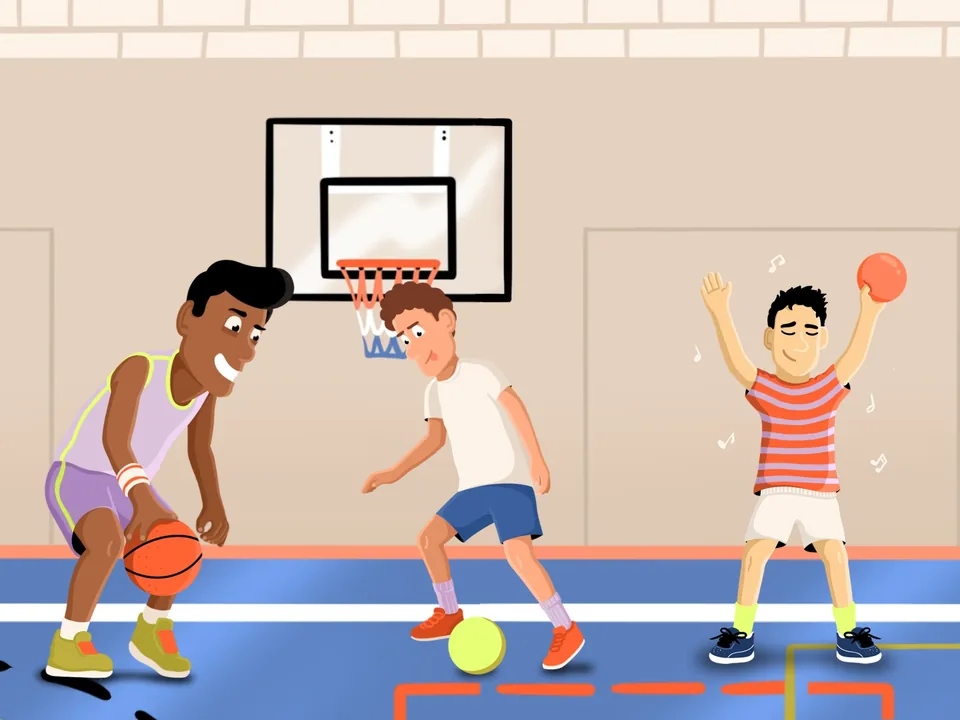
Four short routines cover the start of a game, mistakes, disputes, and the end of a game, and each takes 1 to 3 minutes. Pairing them with fair ways to pick teams without captains cuts down on roster complaints before play starts.
Run with Grades K–12 in groups of 8–32 students for 1 minute using 4 boundary cones.
Run with Grades K–8 in groups of 6–30 students for 2 minutes with no equipment.
Run with Grades 2–12 in groups of 4–36 students for 2 minutes using 2 sideline cones.
Run with Grades K–12 in groups of 10–32 students for 3 minutes using 1 talking ball.
Fast-resetting games let students experience trailing, leading, and losing in 6 to 10 minutes while practicing composure.
Run with Grades 3–8 at 4–6 students per court for 8 minutes using 1 rubber playground ball per court, spaced about 6 feet from walls under supervision.
Run with Grades K–5 at 4–5 students per lane for 6 minutes using 12 bean bags and 2 hula hoops per lane spaced about 6 feet apart on a clear floor; pick up stray bags between rounds so nobody slips.
Run with Grades 4–12 at 8–12 students per court for 10 minutes using 6 tall cones and 3 foam balls per court on a supervised flat floor.
Run with Grades 6–12 at 9–15 students per court for 10 minutes using 1 foam ball and 6 pinnies on an obstacle-free half-court under supervision.
Self-officiating works in Grades 2–12 when students follow a fixed three-step sequence instead of stopping the game to argue with the teacher. Moving disagreements off the playing surface keeps more of the class active, which supports SHAPE America's recommendation of moderate to vigorous activity for 50 percent of class time.
Self-scored activities such as a bowling unit for PE rehearse the same honest-call habit at a slower pace.
Keep the Sideline Dispute Booth and Waiting Team Mat about 5 feet outside the boundary lines on a dry, clear floor so sprinting players stay clear of waiting peers.
Skip a posted scoreboard when classes are learning a new skill, facing wide skill gaps, or working in Grades K–2, where a lane counting its own bags is plenty. Introduce visible scores around Grade 3 once students complete passes under light pressure, and reset the scoreboard to zero every 3 minutes inside longer scrimmages. Dual scoring, giving 1 point for winning a short round and 1 point for zero argued calls, rewards composure alongside effort.
Even strong sportsmanship activities for kids break down when consequences accidentally fuel resentment. SHAPE America's 2021 position statement against exercise as punishment calls exercise as punishment (laps or push-ups for poor behavior, for example) inappropriate, along with withholding PE as a consequence. Fix common breakdowns structurally instead.
| Common Mistake | Why It Backfires | Practical Gym Fix |
|---|---|---|
| Running 20-minute single games | Trailing teams quit or blame peers when gaps grow | Reset the scoreboard to zero every 3 minutes |
| Assigning laps for arguing calls | Ties fitness to punishment and builds resentment | Offer a 90-second sideline breather, then rejoin with a check pass |
| Letting captains pick teams publicly | Creates social embarrassment and lopsided squads | Randomize or balance teams privately before class |
| Eliminating tagged players permanently | Leaves frustrated students idle on the sidelines | Use a short skill task at a cone, such as three partner passes, for instant re-entry |
Assess sportsmanship with a three-level observation checklist during live play rather than grading personality. Watch one group of six to eight students per class for three visible habits: shaking hands without prompting, using the 10-second sideline dispute rule, and encouraging teammates after turnovers. Logging those habits in the Heart domain of a Head, Heart, Hands PE assessment keeps fair play in the same record as the other two domains.
| Habit | 1 Beginning | 2 Developing | 3 Consistent |
|---|---|---|---|
| Handshake or non-contact cue after a game | Only with a teacher prompt | Joins on their own, no eye contact or comment | Starts it unprompted and names one specific play |
| Settling a disputed call | Argues or appeals to the teacher | Uses the 10-second booth after a reminder | Walks to the booth and restarts play within 10 seconds |
| Response to a teammate's turnover | Groans or blames | Stays quiet | Gives two claps and says "Next play" within three seconds |
Mark the level you see most often across several classes, not the one bad moment you remember.
Tracking fair play also connects teaching sportsmanship in PE to national standards. Released in March 2024 for US K–12 programs, SHAPE America's 2024 National Physical Education Standards have four standards (S1–S4), replacing the 2013 edition that had five standards (S1–S5). Standard 3 (social skills) names empathy, respect, communication, leadership, and conflict resolution, with indicators such as encouraging others, sharing space and equipment, and solving problems among teammates and opponents. Standard 4 (personal skills) includes managing emotions and behavior during activity, the self-regulation a student needs after losing a point.
Inside the PhysEdPrep app for iOS and Android, units are mapped to the SHAPE America National Standards (2013 edition, S1–S5) and private student notes let you jot down quick fair-play observations in class.
Give the student a calm 90-second breather at the sideline instead of forcing physical contact while emotions are high. Once breathing slows, accept a low-pressure acknowledgment such as a wave, thumbs-up, or nod from arm's length, then rehearse the handshake routine quietly before the next game.
Use non-contact cues such as a two-finger wave, an air high-five, or a synchronized clap from arm's length. Keep the core habit identical for the whole class: face opponents at the cone line, pause at the whistle, and share one specific compliment before putting equipment away.
Spend 1 to 3 minutes per class session practicing one sportsmanship routine instead of giving long sit-down lectures. Choose one weekly focus, such as the Two-Clap Mistake Reset on Monday, and hold classes to that single cue across every warm-up and game all week.
Keep behavior tracking separate from motor-skill grades unless your state or district rubric explicitly grades personal and social standards such as SHAPE America Standard 3 and Standard 4. When social skills count on a report card, score observable frequency across several classes using clear three-level descriptors.
Teach four to six short phrases students can say in under three seconds: "Next play," "Good try," "My fault," "Nice shot," and "Good game, you played hard on defense." Post them on the wall near the sideline and model one phrase per week, so students have heard it before they need it in a game.
Kids can start practicing basic sportsmanship in kindergarten, around age 5, by taking turns, tagging gently, and clapping for peers. Calling their own faults and self-officiating work better from about Grade 2, when most students can follow a three-step dispute rule under game pressure. Posted scores fit around Grade 3.
This list is for PE specialists and classroom teachers who run bean bag toss games for kids in Grades K–5, with a few options for Grades…
This list is for PE teachers who have a few minutes left and a gym full of sweaty, loud students.
For PE specialists and classroom teachers with a mixed-ability class and little planning time.
Elementary PE specialists, middle and high school coaches, and classroom teachers leading gym periods can apply the TGfU model across…
Try 3 free units without an account in the PhysEdPrep app for iOS and Android, free to download. A 7-day free trial on a yearly or 12-month plan adds 40+ unit plans, 240+ lessons, and all 6 gym tools across Grades K–12, including the Team Creator and Scoreboard & Game Counter for balanced teams and short scored rounds; see current prices in the app.
App for iPhone, iPad and Android.