Games & warm-ups
Outdoor PE Games When the Gym Is Closed
Outdoor PE games when the gym is closed need different planning than gym games: no walls, no painted lines and a surface you did not pick.

These 10 outdoor recess games work for 2 to 30 kids and need little gear, mostly chalk, balls, beanbags and one long rope. That is 4 tag and chase games, 3 blacktop games and 3 rope, team or cooperative games. None eliminates a player for good: tagged kids swap roles, rejoin quickly or rotate through a short waiting line. Teach each game once in class, then let kids run it.
Recess supervisors and classroom teachers in Grades K–5 need games that start fast and run without a referee. Each game comes with grades, group size, gear and full rules, followed by a fix list for common arguments and a supervision check to run before kids head out.
Match the game to your surface and group size first: chalk games need blacktop, while tag, circle, rope and team games fit grass or blacktop. This table lists grades, group sizes and gear for all 10 games.
| Game | Grades | Suggested kids | Surface | Gear |
|---|---|---|---|---|
| Shadow Tag | 1–5 | 8–25 | Blacktop or grass, sunny day | None |
| Tail Tag | 1–5 | 8–30 | Grass or blacktop | One pinny per kid |
| What Time Is It, Mr. Fox? | K–3 | 6–25 | Grass or blacktop | None |
| Duck, Duck, Goose | K–2 | 8–20 | Grass | None |
| Four Square | 2–5 | 4 plus line | Blacktop | Chalk, playground ball |
| Hopscotch | K–3 | 2–4 per court | Blacktop | Chalk, beanbag |
| Tetherball | 3–5 | 2 plus line | Blacktop | Pole with ball on a rope |
| Long Jump Rope | K–5 | 3–6 per rope | Blacktop or flat grass | One long rope |
| Steal the Bacon | 1–5 | 10–30 | Grass or blacktop | One beanbag |
| Keep It Up | K–5 | 4–8 per group | Grass or blacktop | One beach ball |
Recess helps kids reach the daily goal of 60 minutes or more of moderate-to-vigorous activity for ages 6–17 in the Physical Activity Guidelines for Americans. For lessons during class time instead of recess, see outdoor PE games when the gym is closed.
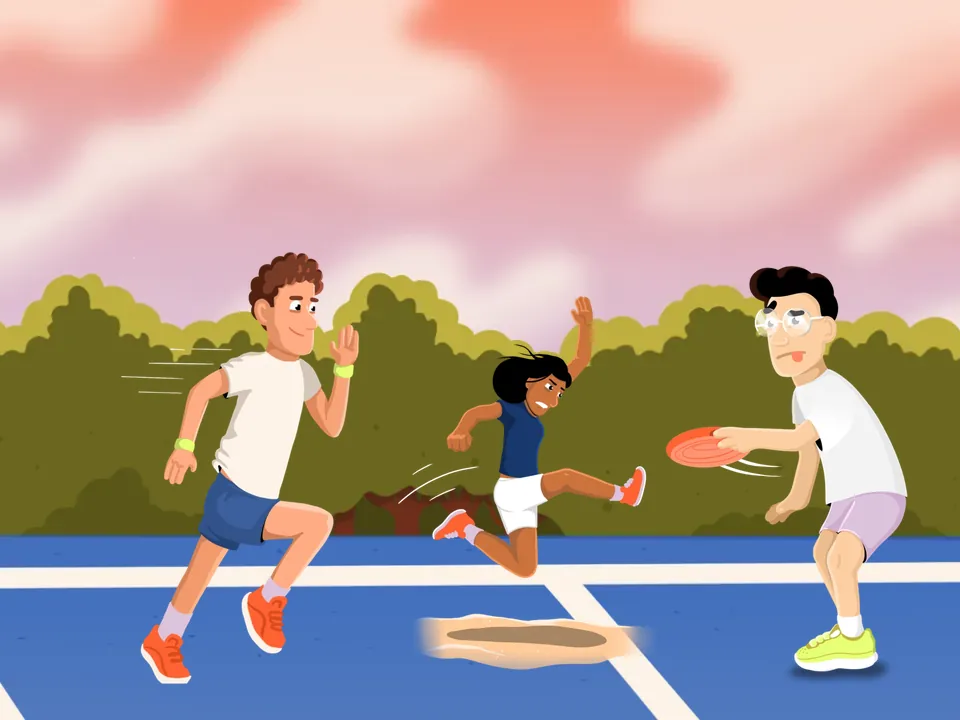
Shadow Tag, Tail Tag, What Time Is It, Mr. Fox? and Duck, Duck, Goose run without a referee because a tagged kid swaps roles or rejoins right away. Mark the boundary with cones, a few strides away from fences, walls and equipment.
Grades 1–5 · 8–25 kids · no gear · sunny day
One kid is It and chases the others inside the cones. Stepping on a player's shadow is a tag, and that kid becomes It; the new It may not tag whoever just tagged them. A kid who steps outside the cones counts as tagged and becomes It. Nobody keeps score, and a signal from the supervisor ends the round.
Grades 1–5 · 8–30 kids · one pinny per kid
Each kid tucks a pinny into the back of the waistband as a tail, then tries to pull other tails without guarding their own with hands. The puller drops the pinny right away. The kid who lost it picks it up, jogs around the nearest cone, tucks it back in and plays on. There is no score, and a whistle ends the round.
Grades K–3 · 6–25 kids · no gear
The fox stands at one end facing away, and the others wait behind a line at the other end and ask, “What time is it, Mr. Fox?” The fox names an hour, and the group takes that many steps. On “Dinner time!” the fox turns and chases while everyone runs back to the line. The first kid tagged, or the first kid to touch the fox before the call, becomes the next fox. If everyone gets back untagged, the same fox goes again.
Grades K–2 · 8–20 kids · grass · no gear
Kids sit in a circle facing in, hands and legs tucked. It walks around the outside tapping heads, “duck, duck,” and then picks a goose. The goose chases It around the circle. If It sits in the empty spot first, the goose becomes It. If the goose tags It first, It stays It for one more round and the goose sits back in its spot. A round ends each time someone sits down, and the game ends on the supervisor's signal.
Four Square, Hopscotch and Tetherball keep small groups busy on pavement and let kids manage their own turns.
Grades 2–5 · 4 players plus a waiting line · chalk, playground ball
Chalk a 2 × 2 grid with squares numbered 1 to 4. The player in square 4 serves: one bounce in their own square, then an open-hand hit into another square. Receivers let the ball bounce once, then hit it on. A player who misses, hits a line, hits out of bounds or catches the ball goes to the end of the line; players in lower squares move up, and the next kid enters square 1. The goal is to work up to square 4.
Grades K–3 · 2–4 kids per court · chalk, beanbag
Chalk squares numbered 1 to 8, mixing single squares and side-by-side pairs. Toss the beanbag into square 1 and hop through the course, skipping that square: one foot in singles, two feet in pairs. Turn at the end, hop back, pick up the beanbag and hop out. The turn ends if the beanbag misses its square or lands on a line, or you step on a line or touch down with a hand. The next kid plays, and you try the same number again later. The first to finish square 8 wins.
Grades 3–5 · 2 players plus a waiting line · pole with a ball on a rope
Players stand on opposite sides of the pole. The server hits the ball around the pole, and the other player tries to send it back the opposite way. Catching or holding the ball, touching the rope or pole, or hitting it twice in a row is a foul, and the other player gets the next serve. Winding the rope fully around the pole in your direction wins the game. The loser goes to the end of the line, and the winner plays one more game before joining it.
Steal the Bacon suits the biggest group at 10–30 kids, while Long Jump Rope and Keep It Up split a class into small groups on flat ground, and none of the three eliminates anyone. For a bigger team game on a full field, see Capture the Flag in PE class.
Grades K–5 · 3–6 kids per rope · one long rope
Two kids turn the rope while the others line up, run in, jump five times, run out and rejoin the end of the line. A jumper who steps on the rope, stops it or leaves early swaps with a turner, and that turner goes to the end of the line. Rounds repeat until time is called. Start younger kids with the rope swinging gently side to side before turning full circles.
Grades 1–5 · 10–30 kids · one beanbag
Two teams line up facing each other with the beanbag on the ground between them, and each kid has a number that matches one kid on the other team. The caller shouts a number, and those two race for the beanbag. Grabbing it and returning to your line untagged scores 1 point; being tagged while holding it gives the point to the other team. If nobody grabs it, the caller picks a new number. The beanbag goes back to the middle after each try. Both runners stay on their feet: no diving or sliding for the beanbag, and a tag is a light touch on the shoulder or back. Play to 5 points or until time is called.
Grades K–5 · 4–8 kids per group · one beach ball
The group stands in a loose circle and taps the ball up with open hands or forearms, counting each hit aloud. The count restarts at 0 when the ball touches the ground or one kid hits it twice in a row. The round ends when the group beats its best count or time is called. On windy days, use a foam ball.
Settle three things before the first round: who decides a close tag, how a dispute ends and how the waiting line works. A light touch on the shoulder or back counts as a tag, a disagreement gets a do-over or a quick rock-paper-scissors, and the line is first come, first served. Teach each game in class with one slow practice round. After that, the supervisor watches and kids settle close calls themselves. Schools call this approach structured recess: adults teach a few games and set up the zones, and kids still choose whether to join a game or play on their own. Classroom teachers new to PE can start with elementary PE for classroom teachers.
| Mistake | Cause | Fix |
|---|---|---|
| Kids argue over who was tagged | No shared tag rule | Light touch on shoulder or back; a dispute gets a do-over |
| Two kids own Tetherball or Four Square | Winner stays with no limit | Winner plays one more game, then joins the end of the line |
| Kids quit tag games | Tagged players wait too long | Tagged kids swap roles or rejoin right away, as in Tail Tag |
| A game fizzles out | Too many kids on one court | Split into two courts using the group sizes in the table |
| Fights over the ball | One kid keeps the equipment | Keep gear in one bin and hand it out by game |
In a 2017 position statement, SHAPE America calls traditional elimination dodgeball, where players are hit out with a ball, inappropriate for K–12 PE. To split groups fairly, see fair ways to pick teams.
Stand where you can see every game at once, and walk the surface before kids come out. Required supervisor-to-student ratios vary by state and district, so follow your school's policy.
Zone the yard so that games don't run into each other. Put tag on the grass at one end behind a cone boundary. Group Four Square, Hopscotch and Tetherball on the blacktop, with Long Jump Rope and Keep It Up on flat ground nearby. The gear bin stays by the door, and the supervisor stands between the zones and can see all of them.
Recess is not a bargaining chip: a SHAPE America position statement calls withholding PE or recess as a consequence inappropriate. When the yard is closed, move indoors with brain breaks for Grades K–5.
A solid top 10 for Grades K–5 is Shadow Tag, Tail Tag, Mr. Fox, Duck, Duck, Goose, Four Square, Hopscotch, Tetherball, Long Jump Rope, Steal the Bacon and Keep It Up. No official ranking exists, so pick classics that need little gear and never sit a kid out for long. Each one comes with grades, group size and rules above.
Eight of the 10 games above work in a typical backyard: Shadow Tag, Tail Tag, Mr. Fox, Duck, Duck, Goose, Long Jump Rope, Steal the Bacon and Keep It Up on grass, plus Hopscotch on a flat patio. Four Square needs a chalked hard surface big enough for a 2 × 2 grid, and Tetherball needs a pole set in the ground.
Yes. Teach one game at a time during class, walk through one slow round with the rules above, then let kids run it at recess while you watch. Start with the no-gear games, such as Shadow Tag or What Time Is It, Mr. Fox?, because they need no setup.
Add one new game about every two weeks, once kids run the current ones without help, and keep the favorites in rotation. Match the choice to conditions: Shadow Tag needs sun, Keep It Up needs low wind, and Hopscotch needs a dry surface.
Change one variable at a time: speed, distance or role. Switch tag games to walking, shorten the distance in Mr. Fox, give a kid the caller job in Steal the Bacon, or let the group count together in Keep It Up. For a student with an individual plan, follow that plan and check with special education staff.
Plan for about 20 minutes or more of recess a day in Grades K–5. Many schools schedule about 20 to 30 minutes, and the minimum is set by district policy or state law. In a 20-minute recess, one or two familiar games per zone work best, because teaching a new game eats into playing time.
Outdoor PE games when the gym is closed need different planning than gym games: no walls, no painted lines and a surface you did not pick.
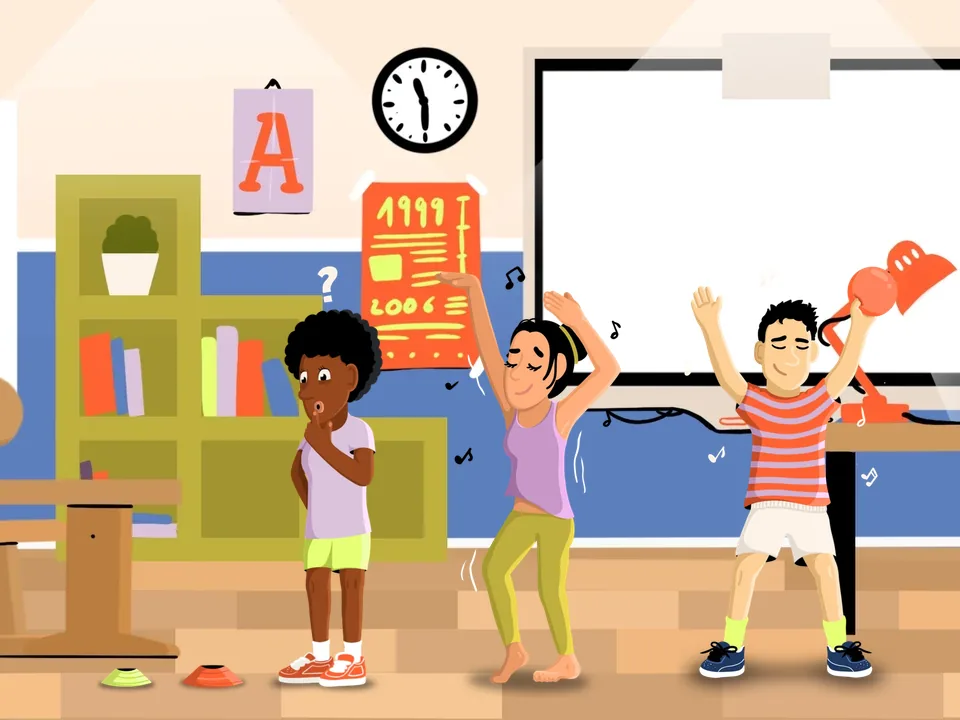
A good brain break needs a clear stop signal, a bubble of space for each child, and a game students can learn fast.
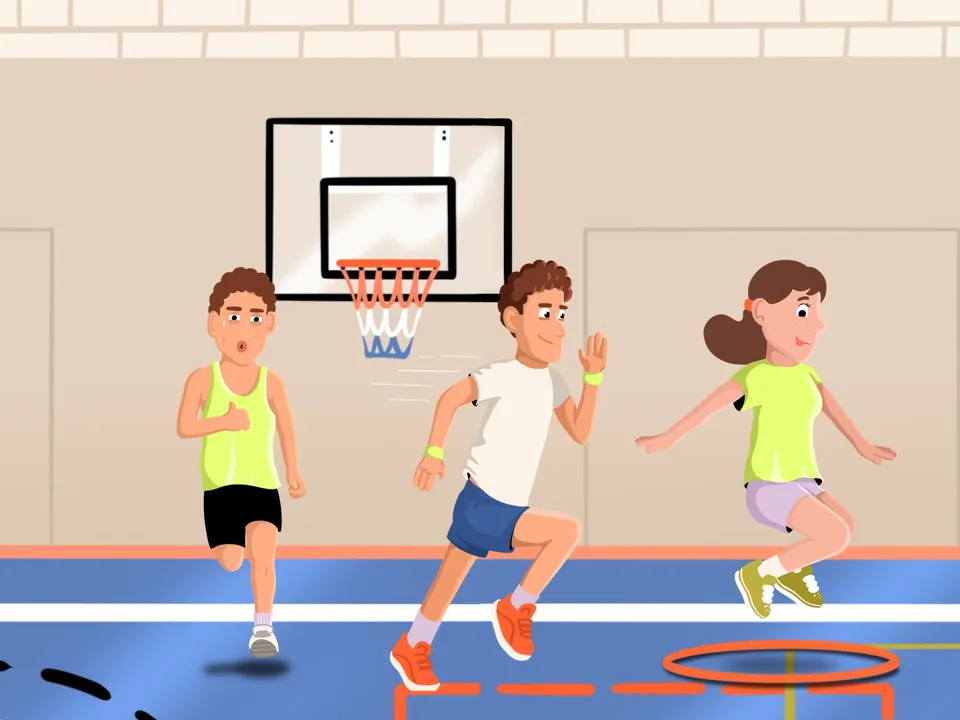
Capture the flag is a two-team tag game: each side guards a flag on its own half of the gym or field and tries to carry the other team's…
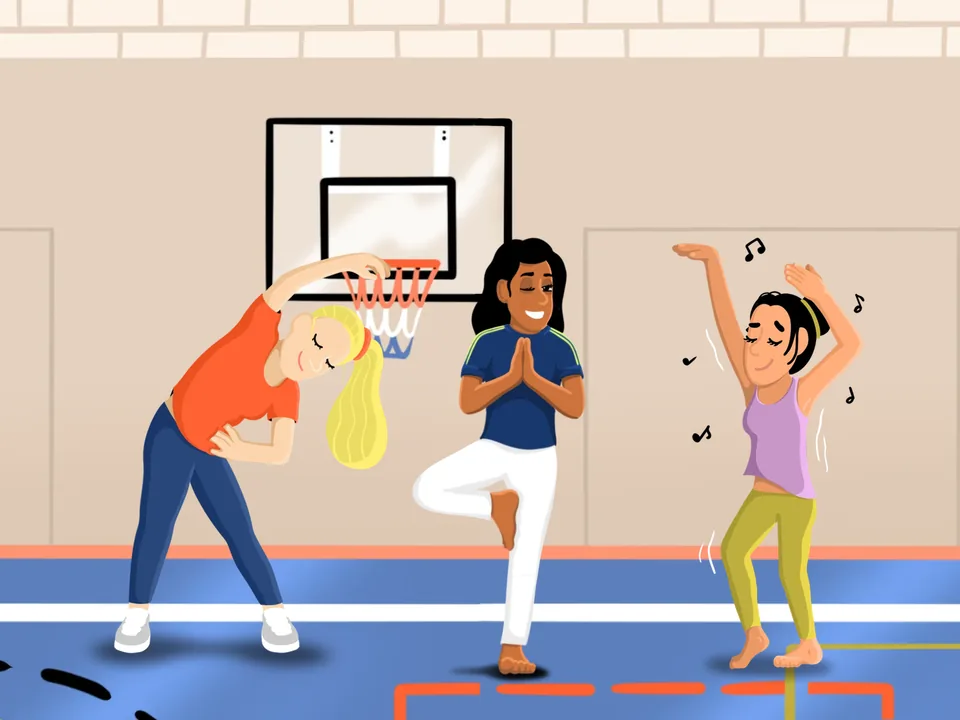
On a cold morning, PE teachers, classroom teachers and recess supervisors often have to decide with no written rule in sight.
In the app for iOS & Android, filter the 8 game collections by grade, group size, equipment and place, including outdoor field. The download is free: try the 3 free units without an account and see current plan prices in the app.
App for iPhone, iPad and Android.