Games & warm-ups
Brain Breaks for Grades K–5
A good brain break needs a clear stop signal, a bubble of space for each child, and a game students can learn fast.
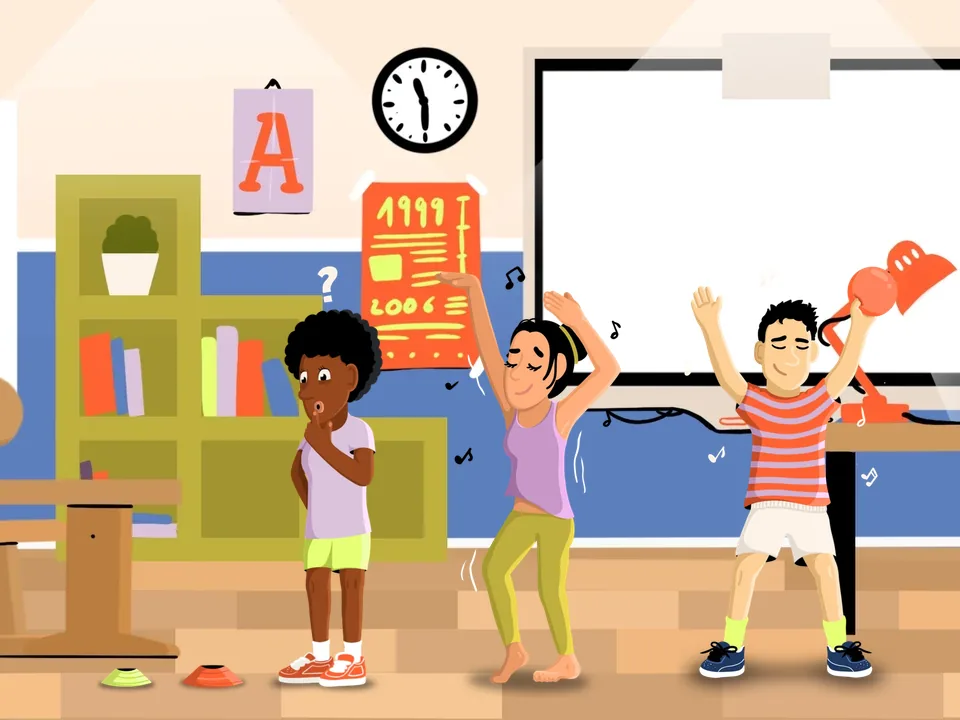
Effective dance brain breaks run for about 2 to 4 minutes using a steady audio track of roughly 100 to 125 BPM, a drumbeat, or clapped rhythms instead of a screen. Students stand about 3 to 4 feet apart (roughly one arm span) on a flat, clear floor and follow one rule at a time, such as freezing on a whistle, mirroring a partner, or repeating four-count footwork.
Loading a follow-along video on the projector can take longer than the movement break itself. With a steady clap or a clean instrumental track, you can lead a two- to four-minute rhythm reset right beside student desks or on the gym floor. Students stay on their own floor spots, so the break works with desks still in the room.
A short rhythmic break can help students reset after a long stretch of seated work, and it adds a few minutes of movement to the day. According to the Physical Activity Guidelines for Americans (2nd edition, HHS), children and adolescents ages 6 through 17 should do 60 minutes or more of moderate-to-vigorous physical activity daily, with muscle- and bone-strengthening activity on at least three days a week.
Stepping to a beat and matching a partner's timing also practice the motor, movement, and social skills outlined in SHAPE America's 2024 National Physical Education Standards, which structure US K–12 physical education around four standards (S1 to S4: motor skills, movement and fitness concepts, social skills, and personal skills, replacing the five-standard 2013 edition). A follow-along video depends on the stream and the screen: an ad or a buffering wheel breaks the beat, and students in the back row can have a hard time mirroring fast edits. With an audio track or a clapped rhythm, students stay on their own floor spots and watch you instead of a screen. For movement breaks without dance, see our guide Brain Breaks for Grades K–5. For slow stretches and balance poses, try yoga brain breaks for kids.
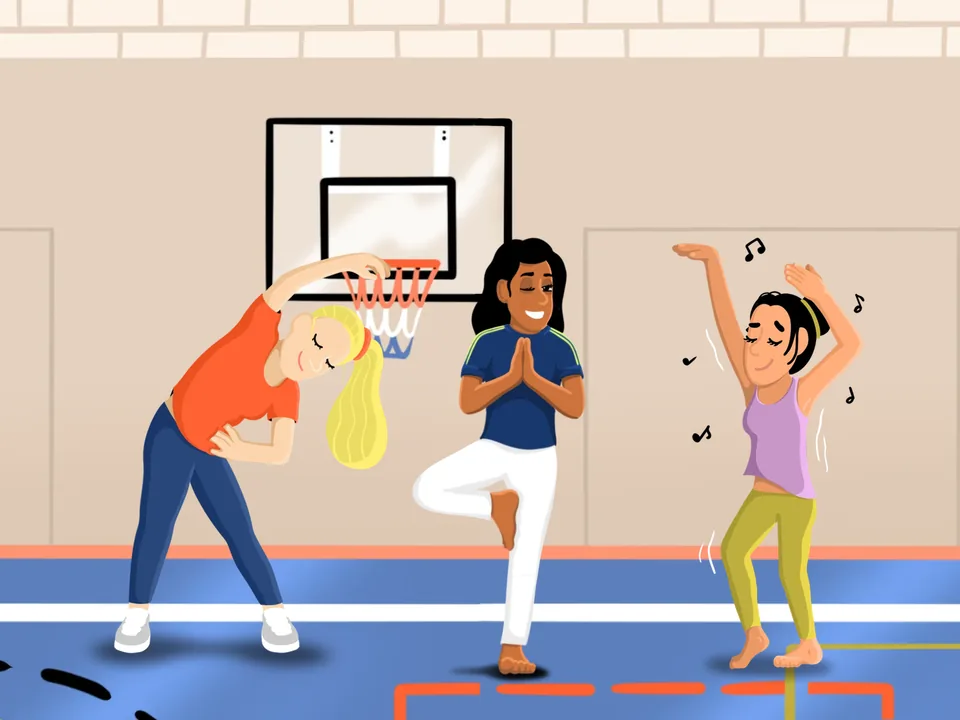
Classic freeze dance works best as a cooperative, non-elimination game where every student stays active for the full three-minute track. Nobody sits out and nobody does exercise as a consequence for a mistake, in line with SHAPE America's 2021 position statement on physical activity and punishment. That statement calls using exercise as punishment, or withholding PE or recess as a consequence, inappropriate.
In Statue Freeze Dance, the goal is for the whole class to move continuously inside their personal floor spots while the music plays and hold a balanced three-second statue pose the instant the audio stops. Under teacher supervision on a flat, dry floor with chairs pushed under desks and students spaced about 3 to 4 feet apart, call out one movement prompt before hitting play, such as heel-toe twists, marching high knees, or slow-motion swimming arms. Play music for 15 to 25 seconds, then pause the track or blow a short whistle. Every time the whole class freezes within two seconds and holds their balance for a three-count, the group earns one team point. If a student wobbles or takes an extra step after the stop signal, that turn scores no point and everyone keeps playing. Call a new movement prompt and restart the music for the next turn. A round ends when the class scores five team points or when the three-minute song finishes.
For Kindergarten and Grade 1 classes, run Tempo Shift instead of sudden stops. The goal is for the whole group to match your tapping speed. Tap a tambourine slowly to cue slow-motion giant steps in place and twice as fast for quick tiptoe marches. Each tempo the group matches earns one point. If the group rushes the beat, everyone taps their knees twice and that tempo restarts. The game ends after four tempo cycles.
Partner mirror routines and rhythm echoes require zero audio equipment because students respond directly to visual timing and hand claps. They work well in classrooms where speakers are unavailable or volume must stay low.
In Mirror Groove Partners, the goal is for two students to synchronize their movements so closely that a watcher cannot tell who is leading. Pair students facing each other about 4 feet apart on a clear, flat floor with shoelaces tied; if you have an odd number of students, form one triangle of three where two mirrors follow one leader and the leader role rotates each interval. Partner A leads steady upper-body and foot movements (shoulder rolls, side taps, knee lifts, and clap patterns) for 30 seconds while Partner B reflects every action as a mirror image. Pairs earn one cooperative sync point for each 30-second block they complete without losing sync or stepping off their floor spot. If a leader moves too fast for their partner to copy or loses the beat, both partners tap their own shoulders twice to reset the pace at half speed and keep going. At the 30-second mark, call "Switch mirrors" so Partner B leads the next interval without changing places. The round ends after four 30-second intervals (two turns per partner, 2 minutes total).
For a whole-group option, lead Rhythm Echo, where the goal is to repeat your pattern exactly: clap-stomp a four-beat pattern at the front, then have the class echo it back in unison while marching in place. The class earns one point per clean echo, resets with two ankle bounces if the echo drifts off beat, restarts immediately with a new four-beat pattern on your hand signal, and finishes after eight echoes.
Four-count footwork loops give students in Grades K–5 a predictable structure they can join after a two-cycle count-in, even if they feel awkward during open freestyle dancing. Count "1, 2, 3, 4" out loud at a steady walking pace for two cycles before turning on the music so every student finds the beat together.
| Pattern Name | Grade Band | Counts 1–2 | Counts 3–4 | Space Needed |
|---|---|---|---|---|
| Forward-Back Walk | Grades K–2 | Small step forward with the right foot, small step forward with the left | Small step back with the right foot, small step back with the left and clap | Small steps inside a 3 × 3 ft spot |
| Grapevine Tap | Grades 3–5 | Step right to the side, cross left foot behind right | Step right to the side, tap left toe beside right foot | About 5 ft of clear floor to one side, whole class travels the same direction |
| Heel-Toe Bounce | Grades K–5 | Tap right heel forward, tap right toe back in place | Step right foot home, bend knees for two light bounces | In place, inside a 3 × 3 ft spot |
| Corner V-Step | Grades 3–5 | Small step forward-right on 1, forward-left on 2 | Step right foot back to center on 3, left foot home with a clap on 4 | 3 × 3 ft floor spot |
Turn these loops into the Eight-Count Combo Builder game: the goal is for the class to chain two patterns from the table together without losing the beat. Pick two patterns from the table. Have students repeat the first one for four loops, then call "Switch on 1" to move into the second. The class scores one point for each clean switch, marches in place until count 1 returns if anyone loses their footing, restarts on your "5, 6, 7, 8" cue, and finishes after six completed switches.
Safe classroom dance breaks depend on a clean mid-tempo beat, moderate speaker volume, and marked floor zones that keep students from drifting into furniture. Choose instrumental tracks or clean percussion loops between 100 and 125 beats per minute (BPM). Tracks much faster than about 125 BPM tend to turn controlled stepping into jumping in tight aisles. Keep the volume low enough that a cue spoken at normal volume or a short whistle is heard on the first beat. For stop-signal routines, see our guide on managing noise and movement.
Under direct teacher supervision, require students to push chairs completely under desks, store backpacks underneath tables, and stand on a flat, dry floor free of pencils or loose rugs. Students should wear closed-toe sneakers or flat school shoes; if a child is wearing slick socks on tile or hardwood, have them do the seated upper-body rhythms instead so they do not slip. Divide your room into four clear zones: a front Teacher Leader Spot where everyone can see your hands, Row 1 Dance Spots and Row 2 Dance Spots staggered between desk rows with about 3 to 4 feet of clearance, and a Low-Key Perimeter Zone along the side wall where students who want extra personal space can step comfortably.
Students who freeze up or hide behind desks during open freestyle songs often join in more easily when you replace open-ended dancing with structured roles or footwork-only counts. Self-consciousness often grows in the upper elementary grades, when students worry about peers watching their arms or faces.
After an energetic two- or three-minute song, spend the final 30 seconds slowing the tempo down or leading a few slow breaths so heart rates settle before students pick up their pencils. For longer cool-downs between lessons, pick one of the calm brain breaks for classrooms.
A classroom dance break should last about 2 to 4 minutes, or the length of one upbeat song. For Grades K–2, a 2-minute round of freeze dance is usually enough, while Grades 3–5 handle 3 to 4 minutes of four-count step patterns followed by 30 seconds of slow deep breaths before sitting back down.
Music between about 100 and 125 beats per minute (BPM) is a practical range for elementary classroom movement in tight spaces. Tracks around 100 to 110 BPM suit coordination patterns like the forward-back walk or partner mirroring, while 115 to 125 BPM fits energetic marches and freeze dance without pushing students into uncontrolled running.
Stop the music with your signal, have everyone stand still for a slow three-count breath, and restart the movement at half speed. Rehearse the stop signal once before the first break and keep a mid-tempo track (about 100 to 125 BPM), because faster songs push students toward jumping and running. If one group keeps drifting out of their spots, give them more room along the perimeter or switch them to the seated tapping version.
Run a silent rhythm break with hand signals instead of a speaker. Lead a partner mirror routine or a four-count step loop, hold up one to four fingers to cue heel taps, toe touches, and knee lifts, and ask students to keep their steps small and soft. Check your school's testing rules first, because a break that is quiet in your room may still not be allowed during a testing window.
Yes, dance breaks work in Grades 6–8 when you frame them as rhythm or footwork challenges instead of performances. Keep the moves below the waist at first, let students pick from a short list of clean instrumental tracks and offer partner choice or the seated tapping version. Short four-count loops and mirror pairs usually go over better than open freestyle dancing in front of peers.
A good brain break needs a clear stop signal, a bubble of space for each child, and a game students can learn fast.
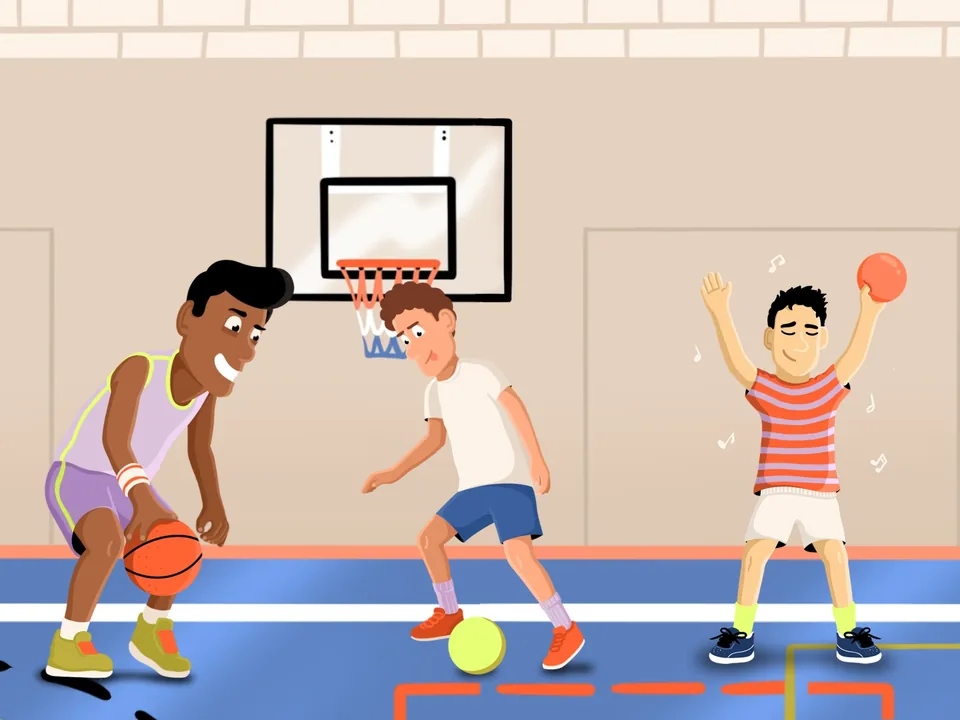
Attention often drops halfway through place value or multiplication drills.
When students return from outdoor recess or a loud hallway transition with racing voices, jumping straight into a lesson rarely works.

Small classrooms and long stretches of sitting call for yoga breaks that need no mats and no extra floor space.
Open 3 free units, including the Classroom Brain Breaks sample pack with 13 movement breaks, without an account at physedprep.com/free/, or download the PhysEdPrep app for iOS & Android at physedprep.com/get-the-app/ to start a 7-day free trial on a yearly plan (see current prices in the app).
App for iPhone, iPad and Android.