Games & warm-ups
Brain Breaks for Grades K–5
A good brain break needs a clear stop signal, a bubble of space for each child, and a game students can learn fast.
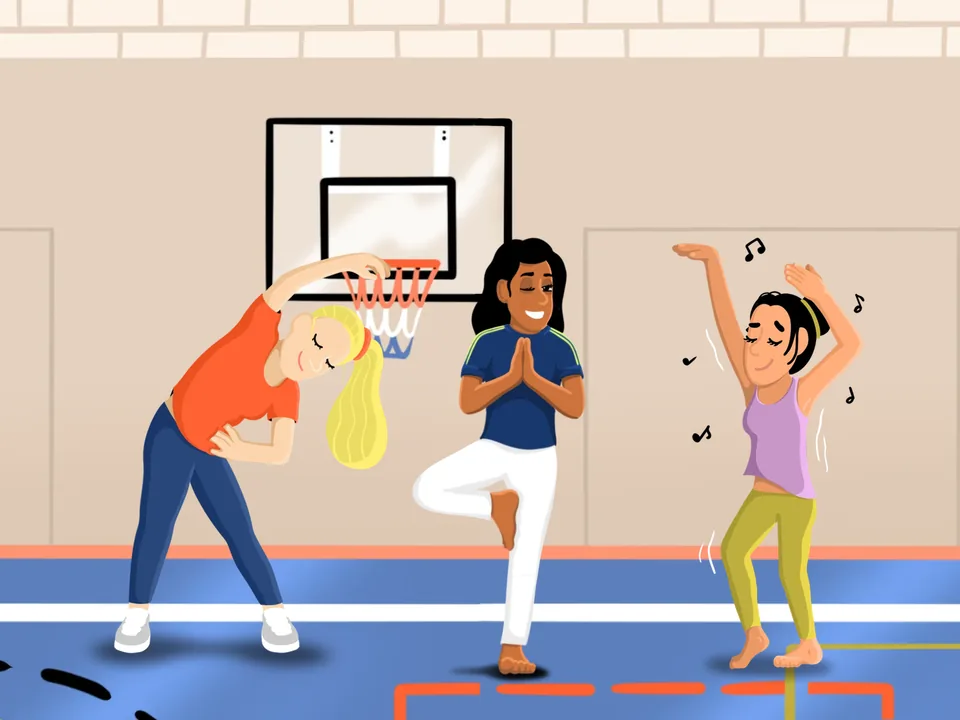
Effective calm brain breaks last about 2 to 3 minutes and pair slow nasal breathing with low-effort isometric holds, seated stretches, or silent leader movements right beside student desks. Starting with one familiar movement at the current energy level and gradually slowing the tempo over 4 to 6 breathing cycles usually lowers the noise level and leaves fewer openings for giggly side conversations.
When students return from outdoor recess or a loud hallway transition with racing voices, jumping straight into a lesson rarely works. The routines below cover desk breathing, slow stretches, a silent cooperative game, timing for tests and dismissal, and adaptations for students with IEP or 504 plans in Grades K–12. Every routine here works at the desk or standing beside it and needs no equipment.
A calming brain break works best when students are overstimulated from outdoor play, hallway transitions, or group work and need to lower their heart rate before focused seatwork. Under the Physical Activity Guidelines for Americans from HHS (2nd edition, 2018), children and adolescents ages 6 through 17 should do 60 minutes or more of moderate-to-vigorous physical activity daily. A calm break is not part of that activity total. It is the short reset after recess or PE that gets students ready for seatwork.
Reading the room first saves you from picking the wrong activity. When students are slumping at 1:30 p.m. after forty minutes of silent reading, they need an active energizer from our Grades K–5 brain breaks and classroom games guide or one of our no-video dance brain breaks. When voices are loud and hands are tapping pencils after lunch, a high-energy game raises the volume further. Match the room's tempo for the first 15 seconds with a familiar standing movement at medium speed, then lower your voice and slow the count.
| Classroom Signal | Typical Mistake | Better 2-Minute Reset |
|---|---|---|
| Loud chatter and flushed faces after outdoor recess | Demanding instant silence or starting a fast tag game | Paced standing breaths that start at medium speed and slow down |
| Fidgeting and pencil tapping before a quiz | Telling students to sit still without releasing tension | Seated isometric desk presses followed by 4-second exhales |
| End-of-day restlessness during pack-up | Letting the whole class rush to cubbies or lockers at once | Silent Mirror Leader at desks, dismissing one calm row at a time |
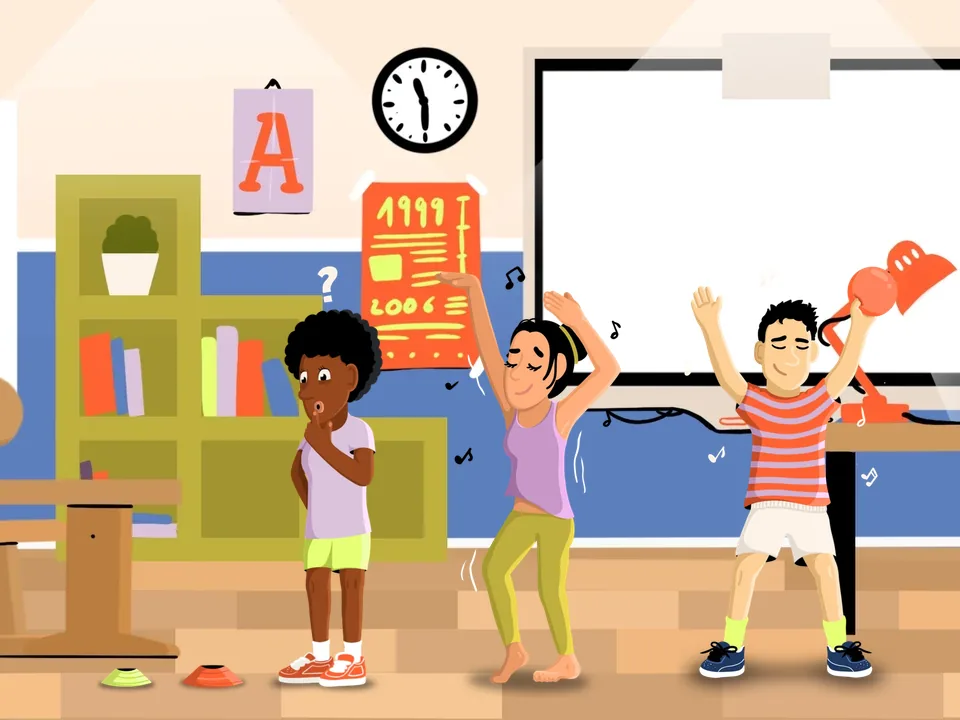
Seated breathing routines give students a visual or tactile anchor on their own desk so they can slow their exhale without feeling awkward in front of classmates. A quiet tracing job gives hands something to do, so a class of around 20 to 30 elementary or middle school students has an easier time following the count for about 60 to 90 seconds.
For safe seating, have students sit upright near the center of a stable chair with both feet flat on the floor and roughly an arm's length of space from neighbors so nobody bumps elbows. Let everyone keep their eyes open and look down at their own desktop rather than requiring closed eyes.
Slow-motion standing stretches release shoulder, neck, and hip stiffness from sitting while keeping feet anchored in one safe spot beside the desk. Moving at half speed requires balance and muscle control, which usually quiets side chatter. For a longer sequence of held poses, see our yoga brain breaks for kids.
Before standing up, direct students to push their chairs all the way under their desks, clear backpacks and water bottles out of the aisles, and check for roughly an arm's length of clearance on all sides on a dry, flat floor under your supervision.
Cooperative silent games channel the urge to move into slow, shared focus where the whole class works together to keep the room quiet. Everyone stays in the game the whole time, so active students get the movement they need without waiting on the sidelines. If your group wants a quick choice game first, you can run two silent finger votes from our Would You Rather brain breaks guide and then shift into a silent leader routine.
For Silent Mirror Leader (setup plan below), you or a chosen student stands at the Teacher Leader Spot at the front while students stand beside their desks in Desk Row 1 and Desk Row 2, facing the leader, with the Standing Aisle between the rows kept clear. Check that chairs are pushed in, aisles are clear of cords and bags, and students have about an arm's length of space on a flat floor under supervision. The goal is for the entire class to mirror the leader's underwater-speed upper-body movements in complete silence for a 90-second round. During play, the leader moves hands, shoulders, and head slowly, changing posture about every 5 seconds while the class copies the exact tempo.
For scoring, the class earns 1 cooperative point for every 30 seconds of silent, synchronized movement (up to 3 points per round). If a student talks, laughs out loud, or speeds up into fast motions, nobody is eliminated; instead, the leader freezes in place with palms facing down for about 3 seconds. The game restarts once the room is silent and every student matches the frozen pose, cued by the leader tapping one shoulder. Points already earned stay, and the 30-second count starts over. The round ends after 90 seconds when the leader slowly sits down, signaling the whole class to sit down together.
Matching the type of calming reset to the time of day helps prevent transition bottlenecks in both elementary classrooms and secondary schedules. Predictable visual cues usually work better than raising your voice over a noisy room. You can reuse the stop signals from our routines for the first week of PE.
Students walk through the door warm and breathing fast, so forcing immediate silent reading often backfires. Start with everyone standing beside their pushed-in chairs for about 30 seconds of slow marching in place, transition into three Desk-Side Rainbow Arc breaths, and cue the class to sit down silently on the final exhale.
Pre-test tension usually shows up as hunched shoulders and tight grips on pencils. Lead about 60 seconds of seated Fist Squeeze and Release under the desk followed by four cycles of Four-Corner Desk Box Breath so students can start the first question with looser shoulders and hands. Run it before the test session starts and follow your district's testing procedures.
The last ten minutes of the afternoon get loud when twenty-five students rush to cubbies or lockers at once. Run a 60-second seated shoulder roll and exhale count, then use a silent hand signal to dismiss one calm row at a time. During busy holiday weeks before a break, you can rotate in seasonal quiet options from our winter brain breaks for classrooms.
Calming routines support self-regulation best when every student has clear choices for posture, eye contact, and movement range. Under SHAPE America's 2024 National Physical Education Standards, which organize K–12 physical education in the US into four standards (S1–S4: motor skills, movement and fitness concepts, social skills, and personal skills, replacing the 2013 edition's S1–S5), social and personal skills (S3 and S4) have learning indicators in every grade span.
Keep calming breaks positive and voluntary in tone. In line with the SHAPE America position statement on physical activity as punishment (2021), using exercise as punishment or withholding PE or recess as a behavior consequence is inappropriate; a quiet reset should never feel like a penalty.
Plan on about 2 to 4 short calming breaks a day in elementary classes and one reset around the middle of a 60- to 90-minute block in secondary classes, then adjust to how settled the room is. Schedule them right after high-energy transitions like outdoor recess, lunch, PE, or hallway passing periods so students settle before independent work begins.
Give students a concrete visual target on their own desk, such as tracing five fingers or following the four edges of a notebook, and let them keep their eyes open. Giggling usually happens when students feel awkward making eye contact or breathing loudly, so cue silent nasal breathing and start with a physical press before slowing the breath.
Subtle seated routines like the Four-Corner Desk Box Breath, under-desk fist squeezes, and slow shoulder rolls usually work best for Grades 6–12 because they do not look childish to peers. Secondary students can do these resets silently at their desks in about 90 seconds without standing up or drawing attention across the room.
Neither has to be fully off. Dimming the overhead lights by half or using natural window light lowers visual stimulation, but avoid a dark room so you can supervise and students stay comfortable. Music is optional: if you play any, keep it slow, instrumental, and quiet enough that students can hear your breathing cues.
Yes, a 2- to 3-minute calm reset works well as the last part of a PE class, right before students line up for the classroom. Use slow walking, standing Rainbow Arc breaths and a quiet stretch on a dry, flat floor. Keep it short so most of the period stays active, and run it after the main activity rather than in place of it.
Plan on about 1 to 2 minutes for kindergarten and first grade, with 2 to 3 slow breathing cycles instead of 4 to 6. Young children lose focus quickly during long holds, so skip breath holds and use a concrete image such as smelling a flower and blowing out a candle. Keep eyes open and let children stay seated or standing beside the desk.
A good brain break needs a clear stop signal, a bubble of space for each child, and a game students can learn fast.
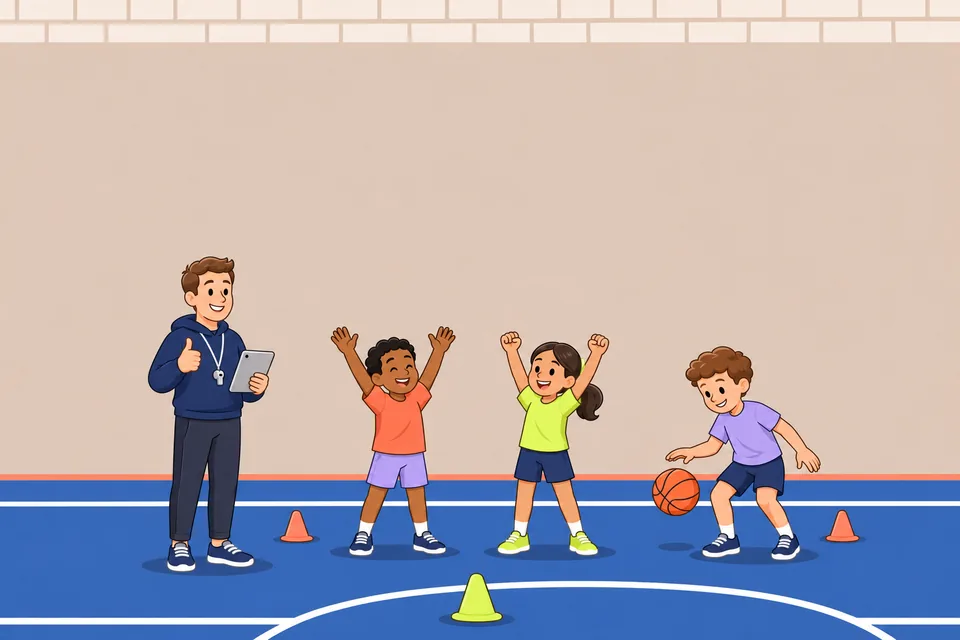
Small classrooms and long stretches of sitting call for yoga breaks that need no mats and no extra floor space.
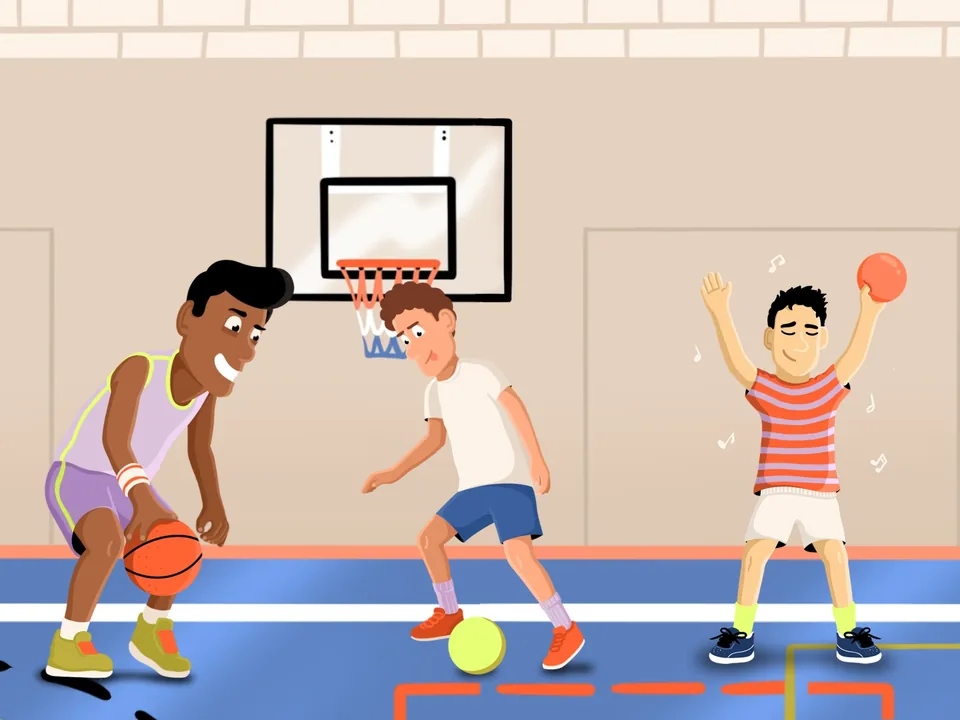
Loading a follow-along video on the projector can take longer than the movement break itself.
Open the Classroom Brain Breaks sample pack in the 3 free units with no account needed at physedprep.com/free/. To time your breathing counts with the Structured Interval Timer, download the PhysEdPrep app for iOS and Android and start a 7-day free trial on a yearly plan (see current prices in the app).
App for iPhone, iPad and Android.