Literacy Activities for PE Class
This list is for PE specialists, classroom teachers who run PE and secondary teachers who are asked how their class supports reading and…
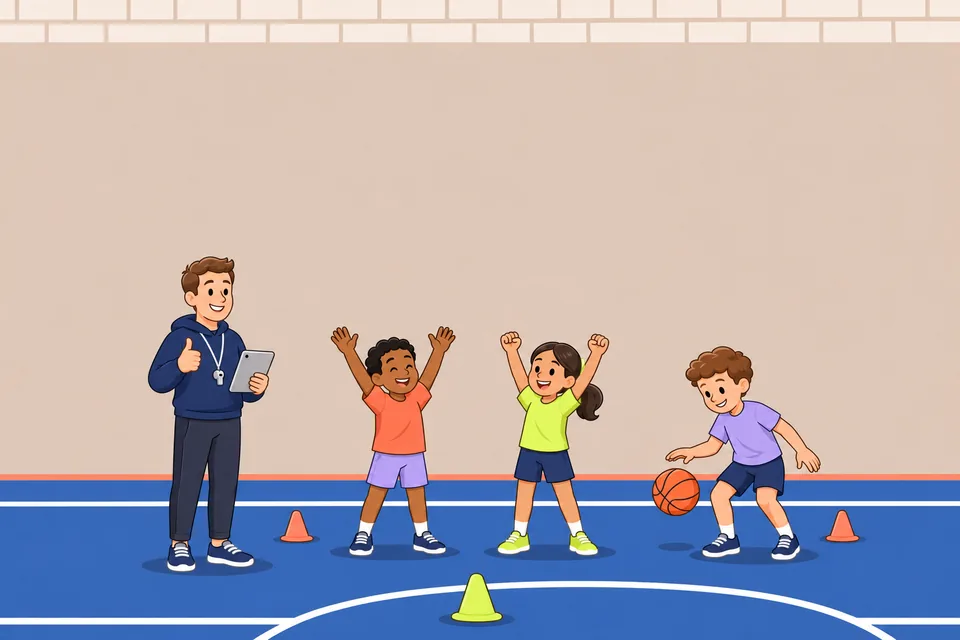
You can bring STEM into PE with 10 activities in which students test one science question while they move. They range from target-zone rolling in Grades K–2 to pulse graphs through Grade 12 and use balls, beanbags, cones, hoops, pool noodles and paper. Keep a PE skill as your objective, and change only one variable per test so the results mean something.
These STEM activities for PE suit specialists and classroom teachers who want to test science ideas with common gym gear. Each activity has rules and a stopping point. You also get safety conditions, a fix table for data collection and science standard matches to share with colleagues.
Science shows up whenever students push a ball, aim a toss, shift their balance or breathe harder. Standard 2 of SHAPE America's 2024 National Physical Education Standards asks students to apply knowledge of movement and fitness concepts, which is where force, motion and balance fit.
| Activity | STEM idea | Grades | Group | Gear |
|---|---|---|---|---|
| Roll to the Zone | Push strength | K–2 | 2 | Playground ball, floor spots |
| Launch Angle Lab | Projectile motion | 3–8 | 3 | Beanbags, cones |
| Bounce Height Test | Energy | 3–8 | 2 | Balls, meter stick, mat |
| Balance Reach | Center of mass | K–5 | 2 | Beanbag, floor spots |
| Pulse Prediction Graph | Heart rate | 4–12 | 2 | Timer, paper |
| Talk Test Tally | Effort level | 3–8 | 2 | Cones, jump ropes, chart |
| Self-Standing Target | Engineering design | 3–8 | 4 | Cones, noodles, hoop, tape, foam ball |
| Noodle Ramp Roll | Height and speed | 3–8 | 3 | Half noodle, cones, table tennis ball, hoop |
| Robot Route | Coding sequences | 1–5 | 2 | Floor spots, cones, hoop, paper |
| Shot Chart | Data and sample size | 4–12 | 3 | Basketball, basket or target, clipboard |
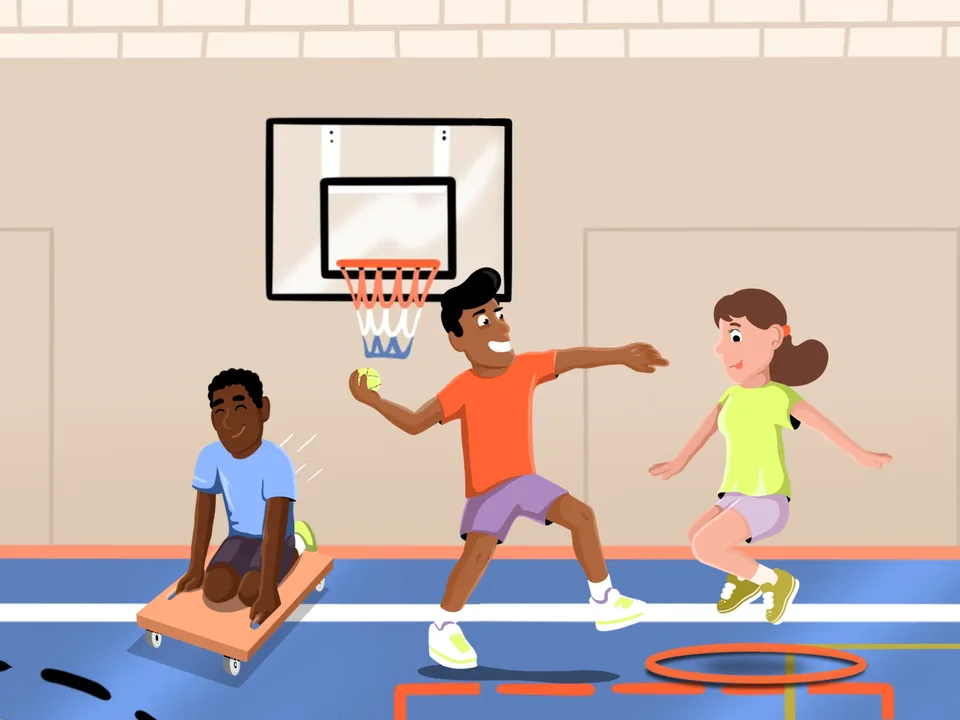
Roll to the Zone and the Launch Angle Lab show how push strength and throwing arc change where an object ends up. A stronger push on the same ball gives it more speed, which is Newton's second law at work on the gym floor.
Pairs in Grades K–2 share a lane with near, middle and far zones marked by floor spots. The receiver at the far end calls a zone, and the roller predicts a soft or strong push, then rolls. A ball stopping in that zone scores 1 point. After a miss, both say how the push should change. The receiver carries the ball back. Swap places after six rolls and end when both have had six. All lanes roll in one direction.
Groups of three in Grades 3–8 compare low, medium and high underhand tosses at equal effort to find which arc lands farthest. The thrower sends five beanbags per arc from behind the throwing line, the recorder watches beside the lane and the third student stays at the waiting spot. After each arc, give a signal once every lane has stopped throwing. The recorder then sets a landing cone at the third-farthest beanbag, and the group retrieves. Rethrow beanbags that slip or leave the lane. Rotate roles after all three arcs until everyone has thrown. The middle arc often wins. When the release is above the floor, the longest throw comes from an angle a bit under 45 degrees. Run lanes parallel, with everyone throwing the same way.
A dropped ball shows that some energy turns into heat and sound at impact, and a sideways reach shows how stance affects stability.
Pairs in Grades 3–8 tape a meter stick upright on a wall with zero at the floor. One holds a ball, underside level with the top of the stick, and lets go without pushing. The other kneels and reads how high the underside rebounds. Record the middle result of three drops, then repeat on a flat, non-sliding mat with zero moved to the mat's surface. Redo any pushed drop. Finish when each ball has been tested on both surfaces, and ask why no rebound reaches the start height.
Pairs in Grades K–5 compare two stances with knees bent: feet together and feet wide. The mover sets a beanbag down as far to the side as possible and stands up again without moving either foot. The partner marks the distance with a floor spot. A moved foot or a supporting hand voids the try. Swap after two tries per stance and stop when both partners have finished. The wide stance usually reaches farther because a wider base gives the center of mass more room to shift. Space pairs well apart on a dry floor, with no pushing.
Students can graph pulse rate by movement and chart effort levels with a talk test that needs no pulse count.
Partners in Grades 4–12 predict whether marching, side shuffles or jumping jacks will raise heart rate most. After a resting count, one moves for about a minute while the other times. Right after stopping, the mover places two fingers (never the thumb) on the thumb side of the inner wrist, counts for 15 seconds and multiplies by 4. Partners swap, and each rests until breathing settles before the next movement. Log a lost pulse as a dash. After all three movements, students draw private bar graphs. Collect the numbers on slips without names so the class can compare the middle value for each movement.
Partners in Grades 3–8 visit marked areas for walking, skipping and rope jumping. One moves while the other asks for a spoken sentence, then a sung line. As a common rule of thumb, moderate effort lets you talk but not sing, while vigorous effort allows only a few words before a breath. If the mover can sing the line comfortably, record light. Recheck any disagreement. Tally each mover once per area and finish after both have visited all three.
Students with asthma, heart conditions or activity limits follow their health plans. Anyone with chest pain, dizziness or unusual breathlessness stops and tells you. Give shufflers and rope jumpers clear space. For a resting-to-recovery graph, see these heart health activities for PE.
Teams can build a freestanding target or a noodle ramp, and pairs can program a partner who walks like a robot.
Teams of four in Grades 3–8 use four cones, three pool noodles, a hoop and tape to build a target that holds the hoop upright. Each test is five underhand throws with a foam ball from a line, with members taking turns. A ball through the hoop scores 1 point. A collapse scores nothing. The team notes the weak spot and rebuilds before the next throw. Change one part and retest, ending after three tests. Targets face one way, throwers stay behind the line and retrieval waits for your signal.
Before class, an adult slices pool noodles lengthwise into tracks. Teams of three in Grades 3–8 prop one end on stacked cones and try to stop a table tennis ball inside a floor hoop. Members take turns releasing. Each stop inside scores 1 point, and a pushed start is redone. Leave the hoop in place. The round ends after five releases at each of three ramp heights. Higher starts usually give more speed and longer rolls. Pick up stray balls right away.
Pairs in Grades 1–5 lay out a floor-spot grid with cone obstacles and a hoop as the goal. The programmer draws arrows for one spot forward, turn left and turn right. The robot follows them exactly at a walk. Reaching the hoop scores 1 point. After a cone touch or a miss, restart and fix one command. Swap after a success or five tries until each partner has programmed two routes.
After the builds, put the noodles to more use with these pool noodle games. To show air resistance in slow motion, try these balloon games for PE.
Let one student record while another moves, and cap each round at one number or tally. Several tests here are light exercise, so run them as stations beside active tasks. SHAPE America recommends moderate-to-vigorous activity for 50 percent of class time. For ways to get there, read about reaching MVPA goals in physical education.
Groups of three in Grades 4–12 shoot five times from each of three floor spots at a basket or a lower target. The recorder marks X for a make and O for a miss on a court sketch while the rebounder returns the ball. Retake shots from the wrong spot. Rotate after 15 shots until all three have shot. Then compare makes out of five and ask whether five attempts are enough to trust the result. Keep groups well apart so loose balls stay clear.
| Problem | Cause | Fix |
|---|---|---|
| Line at the measuring spot | One tool for the whole class | One tape or marker per group |
| Writing takes over | Long worksheets | One number or tally per round |
| Results make no sense | Two things changed at once | Change one variable per round |
| Arguments over a trial | No redo rule | Agree first on what voids a trial |
| Students compare bodies | Personal numbers on display | Graph movements without names |
For more scoring and measuring ideas, see math in PE class.
Ask your colleague which science idea the class is studying, then choose the activity that tests it. If your state uses the Next Generation Science Standards or similar ones, the matches below can open that conversation. For instance, NGSS 3-5-ETS1-3 calls for fair tests that control variables and consider failure points.
| Activity | NGSS code | Shared focus |
|---|---|---|
| Roll to the Zone | K-PS2-1 | Effects of stronger and softer pushes |
| Noodle Ramp Roll | 4-PS3-1 | Speed and energy |
| Self-Standing Target | 3-5-ETS1-3 | Fair tests and failure points |
| Pulse Prediction Graph | MS-LS1-3 | Body systems working together |
Agree on grading early: you assess the movement skill, and the science teacher can assess the written explanation. Share class results without names. Other cross-subject options include literacy activities for PE and orienteering tasks for map work.
Yes, the Pulse Prediction Graph and Shot Chart run through Grade 12. For a harder version, ask students to name the controlled variables and explain how force or rotation affects a skill they choose.
Jump ropes laid in circles can replace floor hoops, and a folded strip of stiff cardboard can serve as a ramp. For the target challenge, empty cardboard boxes make good building parts, with an opening cut by an adult as the goal.
Yes, Balance Reach and Robot Route fit a classroom once desks are moved back and the floor is clear and dry. Keep running, throwing and rope jumping for the gym or another open space with room around each student.
Run about one or two STEM tests per class, set up as stations next to more active tasks. SHAPE America recommends moderate-to-vigorous activity for 50 percent of class time, so measuring and recording should fill only part of the rotation. Short rounds with one number per student keep the test from turning into a seated science lesson.
This list is for PE specialists, classroom teachers who run PE and secondary teachers who are asked how their class supports reading and…
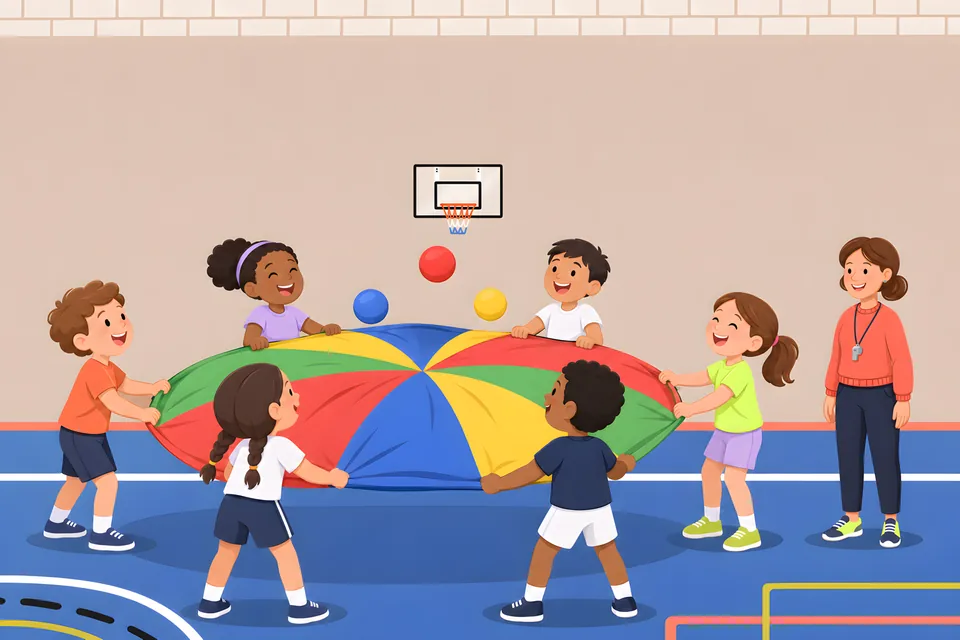
This list is for PE specialists and classroom teachers with a parachute in the equipment room and a class on the way.
Along with the activities, you get steps for drawing your own map, a table of common navigation mistakes and the checks to finish before…
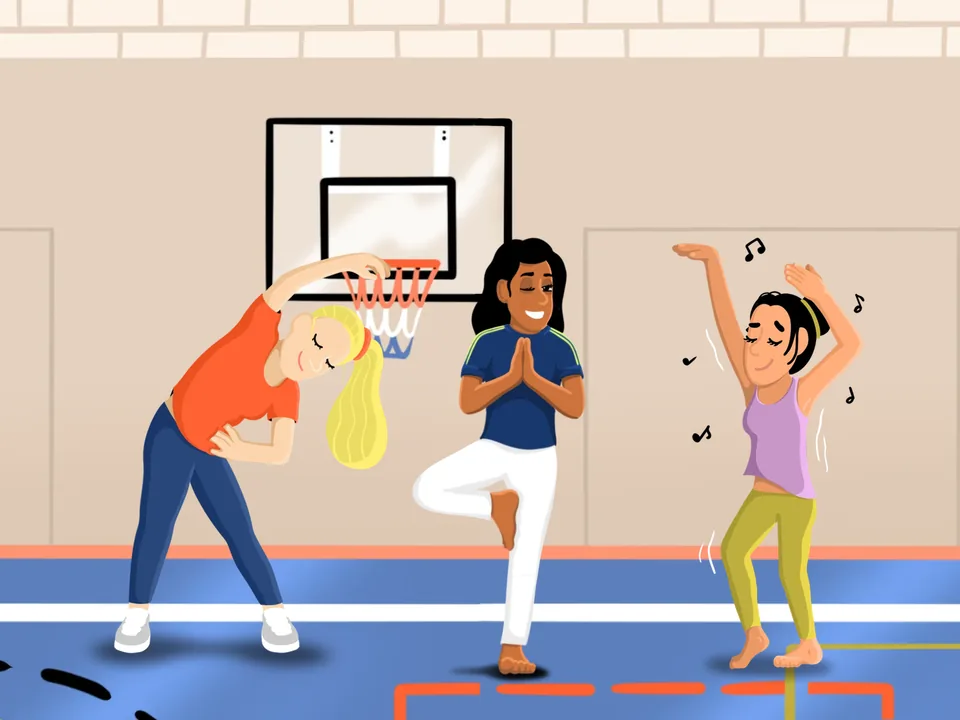
PE specialists and classroom teachers planning a heart-themed class or a full week in February can use these heart health activities for…
The 7-day free trial on yearly and 12-month plans unlocks all 6 gym tools; see current prices in the app. You can also try 3 free units in the app without an account.
App for iPhone, iPad and Android.