Games & warm-ups
9 Scooter Games for PE Class
You teach PE with a rack of scooter boards and a class that cannot wait to ride.
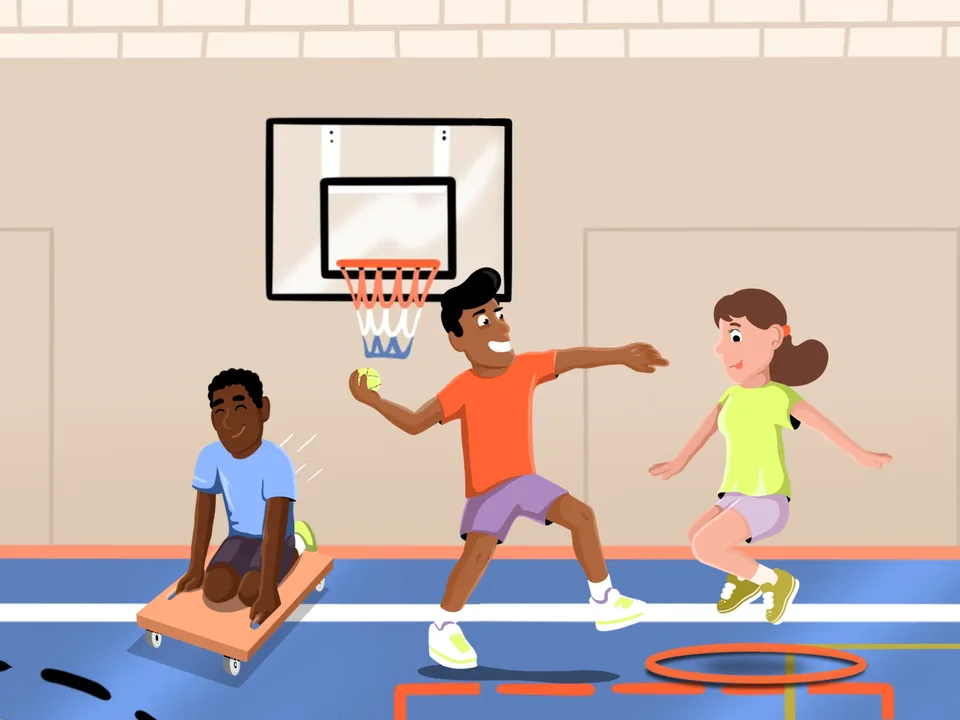
Eight target games for PE work across Grades K–12 when you cap each lane at 2 to 4 players. Four unopposed games build underhand, rolling, overhand, and disc accuracy, while four opposed games add tactical blocking and knock-offs. Point every lane toward one backstop wall in rounds of about 5 to 8 minutes and retrieve misses on one whistle.
PE specialists and classroom teachers covering gym know the scene: a whole class standing behind one set of pins. These eight games use beanbags, hula hoops, foam balls, and floor tape to split one gym wall or field strip into parallel lanes, each with its own scoring and fault rules.
A target game asks players to propel an object toward a stationary goal with high accuracy or in as few attempts as possible. Among the four core game categories in Teaching Games for Understanding (target, net/wall, striking/fielding, and invasion games), target play gives students time to aim without chasing ball carriers. Bowling, golf, disc golf, archery, bocce, and curling are familiar target sports. Unopposed versions measure pure accuracy against fixed goals, while opposed versions let teams block open lanes or bump rival objects away.
Both formats build manipulative control and tactical shot selection under Standards S1 and S2 of SHAPE America's 2024 National Physical Education Standards (four standards, S1–S4, released in March 2024 for US K–12 PE).
| Game | Type | Grades | Players per Lane | Round Time | Equipment |
|---|---|---|---|---|---|
| 1. Hoop Bullseye | Unopposed | K–3 | 3 players | About 5 min | 2 hula hoops, 9 beanbags |
| 2. Three-Pin Alley Roll | Unopposed | K–5 | 3 players | About 6 min | 3 plastic pins, 2 foam balls |
| 3. Wall Target Rebound | Unopposed | 2–8 | 2 players | About 5 min | 1 foam ball, taped wall square |
| 4. Disc Golf Basket Rings | Unopposed | 4–12 | 3 players | About 7 min | 1 hoop, 4 cones, 3 foam discs |
| 5. Beanbag Bocce | Opposed | 3–12 | 4 players (2v2) | About 8 min | 1 jack spot, 8 beanbags, 4 cones |
| 6. Gym Floor Beanbag Curling | Opposed | 4–12 | 4 players (2v2) | About 8 min | Floor tape rings, 8 beanbags |
| 7. Cone Topple Duel | Opposed | 3–12 | 4 players (2v2) | About 6 min | 3 cones, 3 whiffle balls, 4 foam balls |
| 8. Zone Shuffle Knockout | Opposed | 5–12 | 4 players (2v2) | About 7 min | Taped 1–3 pt zones, 8 deck rings |
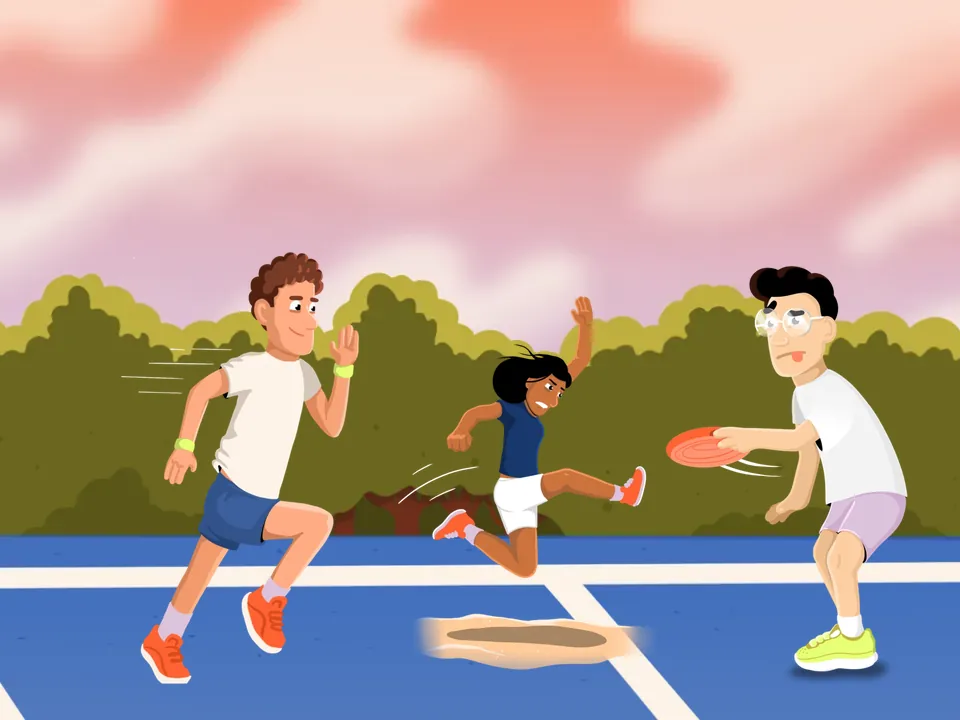
Unopposed aiming games let Grades K–5 and older beginners build throwing and catching skills against fixed goals without defenders.
Opposed target games pit two pairs on one shared target, adding shot blocking and knock-offs for Grades 3–12 and adult PE classes. If a lane has only three players, play one against two: the solo player takes every shot for that side and the others split theirs, then a new solo player starts the next end. In all four games, the side with more points when time is up wins.
Cap every station at 2 to 4 players and line up parallel target lanes facing one backstop wall, so nobody waits in a ten-person line behind a single set of targets. In a class of 25 students, build seven trios and one group of four rather than two giant lines. A trio at Wall Target Rebound rotates thrower, catcher, and scorekeeper; in a four-player lane, rotate throwers after every shot so everyone throws again within four turns.
Mark a Waiting Spot 5 feet behind your continuous Throwing Line across stations such as Lane 1 Hoop, Lane 2 Pins, and Lane 3 Bocce. Target games are often low-intensity, so tight station setups and rotations for PE class and brisk walking retrievals matter if the lesson should add to the 60 minutes of moderate-to-vigorous physical activity per day that the Physical Activity Guidelines for Americans recommend for ages 6 through 17.
Keep target play safe under active supervision by enforcing one shared throwing direction, about 6 feet or more between lanes, and a strict hands-off rule until the retrieval whistle sounds. Use beanbags, deck rings, or coated foam balls on a dry, obstacle-free gym floor, and aim at equipment rather than classmates; SHAPE America's dodgeball position statement calls traditional elimination dodgeball inappropriate for K–12 PE and cites the recommendation of moderate-to-vigorous activity for 50 percent of PE class time.
Rotate target lanes on a fixed clock every 5 to 8 minutes instead of playing to a point limit, so fast lanes never stand idle waiting for a tiebreaker. Have trios or pairs call their running score aloud after each retrieval, and reset points to zero when shifting one lane to the right. Clear, self-scored lane setups also work well inside one-page emergency PE sub plans for K–12 when a guest teacher covers the gym.
Check the turn math before blowing the start whistle: 24 students split into 8 lanes of 3 players, at about 15 seconds per turn with retrieval included, complete 24 turns per lane in a 6-minute round, giving each student 8 turns instead of 1 in a single whole-class line.
| Common Mistake | Why It Happens | Quick Fix |
|---|---|---|
| Throws sail high over targets | Late release or throwing for speed | Step 4 feet closer; cue a release below the waist on underhand tosses |
| Missed balls roll into side lanes | Round balls travel far on hardwood | Switch to beanbags, deck rings, or yarn balls |
| Players chase rebounds mid-round | No clear spot behind the line | Place a Waiting Spot 5 feet back; deduct 1 point for early steps |
| One pair wins every round | Skill gap at fixed distance | Winners step 3 feet back or use their non-dominant hand |
Hoop Bullseye and Three-Pin Alley Roll are the easiest starting games for Grades K–1. Play Hoop Bullseye with only the near hoop at about 6 to 8 feet, since beanbags stop flat instead of rolling into other lanes, and add the 14-foot hoop once throwers land two of three tosses.
Throwing games in PE mostly come from three of the four Teaching Games for Understanding categories: target games aim at a stationary goal, striking and fielding games throw to get runners out, and invasion games pass and shoot against defenders. All eight games in this article are target games, four unopposed and four opposed.
Choose the opposed games: Beanbag Bocce, Gym Floor Beanbag Curling, Cone Topple Duel, and Zone Shuffle Knockout, and add Disc Golf Basket Rings at about 30 feet. Older groups stay engaged when shots can block or bump rivals, and an off-hand rule for the leading pair keeps scores close.
Set a throwing mark about 4 to 8 feet from the goal, offer a tabletop ramp or PVC chute for seated rolls, and mark targets with bright tape. Let each student pick the distance that fits their reach, and check each student's IEP or 504 plan for seating and equipment needs before class.
About eight lanes fit along one 84-foot sideline if each lane is about 4 feet wide and you leave about 6 feet between lanes, which uses 74 feet. A 10-foot bocce lane in place of one narrow lane brings the total to 80 feet. Allow 5 feet for curling rings and 6 for disc targets. In a smaller gym, run fewer lanes with four players each and keep the spacing.
Check one or two throwing cues per student while the lanes run, such as stepping with the opposite foot and releasing underhand throws below the waist. For tactics, ask why a player chose to block, bump, or aim for the target. Compare each student's first and last round from the same distance, since scores from different distances are hard to compare.
You teach PE with a rack of scooter boards and a class that cannot wait to ride.
Elementary PE specialists, middle and high school coaches, and classroom teachers leading gym periods can apply the TGfU model across…
PE stations split a class into small groups that rotate through different tasks, so more students handle equipment and fewer stand in line.
This list is for PE specialists and classroom teachers who run bean bag toss games for kids in Grades K–5, with a few options for Grades…
Download the free PhysEdPrep app for iPhone, iPad, or Android at physedprep.com/get-the-app/ and try 3 free units with no account before your next class. The yearly plan and the 12-month plan start with a 7-day free trial and include 40+ unit plans, 240+ lessons, and all 6 gym tools for all grades K–12 (see current prices in the app).
App for iPhone, iPad and Android.