K–12 PE Equipment List & Checklist
You inherited a half-empty gym closet, or you have one annual supply order to stretch across Grades K–12. Elementary specialists…
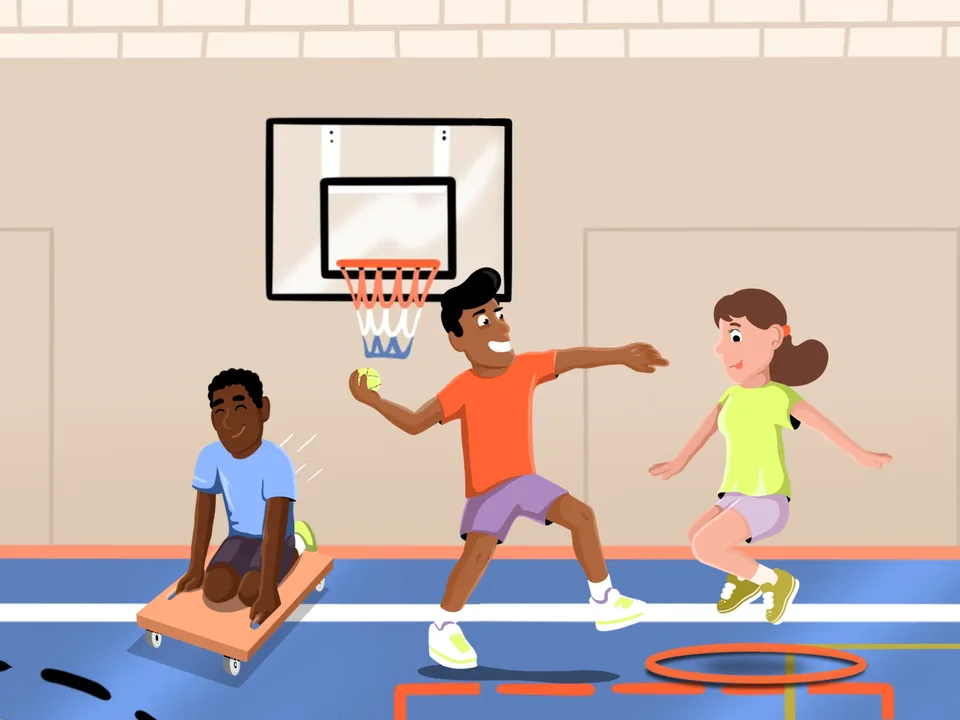
Start with 5 kinds of adapted PE equipment that serve many students at once: soft balls, large targets, a batting tee, bright floor markers, and floor spots with picture cards. Get ramps, paddles, boccia balls, and a low net next. Buy sound balls, a guide rope, or earmuffs when a student's needs call for them.
This list is for PE teachers and adapted PE staff who teach mixed classes on a limited budget. Each entry says who the item helps and how to use it safely. You'll also find closet swaps, common buying mistakes, and the steps for requesting an individual device through the IEP team.
Adapted PE equipment is any ball, target, marker, or support you choose or change so a student with a disability can work on a PE goal. Much adaptive PE equipment is ordinary gear made bigger, brighter, louder, slower, or closer.
In the table's last column, First marks broad use in a mixed class, Next marks a good second order, and On need marks a purchase for a particular student.
| Item | Helps students who | Buy |
|---|---|---|
| 1. Soft foam and beach balls | react slowly | First |
| 2. Batting tee and tethered ball | miss moving balls | First |
| 3. Paddles with grip straps | have a weak grip | Next |
| 4. Large, close targets | have limited aim or range | First |
| 5. Sound balls and beepers | are blind or have low vision | On need |
| 6. Bright and tactile floor markers | lose track of lines | First |
| 7. Guide rope | run with little or no vision | On need |
| 8. Rolling ramp | can't throw with control | Next |
| 9. Boccia set | play seated | Next |
| 10. Low net | play seated or need more time | Next |
| 11. Floor spots and picture cards | rely on routine | First |
| 12. Noise-reducing earmuffs | are sensitive to noise | On need |
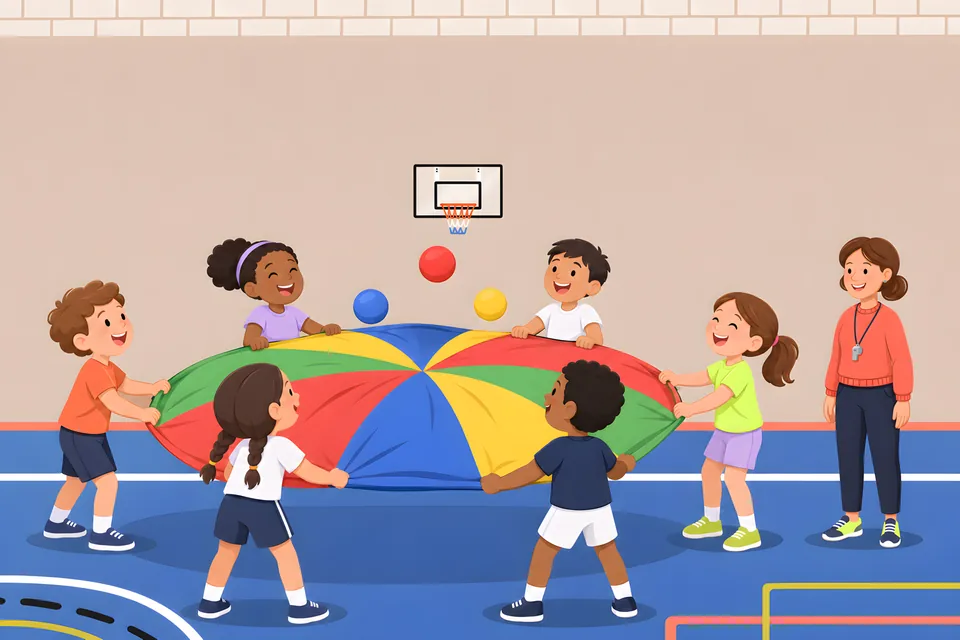
Pick gear that slows or stills the ball, eases the grip, or brings the target closer.
These help students who react slowly or flinch at hard balls; plan about one per pair. Stock foam balls about 8 inches wide and beach balls of about 16 inches, start with bounce-and-catch, and ban head shots. Choose beach balls over balloons for young children. The federal warning label for latex balloons says children under 8 can choke or suffocate on uninflated or broken balloons. Check for latex allergies at every age.
A resting or tethered ball helps students who can't yet time a toss. In each group of about four, one student strikes at a time. Rest a soft ball on a tee near the player's waist height, or hang it from a fixed point. Tape a swing zone that only the striker enters, and aim all hits into open space. Supervise any cord so it stays clear of necks, and take it down afterward.
Give a student with a weak grip a light, wide paddle with a hook-and-loop strap, and keep other players out of swing range. Fit the strap so the hand can slip free quickly, check the skin during use, and ask the occupational therapist first if sensation is reduced.
Floor hoops and laundry baskets help students with limited aim or range; one set serves about four players. Mark near, middle, and far throwing lines and let each student choose. Everyone retrieves on your signal, so nobody walks into a throw.
Sound, touch, and color contrast help students who are blind or have low vision follow play. Low vision varies widely, so ask the student and the vision teacher what works.
A ball with bells or an electronic tone tells a student where it is, and a beeper behind a target gives direction. Start with partner floor rolls in a quiet area, call "ready" before each roll, and test batteries before class.
Choose balls, cones, and tape that stand out against your floor. Tape thin rope flat along a boundary so feet or hands can feel it, and check that walkers and wheelchairs cross it easily. Walk the lines with the student before play and confirm that the tape suits your floor finish.
A guide rope serves one runner at a time. Stretch it at about elbow height between a start post and an end post, both anchored so they can't tip or pull loose. The runner slides a ring or loop along it, and a start knot and an end knot stop that loop well short of each post so the runner can slow down. Set the rope along one side of the gym, well away from the wall. Walk the route together and close the open side with a cone line. Start at a walking pace, and have an adult spotter call out before the end knot. Take the rope down before others cross.
Choose gear that changes where a ball starts, how high it must travel, or how far a player has to move. Check with the physical therapist before changing anyone's positioning.
A ramp or chute suits students who can't throw or roll with control; plan one per lane of about four to six players. The student tells or signals a helper how to turn the ramp, then releases the ball by hand or pointer. Set the ramp on a stable base, keep the lane ahead empty, and keep fingers away from hinges.
Soft red and blue balls plus a white target ball, called the jack, work well for seated players. Practice aiming at the jack by throwing, rolling, kicking, or using the ramp. Nobody picks up a ball until you give the signal.
For students who play seated or need more time, lower a badminton or volleyball net, or tie a bright rope between weighted standards. Begin low enough for the player to send a beach ball over from a chair, then raise it as rallies get longer. Pad the posts, keep the bases out of wheel paths, and don't let anyone run under the net or rope.
Visible routines and noise protection can help students with sensory or attention needs follow a loud, busy class.
Give each student a flat, non-slip spot and post picture cards in activity order at eye level. Point to the current card at every change so students can see what comes next. Remove spots that slide or snag wheels, walkers, or crutch tips.
Offer a pair as a choice to a student who is distressed by whistles or echoes. Earmuffs can also muffle warnings, so agree on a visual stop signal and keep the student where they can see you and any moving balls. Clean the pads if students share them.
A mat in a quiet corner within your sight gives a student room to pause and rejoin when ready. Never use that spot as a punishment.
Start with the student's goal and the barrier in the way, then test the cheapest change before you request a purchase.
| Mistake | Result | Fix |
|---|---|---|
| Ordering a kit before knowing your students | Gear sits unused | List barriers first |
| Parking adapted gear at a side station | A student is cut off from classmates | Offer it inside the main activity |
| Skipping a trial run | Straps pinch or ramps wobble in class | Test it with an adult first |
You can often change speed, grip, height, or sound with gear already in the building, provided each swap passes a safety check.
| You need | Swap in | Check first |
|---|---|---|
| Slower flight | A beach ball for a volleyball | Clear floor space |
| A still ball to strike | A foam ball on a tall cone | Stable cone, empty swing zone |
| An object that doesn't roll away | A beanbag | Throws stay below head height |
| A ramp | A smooth board or plastic gutter on a firm support | Covered edges, no wobble |
| Easier grip | Foam pipe insulation taped on a handle | Secure tape, snug fit |
| A sound cue | A partner clapping beside the target | Soft ball rolled along the floor |
For whole-class ideas, see these adaptive PE activities for K–12. To spot gaps in your inventory, compare it with a K–12 PE equipment checklist. For more low-cost builds, see these DIY PE equipment ideas. Keep sound balls, strap paddles and earmuffs in one labeled bin so they are ready when a student needs them, and find more bin and shelf setups in these PE equipment storage ideas.
Plan about one soft ball for every two students and one floor spot per student, plus one tee and one target set for about every four. A ramp serves a lane of about four to six players. Sound balls, strap paddles, and earmuffs depend on who needs them, so count those students first and add a spare sound ball.
No, don't buy them as general gym gear. Use a weighted vest or lap pad only when an occupational therapist recommends it for a specific student, with written directions on weight, wearing time, and supervision. Ask the therapist whether it should come off during active PE.
Clear floors and objects that stay within reach help most. Try beanbags, slow beach balls, close targets, and wide lanes, with supplies placed at a height that needs no deep bending. Remove loose mats, cords, and stray balls that could catch a crutch tip or roll underfoot, and ask the physical therapist about seated options.
Inspect it before every class and pull damaged items right away. Look for torn foam, frayed rope, loose straps, cracked ramps, wobbly standards, and weak batteries in sound balls. Clean shared straps, paddle handles, and earmuff pads as the manufacturer directs.
Yes, if the student's IEP team decides the student needs the device at home to receive a free appropriate public education. Federal IDEA rules (34 CFR 300.105) make home use of school-purchased assistive technology a case-by-case IEP team decision. General class gear such as foam balls usually stays at school. Raise the question at the IEP meeting and write the decision into the plan.
You inherited a half-empty gym closet, or you have one annual supply order to stretch across Grades K–12. Elementary specialists…
Worn-out balls, half a set of pinnies, one net for four classes: when the school budget does not stretch that far, these are the sources…
You may share students with a specialist, or you may be weighing a move into adapted PE yourself.
PE and classroom teachers with thin equipment bins can build this DIY PE equipment from recycled items and a few store basics.
Try 3 free units in the app without an account. Compare the gear they call for with your closet and note which swaps your students will need.
App for iPhone, iPad and Android.