Games & warm-ups
Calm Brain Breaks for Classrooms
When students return from outdoor recess or a loud hallway transition with racing voices, jumping straight into a lesson rarely works.
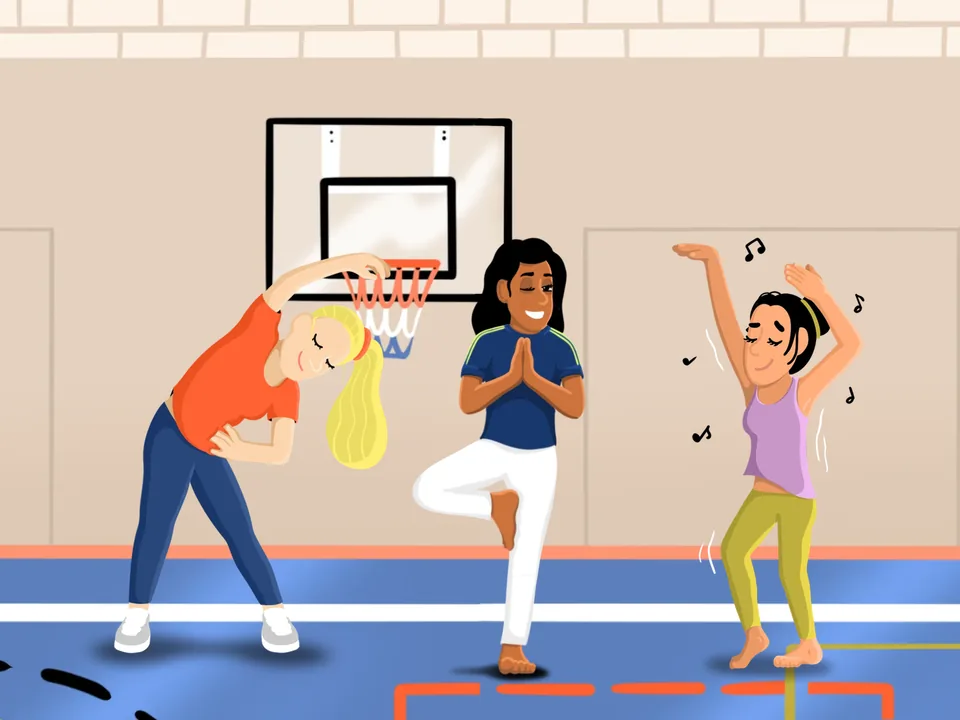
Yoga brain breaks are short, quiet movement resets of about 3 to 5 minutes: three to five easy poses, each held for a few slow breaths, done beside the desk or seated in the chair. Give every student an arm's length of space, skip headstands and forceful breathing, and end with a clear cue that points attention back to the task.
Small classrooms and long stretches of sitting call for yoga breaks that need no mats and no extra floor space. Standing and seated poses fit beside a desk, K–2 classes follow a story better than a list of pose names, and a fixed closing routine gets everyone back to the task.
Use a yoga break when the room is wired: after recess, after a fire drill, or when a transition has gone sideways. Students stand beside their chairs, feet about hip-width apart, and follow one cue at a time. You show a pose once, the class holds it for about three slow breaths, and you move on.
When the room is flat and foggy instead, pick something faster. Brain Breaks for Grades K–5 covers active classroom games and when a calm break fits better. For a quick heart-rate lift without a screen, try no-video dance brain breaks. If you want quiet resets without poses, the guide to calm brain breaks for classrooms covers breathing and stillness routines.
A yoga break does not replace activity. The Physical Activity Guidelines for Americans recommend 60 minutes or more of moderate-to-vigorous physical activity a day for ages 6–17, and gentle poses are mostly light effort. Keep recess and PE for the heart-rate work.
Breathing stays simple: slow breaths in and out at a natural pace. Skip breath holds and fast, forceful breathing with children, since both can leave students lightheaded.
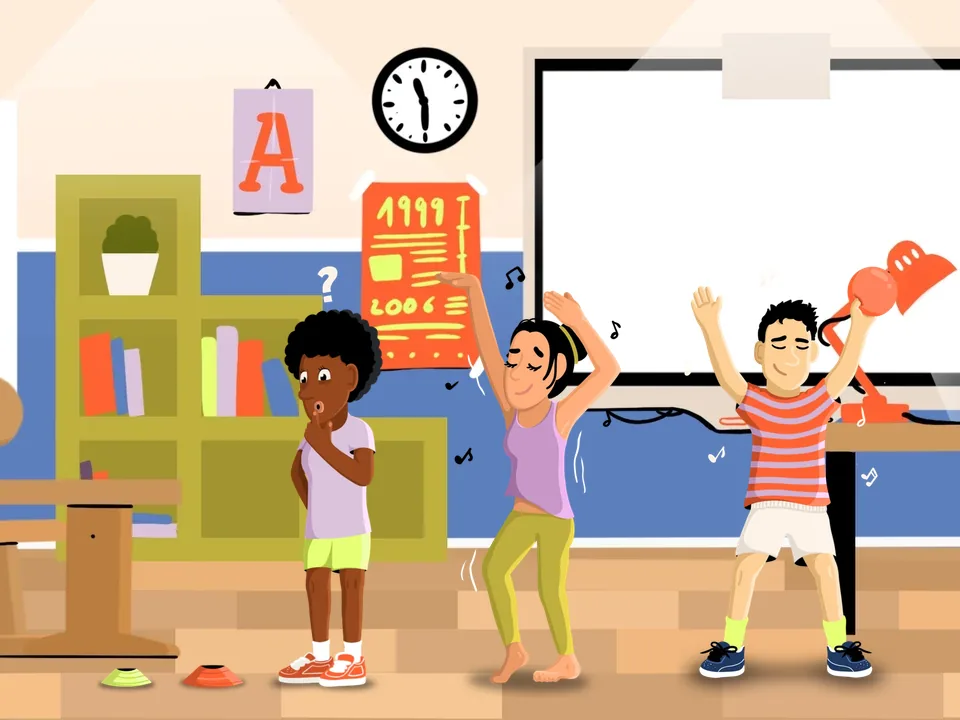
These six poses need no more room than the space beside a desk. The chair is pushed in under the desk. Students stand next to it and use a wall or a sturdy desk for fingertip support. A rolling chair never counts as support.
| Pose | How it goes | Watch for |
|---|---|---|
| Mountain | Feet hip-width apart, arms at the sides, shoulders relaxed. Cue: “Press your feet into the floor and grow tall.” | Locked knees. Keep a soft bend. |
| Reach up | Raise both arms overhead while breathing in, lower them while breathing out. | Shoulders creeping toward the ears, lower back arching. |
| Chair pose | Bend the knees as if starting to sit, weight in the heels, arms forward. | Bending too deep. A shallow bend lets every student hold three breaths. |
| Side bend | Arms overhead, lean slowly to one side, then the other. Cue: “Stay between two panes of glass.” | Twisting or leaning forward during the bend. |
| Soft forward fold | Hinge from the hips with bent knees, hands on thighs or a sturdy desk, head heavy. | Lightheadedness. Roll up slowly. No bouncing. |
| Seated twist | Sit tall in a four-legged chair, turn toward the chair back, hands on the chair back or knees, look over the shoulder. | Forcing the turn. Stop at the first stretch. Swivel chairs are out. |
Pick three to five poses and run the same short sequence all week. Swap in one new pose at a time.
Balance poses stay safe when you set up space, surface and support before the first pose, because they carry the most fall risk of any pose here. They also hold a class's attention, since every student has to focus on one spot.
Tree pose is the standard: weight on one foot, the other foot resting on the standing ankle or calf and never pressed into the knee joint, hands at the chest or overhead, eyes on a fixed spot on the wall. The easier kickstand version rests the toes of the lifted foot on the floor beside the standing foot.
Wobbling is normal. Teach one cue, “foot down,” and praise students who use it. If you teach PE, balance games in PE class take the skill further with equipment.
Younger students follow a story more easily than a list of pose names. Tell it slowly in the present tense and give each beat one pose, so the class moves when the story moves.
A garden story works for K–2. The seed is curled small in a seated forward fold, chest over the knees. It sprouts and stands up in mountain pose. The sun rises and everyone reaches up. Wind blows the tree, and the class bends to one side, then the other. A bird lands on a branch: tree pose in the kickstand version. Rain falls as the class wiggles fingers down into a soft forward fold. The garden goes quiet for three slow breaths, and the story ends.
Classroom teachers without a PE background can find more movement routines in the guide to elementary PE for classroom teachers.
End every yoga break with the same four-step closing, so students learn the signal and start the next task without a delay.
| Mistake | What happens | Fix |
|---|---|---|
| Going straight from the last pose to a quiz | Students are still settling and the first minutes of the task are lost. | Keep the three closing breaths. |
| Holding poses too long | Wobbling, giggling and sore legs. | Hold about three breaths, then move on. |
| Requiring closed eyes | Some students feel uneasy or peek at neighbors. | Make a soft gaze at the floor the default. |
| Starting before the room is quiet | Cues get lost and poses get sloppy. | Wait for quiet, then show the first pose without talking. |
Four of the six poses in the table work from a chair: mountain becomes sitting tall with feet flat, reach up and side bend work seated, and the twist is already seated. Add seated cat-cow: hands on knees, arch the back while breathing in, round it while breathing out. Students who use wheelchairs or mobility aids choose the arm and torso versions, so ask them what feels right. If a student has an IEP or 504 plan with movement accommodations, follow it. More ideas are in the guides to inclusive PE modifications and building an adaptive PE curriculum.
Offer a soft gaze instead of closed eyes and cue by voice and demonstration only, with no hands-on adjustments. Stretching should never hurt, so a student who feels pain skips the pose. Students with asthma, dizzy spells or other health plans follow those plans, and any student can sit out a pose.
Districts differ on yoga in school. After parent complaints, the Encinitas district in California removed Sanskrit terms and renamed poses, and a California appellate court upheld its program in 2015, as Education Week reported. That ruling applies to one state, so check your district's policy and use plain English pose names. Never use poses as a consequence: SHAPE America calls exercise as punishment inappropriate in its 2021 position statement.
Yes, if you preview the video first. Check that it runs about as long as your break, that it avoids floor poses and inversions your room cannot handle, and that no ads or autoplay suggestions will show up on the board. Standing or seated videos suit a room with desks. Follow your district's rules on streaming video.
Yes, in a simplified form with an adult close by. Use one pose per sentence of a short story, hold each for one or two breaths, and practice the pose first. Keep balance work to the kickstand version with a wall or the adult's hand within reach, and skip floor poses unless the surface is clean and soft. Expect wiggles; copying a pose counts.
Start with once or twice a day, placed where attention drops, such as after lunch or recess or before a test. More frequent breaks tend to eat into instruction time, so add a third only if the class clearly needs it. Keep each break at about 3 to 5 minutes.
No. Standing and seated poses need no mats, only the space beside the desk. Mats or a clean carpet matter only for floor poses such as cat-cow on hands and knees, and shared mats call for a cleaning routine your school approves. On tile or vinyl floors, leave floor poses out of the plan.
Yes. In Grades 6–8 they work best as plain standing and seated stretches with a stated purpose, such as loosening up before a test. Skip the story format, use plain pose names, keep each break at about 3 to 5 minutes and let students choose the easier version of every balance pose without comment.
When students return from outdoor recess or a loud hallway transition with racing voices, jumping straight into a lesson rarely works.
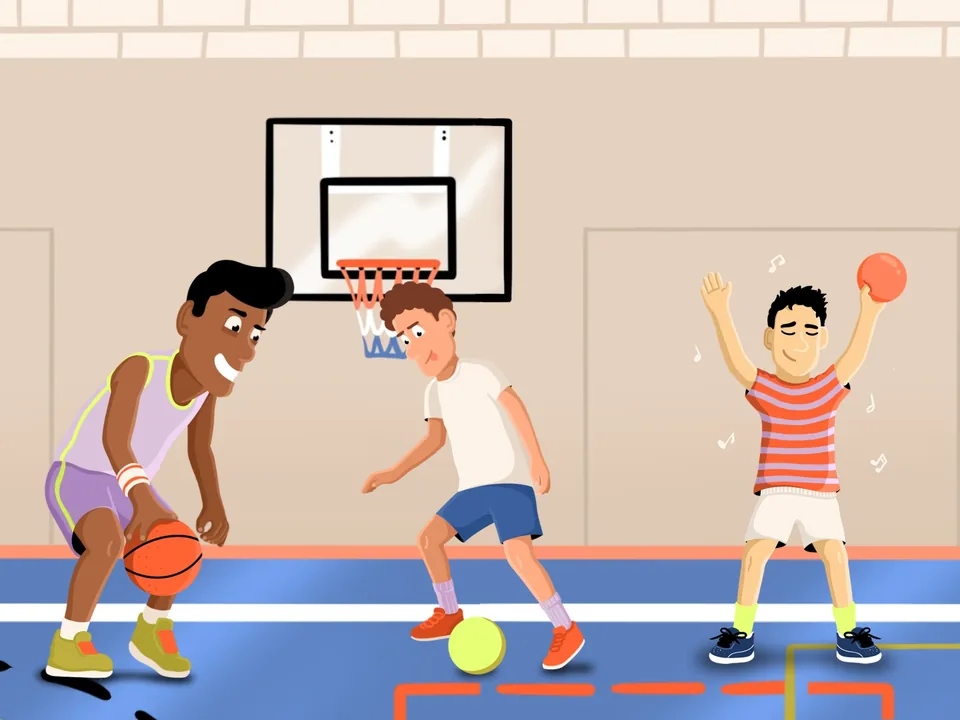
A good brain break needs a clear stop signal, a bubble of space for each child, and a game students can learn fast.
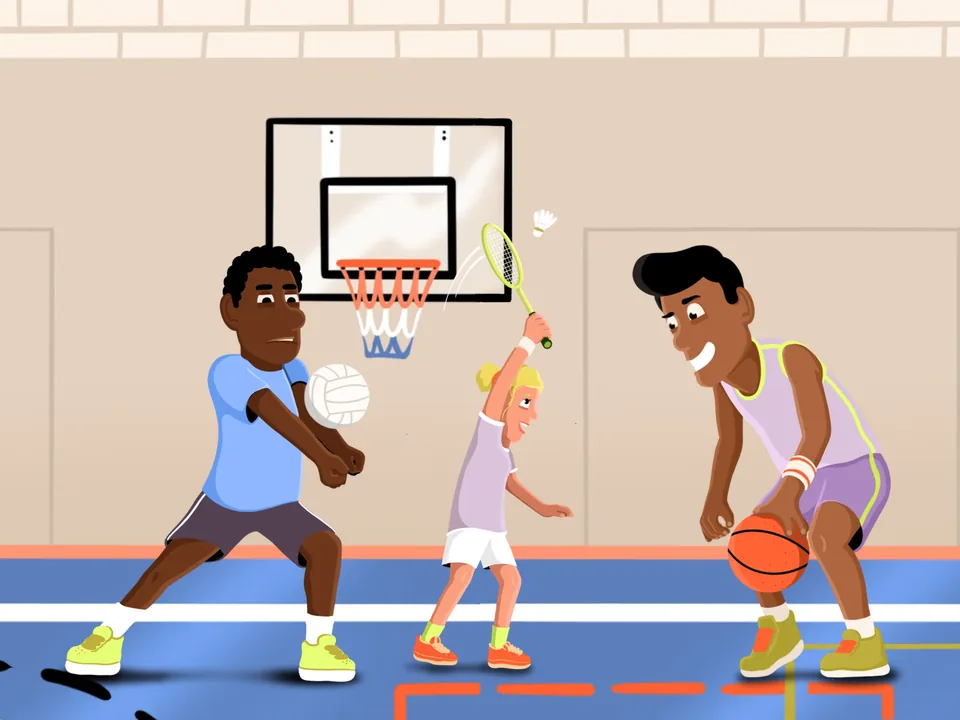
Balance games in PE start with the floor plan: every student needs personal space and a clear signal for start, stop and rotation.
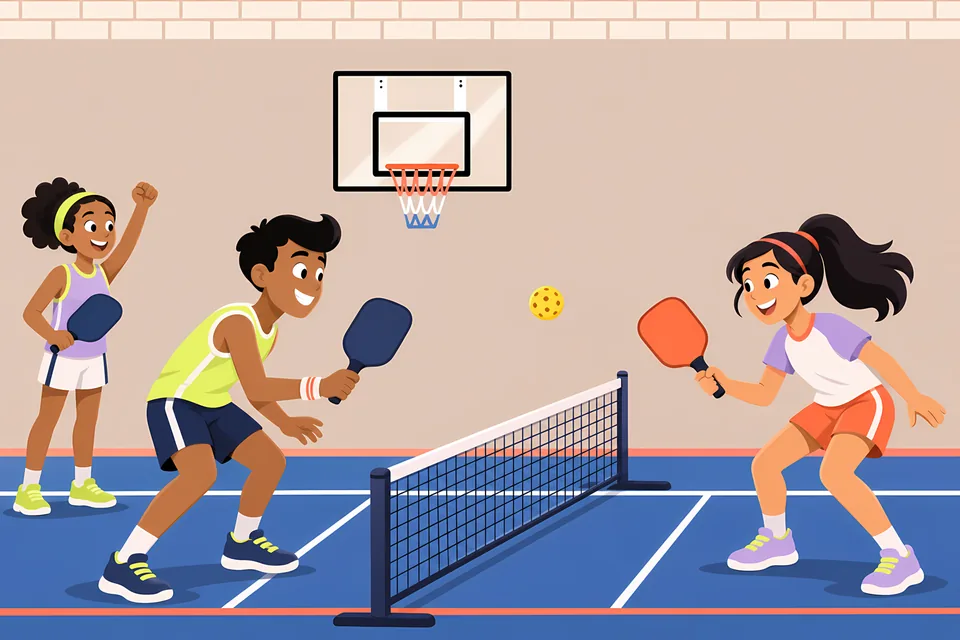
Attention often drops halfway through place value or multiplication drills.
Open the Classroom Brain Breaks pack from the 3 free units, no account needed, or download the PhysEdPrep app for iOS & Android.
App for iPhone, iPad and Android.