Games & warm-ups
Fall Brain Breaks for K–5 Classrooms
K–5 classroom teachers and PE specialists who want seasonal breaks without a screen get complete rules for six classroom breaks, five…
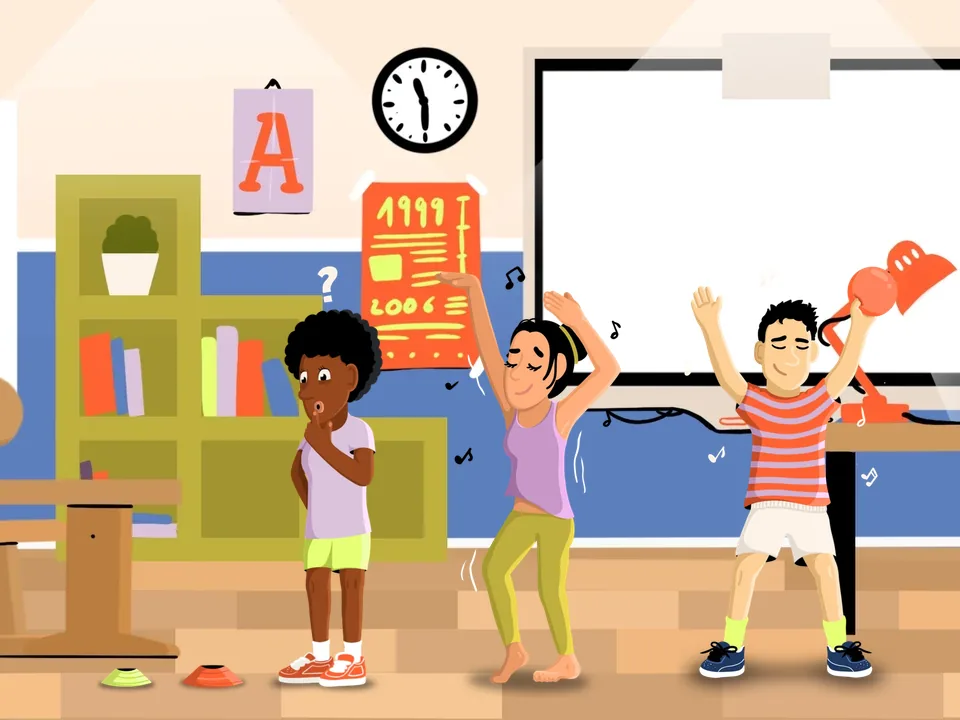
Effective classroom Halloween brain breaks last about 3–5 minutes and stay beside the desks, with about 3 feet between students, so kids release October energy without colliding. Pair two to four minutes of stationary skeleton shakes or monster freezes before seated work with one minute of slow breathing so your class settles right back into the lesson.
These breaks are for elementary teachers, classroom teachers who also teach PE, and substitutes in Grades K–5 during late October, when rain, assemblies, or class parties break up the schedule. They run beside the desks without a projector. You also get a calming reset for after the party, a costume safety check, and harvest versions for students who skip Halloween.
Match each October movement break to your students' current energy level, open floor space, and school holiday guidelines before asking the class to stand up. Lively stationary routines wake up sleepy morning classes, whereas seated breathing resets help settle the room once costumes and party snacks arrive.
Full-class Halloween PE stations with your own gear belong in the gym, while a classroom brain break works best at about 3–5 minutes beside desks. According to the U.S. Department of Health and Human Services Physical Activity Guidelines for Americans, children and adolescents ages 6–17 need 60 minutes or more of moderate-to-vigorous physical activity daily. A short desk-side break adds a little movement on days without PE but does not replace it. Video breaks work until the Wi-Fi drops or an ad pops up, so keep two screen-free cues ready: a clap pattern and a spoken freeze word.
| Classroom Moment | Activity | Duration | Space Needed |
|---|---|---|---|
| Morning sluggishness | Skeleton Shake | 2 minutes | Behind pushed-in chairs |
| Mid-morning transition | Pumpkin Patch Pop | 3 minutes | About 3 feet (arm's length) per desk |
| Before afternoon lessons | Monster Museum Freeze | 4 minutes | Desk-side spot, no running |
| After the class party | Haunted Window Box Breathing | 3 minutes | Seated at cleared desks |
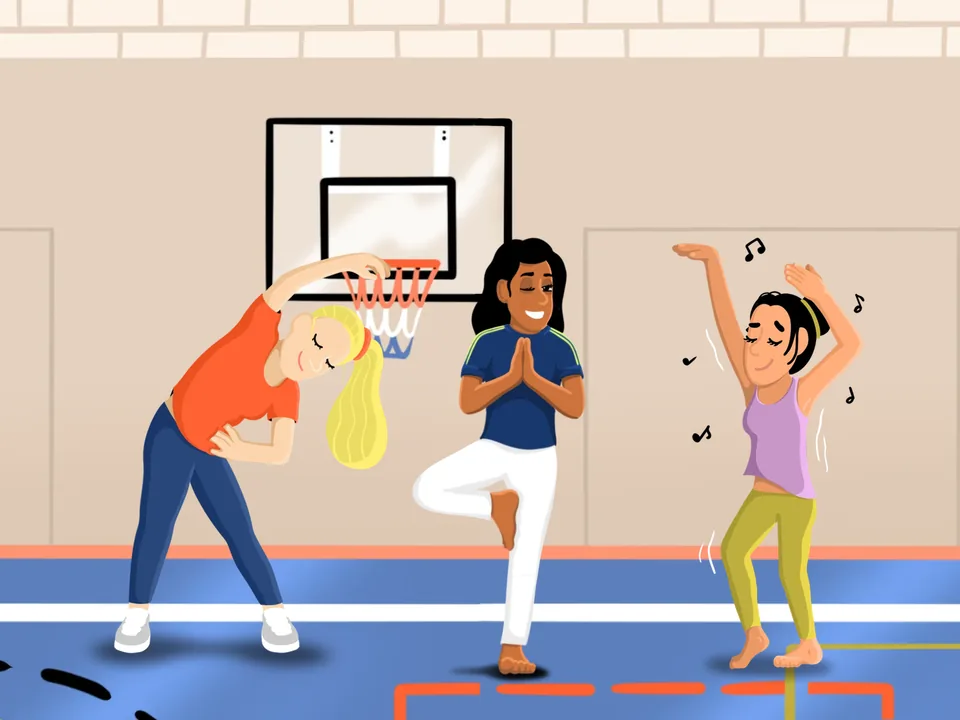
Stationary skeleton, pumpkin, and friendly monster routines get Grades K–5 moving behind pushed-in chairs in 2 or 3 minutes without equipment or hallway noise. Practicing controlled balance and spatial awareness beside desks supports the motor and personal skills described in SHAPE America's 2024 National Physical Education Standards (S1–S4).
In Skeleton Shake, the goal is to switch moves on cue and freeze in balance while staying in your own spot beside the desk.
In Pumpkin Patch Pop, the goal is holding a steady half-squat and rising only on the true cue word.
Teacher-led Halloween freeze dance and slow-motion spooky walks fit into 3 or 4 minutes when you use clapped rhythms instead of fast running. A steady clap pattern lets you lower the volume the moment excitement spikes. For more routines led by claps and hand signals, see these no-video dance brain breaks.
In Monster Museum Freeze, students hold a statue pose for 10 seconds whenever the beat stops while the teacher ("night guard") scans the room.
This is a floor-safe twist on Floor Is Lava: the cones are the lava, and everyone keeps both feet on the floor. Clear backpacks and chair legs from the outer aisle first, then set a cone in each corner (Corner Cones 1 to 4 on the plan) and leave the desks pushed in at the center. Everyone walks the One-Way Haunted Hallway Loop clockwise, using ghost tip-toes or zombie heel-to-toe steps and staying about 3 feet from the student ahead. A student who speeds up or touches a cone does three ankle circles outside the lane, then rejoins. Switch the walking style every 60 seconds, give the class a point for each quiet lap, and stop at seats after three 1-minute rounds (3 minutes total).
Seated breathing, palm presses, and slow shoulder stretches help students settle in about 3 minutes after costume parades, cupcakes, and loud party games. When post-party chatter rises, avoid assigning penalty push-ups or canceling afternoon recess: SHAPE America's position statement on physical activity and punishment notes that using exercise as punishment or withholding PE and recess for behavior management is inappropriate.
Run Haunted Window Box Breathing (3 minutes) right at cleared desks:
Inside the PhysEdPrep app for iOS & Android, the 13 brain breaks include relaxation and concentration options, and the Countdown Timer has quick picks for 1, 3, 5, 10 or 15 minutes to time a reset.
For more seated options before afternoon reading, see these calm brain breaks for classrooms.
Classroom movement on costume day stays safe only when students remove vision-blocking masks, park handheld props, and wear closed-toe non-slip shoes on a dry, clutter-free floor. Keep adult sightlines clear across every desk row and space students about 3 feet (arm's length) apart before starting any standing cue.
Check outfits before the first count: hems that touch the floor get rolled up, loose capes come off, and students in slick costume socks switch to seated upper-body moves so nobody slips on tile or linoleum. Save the final 1 minute of every 3–5 minute break for slow breathing so kids sit down steady.
| Common Mistake | Why It Happens | Classroom Fix |
|---|---|---|
| Tripping during freeze cues | Long robes, capes, or slick socks on tile floors | Unclip capes, roll hems up off the floor, or use seated arm moves |
| Bumped heads in aisles | Masks block side vision and chairs stick out | Remove masks before movement, push chairs in, and keep about 3 feet between students |
| Louder class afterward | Stopping straight from a fast, loud cue | Spend the last 1 minute of each 3–5 minute break on seated breathing |
| Stepping onto chairs | Students copy home Floor is Lava stunts | Keep both feet on the floor along the clockwise outer-aisle loop |
Framing October movement breaks around autumn weather, woodland animals, or harvest chores lets every student join the same 3–5 minute routine when families opt out of Halloween celebrations. Neutral seasonal cues can also help younger Kindergarteners or sensory-sensitive students who find zombies, witches, or eerie soundtracks unsettling.
Keep the same movements, class points, and round timers, and change only the imagery so nobody is singled out:
Keep classroom lights on, set audio low enough for spoken stop cues, and offer seated arm-only variations for students using mobility aids. Find more seasonal options in fall brain breaks for K–5 classrooms and Thanksgiving brain breaks for the short week, and year-round ideas in brain breaks and active classroom games for Grades K–5.
Plan about three or four 3–5 minute movement breaks across Halloween day, roughly one for every 45–60 minutes of seated work. Run active standing routines in the morning before costumes go on, then switch to seated stretches and 4-second box breathing after the class party.
Keep Kindergarten breaks to about 2 minutes, skip scary monster voices, and use cheerful pumpkin or animal cues with one movement at a time. Swap single-leg balances and sudden freezes for two-foot marching, clapped beats, tiptoe steps, and gentle arm sweeps, and stay close to the class during every standing cue.
Lead rhythm-and-cue breaks with hand claps, desk taps, or a phone countdown timer set for 2–4 minutes of movement plus 1 minute of slow breathing. Call out clear tempo shifts like slow mummy steps, silent owl wings, and 10-second statue freezes so you control room volume without waiting on ads or a frozen smartboard.
Students wearing inflatable suits, floor-length robes, or slick costume booties should stick to seated upper-body breaks unless they step out of the bulky layer first. Inflatable suits limit side vision, and wide costumes bump desks in aisles about 3 feet wide, so either store outer costume pieces during movement or run a seated routine for the whole class.
Yes, older students can do the same breaks if you raise the challenge. Stretch the freezes from 10 to about 15 seconds. Let a student call the cues and the decoy words. Add a quiet class goal, such as five silent freezes in a row. Keep the desk-side spacing of about 3 feet and the final minute of slow breathing for every grade.
K–5 classroom teachers and PE specialists who want seasonal breaks without a screen get complete rules for six classroom breaks, five…
A good brain break needs a clear stop signal, a bubble of space for each child, and a game students can learn fast.
When students return from outdoor recess or a loud hallway transition with racing voices, jumping straight into a lesson rarely works.
Loading a follow-along video on the projector can take longer than the movement break itself.
Download the PhysEdPrep app for iOS & Android to try the 3 free units, including the Classroom Brain Breaks pack, with no account needed. For all grades K–12 with 40+ unit plans, 240+ lessons, and 6 gym tools, start a 7-day free trial on the yearly plan and see current prices in the app.
App for iPhone, iPad and Android.