Games & warm-ups
Rainy Day Indoor PE Games for the Classroom
With clear floor boundaries and modified rules, you can run indoor PE activities that keep students moving safely without knocking over…
Ten indoor recess ideas fit a regular classroom with desks: five active games and five quiet activities, each running 5 to 10 minutes. Most need only a soft ball, a balloon, paper or masking tape. Pair one active game with one quiet option, keep everyone at walking pace, and rotate groups every 10 minutes.
When ice, snow or cold keep the class off the playground, recess moves into a room full of desks. Classroom teachers and PE specialists will find games that work between desks, plus a plan for zones, noise and rotation. If you are still deciding whether to go out at all, start with how cold is too cold for recess.
Ten games and activities work in a regular classroom: five active games that need an open patch of floor or the aisles, and five quiet activities that run at desks or one table. Pick one from each group per recess, so kids who want to move and kids who want to sit both have a place.
| Idea | Energy | Grades | Length | Gear |
|---|---|---|---|---|
| Silent Ball Streak | Medium | 2–5 | 10 min | Foam ball or rolled socks |
| Freeze Dance | High | K–5 | 5 min | Music or a clap pattern |
| Balloon Keep-Up | Medium | K–5 | 10 min | 1 balloon per group |
| Four Corners | Medium | 1–5 | 10 min | 4 numbered signs |
| Follow-the-Leader Trail | Medium | K–5 | 10 min | Masking tape |
| Heads Up, 7 Up | Low | 1–5 | 10 min | None |
| Fold-and-Pass Drawing | Low | 2–5 | 10 min | Paper, pencils |
| Paper Airplane Contest | Low | 3–5 | 10 min | Paper, masking tape |
| Puzzle and Board-Game Table | Low | K–5 | 10 min | Puzzles, board games |
| Story Chain | Low | 2–5 | 10 min | None |
The grade ranges are a starting point. Shorten the rounds for younger kids, and give older kids an extra rule, such as a required theme word in Story Chain.

Three zones cover most rooms: an active zone on cleared floor, a game table and quiet desks. Split the class into three groups and rotate them every 10 minutes. Whole-class games such as Four Corners and Heads Up, 7 Up replace the rotation for one slot.
Keep shoes on, since stocking feet slip on tile and vinyl, and clear dropped pencils, backpacks and water bottles before any moving game. If the room is too tight for a clear patch, run one active zone at a time and see games for small spaces.
Five active games fit between desks, and all of them stay at walking pace.
Grades 2–5, 10 minutes, one foam ball or rolled-sock ball. The class stands in a circle and tosses the ball underhand without talking while one student counts the streak. A drop, a toss above shoulder height or a word resets the count to zero. Rounds last 3 minutes; the best streak goes on the board.
Grades K–5, 5 minutes, music or a clap pattern. Kids move in place on their own spot of floor, an arm's length from anyone else, and freeze when the music stops. Nobody sits out, and a kid who moves during a freeze just keeps dancing. Call a new move each round, such as slow motion or tiptoes, and end with a last freeze after six stops.
Grades K–5, groups of 4 to 6, 10 minutes, one balloon per group. Groups keep the balloon up with open hands and count touches aloud, with no one touching it twice in a row. A balloon on the floor resets the count; each 2-minute round is a chance to beat the group's best. Ask about latex allergies first and clear popped pieces right away.
Grades 1–5, whole class, 10 minutes, four numbered signs. The caller closes their eyes and counts aloud to 10 while everyone walks to a corner. The caller then names a corner, and the kids there join the caller in the middle to count aloud next round. If the named corner is empty, the caller picks another. When only one corner still has kids, that group picks the next caller and everyone starts over.
Grades K–5, groups of 5 or 6, 10 minutes, masking tape. Lay a looping tape path around the desks for each group. The leader walks the group along it with a slow move such as tiptoes, giant steps or a side shuffle, and swaps to the back every minute. The game ends when every child has led once.
Five quiet activities run at desks or at one table and give kids a break from moving. For a short reset between games, try calm brain breaks.
Grades 1–5, whole class, 10 minutes. Seven kids stand at the front while everyone else puts their head down with one thumb up. Each of the seven quietly presses one thumb and returns to the front. On “Heads up,” the tapped kids stand and guess the tapper; a correct guess swaps places. A wrong guess keeps the tapper at the front. Play until all seven have guessed, then pick seven new kids for the next round.
Grades 2–5, groups of 4, 10 minutes, paper and pencils. Each child starts a sheet with a creature's head, folds it over to hide it and passes it on. The next child draws the body, then the legs, then the feet, folding after each. The round ends when every sheet is unfolded and named.
Grades 3–5, 10 minutes, paper and a tape line. Kids fold a plane with a blunted nose and throw it from behind the tape line, one thrower at a time, while everyone else stands to the side of the lane. Each child gets three flights, and the longest counts, measured in floor tiles or giant steps. Aim away from faces.
Grades K–5, 2 to 4 kids per game, 10 minutes, puzzles and board games. Set out three or four options at the game table. Kids pick one and stay with it until the 10 minutes are up. A puzzle in progress stays on the table for the next group, and finished games get repacked.
Grades 2–5, groups of 6 or a whole-class circle, 10 minutes, no gear. The first child opens a story with one sentence, and each child adds one more in turn. The last child gives the ending. For extra challenge, every sentence must include a winter word.
Three rules keep indoor recess calm enough for one adult: walking pace only, soft objects only, and a choice between a moving and a quiet activity for every child. Add one freeze signal, such as flicking the lights or raising a hand, that stops everything.
Two SHAPE America position statements are useful guides for indoor recess. The 2021 statement on using exercise as punishment calls it inappropriate to withhold physical activity such as PE or recess as a consequence, so a student who needs a reset still gets a quiet or moving option. The 2017 dodgeball statement rejects traditional elimination dodgeball for K–12 PE. All 10 games above keep every child playing.
| Mistake | Cause | Fix |
|---|---|---|
| Kids run and collide | Floor patch too small for the game | Mark the edge with tape, enforce walking only, or switch to an in-place game |
| Noise climbs after a few minutes | Cheering with no reset | Use the freeze signal, then move to a quiet option |
| The same kids always lead | Volunteers chosen by raised hands | Draw names from a cup for roles like caller or counter |
| Kids sit out or drift | Only one kind of activity offered | Run a quiet option next to the active one |
| A ball or balloon hits a face or desk edge | Hard object or crowded floor | Foam, sock or balloon only, toss below shoulder height, spread out |
Swap the games each day and keep the routine fixed: one active game, one quiet option, same zones. A five-day rotation from the list above looks like this:
Add a twist when a game goes flat: a class record for the week on the board, one student-invented rule change, or a new theme for Story Chain.
Children ages 6 through 17 should get 60 minutes or more of moderate-to-vigorous physical activity a day. Indoor recess covers only part of that, so add movement inside lessons with brain breaks for Grades K–5. For more games that fit a classroom, see rainy day indoor PE games. When the weather clears, outdoor recess games take over.
Five that need almost no setup are Silent Ball Streak with a foam ball, Freeze Dance with any music, Heads Up, 7 Up with no gear, Fold-and-Pass Drawing with paper and pencils, and Story Chain with nothing at all. Each runs 5 to 10 minutes and fits a standard classroom with desks.
Silent Ball Streak, Four Corners, Balloon Keep-Up and the Paper Airplane Contest suit 4th graders, and Heads Up, 7 Up works as the quiet pick. Fourth graders usually like a score to beat, so keep a class record on the board and let students propose one rule change a week.
Give an 11-year-old a challenge with a number to beat, such as a paper airplane distance contest from a tape line or a solo Balloon Keep-Up record. With siblings or a parent, Fold-and-Pass Drawing needs 4 players and Story Chain needs 2 or more. Clear breakables first and check for latex allergies before using balloons.
About 10 minutes for most games here, and 5 minutes for Freeze Dance. Switch earlier when noise rises or kids drift away. With zones, rotate the three groups every 10 minutes so each group visits the active zone, the game table and the quiet desks.
Use in-place and seated versions: Freeze Dance beside the desks, Silent Ball Streak with kids seated in a circle on the floor, and Story Chain or Heads Up, 7 Up from the quiet list. Run one active zone at a time and keep an arm's length between kids at walking pace.
With clear floor boundaries and modified rules, you can run indoor PE activities that keep students moving safely without knocking over…
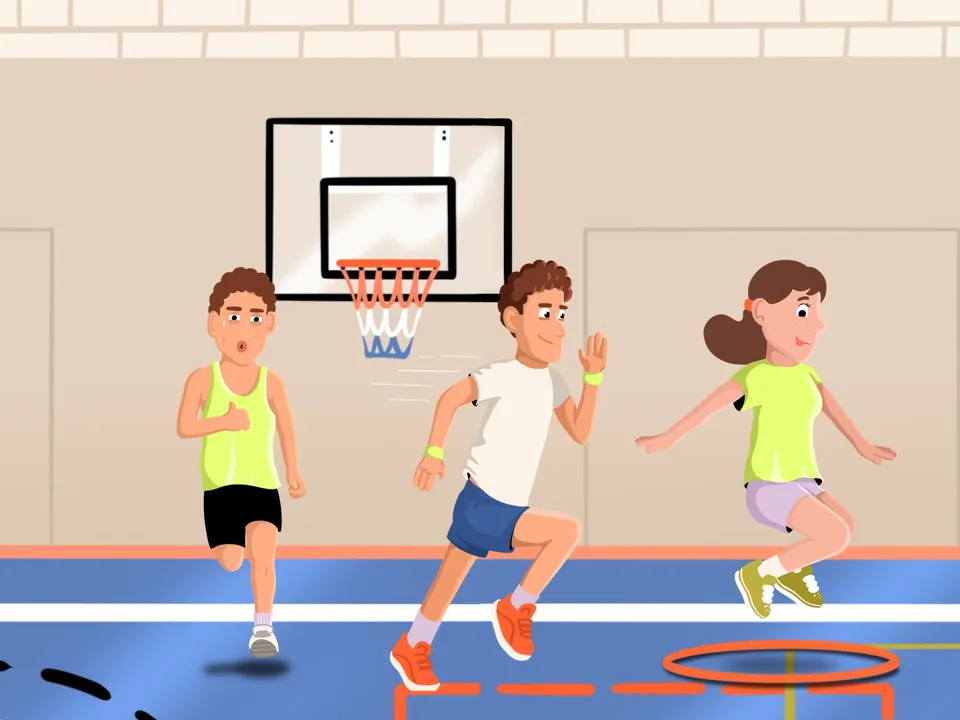
A good brain break needs a clear stop signal, a bubble of space for each child, and a game students can learn fast.
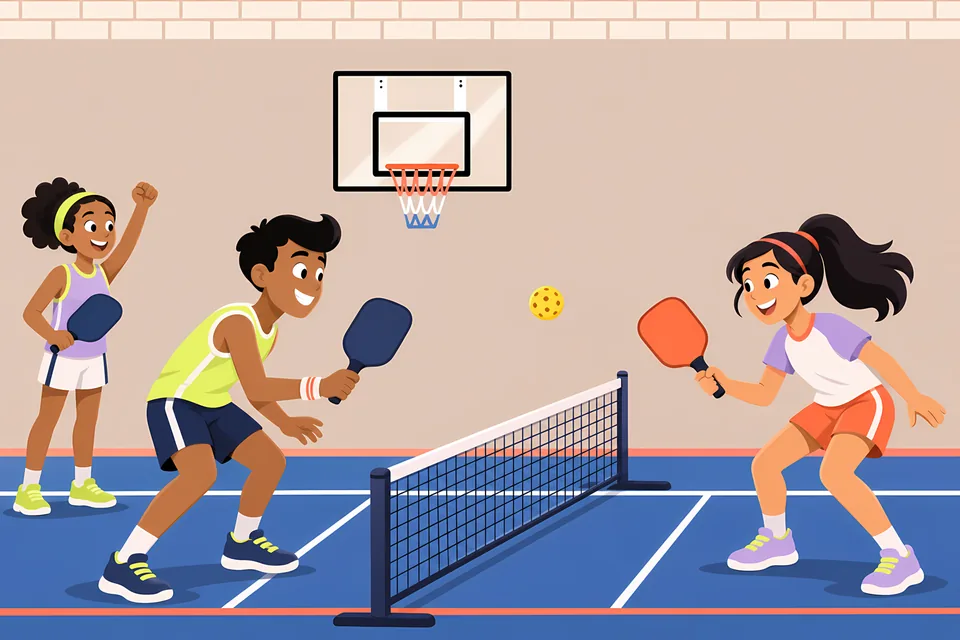
When students return from outdoor recess or a loud hallway transition with racing voices, jumping straight into a lesson rarely works.
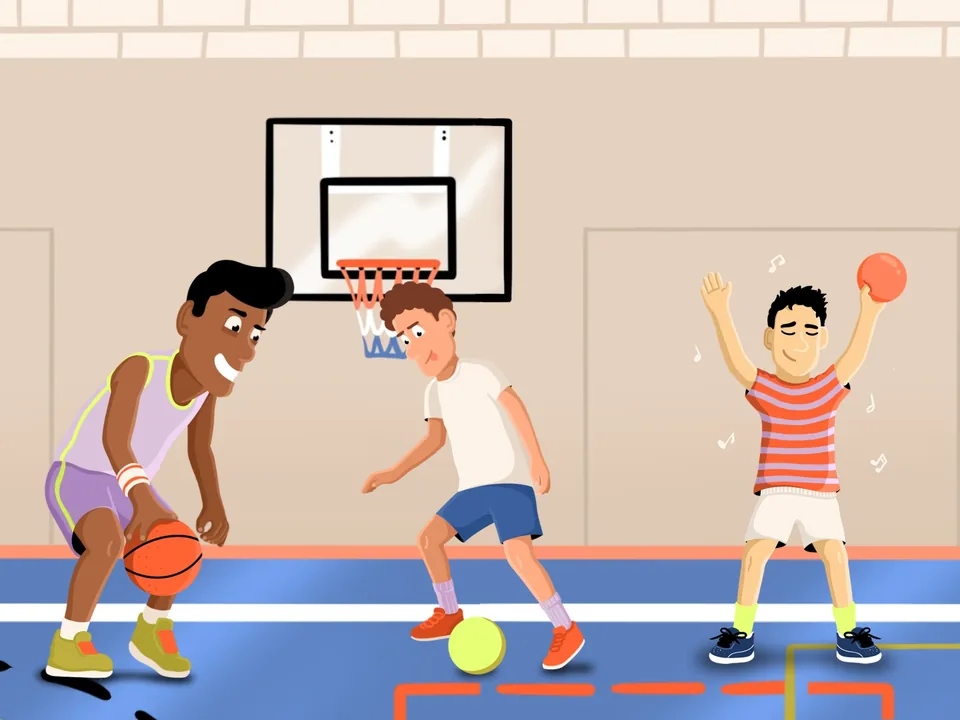
When an assembly, a testing day or a second class takes half your gym, the students still show up. PE games for small spaces work when you…
Open the 3 free units, no account needed, and start with Classroom Brain Breaks. A plan in the app adds 40+ unit plans, 240+ lessons and all 6 gym tools. Yearly plans start with a 7-day free trial; see current prices in the app.
App for iPhone, iPad and Android.