Literacy Activities for PE Class
This list is for PE specialists, classroom teachers who run PE and secondary teachers who are asked how their class supports reading and…
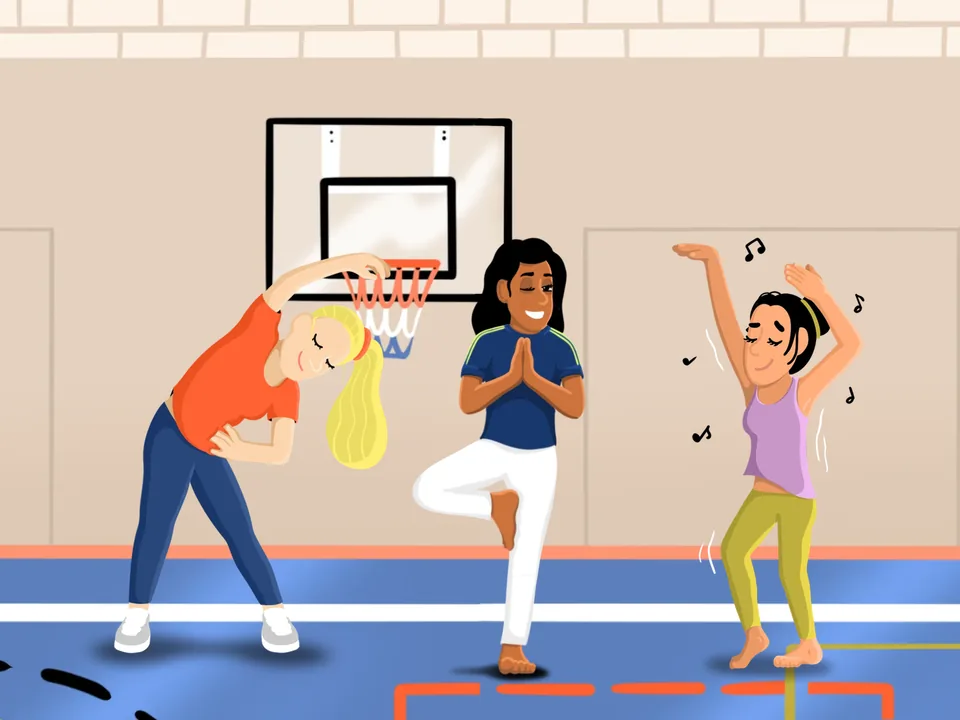
Movement concepts in PE fall into 4 groups: body awareness, space awareness, effort and relationships. Skills such as running or throwing say what the body does. Concepts say where, how fast, how hard and with whom, so one skill can be practiced many ways. The 10 short activities below take 5 to 10 minutes each and are sorted by concept.
PE specialists and classroom teachers with little prep time can run these activities with basic gym gear, and several need none at all. Most fit Grades K–5, and one reaches Grade 8. After the activities come quick assessment checks and a table of typical mistakes with fixes.
A skill is the action, and a concept is how, where or with whom the action happens. Hopping is a skill. Hopping slowly along a zigzag path toward a partner adds speed, pathway and a relationship to the same skill.
SHAPE America's 2024 National PE Standards have four standards (S1–S4) and replace the 2013 edition, which had five. Standard 2 covers movement and fitness concepts, and its PreK–2+ indicators ask students to recognize personal space and where to move in general space.
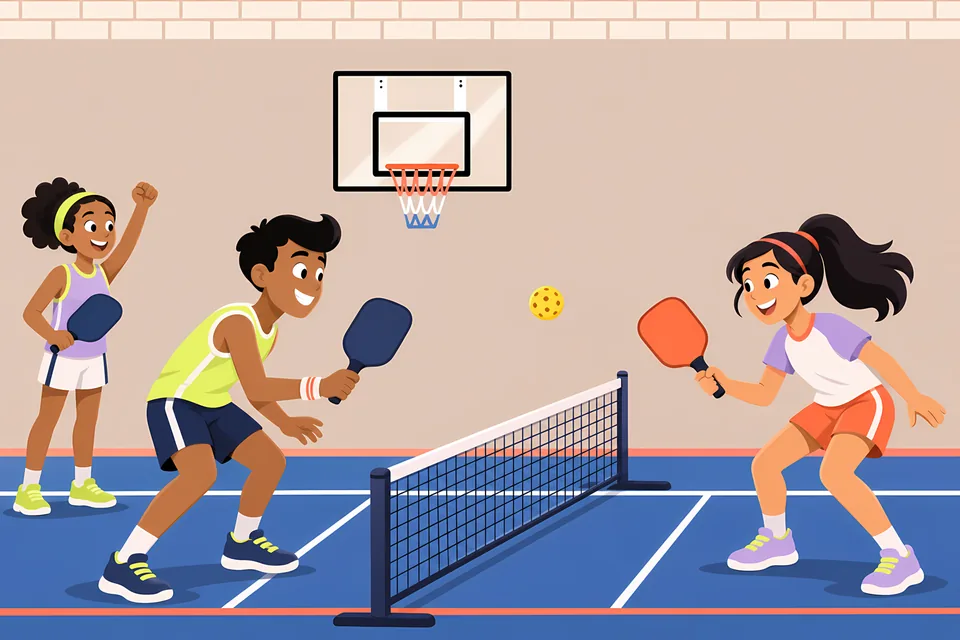
The 10 activities cover all 4 concept groups and take 5 to 10 minutes each. They use basic gear such as cones, spot markers, jump ropes, hoops, bean bags and floor tape, and several need no gear at all.
| Activity | Concept | Grades | Group | Time |
|---|---|---|---|---|
| Bubble Check | self space | K–2 | whole class | 5 min |
| Open Space Hunt | general space | K–5 | whole class | 5 min |
| Level Switch | levels | K–5 | whole class | 5 min |
| Pathway Trails | pathways, directions | 1–5 | groups of 4–5 | 8 min |
| Speed Dial | speed | K–5 | whole class | 5 min |
| Soft Touch, Strong Throw | force | 2–5 | pairs | 8 min |
| Flow Chain | flow | 3–8 | pairs | 10 min |
| Mirror Mates | relationships with people | K–5 | pairs | 5 min |
| Over-and-Under Course | relationships with objects | K–2 | groups of 4–6 | 8 min |
| Shape Statues | body awareness | K–3 | whole class | 5 min |
Treat the grade ranges as starting points and shift them a year up or down to fit your class.
Four activities cover self space, general space, levels and pathways, and they work best in that order. Self space is the bubble a student can fill without touching anyone; general space is the whole shared area. Keep the floor clear and dry, mark boundaries with cones and start every travel activity at a walk.
Grades K–2, whole class, about 5 minutes, one spot marker per student
Scatter the spot markers so each student has room to reach out and spin. On “bubble check,” students stretch both arms out and turn once. Anyone who touches something slides one step away and checks again, and the round ends when everyone is frozen with a clear bubble.
Grades K–5, whole class, about 5 minutes, cones for the boundary
Students walk inside the cone boundary toward the emptiest spot, and anyone within arm's reach of a classmate turns away. On “freeze,” everyone stops and checks their bubble. Repeat with skipping, galloping and sliding, and stop after four rounds.
Grades K–5, whole class, about 5 minutes, music or a drum
Call “low,” “middle” or “high” while students travel: a bear walk, a walk or a tiptoe walk with arms overhead. Students at the wrong level fix it on the next call. The round ends when each level has been called three times.
Grades 1–5, groups of 4–5, about 8 minutes, jump ropes or floor tape
Give each group a rope or tape line shaped straight, curved or zigzag, with the rope ends taped down. Each student walks the line forward, sideways and backward (looking over the shoulder, and only while the space behind is clear), then names the pathway. A student who steps off restarts, and groups rotate to a new shape once everyone has walked all three directions.
Teach speed, force and flow one at a time and ask for the extremes first, such as slow motion versus fast, so students can feel the contrast.
Grades K–5, whole class, about 5 minutes, a drum or your voice
Students travel inside the cone boundary with the movement you name, such as skipping or jogging, while you call “slow motion,” “medium” or “fast” with a hand signal for each. Anyone about to bump a classmate slows down or turns away. The round ends when you have called each speed twice.
Grades 2–5, pairs, about 8 minutes, bean bags and three hoops per pair
Place the hoops at a near, a middle and a far distance from a throwing line. Each student tosses underhand at every hoop and tells their partner whether the force was soft, medium or strong. Toss only toward the hoops, never at people, and collect the bags after all tosses are done; each student takes two turns. For more tossing ideas, see bean bag games for PE.
Grades 3–8, pairs, about 10 minutes, no gear
Each pair builds a sequence of three movements, such as a jump, a quarter turn and a balance, and performs it without pausing between moves. Another pair calls it “smooth” or “stopped.” A pair that stops restarts from the first move, and each pair performs twice. Add rolls only on mats and only after you have taught the roll.
Relationships and body awareness work best after students can hold a clear bubble in general space. These three activities cover partners, objects and body shapes.
Grades K–5, pairs, about 5 minutes, no gear
Partners face each other about an arm's length apart. The leader moves slowly in place and the follower mirrors, and on “switch” the roles swap. The goal is that an observer cannot tell who leads, and the round ends after each partner has led twice.
Grades K–2, groups of 4–6, about 8 minutes, hoops, cones and two jump ropes
Set a start cone, a row of flat hoops, a rope on two cones low enough to step over, a second rope high enough to crawl under, and a finish cone. Students go one at a time and say the word for each part: in, out, over, under. If a rope falls, the student puts it back and keeps going, and each student completes three trips.
Grades K–3, whole class, about 5 minutes, no gear
Call a shape such as wide, narrow, round or twisted, and students freeze in it inside their own space. For a harder call, name a balance with three body parts on the floor. Students hold each shape for a slow count of three, and the activity ends after six shapes.
For cooperative group play, the Parachute Games unit (from grade 1) is one of the 3 free units, which need no account.
You check movement concepts by watching what changes in a student's movement, not whether the skill itself was perfect. One or two quick checks per activity fit into the same 5 to 10 minutes.
Turn each check into an I can statement, for example “I can change levels while I travel,” and see assessing PE class for grading options.
Collisions, races and long explanations are the usual trouble spots, and each has a quick fix. Talking time matters: SHAPE America recommends moderate to vigorous activity for 50 percent of PE class time, a figure it cites in its position statement on dodgeball. Our guide to reaching 50% MVPA covers the rest.
| Mistake | Cause | Fix |
|---|---|---|
| Students collide while traveling | Boundary too small, or bubble check skipped | Start at a walk, widen the boundary or split the class in two, and repeat the bubble check |
| Speed Dial turns into a race | Fast gets all the praise | Call “slow motion” first and praise the clearest contrast between speeds |
| Young students mix up self space and general space | Both terms are abstract | Use a spot marker as self space and the cone boundary as general space |
| Flow Chain stalls | Sequence has too many moves | Cut it to two moves, then add a third |
| The same student always leads | Partners choose themselves | Assign partners as A and B and call which letter leads |
| Explanations eat the activity | Too many concepts at once | Teach one concept per activity and demonstrate instead of describing |
For mixed-ability classes, change one variable at a time; 10 ways to differentiate in PE shows how.
Movement-based learning teaches academic content, such as spelling words or number facts, through physical activity, for example hopping to a letter to spell a word. It is different from movement concepts, which are PE content itself. Keep the bursts short and mark a boundary so students have room to move.
In fitness training the seven basic movements are often listed as squat, hinge, lunge, push, pull, rotate and gait (walking and running). In elementary PE, teachers more often list locomotor skills: walk, run, jump, hop, skip, gallop, slide and leap, which makes eight. Movement concepts such as speed or level change how any of these are done.
One concept per activity and one or two per class is a good start. When students pass the quick check for a concept, combine two, such as slow motion along a curved pathway. Add a third, such as a low level, only after the first two look secure.
Change one variable at a time: a wider boundary, a slower speed, a visual cue or a chosen partner. Levels can be shown with arms or head position, and pathways can be traced with hands or a mobility device. Check each student's IEP or 504 plan for required accommodations.
Usually in Pre-K through Grade 2. SHAPE America's 2024 standards include recognizing personal space and where to move in general space among their PreK–2+ indicators. Older students keep using both ideas in games and sequences, such as Flow Chain in Grades 3–8.
This list is for PE specialists, classroom teachers who run PE and secondary teachers who are asked how their class supports reading and…
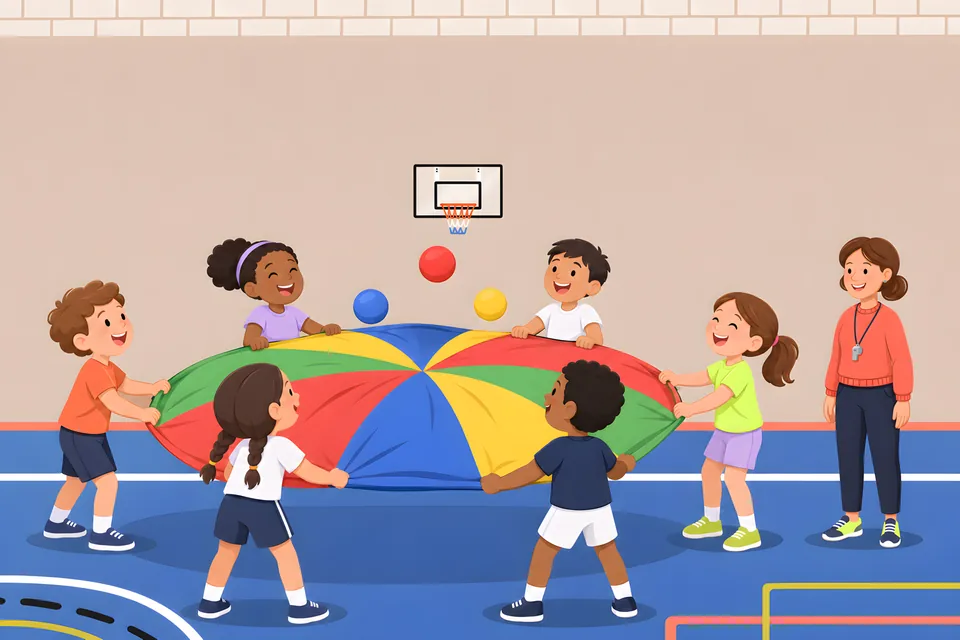
In a 30- or 40-minute period with 24 to 36 students, much of the lost movement time comes from routines like roll call, team picks and…
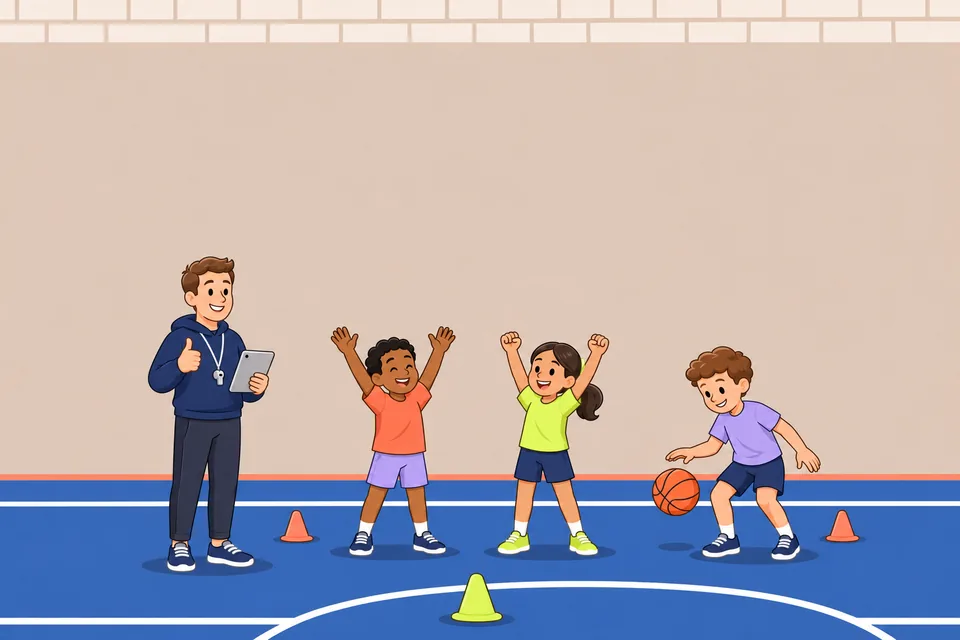
Some students in your class have played a sport for years, and others are touching it for the first time.
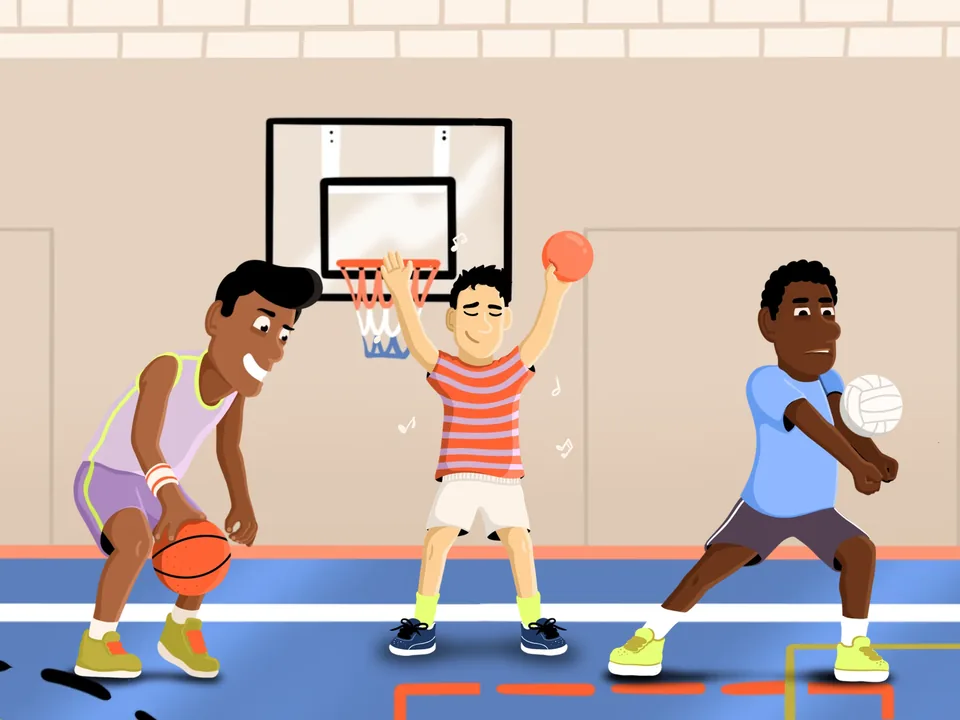
This guide is for PE specialists and classroom teachers who need I can statements for PE that students can read, say and rate.
Open the 3 free units, no account needed, and run Parachute Games (from grade 1), a unit built on cooperation, with your class. Memberships are bought in the app and start with a 7-day free trial on the Yearly and 12-month plans; see current prices in the app.
App for iPhone, iPad and Android.