Games & warm-ups
Winter Brain Breaks for Classrooms
Short, structured winter brain breaks let you channel that restless energy right beside student desks without rearranging furniture.
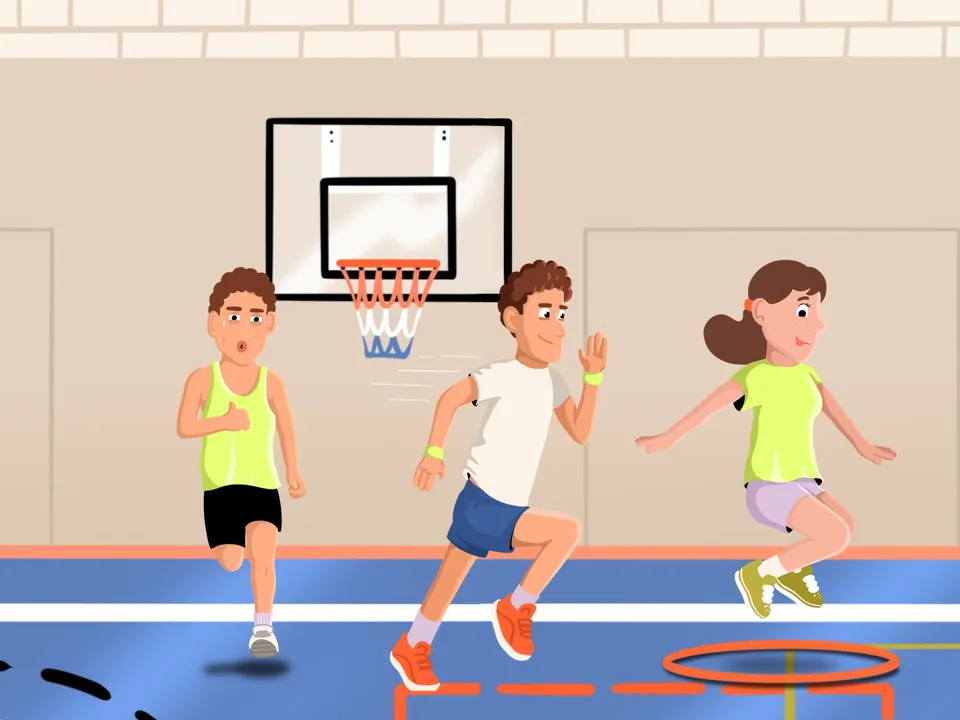
Ten New Year brain breaks, each about 1 to 3 minutes long, cover the first week back from winter break. They split into two countdown breaks, three calendar and number breaks, three routine resets and two calm breaks. Only one needs a timer; the rest use only your voice, the board or your usual signal. All work beside the desks with arm's length of clear space per student.
K–5 classroom teachers and PE specialists can use these breaks when students have not followed a school schedule for a week or two. A chart helps you pick by grade and energy level, each break comes with its rules, and a table of typical mistakes covers what goes wrong in a crowded room.
Pick by grade band and energy level: these January brain breaks run about 1 to 3 minutes each, and only Beat the Posted Time needs a tool, a classroom timer. Active breaks wake a class up, calm breaks settle it.
| Break | Grades | Time | Energy | Needs |
|---|---|---|---|---|
| Ten-Count Rise | K–5 | about 1 minute | Medium | Nothing extra |
| Eight-to-One Shake-Out | K–5 | about 1 minute | Active | Nothing extra |
| Month Motions | K–2 | about 2 minutes | Medium | Nothing extra |
| Year Digit Air Writing | 1–5 | about 2 minutes | Calm | The board |
| Midnight Clock Arms | 1–3 | about 2 minutes | Calm | Board (optional) |
| Signal Rehearsal | K–5 | about 2 minutes | Medium | Your usual signal |
| Beat the Posted Time | 2–5 | about 3 minutes | Medium | Timer |
| Break Check-In Stand-Ups | 2–5 | about 2 minutes | Medium | Nothing extra |
| Fireworks Breathing | K–5 | about 1 minute | Calm | Nothing extra |
| Resolution Mirror | 3–5 | about 3 minutes | Calm | Partner space |
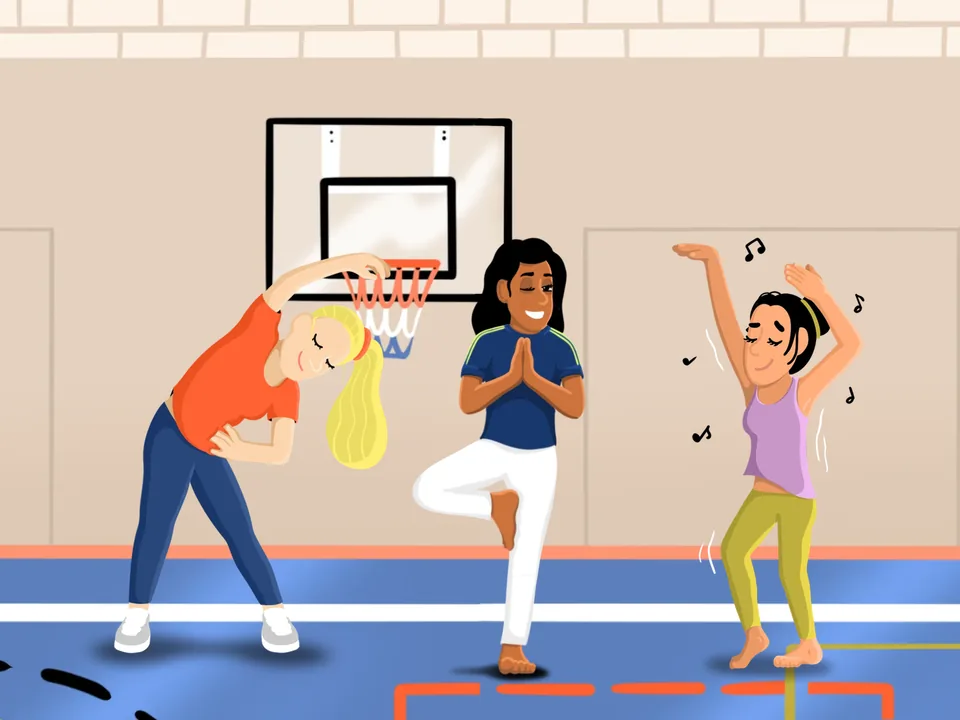
The first week back calls for extra movement because students have to relearn how a school day runs after a week or two off, and brain breaks give you a low-stakes way to practice. A break that ends on your signal rehearses listening. A break beside the desks rehearses personal space.
Brain breaks add only a little to the daily movement students need. The Physical Activity Guidelines for Americans recommend 60 minutes or more of moderate-to-vigorous physical activity a day for ages 6 through 17. At about 1 to 3 minutes each, and light activity in the calm ones, brain breaks supplement PE and recess and do not replace them. SHAPE America's position statement calls exercise as punishment, and withholding PE or recess as a consequence, inappropriate. Cutting the afternoon break because the morning was loud treats movement as a consequence too, so keep the breaks on the schedule.
For snow themes, see the winter brain breaks guide. None of the breaks below depends on snow or cold weather.
Countdown breaks give a restless class a clear end, because the count tells students exactly when the break is over.
Grades K–5 · whole class · about 1 minute · no equipment
Students crouch low beside their desks. Count down from 10 in a whisper, and on every number the class rises a little higher until everyone stands tall with arms overhead at zero. Anyone who pops up early crouches back down on the next number. The break ends when the whole class holds the final pose still for one breath.
Grades K–5 · whole class · about 1 minute · no equipment
Students shake the right hand while counting to 8 aloud, then the left hand, the right foot and the left foot. They repeat the whole set counting to 4, then 2, then 1. A student who loses count restarts that body part, and nobody is out. The break ends with one slow breath after the last single shakes; a hand on the desk helps with the foot shakes.
Calendar and number breaks fit a new year because they tie movement to what students are relearning: seasons, the digits of the year and the clock.
Grades K–2 · whole class · about 2 minutes · no equipment
Choose one motion per season with the class, for example shivering for winter, jumping puddles for spring, swimming for summer and raking leaves for fall. Call a month at random, and students show the motion for that month's season. A student who mixes it up copies a neighbor and keeps going. The break ends once you have called at least one month from each season.
Grades 1–5 · whole class · about 2 minutes · the board
Write the new year on the board. Students stand beside their desks and trace each digit large in the air with the right hand, then the left hand, then both hands at once. A student who loses their place restarts that digit. The break ends after the both-hands round.
Grades 1–3 · whole class · about 2 minutes · board optional
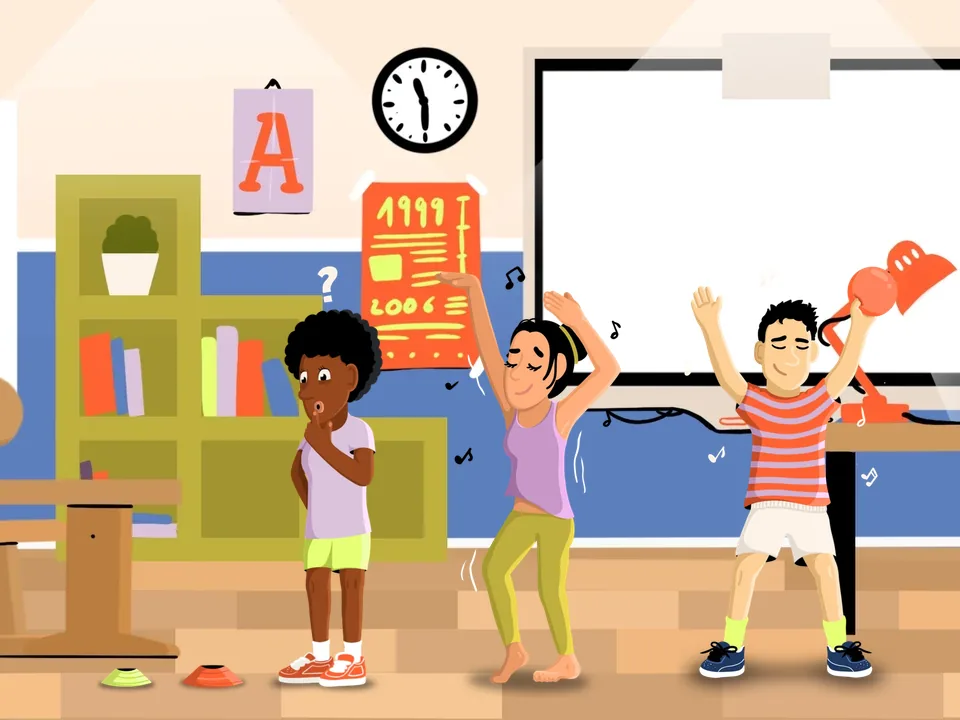
Students use their arms as clock hands: the long arm for minutes, the short arm for the hour. Call an o'clock time such as 3:00 or 9:00, and the class shows it; a clock drawn on the board settles disagreements. After 6 to 8 times, call midnight, with both arms straight up and silent jazz hands. For music-based movement without a screen, see the no-video dance brain breaks.
Routine-reset breaks turn the habits students have to relearn, such as listening for a signal, walking between spots and talking about the break, into short games.
Grades K–5 · whole class · about 2 minutes · your usual signal
Students march in place quietly at their desks. Give your attention signal, such as a chime, a clap pattern or a call-and-response, and the class freezes with eyes on you before you finish counting down from 3. If everyone makes it, add a tally mark on the board. If not, the class marches again and you repeat the signal. The break ends at 3 tally marks.
Grades 2–5 · whole class · about 3 minutes · a classroom timer
Pick one transition that slipped over the break, such as moving from the carpet to desks. Time the first run and post the time on the board, then run it again to beat that time, walking only, chairs pushed in. A run in which anyone runs does not count and is repeated once. The break ends when the class beats the posted time or after two attempts, and the best time stays on the board for the next day.
Grades 2–5 · whole class · about 2 minutes · no equipment
Call out prompts, and students stand if the prompt fits them and stay seated if it does not. Use prompts everyone can answer without comparing, such as "slept past 8" or "ate a food I love," and keep gifts, trips and money out of it. Staying seated is always a fine answer. The break ends after 6 to 8 prompts. For year-round options by grade, see brain breaks for Grades K–5.
Calm breaks of about 1 to 3 minutes settle a restless afternoon when they slow the breathing and the movement together.
Grades K–5 · whole class · about 1 minute · no equipment
Students stand or sit tall. They breathe in slowly through the nose while raising their arms overhead like a rocket, then breathe out through the mouth while the arms drift down and the fingers wiggle like falling sparks. Nobody holds their breath. The break ends after 5 rounds with hands resting on the desk, and any student who feels dizzy stops and breathes normally.
Grades 3–5 · pairs · about 3 minutes · no equipment
Partners stand facing each other at arm's length. Partner A silently acts out, in slow motion, something they want to get better at, like reading or shooting a free throw, and partner B mirrors the moves. When you call "switch," the roles swap. The break ends when both partners have led once and each has guessed the other's goal.
More settle-down options are in the calm brain breaks guide.
Give every student arm's length of clear space, push chairs in, and end each break with the same cue, so it stays at about 1 to 3 minutes. Check the floor for backpacks and cords before the first break of the day.
Offer a seated or upper-body version of any break, for example sitting tall and lifting the arms a little higher on each count in Ten-Count Rise. For Beat the Posted Time, ask a student with mobility needs how they want to take part, and keep the goal the class's time, not one student's speed.
| Mistake | Cause | Fix |
|---|---|---|
| The break runs long | No end cue was set | Decide the end before you start: a count, a signal or a number of rounds. |
| Students bump into each other | Chairs pulled out, backpacks in the aisles | Push chairs in, clear the aisles, and have students stand beside their own desk. |
| The room gets loud | Counting aloud after a long break | Count in a whisper and finish silently, for example with jazz hands. |
| Some students sit out | The movement does not fit their body or mood | Offer a seated version and let any student pass without explaining. |
| Breaks turn into a reward or a consequence | They are the first thing cut when the class is noisy | Keep them on the daily schedule whatever the morning looked like. |
Start with two a day: one active break before a long seated task and one calm break in the afternoon. Add a third only if the class is clearly restless, for example after indoor recess. If students settle quickly by midweek, drop back to one active break and keep the calm one.
Yes, with changes. Resolution Mirror, Beat the Posted Time and Break Check-In Stand-Ups suit Grades 6–8 when you frame them as challenges and let students write the prompts. Skip Month Motions and Midnight Clock Arms, which are aimed at the youngest grades.
The breaks work without a celebration. Only Midnight Clock Arms mentions midnight, and you can call 12:00 instead. In Break Check-In Stand-Ups, avoid prompts about gifts, trips or money, and let any student stay seated without saying why.
No. None of the ten breaks needs music, a screen or a video. You need your voice, the board, your usual attention signal and, for one break, a timer. If you want music, a short instrumental clip with the same end cue as the other breaks works.
Let the student pass by staying seated and breathing with the class, without asking why. A pass keeps the break short and avoids a power struggle. Offer a seated version, such as the arm movements from Year Digit Air Writing, and check in privately later if the student passes repeatedly.
Short, structured winter brain breaks let you channel that restless energy right beside student desks without rearranging furniture.
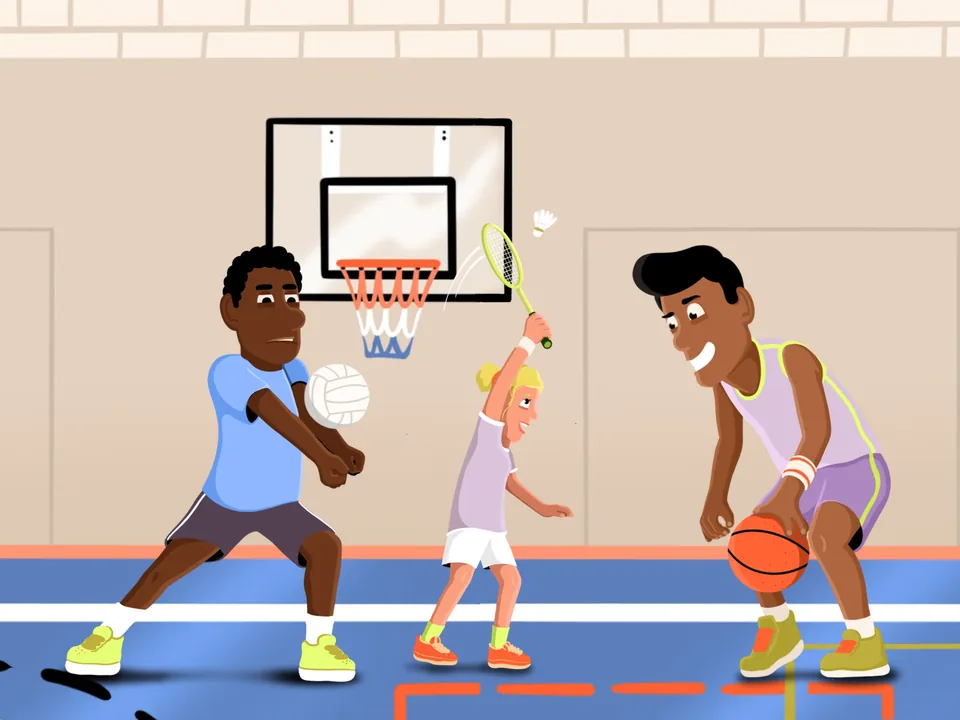
When students return from outdoor recess or a loud hallway transition with racing voices, jumping straight into a lesson rarely works.
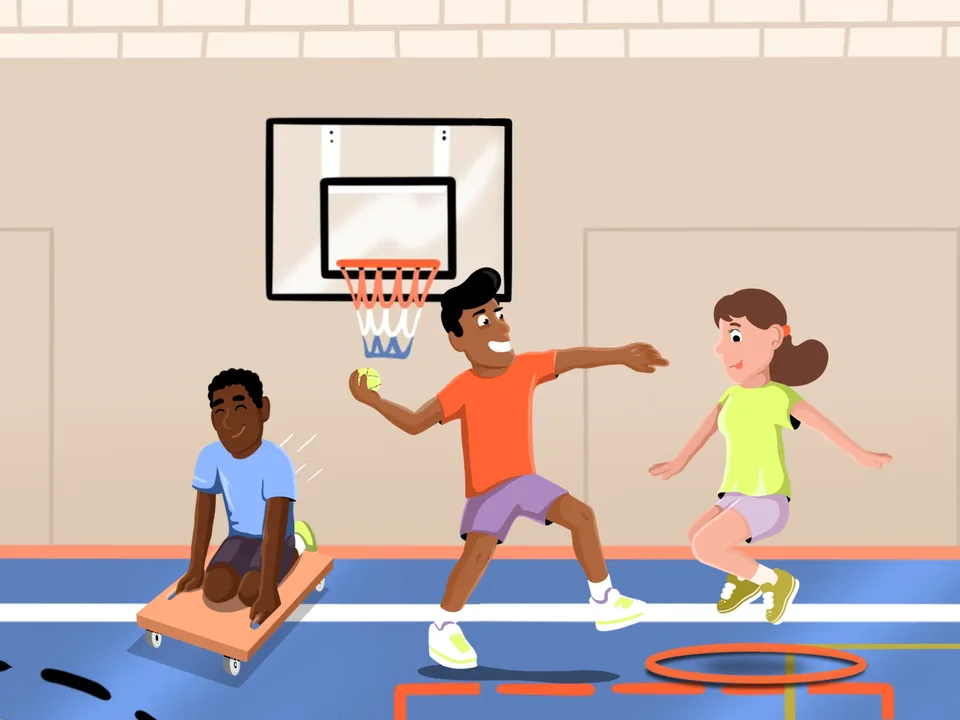
A good brain break needs a clear stop signal, a bubble of space for each child, and a game students can learn fast.
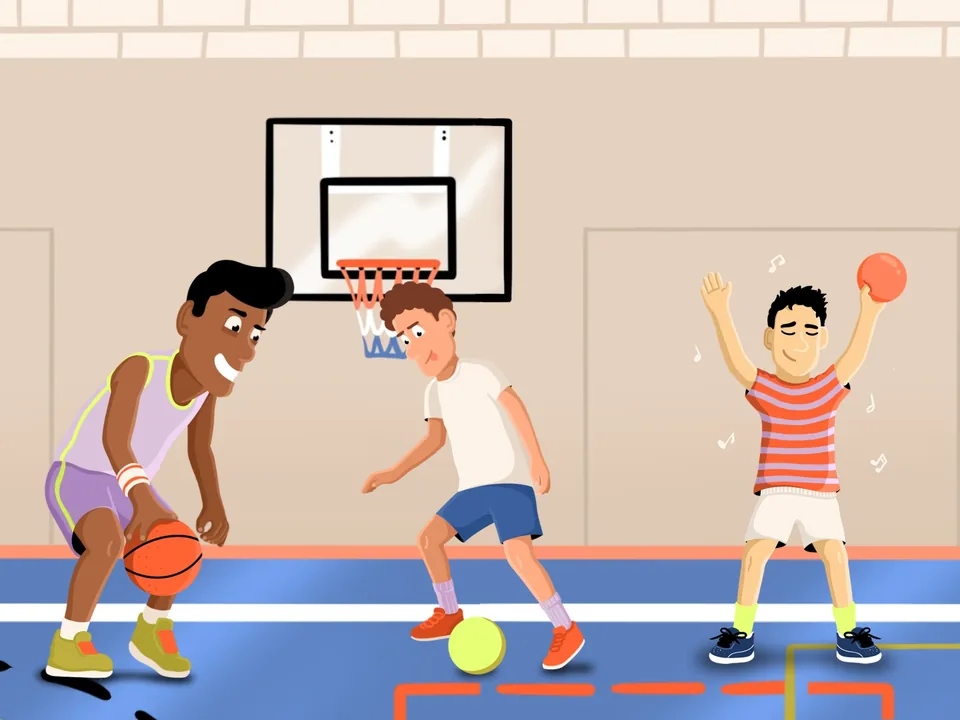
Loading a follow-along video on the projector can take longer than the movement break itself.
Open the 3 free units, including the Classroom Brain Breaks pack, with no account. Get the app for iOS & Android when you want it on your phone or tablet in the room.
App for iPhone, iPad and Android.