Games & warm-ups
Fun Games for Every Grade, K–12
Games in PE class usually fall apart for two reasons: students spend too much time waiting, and the rules or the space don't fit the group.
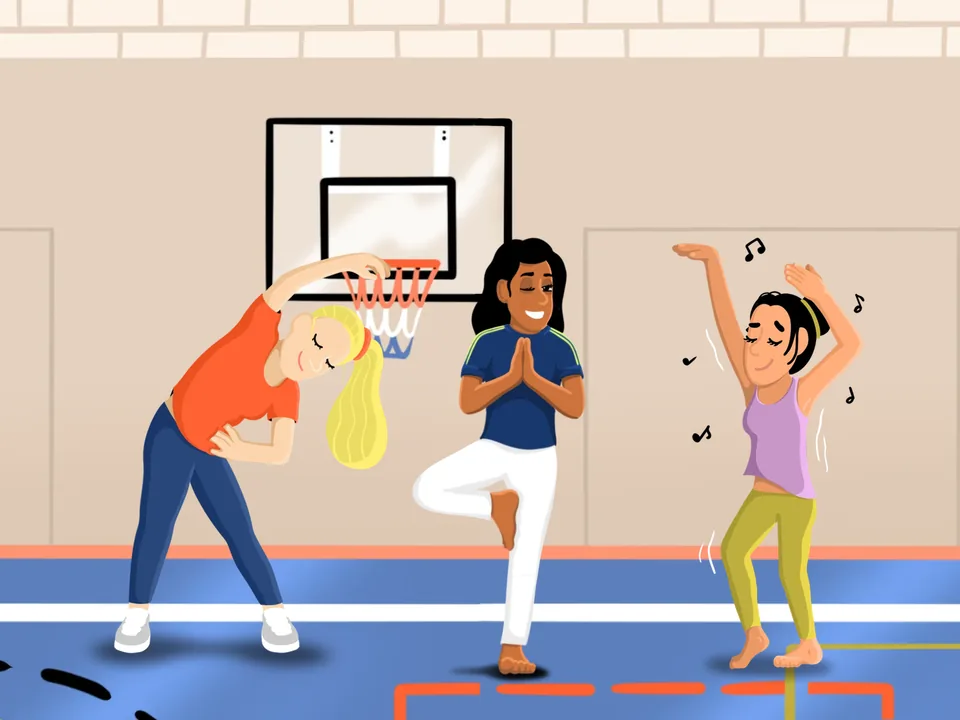
These 10 PE activities cover throwing, catching, striking, fitness, teamwork, rhythm, and balance, and each round runs about 5 to 10 minutes for Grades K–12. No setup uses elimination or sit-out benches, so your class can work toward SHAPE America's recommended 50 percent of class time in moderate-to-vigorous movement. Most need only cones, bean bags, foam balls, hoops, and poly spots.
Classroom teachers who cover PE and specialists who share a gym with another class often need a setup that works on short notice. This list gives you an overview table of all 10 activities, scoring and restart rules for each, a floor diagram for Four-Zone Tag, and scaling cues through Grade 12.
An activity in PE isolates one movement skill, fitness task, or group challenge in about 5 to 10 minutes without elimination, while PE games for Grades K–12 layer multi-rule scoring and team strategy onto familiar skills. Good activities combine locomotor steps, object control, strength, and rhythm, so students ages 6–17 build toward the 60 minutes or more of daily moderate-to-vigorous movement (with muscle- and bone-strengthening at least three days weekly) in the Physical Activity Guidelines for Americans (HHS).
Rotating setups across the four SHAPE America 2024 National Physical Education Standards (S1 motor skills, S2 movement and fitness concepts, S3 social skills, and S4 personal skills, released in March 2024 to replace the five-standard 2013 edition) keeps practice varied from week to week.
| Activity | Type | Grades | Duration | Equipment |
|---|---|---|---|---|
| King Pin Target Pass | Throwing | Grades 3–12 | about 8 minutes | 6 foam balls, 6 plastic pins |
| Step-Back Bean Bag Catch | Catching | Grades K–5 | about 6 minutes | 1 bean bag per pair, 2 cones |
| Paddle Tap Keep-Up | Striking | Grades K–8 | about 7 minutes | 1 foam paddle and 1 balloon or ball per student |
| Four-Zone Tag | Fitness | Grades K–8 | about 6 minutes | 12 cones, 4 pinnies |
| Cops and Robbers Bean Bag Rescue | Fitness | Grades 1–6 | about 8 minutes | 20 bean bags, 4 hoops, 4 pinnies |
| Hoop Card Fitness Relay | Fitness | Grades 2–12 | about 10 minutes | 6 hoops, 1 card deck |
| Hula Hoop Pass Circle | Cooperative | Grades K–12 | about 5 minutes | 2 hoops per circle |
| River Crossing Stepping Stones | Cooperative | Grades 2–12 | about 8 minutes | 1 poly spot per student plus 1 extra, 8 cones |
| Four-Count Rhythm Beat | Rhythm | Grades K–8 | about 6 minutes | Speaker or drum |
| Poly Spot Balance Mirror | Balance | Grades K–6 | about 5 minutes | 1 poly spot per student |
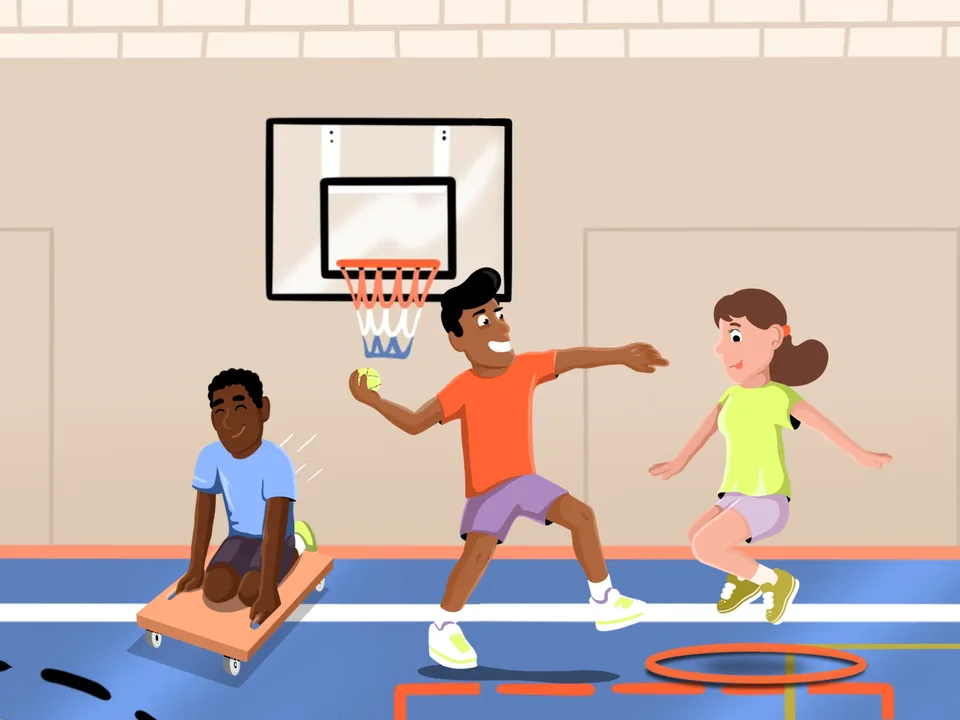
High-repetition PE drills give each student many touches without long lines. Aiming at pins instead of classmates follows the SHAPE America position statement on dodgeball and class activity time, which opposes elimination dodgeball in K–12 PE and recommends moderate-to-vigorous movement for 50 percent of class.
Grades 3–12, 12–30 students, about 8 minutes; 6 foam balls, 6 plastic pins.
Grades K–5, 10–30 students, about 6 minutes; 1 bean bag per pair, 2 cones (bean bag games for PE class).
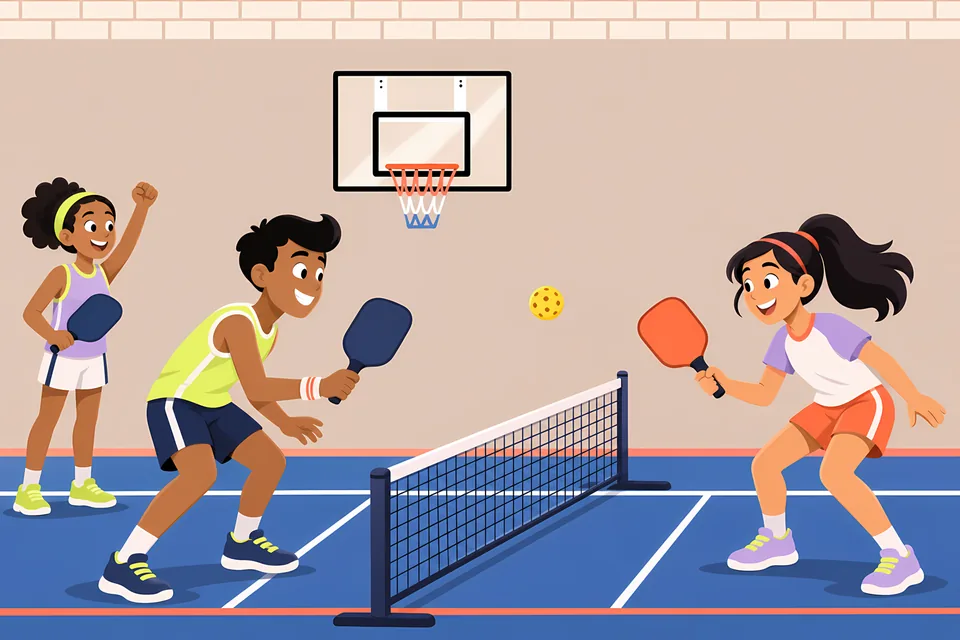
Grades K–8, 10–30 students, about 7 minutes; 1 foam paddle and 1 balloon or ball per student.
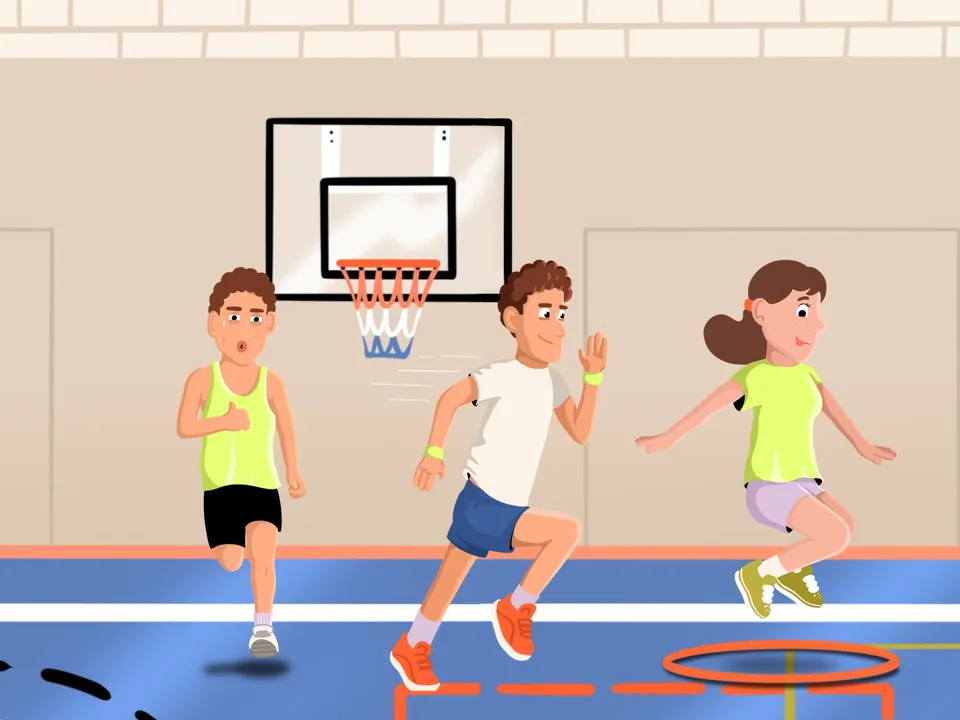
Fitness activities keep everyone moving by replacing sit-out benches with a quick re-entry task. For more, see 10 PE fitness activities.
Grades K–8, 16–32 students, about 6 minutes; 12 cones, 4 pinnies (layout below).
Grades 1–6, 14–30 students, about 8 minutes; 20 bean bags, 4 hoops, 4 pinnies.
Grades 2–12, 12–20 students, about 10 minutes; 6 hoops, 1 card deck.
Cooperative challenges require small groups to communicate and solve a movement task together before scoring. For Grades K–2, parachute activities for K–2 PE are another non-competitive option.
Grades K–12, 8–15 students per circle, about 5 minutes; 2 hoops per circle.
Grades 2–12, 4–6 students per team, about 8 minutes; 1 poly spot per student plus 1 extra, 8 cones.
Rhythm and balance tasks build tempo control and single-leg stability with minimal gear, and the slower ones lead naturally into cool-down activities for PE class.
Grades K–8, 10–32 students, about 6 minutes; Speaker or drum on an open floor.
Grades K–6, 10–30 students, about 5 minutes; 1 poly spot per student clear of walls.
You can scale a setup up or down a grade band by changing one variable at a time: object speed, distance, group size, or the pass rule. For multi-week sequences, see elementary PE lesson plans for Grades K–5.
Matching a setup to your period starts with checking usable floor width, equipment count, and clear sightlines before students enter the gym. When one item runs short (fewer than 15 pieces for 30 students), divide the court into four rotating corners using station setups for PE class so one group throws at plastic pins while the other three groups run poly spot balance, hoop passes, and four-count rhythm beats.
Before you start, confirm that the floor is dry and free of stray gear, and leave a buffer of about 6 ft clear of walls and folded bleachers. In hot weather outdoors, shorten sprint intervals, add water breaks, move to shade, and follow your school's heat policy. The table below lists four common breakdowns and a quick fix for each.
| Common Mistake | Why It Happens | Quick Fix |
|---|---|---|
| Long wait lines at cones | Teams exceed 5 students | Split lines of 6+ into two lanes of 3 |
| Bumps in tag or keep-up | No wall buffer zone | Set cones 6 ft inside walls and cue eyes-up travel |
| Same players take throws | Closest players grab balls | Require a pass to a teammate first |
| Rule talks drag on | Too many twists at once | Teach one core rule and add twists in round two |
A PE lesson is a standards-based class in which a teacher builds motor skills and teamwork, and SHAPE America recommends moderate-to-vigorous movement for 50 percent of class time. For example, fourth graders might practice catching in Step-Back Bean Bag Catch, then use the same throwing skills in King Pin Target Pass. Unlike unstructured recess, the teacher plans and coaches each skill.
Push desks against the walls to clear a center area and choose low-travel setups like Poly Spot Balance Mirror in pairs, a small Hula Hoop Pass Circle, or walking-pace Four-Count Rhythm Beat. Skip the ball setups, keep chairs tucked in, and use latex-free balloons if you want a slow object.
Create one rotating group of three standing in a line rather than sitting a student out or playing full-time yourself. The middle player alternates between Partner A and Partner B every three throws or 30 seconds so your eyes stay on the whole class.
Plan on 1 paddle or poly spot per student for solo tasks and 1 bean bag per 2 students for partner work, or 15 to 30 pieces of each item. With fewer than 15 pieces of one item, run four rotating stations that each use different gear.
Games in PE class usually fall apart for two reasons: students spend too much time waiting, and the rules or the space don't fit the group.
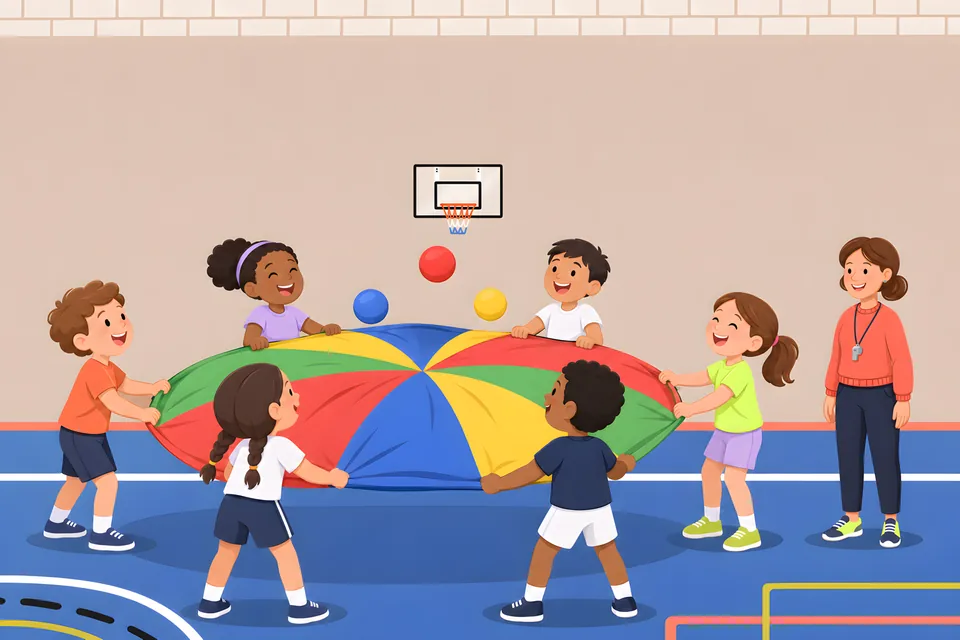
This list is for PE specialists and classroom teachers with a parachute in the equipment room and a class on the way.
This list is for PE specialists and classroom teachers who run bean bag toss games for kids in Grades K–5, with a few options for Grades…
It adds the five health-related components in kid language, a way to run the activities as stations or intervals, and the safety limits…
Download the free PhysEdPrep app for iOS and Android to open 3 free units (Basketball for Grades 5–7, Parachute Games from Grade 1, and 13 Classroom Brain Breaks) with no account needed. Yearly and 12-month plans start with a 7-day free trial across all grades K–12 and include 40+ unit plans, 240+ lessons, and all 6 gym tools (see current prices in the app).
App for iPhone, iPad and Android.