Cool-Down Activities for PE
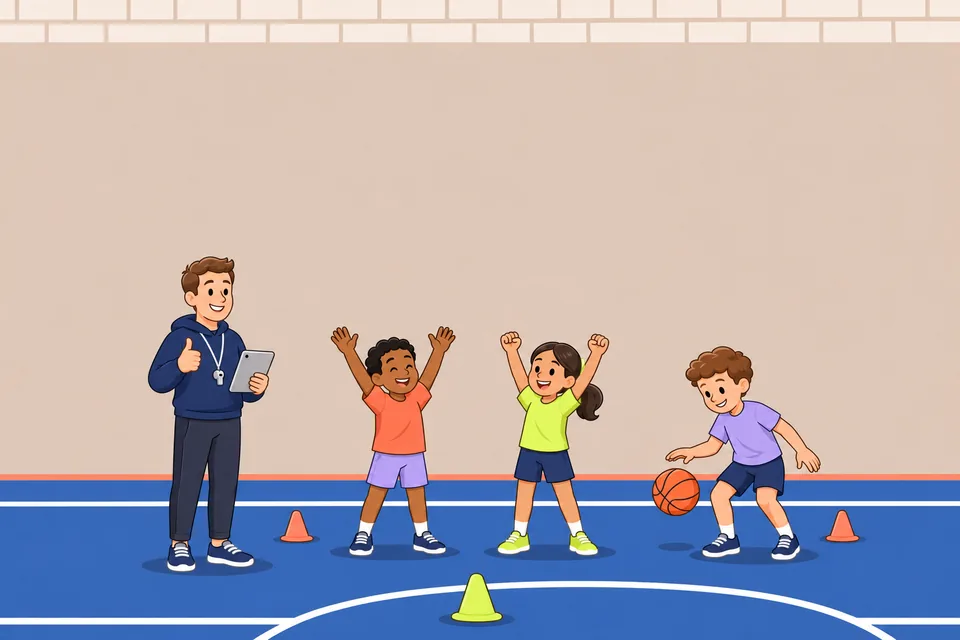
This list is for PE teachers who have a few minutes left and a gym full of sweaty, loud students.
Effective PE written activities take 2 to 5 minutes for active classes so students can still spend at least 50 percent of class time in moderate-to-vigorous activity (MVPA). The 10 tasks below cover Grades K–12, combining brief exit slips, personal fitness logs, team play sketches, and 10–15 minute observation sheets for sidelined students. Perimeter pencil bins and half-sheet cards reduce line bottlenecks.
Elementary and secondary PE teachers often need written evidence for curriculum reviews, gradebooks, or injured students sitting on the bleachers. Each task lists grade band, group size, time, and materials. The last section shows a perimeter setup that keeps clipboards out of the way of running students, so you can check understanding without carrying worksheets home.
Written work belongs in PE class when it captures tactical understanding, teamwork, or personal fitness goals in 2 to 5 minutes without dropping active movement below half the period. SHAPE America's 2024 National Physical Education Standards define four standards (S1–S4) for US K–12 PE: motor skills, movement and fitness concepts, social skills, and personal skills. They replaced the five-standard 2013 edition. Brief written checks document Standards 2 through 4 while protecting SHAPE America's 50 percent MVPA recommendation.
| Activity | Grades & Group | Time | Materials |
|---|---|---|---|
| Two-Cue Exit Slip | Grades 3–8 · Whole class | 2 minutes | Half-sheet cards, golf pencils |
| Emoji Skill & Effort Check | Grades K–2 · Whole class | 2 minutes | Picture slip, crayons or golf pencils |
| 3-2-1 Tactical Post-Game Card | Grades 6–12 · Groups of 3–4 | 3 minutes | 1 index card, 1 pencil per team |
| Sideline Skill-Cue Tally Sheet | Grades 4–12 · 1–4 sidelined students | 10–15 minutes | Clipboard, tally sheet, pencil |
| Peer Coaching & Safety Spotter Log | Grades 5–12 · Pairs or 1 observer | 10 minutes | Clipboard, 3-point rubric card, pencil |
| Station Rep & Pulse Log | Grades 4–12 · Individual | 3 minutes | Personal folder card, golf pencil |
| 4-Week SMART Movement Goal Card | Grades 5–12 · Individual | 5 minutes | Goal card, pencil |
| Diagram-a-Play Court Sketch | Grades 6–12 · Teams of 4–5 | 4 minutes | Court outline, clipboard, marker |
| Invent-a-Game Station Blueprint | Grades 3–10 · Groups of 3–4 | 5 minutes | Blueprint card, pencil, 3 equipment pieces |
| Tournament Scorekeeper & Fair-Play Sheet | Grades 5–12 · 1–2 student officials | 5 minutes | Clipboard, match score sheet, pencil |
Match every prompt to your students' reading level so a gym reflection does not turn into a long desk test on the bleachers. When you only need teacher-recorded skill checks, pair occasional cards with assessing PE class without losing active time during live scrimmages and station play.

Post-game exit tickets fit cleanly into the final 2 to 3 minutes of PE while heart rates recover during cool-down activities for PE class. Limit each slip to circling cues and writing at most one short sentence.
Built for Grades 3–8 with the whole class, this reflection takes 2 minutes using half-sheet cards and golf pencils by the gym exit. Each student circles the two skill cues posted for that day and writes one sentence naming where one of them worked in the game, then drops the card in the exit bucket at the door.
Designed for Grades K–2 with the whole class, this check takes 2 minutes with a picture slip and crayons or golf pencils. After movement exploration or balloon games for elementary PE, young students circle one of three faces for how hard they tried, then circle the equipment picture they controlled best. Have them sit on perimeter mats, away from doors, while they mark the slip.
Used in Grades 6–12 in groups of 3–4, this huddle takes 3 minutes with 1 index card and 1 pencil per team. Players list three plays that worked, two spacing fixes for next class, and one rule question, leaving you about 8 to 10 cards to scan in a class of 30.
Students sitting out with an injury note or without proper footwear stay involved when their written task follows the skill or tactic their classmates are practicing. Seat sidelined observers behind boundary cones, roughly 6 feet or more from the active sidelines (farther for throwing and kicking games), and keep them in your line of sight so stray balls and sprinting players stay out of reach.
Built for Grades 4–12 with 1–4 sidelined students, this observation takes 10–15 minutes using a clipboard, tally sheet, and pencil. Observers watch one court and tally target actions such as completed give-and-go passes or balanced two-foot landings, then write two patterns to share with teams at water break.
Designed for Grades 5–12 in pairs or with 1 observer per station, this check takes 10 minutes using a clipboard, 3-point rubric card, and pencil. The observer marks three mechanics and floor-spacing cues and writes one specific adjustment for a partner. Observers only watch and write; they do not physically spot another student. For longer medical excuses, rotate in alternative PE assignments for injured students.
Self-kept fitness logs help students track personal progress from week to week while keeping scores private. The Physical Activity Guidelines for Americans (HHS) recommend 60 minutes or more of moderate-to-vigorous activity daily for ages 6 through 17, with muscle- and bone-strengthening activity on at least three days a week. A short tracking card lets students compare their gym effort with the activity they get outside class.
Students fill in a personal folder card with a golf pencil at water breaks and station changes (Grades 4–12, individual, 3 minutes in total). They jot down jump rope counts, shuttle touches, or a 10-second wrist pulse count, then slip the card into a private folder so personal fitness scores stay off public walls.
This individual task for Grades 5–12 takes 5 minutes with a goal card and a pencil. Students write one measurable four-week movement target and two weekly practice steps; for ready-made prompts, adapt PE goal-setting sheets and examples so students reuse one sheet all month.
Strategy diagrams, game blueprints, and officiating sheets give students a reason to write, because they test what they wrote in the next game. You can spot right on the court whether a group's written rule or spacing plan works without taking papers home.
Teams of 4–5 in Grades 6–12 get a court outline, a clipboard, and a marker for a 4-minute sketch. Teammates draw player spots, cutting lanes, and passing options for an inbound play or defensive zone, then run that exact play in their next game.
Built for Grades 3–10 in groups of 3–4, planning takes 5 minutes with a blueprint card, pencil, and 3 equipment pieces such as hoops, foam balls, and floor markers. Groups write an objective, boundary rule, scoring rule, and safety rule. Check every blueprint before play starts: confirm throwing height and wall buffers, and require soft balls with no throws at heads.
One or two student officials per court (Grades 5–12) keep a clipboard, a match score sheet, and a pencil for one 5-minute match. They log points, service order, and one fair-play note per team, then rotate back into play for the next match.
Gym-floor setup decides whether PE written activities finish in 2 minutes or eat into the time you need to keep MVPA above 50 percent in PE. Delays usually start when a whole class lines up at one pencil cup or students write paragraphs instead of circling cues.
A workable starting point is one brief written check a week in daily middle or high school PE and one every third or fourth class in elementary PE that meets once a week. Spacing the checks out keeps paperwork light and protects the 50 percent of class time SHAPE America recommends for moderate-to-vigorous activity.
Secure heavyweight index cards under wide rubber bands on clipboards, or use one shared team card written by a designated recorder near the equipment cart. Store finished cards in a lidded plastic bin so wind and damp grass do not ruin responses.
Follow each student's documented IEP or 504 accommodations first, and offer visual word banks, court diagrams, or partner scribing so writing speed does not lower a PE grade. Letting students circle icons or give a short spoken answer at the door can check tactical understanding without relying on writing. For a specific student, ask your special education team.
Only a small share, within whatever category weights your district sets. Keep written work light so skill performance and participation carry most of the grade, and treat quick exit slips as ungraded formative checks. Reflections can document movement concepts and personal skills under SHAPE America's S2 and S4.
This list is for PE teachers who have a few minutes left and a gym full of sweaty, loud students.
Each entry gives group size, gear and round length, plus the rules for what happens when the balloon hits the floor.
You teach PE in Grades K–12, and a student arrives with a boot, cast, sling or concussion note but still needs PE assignments for injured…
Teachers in Grades K–12 can set up goal setting in PE with a goal sheet to copy, example goals for each grade band, a check-in routine…
Start with 3 free units without an account in the PhysEdPrep app for iOS and Android, including Basketball (Grades 5–7), Parachute Games, and Classroom Brain Breaks. Get access to all 40+ unit plans, 240+ lessons, and 6 gym tools across Grades K–12 with a 7-day free trial on a yearly or 12-month plan, and see current prices in the app.
App for iPhone, iPad and Android.