How to Start Intramurals at School
A league needs a gym or field, one adult on duty and a lunch or after-school slot.
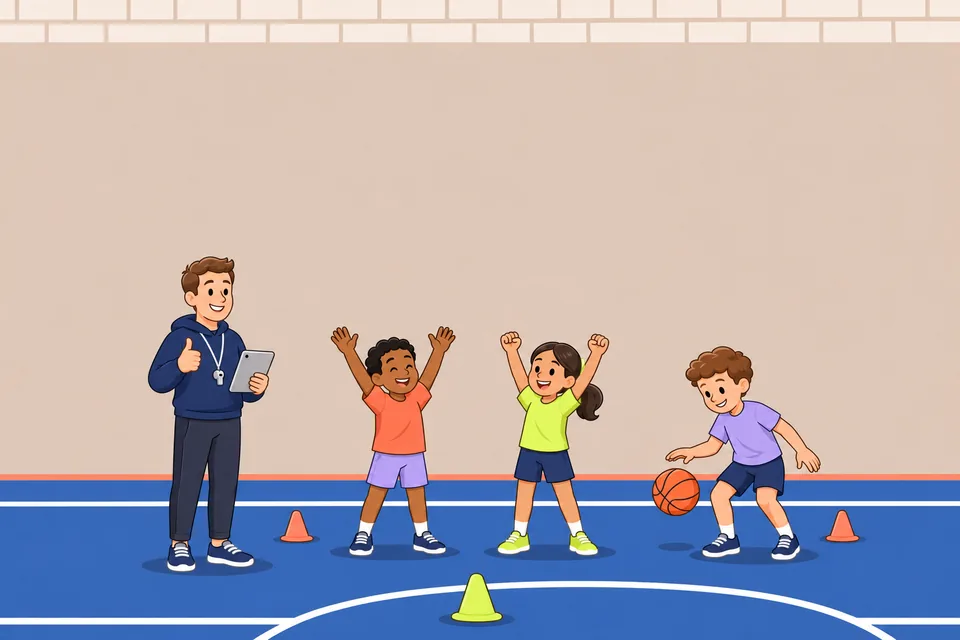
The sport education model replaces a short sport unit with a season of at least 18 lessons, in which students stay on one team and take roles. Daryl Siedentop built it on six features: season, affiliation, formal competition, record keeping, a culminating event and festivity. You teach and supervise; students run much of the practice, games and records.
PE teachers with one class and a season to plan need four pieces in place: teams that stay fair, roles students can handle, a game schedule with a final event, and records that support grades. The examples below use a class of 28 students and four teams.
In a regular sport unit, you often lead the drills and pick new teams from lesson to lesson, while in the sport education model students join one team for the whole season, practice together, play a posted schedule and handle officiating and records themselves. Daryl Siedentop described the model in his 1994 book Sport Education: Quality PE through Positive Sport Experiences. It aims at competent, literate and enthusiastic sportspeople, and it gives every student the experience of authentic sport, including students who are not the strongest players.
Your role shifts to coach and supervisor. You teach skills and tactics, set the rules and safety limits, and stay on the floor while students run practice and games.
Team practice days work well with game-based tasks from Teaching Games for Understanding, because they start from a game problem instead of a drill.
A 2021 systematic review of 28 studies found higher values for sport education than for traditional teaching in personal and social skills, game performance, sport knowledge and physical activity. The review rated all 28 studies as moderate quality, with frequent gaps in randomization and blinding, so treat the results as a promising trend.
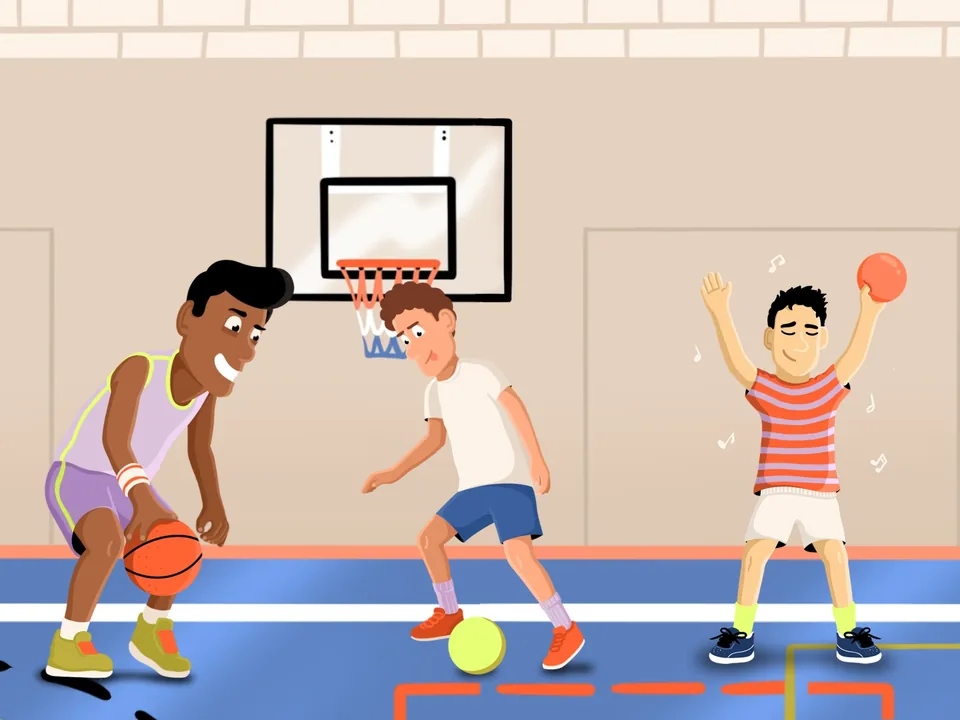
A sport education season has six features from Siedentop's description of the model: season, affiliation, formal competition, record keeping, a culminating event and festivity.
| Feature | What it means | In your gym |
|---|---|---|
| Season | One sport over many lessons, with pre-season, regular season and finale | One sport per unit, one posted calendar |
| Affiliation | Students belong to one persistent team | Team name, color and pinnies from day one |
| Formal competition | Scheduled games with standings | Round robin with a posted schedule |
| Record keeping | Students keep results and stats | Team score sheets and a standings board |
| Culminating event | A final that closes the season | Playoff and final day where every team plays |
| Festivity | Celebration and team identity | Banners, team cheers, a fair-play award |
Festivity is the easiest feature to skip. Team names, colors and a fair-play award cost little class time and keep each team's identity visible all season.
Rank students after a short pre-season, split them into teams of similar total strength and keep those teams fixed until the final. Fixed teams keep the affiliation feature intact: students practice, win and lose together.
The Team Creator in the PhysEdPrep app for iOS & Android makes teams at random, balanced by skill or split by gender, from your saved class rosters. Copy the result onto your roster so the teams stay fixed. For more on group building, see fair random teams for PE and ways to differentiate in PE.
Every student plays and also holds one team role, typically coach, referee, scorekeeper or equipment manager.
| Role | Job on game day | How to teach it |
|---|---|---|
| Coach | Leads the team warm-up and sets the lineup | Hand out a short checklist and run it once in pre-season |
| Referee | Starts and restarts play, calls fouls and out-of-bounds | Teach three or four calls with hand signals, then scrimmage with you as the only appeal |
| Scorekeeper | Records points, game time and the final result | Practice with a team score sheet and the scoreboard |
| Equipment manager | Sets up cones, balls and pinnies and returns them | Show the setup, then count items out and back in |
Add roles like trainer or team reporter when a class needs more. With younger students, start with two roles, such as equipment manager and scorekeeper, and keep officiating yourself (see Elementary PE lesson plans, K–5).
Students officiate and carry equipment only under your supervision. Adults move goals and volleyball standards, and carts are loaded to a weight that students of that age can handle. Roles can also cost movement time: SHAPE America recommends moderate-to-vigorous activity for 50 percent of PE class time, so rotate roles by game or half and keep teams large enough that one student can step out without stopping play. More ideas: reaching 50% MVPA in PE class.
Plan a season of at least 18 lessons if your calendar allows it. A 2021 systematic review describes the model as needing seasons of that length, yet 15 of its 28 studies used fewer lessons, so shorter seasons are common. One way to split 18 lessons:
| Block | Lessons | Purpose |
|---|---|---|
| Pre-season | 4 | Teach skills, rules and roles; rank students; form teams |
| Regular season | 10 | 6 game days and 4 team practice days |
| Culminating event | 4 | Playoffs and final, awards and festivity, season reflection |
Four teams on two courts need 3 game days for one round robin: n teams play n × (n − 1) ÷ 2 games, so 4 × 3 ÷ 2 = 6 games, two at a time. Two round robins fill the 6 game days. With only 10 lessons, use 2 for pre-season, 6 for one round robin with practice days between games, and 2 for the final.
The Tournament Planner in the app builds round-robin schedules for 2 to 10 teams on up to 4 courts, and the Scoreboard & Game Counter shows points and game time for two teams. For a single class period, see the guide to a round-robin tournament in a 45-minute class and the scoreboard and game counter app guide.
Close the season with a seeded final where every team plays once more, for example a championship game plus placement games, so no team sits out the finale. If you also want after-school play, see how to start intramurals.
Record game results, skill and tactics checks, role duties and personal reflections, and grade each against the standard it supports. SHAPE America's 2024 National PE Standards have four standards: S1 develops a variety of motor skills, S2 applies knowledge related to movement and fitness concepts, S3 develops social skills through movement, and S4 develops personal skills.
| What to record | Who records it | Standard |
|---|---|---|
| Skill and tactics checks during game play | You, on a short observation sheet | S1 |
| Coach's game plan or a short rules quiz | Student coaches and you | S2 |
| Role duties and fair-play points | Teammates and you | S3 |
| Personal goal and end-of-season reflection | Each student | S4 |
| Results and standings | Scorekeepers | Feedback for team goals |
Decide the weights before the season starts and share them with students, so a strong player who ignores a role sees it in the grade. Scorekeepers post results on a standings board after every game day, with fair-play points in the totals. For goal sheets that feed the S4 reflection, see the PE goal setting sheet and examples; for S2 tasks, see movement concept activities for PE.
Four problems are common in a first season: lopsided teams, idle roles, stalled games and a lost finale.
| Problem | Cause | Fix |
|---|---|---|
| One team wins every game | Teams came from captain picks or a single random draw | Rank and snake-draft; check rank sums before the first game day, then leave the teams alone |
| Students in roles stand around | Roles go to students who are not playing | Rotate roles by game or half and give each role a short checklist |
| Games stall over calls | Refereeing was never taught | Teach three or four calls with hand signals in pre-season; you are the only appeal |
| The finale gets cut | Season too short or class days lost | Hold one spare lesson, or switch to a single round robin and keep the final |
Basketball, volleyball, soccer, flag football, ultimate, pickleball, badminton, softball, team handball and floor hockey all work for a season. Pick by space, equipment and class size, and use small-sided games so everyone plays most of the time. Contact and stick sports need clear limits, for example flag football without tackling and floor hockey with plastic sticks kept below the waist.
Four models PE teachers often compare are direct instruction, cooperative learning, Teaching Games for Understanding and sport education. Direct instruction is teacher-led, cooperative learning uses small groups with shared goals, Teaching Games for Understanding starts from game problems, and sport education runs a season with fixed teams and roles. Other lists add models such as peer teaching and inquiry teaching.
Education-based athletics means running school sports as part of the school's educational mission, with learning, participation and character as goals alongside winning. Sport education brings the same idea into PE class: every student plays on a team, holds a role and is assessed on more than the score. After-school versions, such as intramurals, can build on that.
Students practice motor skills, learn movement and fitness concepts, and build social and personal skills through games, sports, fitness and movement activities. These match the four 2024 SHAPE America standards. In a sport education season, students also join a team, practice and play with it, and take a role such as scorekeeper or referee.
The team plays on with the students it has, and a named backup covers the missing role. Name one backup per role in pre-season, and even out numbers with a rule such as a neutral player or a smaller court so a short team is not at a disadvantage. Record the game as a normal result.
About 6 to 8 students per team works for most classes, for example 4 teams of 7 in a class of 28. That size leaves enough players for small-sided games while one or two students cover roles, and a team can still play when a student is absent. Smaller classes can run 3 teams; larger classes can add a fifth team and a third court.
A league needs a gym or field, one adult on duty and a lunch or after-school slot.
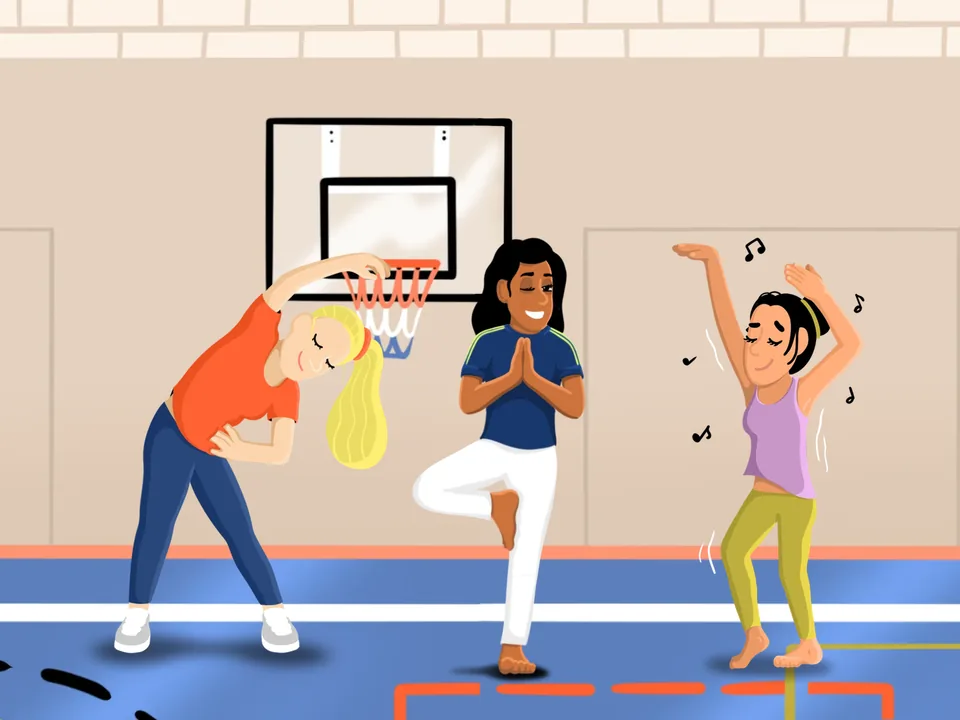
PE specialists and classroom teachers with little prep time can run these activities with basic gym gear, and several need none at all.
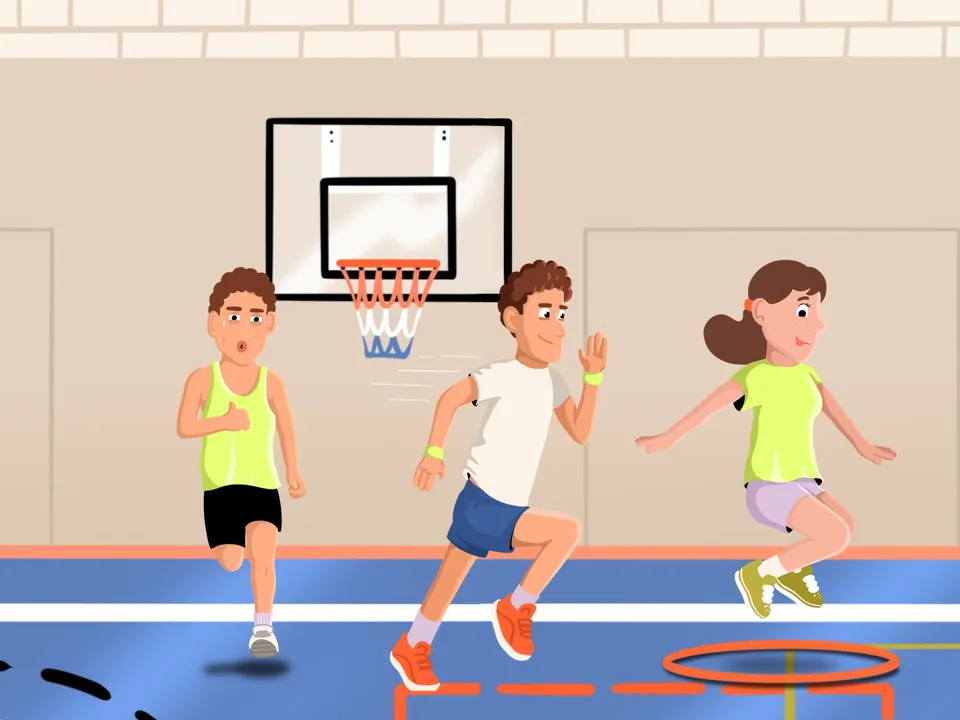
In a 30- or 40-minute period with 24 to 36 students, much of the lost movement time comes from routines like roll call, team picks and…

Some students in your class have played a sport for years, and others are touching it for the first time.
Download the app for iOS & Android and try 3 free units without an account, then use Team Creator and Tournament Planner for your first season. Yearly plans start with a 7-day free trial; see current prices in the app.
App for iPhone, iPad and Android.