Reaching 50% MVPA in PE Class
In a 30- or 40-minute period with 24 to 36 students, much of the lost movement time comes from routines like roll call, team picks and…
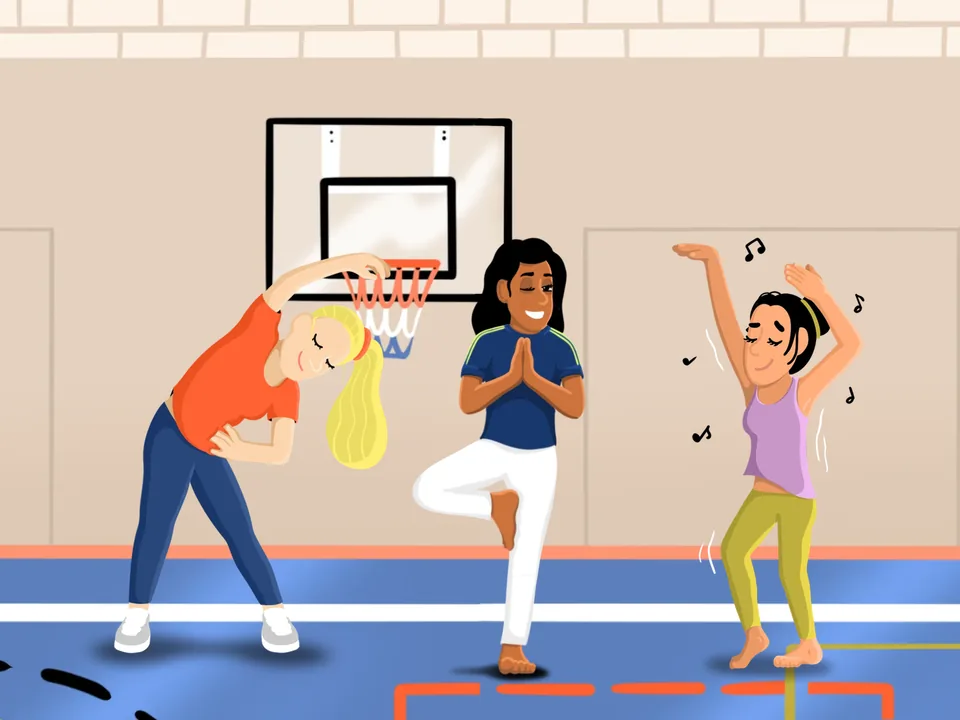
Physical literacy is the motivation, confidence, physical competence, knowledge and understanding to value and take responsibility for staying active for life, as the International Physical Literacy Association defined it in May 2014. That definition has 4 elements. In PE, it means students who move with control, believe they can improve, understand why movement matters and choose to stay active outside class.
PE teachers and classroom teachers who cover PE need a definition they can use in lesson plans, parent notes and administrator meetings. It covers SHAPE America's 2024 standards, examples for K–5 and 6–12, the difference between physical literacy and fitness, and a routine for planning it into a unit.
The International Physical Literacy Association (IPLA) lists four elements in its May 2014 definition. They work as a set, so a student with strong skills and no wish to move still has a gap.
| Element | In plain words | What you see in class |
|---|---|---|
| Motivation and confidence | Enjoying activity and trusting yourself to try | A student retries a missed catch instead of walking away |
| Physical competence | Movement skills and patterns, used at different intensities and durations | A smooth jog, a balanced landing, a controlled throw |
| Knowledge and understanding | Knowing what shapes movement, why activity helps health and how to stay safe | A student explains why bent knees soften a landing |
| Engagement for life | Choosing to be active on a regular basis | A student joins the lunchtime game or plans a weekend walk |
Reading offers a useful comparison: children learn sounds, then words, then stories. In movement, they learn basic skills, then combine them in games and activities they choose themselves.

SHAPE America's 2024 National PE Standards use the phrase “physical literacy journey” in the rationales for S1, S2 and S4 and give no separate definition. Released in March 2024, they have four standards (S1–S4), each with indicators for PreK–2, 3–5, 6–8 and 9–12.
This pairing is a reading aid and does not come from SHAPE America. The 2013 edition had five standards (S1–S5), and each began with “The physically literate individual.” If your curriculum still cites S1–S5, PE lesson plans and the SHAPE standards covers planning around them.
A physically literate student moves with control, keeps trying after a miss and can explain why activity matters, at a level that fits the grade band.
The goal is a wide movement vocabulary and good early experiences. A kindergartner who can gallop and balance on one foot has more to build on than one who only runs. A first grader who misses several bean bag throws at a wall target and keeps going is showing confidence. For throwing stations, use soft objects such as bean bags, throw only toward a wall target with nobody between it and the throwers, and send students to retrieve only after a stop signal.
The goal shifts to choice, strategy and self-direction. Students choose an activity for a unit, lead a warm-up for a small group, explain a tactic such as creating open space, or set a personal goal and review it with a PE goal setting sheet. The rationale for 2024 Standard 4 names goal setting, identifying strengths and reflection as personal skills.
The four elements apply to every student, with goals and equipment adapted. The adaptive PE curriculum guide shows how to plan for that.
Physical fitness, in simple words, is how well your body handles physical effort: how long you can keep going, how strong you are and how far you can bend. A sport skill is competence in one activity, such as a bounce pass. Physical literacy includes both and adds confidence, knowledge and the habit of choosing to move.
| Concept | Simple definition | Example | Role in physical literacy |
|---|---|---|---|
| Physical fitness | How well the body handles effort: stamina, strength, flexibility | Keeping a steady jog going for a set time | Supports competence and links to health knowledge |
| Sport skill | Competence in one activity | A bounce pass or a serve | One piece of physical competence |
| Physical literacy | Skills, confidence, knowledge and the choice to stay active | A student picks a pickleball game at lunch and knows how to warm up | The overall goal |
A student can post a strong fitness score and still dread PE, which leaves motivation and engagement unbuilt. Another may have a rough serve but play with friends every weekend. That student's motivation and engagement are in place, and competence is the next thing to build.
Plan each unit around four items: one skill focus, one concept, one choice and one moment of reflection. Together they touch all four IPLA elements.
Example: tape a square target on a wall and mark near, middle and far lines in front of it, with lanes wide enough that no student can hit a neighbor with a bag. Each student picks a line and makes five bean bag throws toward the wall at one shared signal, then collects the bags after a stop signal. Four or five hits means moving back one line next round, three stays put, and two or fewer means moving forward. You end after the number of rounds you set, and nobody sits out. Keep waiting short so students spend most of the period moving; reaching 50% MVPA in PE class shows how to plan and check active time.
Four habits can quietly work against confidence and engagement, and each has a quick fix.
| Habit | Why it happens | Fix |
|---|---|---|
| Isolated drills only | Drills are easy to run and to watch | Add a short game-like task where students apply the skill and can adjust the difficulty |
| Fitness score as the main grade | Numbers are quick to record | Grade effort, progress and goal setting alongside any fitness result |
| Elimination games | They are simple to organize | Switch to a game where everyone stays in, such as freeze tag in a marked area with no walls or equipment inside it, tagging with a light touch on the shoulder or back, where a teammate's high five frees a frozen player |
| Praise only for results | Results are the easiest thing to see | Praise a specific change: “Your feet turned sideways and the throw got straighter” |
Use one sentence: “We teach students to move well, enjoy it and know how to stay active, so they keep moving after school.”
For parents, the reading comparison works well: sounds, words and stories become basic movements, games and activities a child chooses. A short note home can name the skill your class is practicing and suggest one way to practice it, such as a game of catch with a soft ball in the yard.
For principals and curriculum teams, tie the idea to SHAPE America's standards, then show your evidence: observation checklists, I can statements, student goal sheets and how much class time is active. The PE teaching philosophy template helps you put your “why” in writing, and what a strong PE curriculum includes shows where physical literacy fits in a full program.
The term “4 C's” most often refers to critical thinking, communication, collaboration and creativity, a set of 21st-century skills. Physical literacy is described through the four IPLA elements instead: motivation and confidence, physical competence, knowledge and understanding, and engagement for life. If you want a memory aid, confidence, competence, comprehension and commitment cover the same four areas.
In language arts, literacy skills are reading, writing, speaking and listening. The movement counterpart is fundamental movement skills: locomotor skills such as running, hopping and skipping, balance skills such as twisting and landing, and manipulative skills such as throwing, catching, kicking and striking. Confidence and knowledge about when and how to use them complete the picture.
Yes. Goals, equipment and the way a skill is performed can be adapted so each student builds skills, confidence and knowledge from their own starting point. Larger targets, lighter balls or extra practice time are common adaptations. For IEP or 504 questions, work with your school's team, which sets the plan for each student.
Assess each element with evidence you can see: skill performance against a short rubric, students explaining a concept in their own words, a self-rating of confidence and what students choose to do in free-choice time. One fitness score covers only part of it. Record growth over a unit, because every student starts from a different place.
The modern concept is most closely linked to Margaret Whitehead, a UK physical education scholar who began writing about it in the 1990s. Her work shaped the definition the International Physical Literacy Association published in May 2014. Since then, national bodies such as SHAPE America have used the term in their standards.
No. Physical education is the school subject, and physical literacy is one outcome it aims for. PE class is the main place students build skills and knowledge, but recess, youth sport, family activities and free play also add to each student's physical literacy over time.
In a 30- or 40-minute period with 24 to 36 students, much of the lost movement time comes from routines like roll call, team picks and…
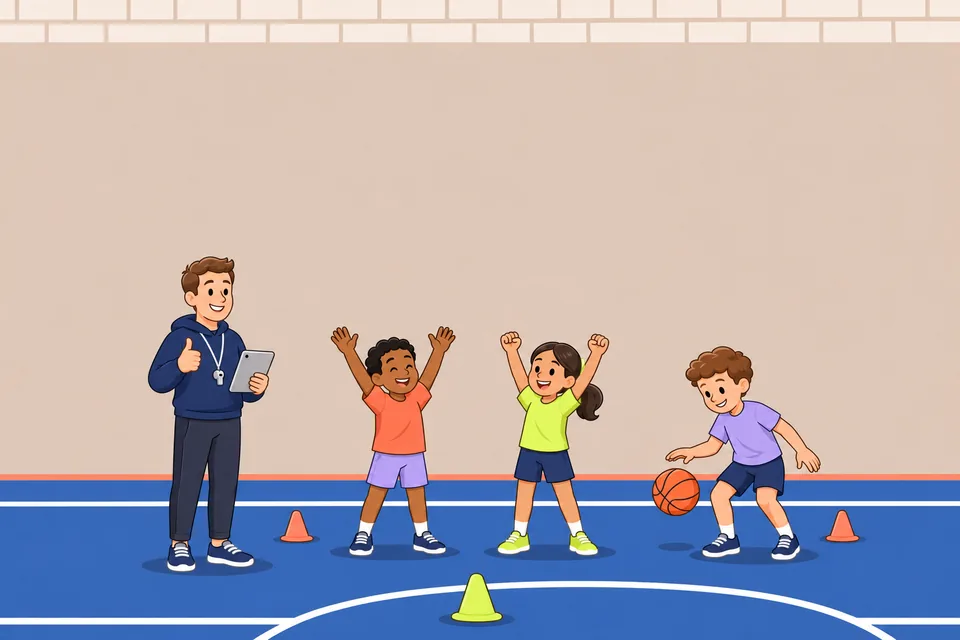
Some students in your class have played a sport for years, and others are touching it for the first time.
Teachers in Grades K–12 can set up goal setting in PE with a goal sheet to copy, example goals for each grade band, a check-in routine…
Open the 3 free units, no account needed, and check a full unit against skill, knowledge, confidence and choice. Memberships are in-app purchases, so see current prices in the app; the 7-day free trial covers the Yearly plan and the 12-month plan.
App for iPhone, iPad and Android.