Games & warm-ups
Brain Breaks for Grades K–5
A good brain break needs a clear stop signal, a bubble of space for each child, and a game students can learn fast.
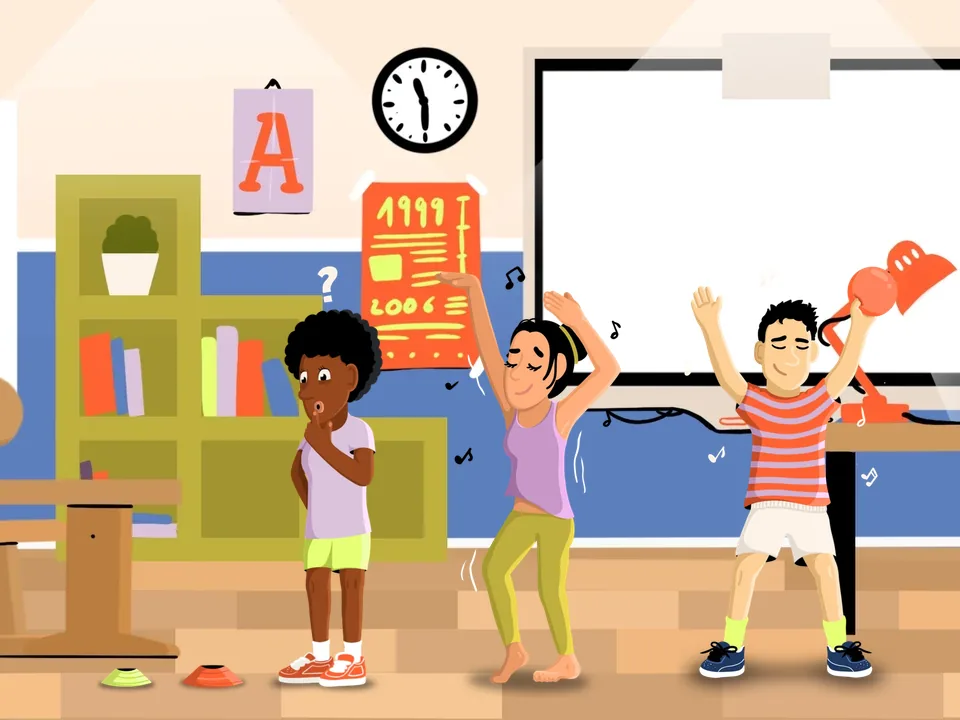
Movement breaks are short bursts of physical activity during class, usually about 2 to 5 minutes long. The 12 options here include three seated ones, three quick standing ones, three for grades K–2, and three for grades 6–12. Agree on a stop signal first, then pick by grade and space.
These ideas for movement breaks in the classroom suit teachers with a room full of desks and few spare minutes. You get grades, space, and rough minutes for each one, a menu to print, and fixes for collisions and a wound-up room.
Teachers use short activity breaks to give students a reset between two blocks of seated work, so they can refocus afterward. Plan about 2 to 5 minutes, and use the longer end after a long block of sitting.
The HHS Physical Activity Guidelines for Americans (PDF) recommend 60 minutes or more of moderate-to-vigorous activity a day for ages 6–17, and lively breaks can add to that total. The same guidelines list improved cognition among the benefits of physical activity for ages 6 to 13.
| Break | Grades | Minutes (about) | Space |
|---|---|---|---|
| Air Spelling | 1–6 | 2 | Chairs |
| Seated Sports Mime | K–8 | 2 | Chairs |
| Countdown Ladder | 3–12 | 3 | Chairs |
| Roll-a-Move | 2–8 | 3 | Beside desks, soft die |
| Full-Body Rock Paper Scissors | 2–12 | 2 | Partner spots |
| Opposite Commands | 1–8 | 2 | Beside desks |
| Weather Report | K–2 | 3 | Own spots |
| Red Light, Green Light in Place | K–2 | 2 | Own spots |
| Adventure Walk | K–2 | 3 | Own spots |
| Opinion Line | 6–12 | 5 | Clear wall |
| Walk and Talk | 6–12 | 4 | Walking loop |
| Pick-Your-Level Set | 6–12 | 3 | Wall and chair |
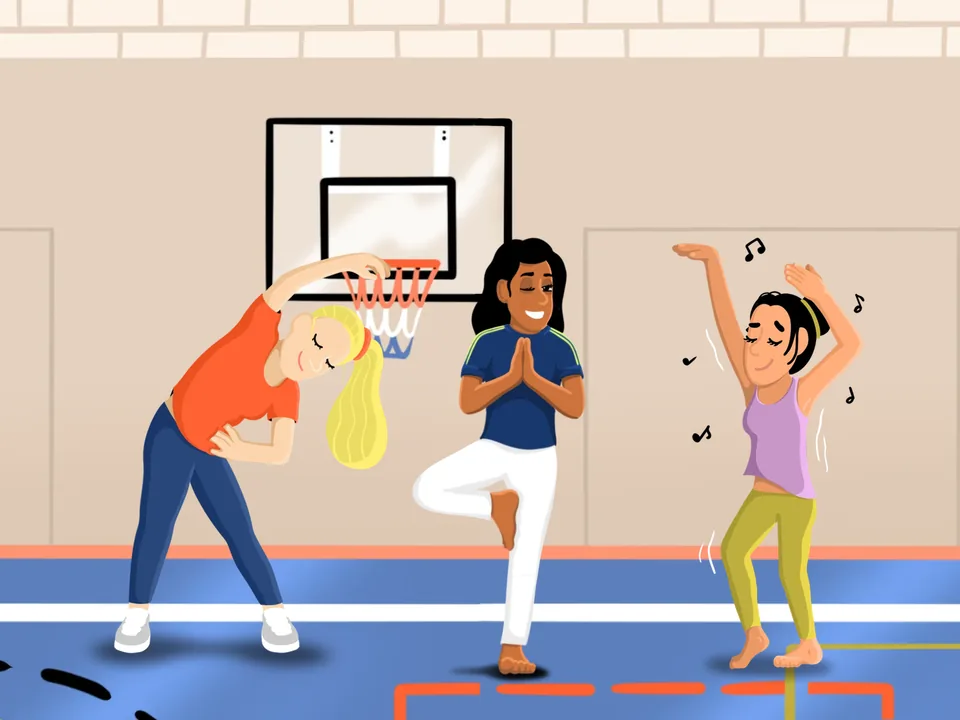
Air Spelling, Seated Sports Mime, and Countdown Ladder all work from a chair. Keep chair legs on the floor, use only arm moves on wheeled chairs, and reach upward where neighbors sit close.
Grades 1–6, any class size, about 2 minutes. Say a spelling or vocabulary word, and students write it in big air letters with one hand, then the other. Spell it aloud to check. Anyone who gets lost rejoins on the next word, and new words keep coming until the timer ends. For younger readers, these sight word brain breaks for grades K–3 build the same idea around high-frequency words.
Grades K–8, whole class, about 2 minutes. Call a sport, such as swimming, rowing, skiing, or basketball, and students act it out in their seats. Switch about every 15 seconds, and end with a slow reach to the ceiling.
Grades 3–12, own pace, about 3 minutes. Write the ladder on the board: 10 seated marching steps, 9 shoulder rolls, 8 overhead reaches, then moves the class picks for 7 down to 1. Early finishers repeat slow reaches until the timer ends.
Roll-a-Move, Full-Body Rock Paper Scissors, and Opposite Commands take about 2 to 3 minutes. Before standing, students push in chairs and tuck bags under desks.
Grades 2–8, whole class, one soft die, about 3 minutes. Give each number a move: marching, arm circles, calf raises, side reaches, half squats, or slow breaths. A student rolls, everyone does that move for a count of 10, and the roller picks who goes next. Anyone who loses count joins the next roll. Stop when the timer ends.
Grades 2–12, partners, about 2 minutes. Rock is a low crouch, paper a wide star, and scissors one foot forward with arms crossed. Partners say “one, two, three, show” and strike a pose. Rock beats scissors, scissors beats paper, and paper beats rock, and the winner scores a point. Replay ties and late poses. At three points the pair starts a new game, until time is up. With an odd number, form one group of three and rotate the judge. Keep pairs far enough apart that two stars can't touch.
Grades 1–8, whole class, about 2 minutes. Students do the reverse of your call: “reach high” means reach low, and “march fast” means march slowly. Nobody sits out after a slip; they join the next call. After about 10 calls, a volunteer takes over until the timer ends.
Weather Report, Red Light, Green Light in Place, and Adventure Walk suit kindergarten through grade 2 because each gives children a story or a signal to follow. Give every child a spot with room to stretch both arms, and keep shoes on where socks would slide.
Grades K–2, whole class, about 3 minutes. As the forecaster, call rain (quick tiptoes on the spot), wind (swaying arms), thunder (stomping), and sunshine (a big stretch). Change the weather every few sentences, then let quiet snow float everyone down to sit.
Grades K–2, whole class, about 2 minutes. Children march on their spots for green, move in slow motion for yellow, and freeze for red. Nobody is out: a child who misses the freeze joins in again on the next color. A volunteer can be the traffic light until the timer ends.
Grades K–2, whole class, about 3 minutes. Tell a short trip that children act out in place: high knees through tall grass, swimming arms across a river, big steps up a mountain, and tiptoes past a sleeping bear. They pick the last stop, then walk “home” slowly and sit.
Opinion Line, Walk and Talk, and Pick-Your-Level Set suit grades 6–12 because they give a break a purpose or some choice. The first two carry lesson content, and the third lets students decide how hard to work.
Grades 6–12, whole class, about 5 minutes. Mark the two ends of a clear wall “agree” and “disagree.” Read a debatable statement from your lesson, and students walk to the spot that fits their view. Neighbors trade reasons, anyone may move after hearing a better one, and a few volunteers sum up.
Grades 6–12, pairs, about 4 minutes. Pairs walk an agreed loop in one direction and discuss a review question for about 2 minutes, then a second one until the timer ends. An odd number makes one group of three. Use a hallway only if school rules allow it and you can see every group.
Grades 6–12, individuals, about 3 minutes. Offer wall push-ups with feet near or farther back, calf raises on two feet or one with a hand on the wall, and sit-to-stands from a chair without wheels that is braced against a wall. Students choose their level and reps, then switch moves on your call. Keep the floor dry; anyone in pain stops.
Print this menu, post it by the board, and circle two options in your grade row for a class vote. Numbers in parentheses are rough minutes.
| Grades | In chairs | On your feet |
|---|---|---|
| K–2 | Seated Sports Mime (2) | Weather Report (3), Red Light, Green Light in Place (2), Adventure Walk (3) |
| 3–5 | Air Spelling (2), Seated Sports Mime (2), Countdown Ladder (3) | Roll-a-Move (3), Full-Body Rock Paper Scissors (2), Opposite Commands (2) |
| 6–8 | Seated Sports Mime (2), Countdown Ladder (3) | Roll-a-Move (3), Full-Body Rock Paper Scissors (2), Opposite Commands (2), Opinion Line (5), Walk and Talk (4), Pick-Your-Level Set (3) |
| 9–12 | Countdown Ladder (3) | Full-Body Rock Paper Scissors (2), Opinion Line (5), Walk and Talk (4), Pick-Your-Level Set (3) |
Add a tally mark for each break you run. After a week, drop the ones that left your class hardest to settle.
To run a break safely and get back to work, take these four steps in order.
| Typical mistake | Cause | Fix |
|---|---|---|
| Break drags on | No end was set | Use a timer and stop on it |
| Room stays wound up | Liveliest move came last | Finish with a calm brain break |
| Students bump into desks | Too little space | Switch to chairs |
| Same students sit out | Only one version offered | Add a seated version or caller job |
SHAPE America's position statement on activity and punishment calls exercise as punishment inappropriate, along with withholding PE or recess as a consequence. Don't assign squats for talking or take a student's break away as discipline.
For children with ADHD, breaks and time to move are common school supports. Follow IEP and 504 plans, and ask the school nurse about injuries or asthma.
As a rough guide, plan one after about 20 to 30 minutes of seated work, and sooner for young children or when attention drops. The switch between two subjects is a good moment because no task gets cut in half.
It is a short, planned chance to move, such as delivering a note, standing to work, or doing a quiet chair routine. Agree on a discreet signal and a return point, and follow any IEP or 504 plan. The break is a classroom support and does not replace treatment.
No, they come on top of both. PE teaches movement skills through a curriculum and recess gives students free play, while a classroom break fills only a few minutes of a lesson block.
Offer a real choice, such as calling the moves, running the timer, or doing a smaller seated version. Talk privately later, since refusal can come from embarrassment or pain, and follow school health procedures if something seems wrong.
A movement break always gets students physically moving, while a brain break is any short pause from focused work. That pause can be active, such as marching or stretching, or calm, such as slow breathing or a quiet guessing game. Use an active break after long sitting and a calm one when the room is already wound up.
A good brain break needs a clear stop signal, a bubble of space for each child, and a game students can learn fast.
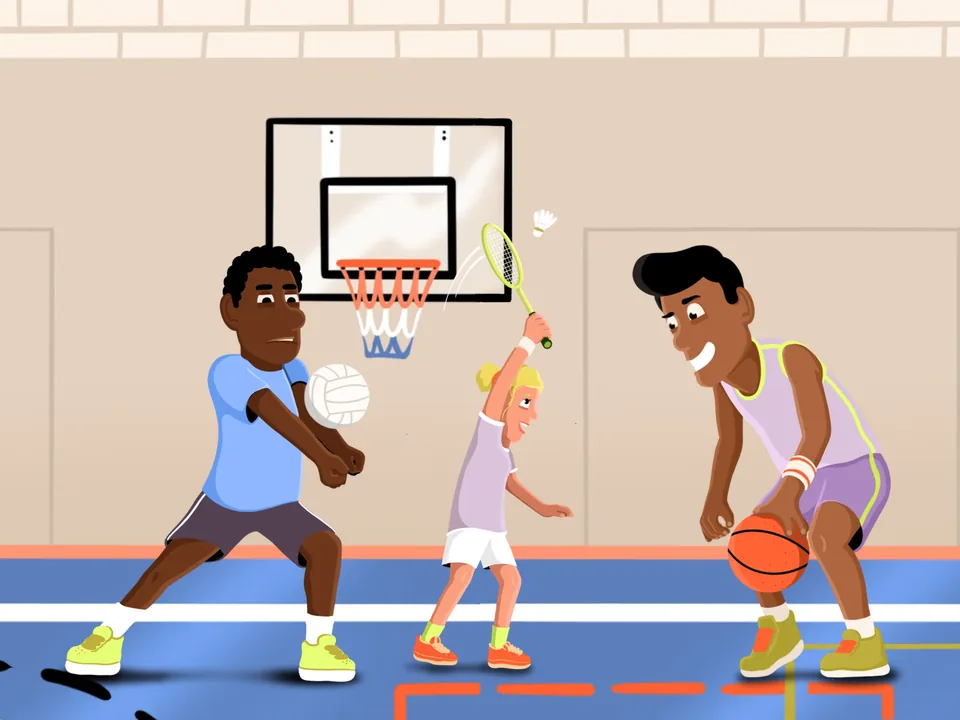
When students return from outdoor recess or a loud hallway transition with racing voices, jumping straight into a lesson rarely works.
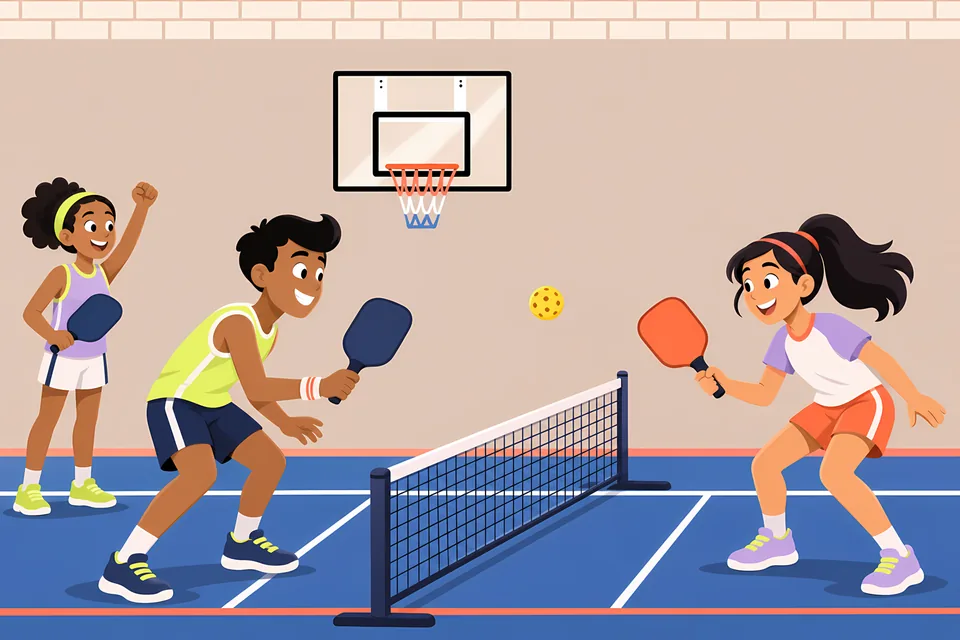
Attention often drops halfway through place value or multiplication drills.
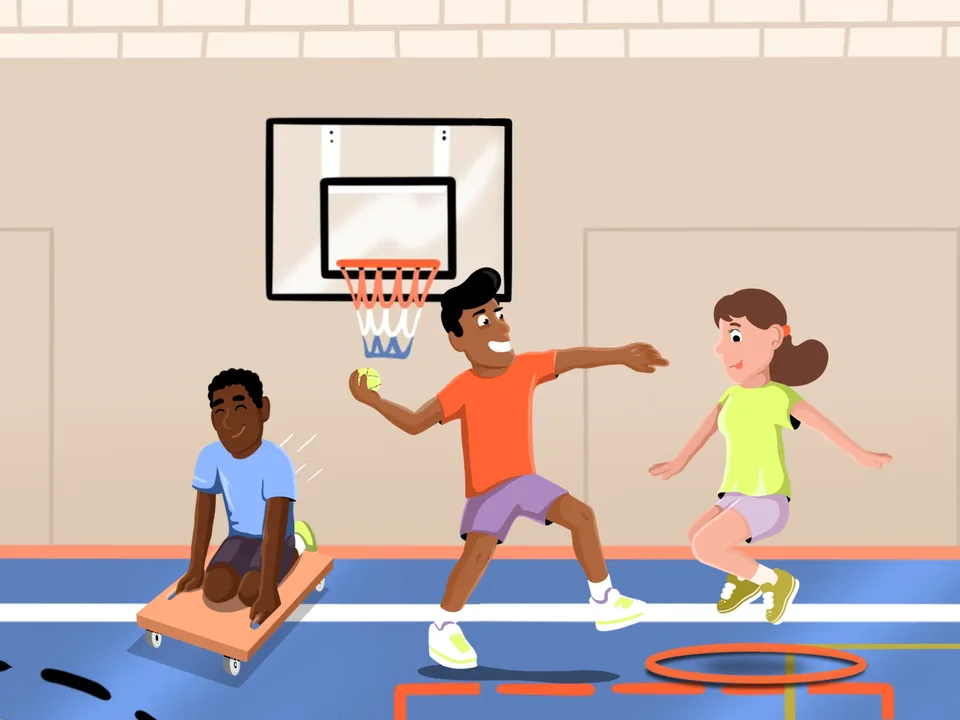
Loading a follow-along video on the projector can take longer than the movement break itself.
Open the 3 free units in the app, no account needed, and try the Classroom Brain Breaks pack. Write the ones your class likes onto the printed menu on your board.
App for iPhone, iPad and Android.