Games & warm-ups
Brain Breaks for Grades K–5
A good brain break needs a clear stop signal, a bubble of space for each child, and a game students can learn fast.
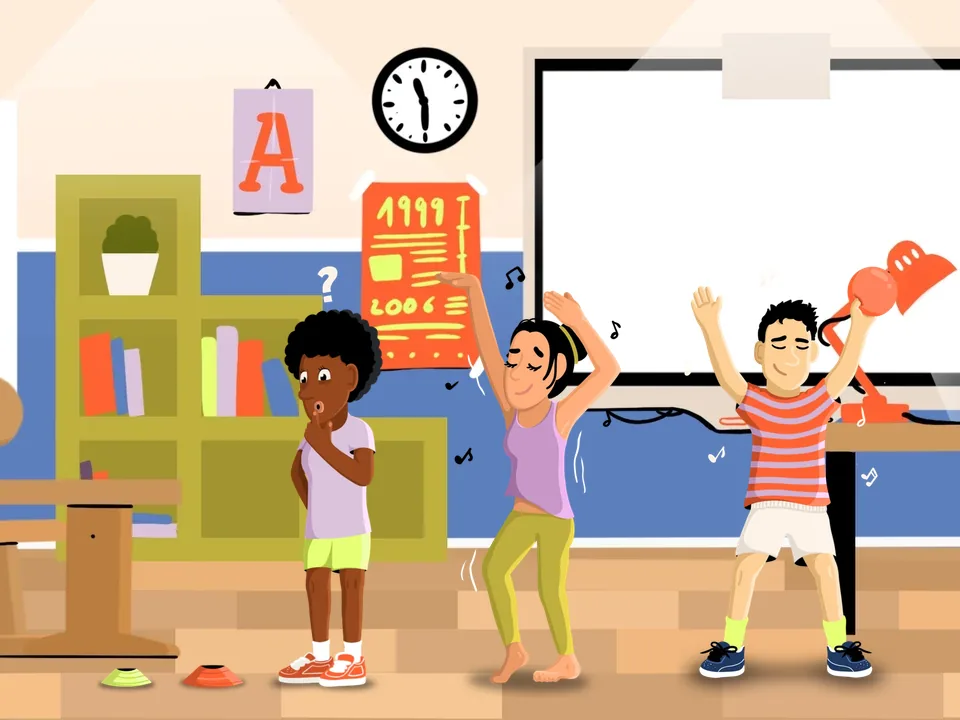
Sight word brain breaks work well in Grades K–3 when they take 2 to 5 minutes and tie each movement to a word card. All 10 routines here run without a video screen and use 5 to 10 cards per class or pair. Choose brisk standing reads after long seatwork, or slow partner letter tracing right before independent reading.
Elementary classroom teachers and reading specialists can use these routines whenever students start fidgeting during phonics or guided reading rotations. Each entry gives the group goal, movement steps, a low-pressure reset for misread words, and a clear finish. You also get a floor plan for the vowel corner walk and a table of fixes for crowded aisles and noisy transitions.
All 10 games take 2 to 5 minutes each: eight run with the whole class and two in pairs. They give elementary readers extra practice on high-frequency words between seated literacy blocks, with no projector needed. Sight words are those high-frequency words, such as the, said, and was. Many K–3 teachers take them from the Dolch list (220 service words) or the Fry list (1,000 instant words). The irregular ones are often taught as heart words, where students learn one part by heart. Rounds at moderate intensity or harder can also count toward the 60 minutes or more of daily moderate-to-vigorous physical activity that the Physical Activity Guidelines for Americans from HHS recommend for ages 6 through 17.
Choose your sight word brain breaks by classroom energy: whole-class standing reads suit sleepy mornings, and slow partner letter tracing fits right before independent reading. Give each student arm's-length space on a flat floor free of bags. Popup Chair Read uses chairs, and the corner walk needs open paths to all four corners. When you want movement breaks without word cards, see active classroom brain breaks for Grades K–5 or 12 classroom movement breaks for K–12.
| Activity | Grades | Group | Time | Materials |
|---|---|---|---|---|
| Popup Chair Read | Grades K–2 | Whole class | 2 minutes | 8 word cards |
| Action-or-Freeze Check | Grades K–2 | Whole class | 3 minutes | 8 word cards |
| Wall-Spot Point and March | Grades K–2 | Whole class | 3 minutes | 6 word cards |
| Sky-Grass-Dirt Reach | Grades K–2 | Whole class | 3 minutes | 5 word cards |
| Cross-Body Letter Tap | Grades 1–3 | Whole class | 3 minutes | 6 word cards |
| Invisible Rope Jumps | Grades 1–3 | Whole class | 3 minutes | 6 word cards |
| Heart-Part Hop and Squat | Grades K–2 | Whole class | 4 minutes | 6 word cards |
| Vowel-Corner Tip-Toe Walk | Grades 1–2 | Whole class | 4 minutes | 4 corner signs, 8 word cards |
| Rock-Paper-Read Duel | Grades 1–3 | Pairs | 5 minutes | 10 word cards per pair |
| Back-Trace Partner Guess | Grades 1–3 | Pairs | 4 minutes | 6 word cards per pair |
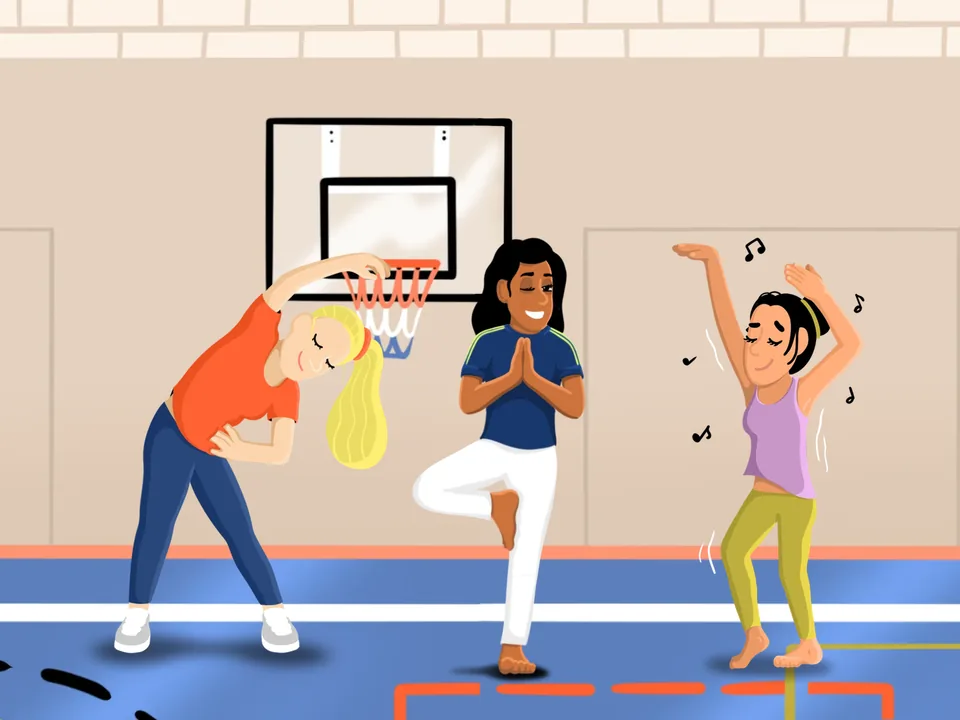
Three whole-class breaks keep students at or beside their desks while they read high-frequency words aloud together.
For Grades K–2 with the whole class (2 minutes, 8 word cards): students earn up to 8 class points by standing to read each card in unison.
For Grades K–2 with the whole class (3 minutes, 8 word cards): students aim for 16 points by marching on most words and freezing on one freeze word.
For Grades K–2 with the whole class (3 minutes, 6 word cards): students aim for 6 points by locating and reading words taped above eye level on classroom walls.
Spelling brain breaks pair each letter of a high-frequency word with a body level, a knee tap, or a hop so students rehearse letter order aloud.
For Grades K–2 with the whole class (3 minutes, 5 word cards): students aim for 5 points by showing letter heights with body levels.
For Grades 1–3 with the whole class (3 minutes, 6 word cards): students target 6 points using alternating knee taps per letter.
For Grades 1–3 with the whole class (3 minutes, 6 word cards): students collect 6 points with soft imaginary jump-rope hops on flat non-slip flooring.
Two phonics games tie movement to letter sounds: one flags irregular spellings, and the other sorts short vowels. With gym space, try the spelling relays and task card stations in literacy activities for PE class.
For Grades K–2 with the whole class (4 minutes, 6 word cards): students target 6 points by hopping regular sounds and squatting on the irregular heart part.
For Grades 1–2 with the whole class (4 minutes, 4 corner signs, 8 word cards): students aim for 8 points by tiptoeing to the corner that matches each word's short vowel, as shown in the Four-Corner Vowel Walk Classroom Setup.
Partner challenges give each child individual turns to read or name words, and the turn-taking connects to social skills (S3) in SHAPE America's 2024 National Physical Education Standards (S1–S4 for K–12 US PE). With an odd headcount, form one trio: two students play while the third holds the deck, and roles rotate every two cards.
For Grades 1–3 in pairs (5 minutes, 10 word cards per pair): partners work together to clear all 10 cards into a shared win pile. More partner games with the same hand signs are in rock paper scissors games for PE.
For Grades 1–3 in pairs (4 minutes, 6 word cards per pair): partners aim for 6 team points by identifying words traced slowly on an upper back or open palm.
Write 5 to 10 words on large index cards (5 × 8 inches or bigger) in thick dark marker, with letters about 2 inches tall so the back row can read them from about 20 feet. Keep them on a binder ring on your whiteboard ledge, and make one set per pair for partner games. Each Monday, swap about 2 to 3 mastered words for new ones. Before each round, clear backpacks and loose pencils from the floor, as you would for math brain breaks for elementary classes.
Keep reading mistakes low-pressure and never assign extra squats for a missed word or hold a child out of the break to finish seatwork; SHAPE America's 2021 position statement on physical activity as punishment calls activity used as punishment, or withheld as punishment or behavior management, inappropriate. Follow energetic rounds with two slow breaths or one routine from calm brain breaks for classrooms before picking up pencils.
| Mistake | Cause | Fix |
|---|---|---|
| Students copy louder classmates instead of reading | Fast readers shout the word immediately | Hold two fingers up for 2 seconds of silent eyes-on-card wait time before the movement signal |
| Bumped elbows or tripping over chairs in tight aisles | Chairs left pulled out and backpacks in walkways | Cue clear walkways, tidy chairs, and an arm's-length check before card one |
| Shouting carries into the next reading block | Ending on a high-speed jumping card | Make the final card a whisper-read with a 3-second tiptoe stretch |
| Guessing words from the first letter alone | No visual cue for middle vowels or endings | Sweep a finger under every sound part and underline irregular heart letters |
Switch from three-letter kindergarten words to two-syllable high-frequency words and irregular vowel teams from your 2nd grade reading list. Replace simple chair pop-ups with cross-body taps or the 5-minute Rock-Paper-Read Duel in pairs. A class streak or a shared 10-card partner deck gives them a goal to work toward.
Include about 2 to 3 new words mixed with 3 to 7 familiar review words inside your 5-to-10-card deck. Keeping most of the stack recognizable lets students move at a brisk pace during a 2-to-5-minute break without stopping on every card. Once the class reads a word cleanly three days in a row, swap it for a fresh one the following Monday.
Cards work better when you need your exact weekly phonics sequence, because a ready-made video may use a different word list. Holding index cards also lets you pause for two seconds on a tricky vowel spelling and match your class's pace. A projected video can still help during indoor recess when a substitute teacher needs a ready-made routine.
Give upper-body options for every leg movement before card one so seated and wheelchair-using students participate on the same cue. Swap chair pop-ups for an overhead arm press, and replace corner tiptoe walks with holding up a matching vowel card at the desk. Each student's reading counts toward the same class point total.
The Dolch list (220 service words) and the Fry list (1,000 instant words) are the two most common sources for Grades K–3. Use the list your reading program already follows so the cards match your weekly phonics sequence. Pull 5 to 10 words per deck and mark irregular spellings as heart words.
Once or twice a day works for most K–3 classes: for example, one break in the middle of a long literacy block and one before independent reading. Each break lasts 2 to 5 minutes, so two rounds add roughly 4 to 10 minutes of movement. Add a break sooner when students start fidgeting or lose focus during seatwork.
A good brain break needs a clear stop signal, a bubble of space for each child, and a game students can learn fast.
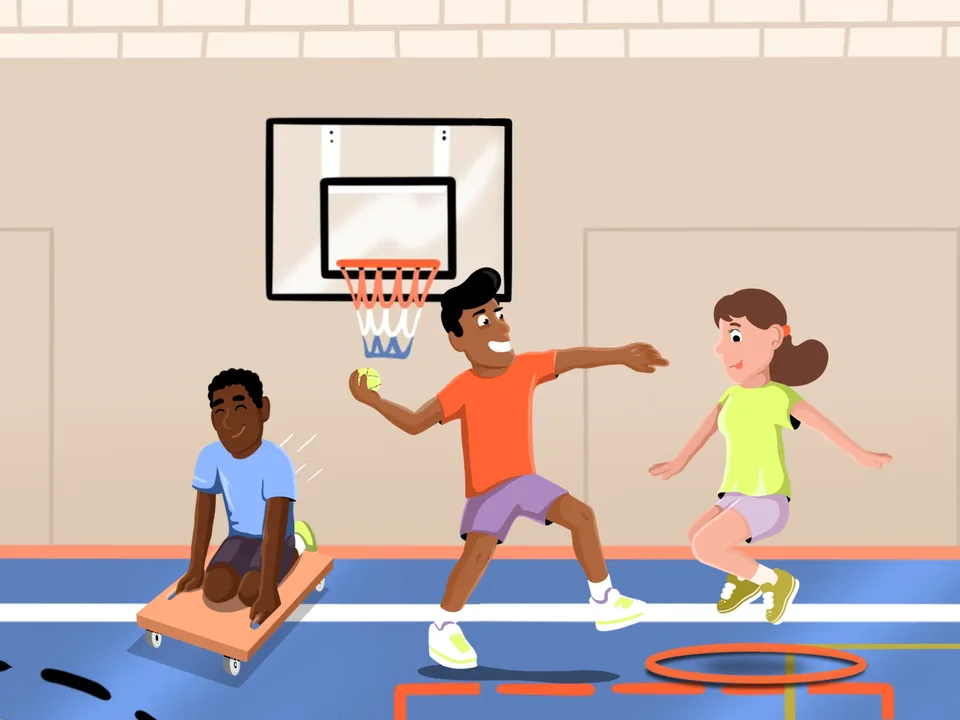
This list is for PE specialists, classroom teachers who run PE and secondary teachers who are asked how their class supports reading and…
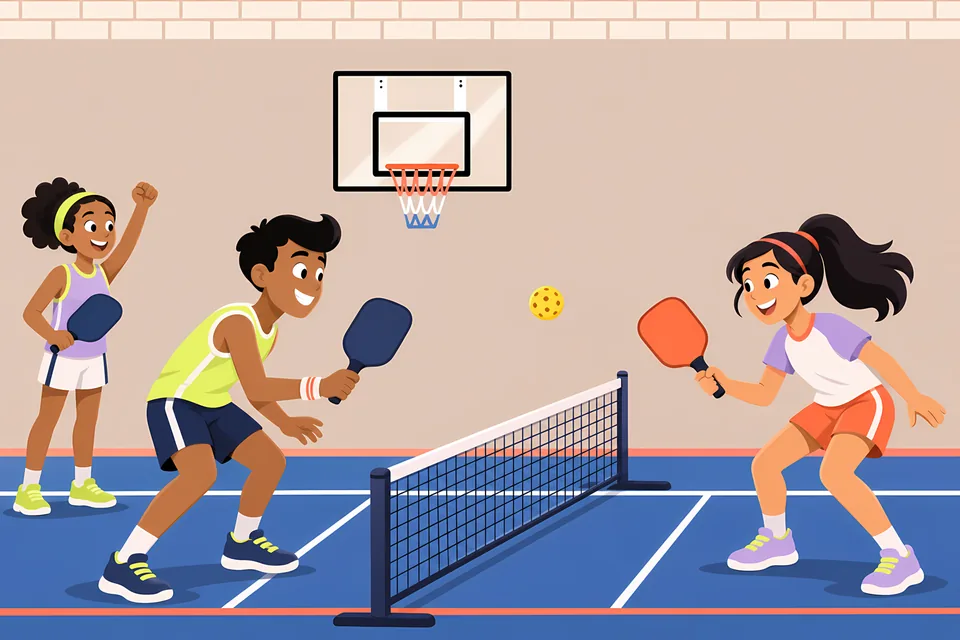
When students return from outdoor recess or a loud hallway transition with racing voices, jumping straight into a lesson rarely works.
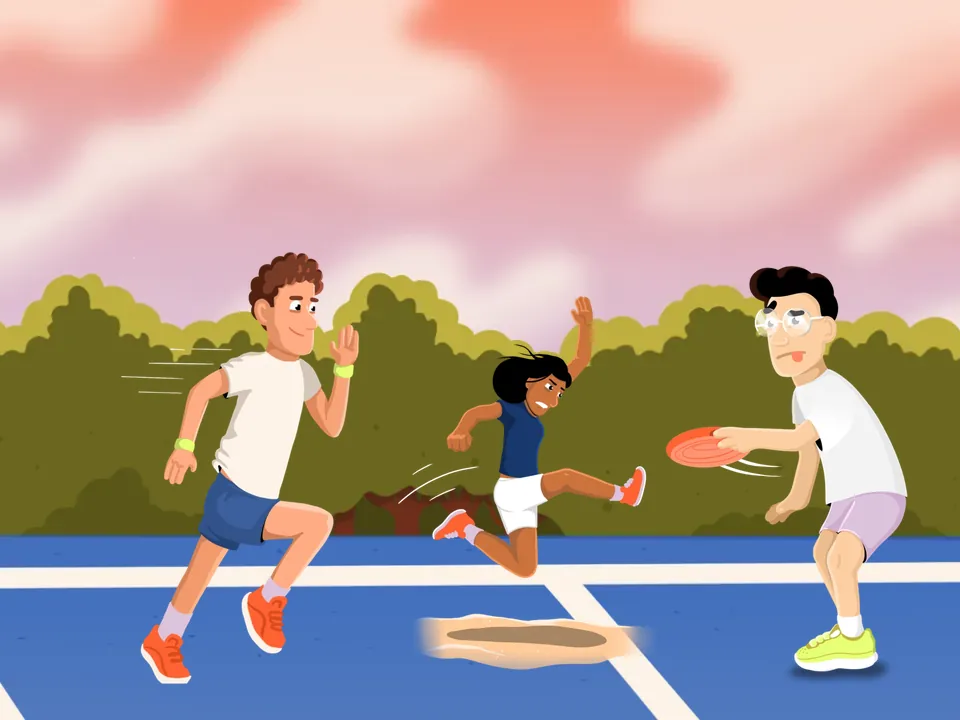
Attention often drops halfway through place value or multiplication drills.
Download the free PhysEdPrep app for iOS & Android to open 3 free units without an account, including the Classroom Brain Breaks sample pack with 13 movement breaks. Yearly and 12-month plans start with a 7-day free trial and include all grades K–12, 40+ unit plans, 240+ lessons, and all 6 gym tools (see current prices in the app).
App for iPhone, iPad and Android.