10 Ways to Differentiate in PE
Some students in your class have played a sport for years, and others are touching it for the first time.
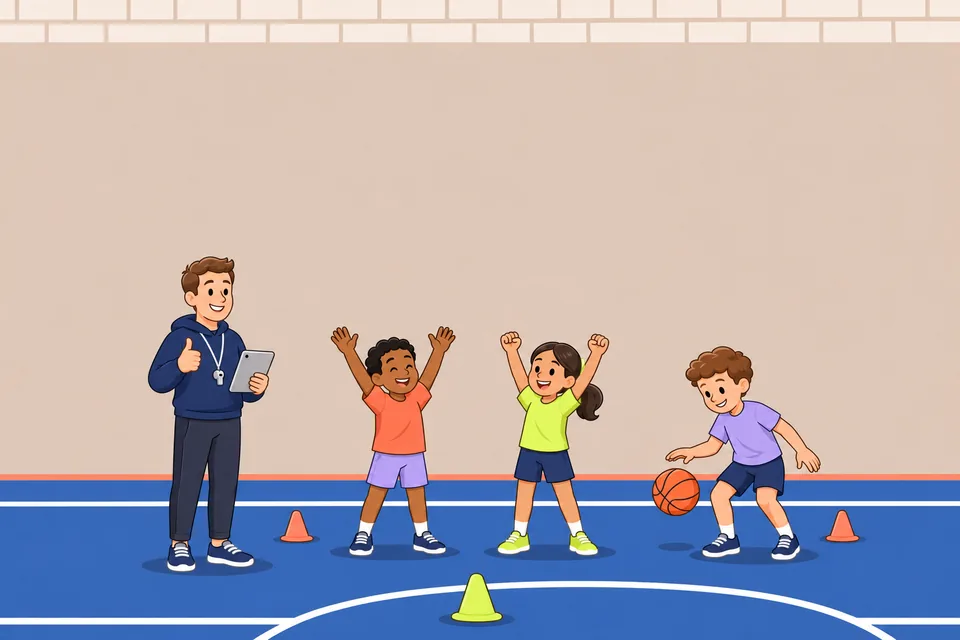
PBIS in physical education translates your school's 3 to 5 core expectations into a printable PE behavior matrix for the gym, locker room, and outdoor field. You model one routine in about 2 to 3 minutes at the start of class, praise safe habits during play, and log repeated minor issues on a clip-on tally sheet.
A classroom PBIS poster says little about thrown balls, open fields, or locker rooms, so PE teachers in Grades K–12 need a gym version. The tools that follow are a ready-to-print behavior matrix for gym zones, a floor map for the first minutes of class, low-prep class rewards, and a copyable tally log for minor behaviors.
PBIS (Positive Behavioral Interventions and Supports) works in the gym when you keep the names of your building's 3 to 5 core expectations and rewrite every example for open space, shared gear, and active play. Seated classroom rules like raising a quiet hand break down once 30 students spread across a gym floor or soccer field. Translating PBIS in physical education means defining observable habits for whistles, equipment bins, boundary cones, and sidelines.
Gym PBIS routines also fit SHAPE America's 2024 National Physical Education Standards, which have four K–12 standards (S1–S4) and replaced the five-standard 2013 edition. Standard 3 covers social skills such as cooperation, and Standard 4 covers personal skills.
Tier 1 is the layer of routines every student learns, and the Center on PBIS expects it to work for about 80 percent of students or more. Tier 2 adds targeted support for roughly 10 to 15 percent of students, and Tier 3 adds individualized support for about 1 to 5 percent. In the gym, add visual cue cards or noise-adjusted signals where students need them, and follow each student's IEP or 504 plan and your district procedures (see building an adaptive PE curriculum). Shared Tier 1 labels also help substitutes, so copy them into your long-term PE sub plans.
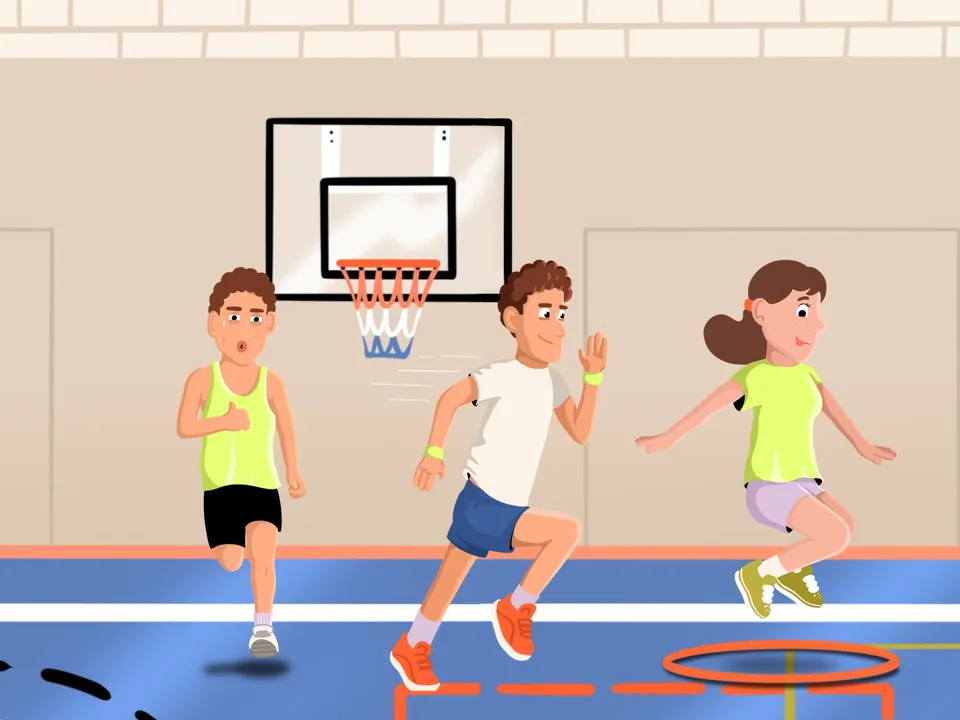
A printable PE behavior matrix lists about 2 observable actions in each cell so K–12 students see what safe, respectful, and responsible participation looks like before equipment comes out. Swap the three rules in the left column for your school's 3 to 5 PBIS expectations and post copies at the gym doors, equipment area, and locker rooms. In Grades K–5, use the last column for hallway lineups. In Grades 6–12, apply it to locker rooms with adult supervision that follows your district's privacy rules.
| Schoolwide Rule | Entry & Home Base | Signals & Equipment | Gameplay & Sidelines | Locker Room & Lineup |
|---|---|---|---|---|
| Be Safe | Walk the perimeter track; wait at home-base cones about 5 to 6 feet apart on a dry floor. | Freeze in about 3 to 5 seconds with gear on the floor; throw soft balls below shoulders. | Stay inside boundary cones; check spacing from walls and bleachers before running. | Walk, report wet floors, and push backpacks under benches. |
| Be Respectful | Keep voices low during directions; leave arm's-length space around classmates. | Share equipment fairly; wait behind the staging line until called. | Accept official and rock-paper-scissors calls right away; encourage teammates. | Respect privacy and belongings; keep phones put away per school policy. |
| Be Responsible | Wear tied athletic shoes; go straight to your assigned spot. | Sort cones, pinnies, and balls into matching bins before cleanup ends. | Rejoin play after about 60 to 90 seconds at the sideline reset spot. | Change in about 4 to 5 minutes (Grades 6–12) and stand on the exit line. |
Outdoors, keep the same rules. Check the field for holes and debris, set cones well away from fences, goalposts, and pavement, and pair your whistle with a raised arm.
Plan about 2 to 3 minutes at the start of class to teach one cell of your matrix, and have students physically rehearse it before the warm-up game. Practice every class for the first two weeks and after breaks (see first-week PE class routines and rules). Before opening the Gym Door, check for a dry, clear floor, set Home-Base Cones about 5 to 6 feet apart away from walls and bleachers, and stage bins in an Equipment Garage.
A practical PE reward system reinforces specific habits during live play, water breaks, or transitions so you never stop the whole class to pass out paper slips. Fast recognition keeps students moving. SHAPE America's 2017 dodgeball position statement cites the recommendation of moderate to vigorous physical activity (MVPA) for 50 percent of PE class time. More ways to reach that target are in reaching 50% MVPA in PE class.
Verbal feedback works best when you pair a squad or student name with the exact matrix action, such as thanking Squad 3 for grounding basketballs in about 3 to 5 seconds. Add class incentives that cost little or no activity time:
Redirect minor off-task actions on the floor within seconds, and handle major safety violations as office referrals under your school's discipline policy. Minor issues include talking over signals, kicking cones, arguing calls, or slow cleanup. Major violations include fighting, bullying, hitting others with equipment, or leaving the supervised area. If anyone is at risk, stop the activity first.
Keep consequences educational rather than physical. Under SHAPE America's 2021 position statement on physical activity as punishment, assigning push-ups or laps, or withholding PE or recess for K–12 behavior management, is inappropriate. Address minor issues with a quiet prompt, a station change, or about 60 to 90 seconds at the Sideline Reset Spot inside your sightline (more options in these PE classroom management strategies).
| Common Mistake | Why It Backfires | PBIS Fix |
|---|---|---|
| Assigning laps or push-ups for rule breaks | Turns fitness into punishment and conflicts with SHAPE America guidance. | Use about 60 to 90 seconds at the Sideline Reset Spot and rehearse the safe skill. |
| Halting the whole class to lecture two students | Cuts into the 50 percent MVPA goal and gives peer attention to off-task actions. | Start the group activity first, then give a quiet prompt on the sideline. |
| Relying on seated classroom PBIS posters | Leaves ball safety, boundary cones, and locker rooms undefined. | Post your gym-specific behavior matrix at the doors and equipment bins. |
A clip-on gym tally log lets you record minor behaviors by zone in seconds, so you can spot and fix the routine that keeps breaking down. If about half of a class's tallies happen at the equipment bins, try splitting the gear across two corners. If they pile up during one drill, check whether the task is too easy or too hard (see ways to differentiate in PE).
Print the copyable log below for your clipboard. As a starting point, when one student collects about 3 tallies for the same minor behavior within 2 weeks, take that student's entries to your school PBIS team and agree on a call home or Tier 2 Check-In/Check-Out (a daily goal card reviewed with an adult). Your team's own data rules come first.
| Date & Class | Student or Squad | Gym Zone | Minor Behavior | Action Taken | 2-Week Tally |
|---|---|---|---|---|---|
| Oct 14, Grade 5B (sample) | Student #14 | Signals & Equipment | Throwing foam ball after freeze whistle | Private prompt and 1 freeze rep | 3 of 3 (talk to PBIS team) |
| Oct 15, Grade 2A (sample) | Whole class | Equipment Garage | Crowding ball bin line | Split bins into 2 corners next class | Routine adjusted |
| Write date and grade | Student number or squad | Entry / Gear / Play / Locker | Freeze / Gear / Call / Space | Prompt / Choice / 60 to 90 sec Reset | Circle: 1 / 2 / 3 |
Use squad tallies during activity time and hand out 2 or 3 individual paper tickets only at the exit door. Divide 40 to 60 students into 6 to 8 home-base squads, mark quick whiteboard checks when a full squad freezes in about 3 to 5 seconds, and keep a short list so different students get recognized over the weeks.
On the 1 or 2 days the student has PE, you complete the PE section of their daily Check-In/Check-Out card, using your gym matrix to show what each goal looks like. Greet the student privately at the gym door with a 15-second reminder, rate each goal at dismissal on your team's scale (for example 0 to 2 points), and share one specific positive note.
Push back politely: check your district's policy and share SHAPE America's 2021 position statement against withholding physical education for behavior management. Then suggest a classroom-based step, such as a brief goal reflection during homeroom, and involve your principal if you cannot agree.
Leave a one-page sub plan with your printed PE behavior matrix, the sideline token bucket rule, and familiar games with set boundaries. Ask the substitute to write down 2 or 3 squad shout-outs so returning classes earn immediate recognition next lesson.
A free play day works as a PE reward only now and then, and only with structure. A fully unstructured period can lower activity levels and leave less-skilled students on the sidelines. A better reward lets the class choose between two or three familiar games with set boundaries and an active role for everyone. Make it a whole-class reward so no student is left out.
Some students in your class have played a sport for years, and others are touching it for the first time.
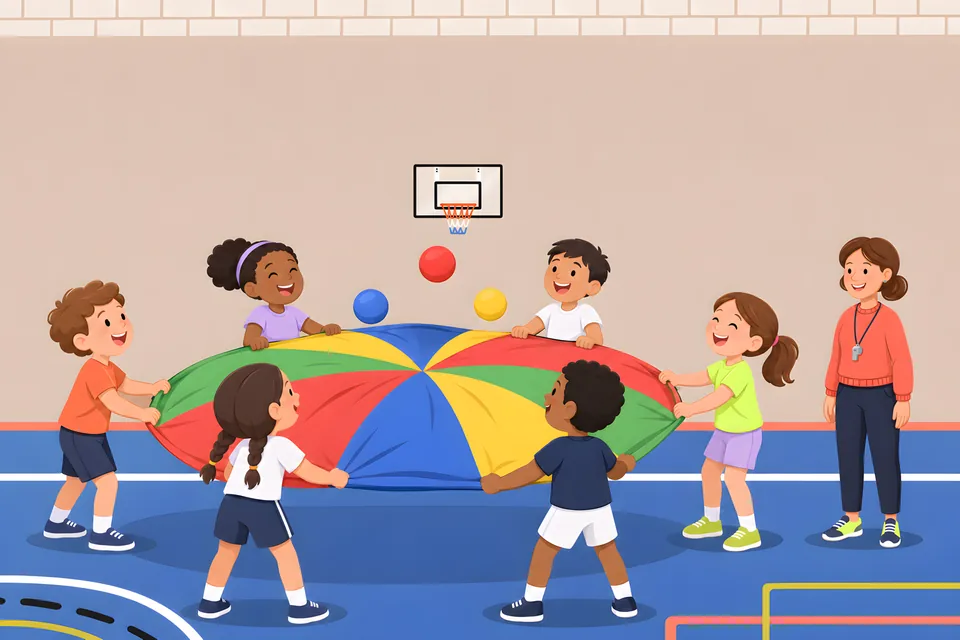
In a 30- or 40-minute period with 24 to 36 students, much of the lost movement time comes from routines like roll call, team picks and…
Download the PhysEdPrep app for iOS & Android for free and open 3 free units without an account; every lesson comes with an equipment checklist and a gym floor setup plan. A 7-day free trial on a yearly or 12-month plan unlocks 40+ unit plans, 240+ lessons, and all 6 gym tools for grades K–12 (see current prices in the app).
App for iPhone, iPad and Android.