Games & warm-ups
Spring Brain Breaks for Testing Season
Built for K–5 classroom teachers and PE specialists whose classes get restless once the weather warms and testing starts.
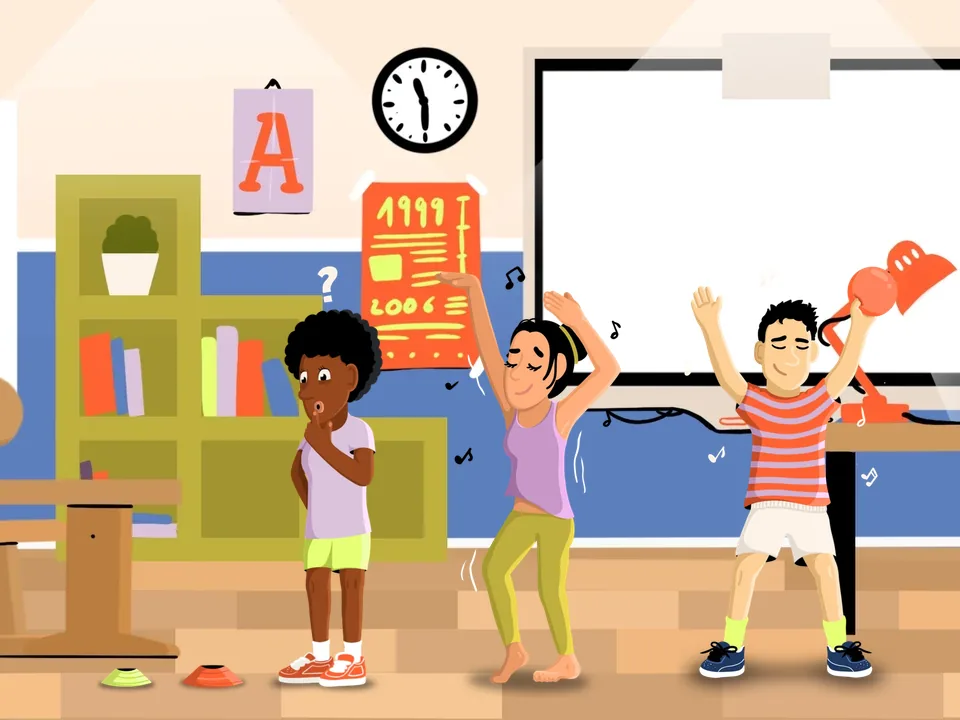
Effective Easter brain breaks take 3 to 5 minutes right beside student desks and need zero video setup. Pair 30-second hop rounds with a 5-second balance freeze so Grades K–5 students release energy and settle back into seatwork. Crumpled scrap-paper eggs do not roll like plastic ones, and spring nature cues work for classes that skip Easter.
Elementary teachers and PE specialists teaching Grades K–5 often manage restless classes right before spring break, especially when rain or testing limits recess. Loud cartoon chase videos on a classroom screen can wind students up instead of helping them refocus for math or reading. Voice-led games with clear stop signals, scrap-paper props, and secular spring cues help keep movement controlled in tight desk aisles.
Pick a holiday classroom break by checking whether students look sluggish after seatwork or restless after lunch, then cap the pause at 3 to 5 minutes. Under the Physical Activity Guidelines for Americans (2nd edition, ages 6 through 17), youth need 60 minutes or more of daily moderate-to-vigorous physical activity, and brief breaks after about 30 to 45 minutes of sitting add active minutes on non-PE days.
SHAPE America's 2024 National Physical Education Standards group K–12 outcomes into four standards (S1–S4) covering motor skills, movement and fitness concepts, social skills, and personal skills. Closing an active round with a silent 5-second pose gives students a short practice in self-control before desk work resumes. During state testing weeks, pair quiet rounds with spring brain breaks for testing season.
| Activity | Grades | Classroom Goal | Space Needed | Props | Duration |
|---|---|---|---|---|---|
| Bunny Freeze Hop | Grades K–5 | Wake up sleepy rooms | About 3 feet beside desk | None | 3 to 5 minutes |
| Tiptoe Egg Search | Grades K–3 | Reset focus quietly | Classroom perimeter | 6 paper cutouts | 3 to 5 minutes |
| Paper-Egg Spoon Walk | Grades 1–5 | Steady hand-eye control | 6 to 8 feet in aisle | Spoon, scrap paper | 3 to 5 minutes |
| Nest Balance Hold | Grades K–5 | Calm noisy rooms | About 3 feet beside desk | 1 paper ball | 3 to 5 minutes |
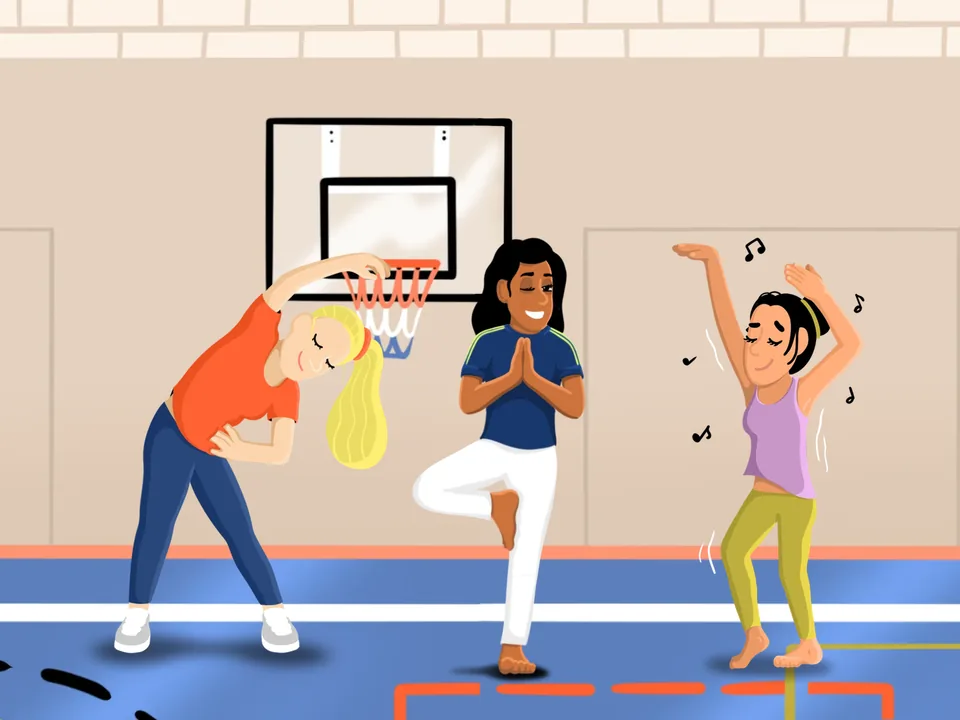
Two-foot bunny hops beside desks and silent tiptoe searches along the outer aisle give students active leg work without classroom running. Both games use live voice cues instead of screens, much like no-video dance brain breaks between subjects.
A crumpled half-sheet of scrap paper and a plastic cafeteria spoon let classes run balance challenges without smooth plastic eggs rolling under chairs. Controlled balance tasks also quiet loud transitions, working well alongside calm brain breaks for classrooms before writing blocks.
Swapping bunny and egg prompts for spring nature cues lets the whole class join the same 3-to-5-minute movement reset, including students whose families skip holiday themes. Changing the cue words and the cutout shapes keeps preparation simple, and the rules stay the same.
Keep all students included in classroom movement breaks even when seatwork is unfinished. SHAPE America's 2021 position statement on physical activity and behavior management identifies withholding physical activity as an inappropriate consequence, and fidgety students usually settle faster after moving.
Teachers building a year-round folder can combine spring nature cues with classroom brain breaks for Grades K–5. For another holiday set built on the same no-video, beside-the-desk format, see St. Patrick's Day classroom brain breaks.
Clear about 3 feet of floor space per student, push chairs completely under desks, and store zipped backpacks under seats or on wall hooks before calling the first hop. Classroom tile is often slicker and tighter than a gym floor, so footwear, spacing, and prop height decide how safe a 3-to-5-minute movement break is.
Check shoes before two-foot hops on tile, switching students in slick socks, rain boots, or smooth dress shoes to marching in place or heel raises. During perimeter searches, require single-file tiptoe walking with no jogging, and keep cutouts at student shoulder height, clear of cords, radiators, and doors. Rooms with shared tables can borrow spacing setups from PE games for small spaces.
| Classroom Mistake | Why It Causes Trouble | Classroom Fix |
|---|---|---|
| Hiding plastic eggs on floors | Round shells roll underfoot and cause slips or head bumps | Tape flat paper cutouts at shoulder height or use paper balls |
| Holding spoons in the mouth | A trip pushes the handle toward teeth or throat | Hold the spoon in one hand at waist height |
| Stopping right after fast hops | High heart rates and chatter carry into seatwork | End with a 5-second balance hold and 3 slow nasal breaths |
| Racing to grab wall cutouts | Crowding in corners causes shoving in narrow aisles | Walk single-file on tiptoes and spot silently with thumb on chest |
Yes, Grades 6–8 classes often respond well when you skip bunny role-play and frame the 3-to-5-minute pause as a reaction or coordination drill. Run 30-second partner mirror steps, non-dominant-hand paper-ball catches beside desks, or rhythm clap patterns. Each round adds active minutes toward the 60 minutes or more of daily physical activity recommended for ages 6 through 17.
Plan about 3 to 4 movement breaks of 3 to 5 minutes across a full elementary day, spaced after roughly 30 to 45 minutes of seated work. Add a calming balance round after a noisy lunch or class party, and drop one slot on days with PE or full outdoor recess.
Stationary games like Bunny Freeze Hop and Nest Balance Hold work in crowded indoor-recess rooms and on remote learning video calls because each student stays within about 3 feet of clear floor space. On video calls, students crumple one sheet of notebook paper for the 5-second balance poses and skip the hops unless they have non-slip footing and a clear floor.
No, students should not sit out a 3-to-5-minute movement break to finish a worksheet. SHAPE America's 2021 position statement calls withholding physical activity as punishment or behavior management inappropriate, and the same reasoning applies to a short classroom break. Students struggling to focus before spring break usually settle back into writing faster after the brief motor reset.
No, keep candy and other food out of classroom movement breaks. Wrapped treats still raise food-allergy and choking concerns. Running with food in the mouth is a hazard, and food rewards turn a short reset into a race. Use paper cutouts or paper balls instead. Save any treats for a seated class party that follows your school's allergy plan.
Built for K–5 classroom teachers and PE specialists whose classes get restless once the weather warms and testing starts.
A good brain break needs a clear stop signal, a bubble of space for each child, and a game students can learn fast.
Elementary classroom teachers and PE specialists covering indoor classes on March 17 often face restless energy around holiday crafts and…
When students return from outdoor recess or a loud hallway transition with racing voices, jumping straight into a lesson rarely works.
Download the free PhysEdPrep app for iOS and Android and tap "Try 3 Sample PE Units Free" on the login screen to open the 13 movement breaks right away with no account needed. When you want all 40+ unit plans, 240+ lessons, and 6 gym tools across Grades K–12, start the 7-day free trial on the yearly plan (see current prices in the app).
App for iPhone, iPad and Android.