Games & warm-ups
9 Tag Games for PE (Grades K–8)
Elementary PE teachers, classroom teachers without a PE background, middle school coaches, and substitutes can run these tag games for…
These 10 rock paper scissors games for PE take about 2 to 8 minutes each and fit 8 to 60 students in Grades K–12, depending on the game. Five need no equipment; the other five use cones, pinnies, hula hoops, or gym mats. In every game, students who lose a throw stay involved.
These games are for PE teachers, classroom teachers, and subs who want a warm-up or a movement break with little setup. Each one comes with scoring and restart rules. You also get a comparison table, a floor plan for the hoop relay, fixes for common setup mistakes, and a way to handle odd numbers.
Match the game to your grade, headcount, gear, and time. The two classroom brain breaks take about 2 to 4 minutes, and the other eight games run about 3 to 8 minutes in a gym or open space.
Short relay lines and quick tie replays help you work toward moderate- to vigorous-intensity activity for 50 percent of class time, a recommendation cited in the 2017 SHAPE America position statement. Unless a game says otherwise, partners count "rock, paper, scissors, shoot" and show their sign on "shoot." Some students know the game as roshambo or use a different count, so practice one class count before the first duel. With an odd number in a pair game, the extra student waits at a challenger cone outside the playing area and swaps in for a classmate at the next reset or partner switch.
| Game | Grades | Players | Play Time | Equipment |
|---|---|---|---|---|
| Sprint Tag | Grades K–12 | 10–36 players | About 4–6 min | 4 boundary cones |
| Four-Corner Tail Tag | Grades K–8 | 12–32 players | About 5–7 min | 4 cones, 1 pinnie per player |
| Posse Cheer Tournament | Grades 2–12 | 16–60 players | About 4–6 min | None |
| Egg-to-Champion Evolution | Grades K–8 | 12–40 players | About 5–8 min | None |
| Hula Hoop Hop Showdown | Grades K–12 | 8–32 players | About 6–8 min | 10–12 hula hoops and 2 cones per lane |
| Four-Base Cones Relay | Grades 3–12 | 12–36 players | About 6–8 min | 4 large cones |
| Full-Body Jump Duel | Grades K–8 | 8–36 players | About 4–5 min | None |
| Plank and Balance Duel | Grades 3–12 | 8–36 players | About 3–5 min | 1 gym mat per player |
| Desk-Side Split Step | Grades K–6 | 10–32 players | About 2–3 min | None |
| Line Leader Walk-and-Freeze | Grades K–5 | 12–30 players | About 2–4 min | None |
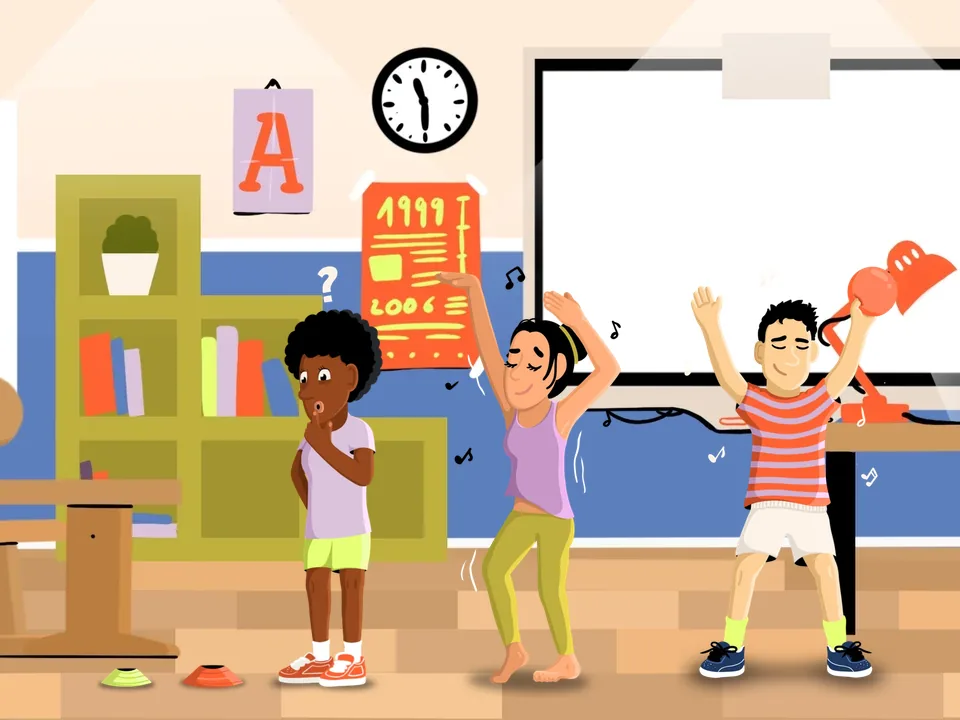
In these two games, a hand throw decides who chases or who gets back into play. Either one makes a warm-up before other tag games for PE class.
In Sprint Tag, chasers try to make a tag and runners try to reach their safety line first.
In Four-Corner Tail Tag, players score by pulling pinnie tails without touching bodies or clothes.
Neither of these whole-class games needs equipment. Losers turn into cheerleaders in the tournament and drop a stage in the evolution game.
Posse Cheer Tournament narrows the class down to one champion.
Egg-to-Champion Evolution is a rock paper scissors evolution game with four stages, each with its own way of moving.
In a rock paper scissors relay, students travel a marked path and duel for the right to keep going.
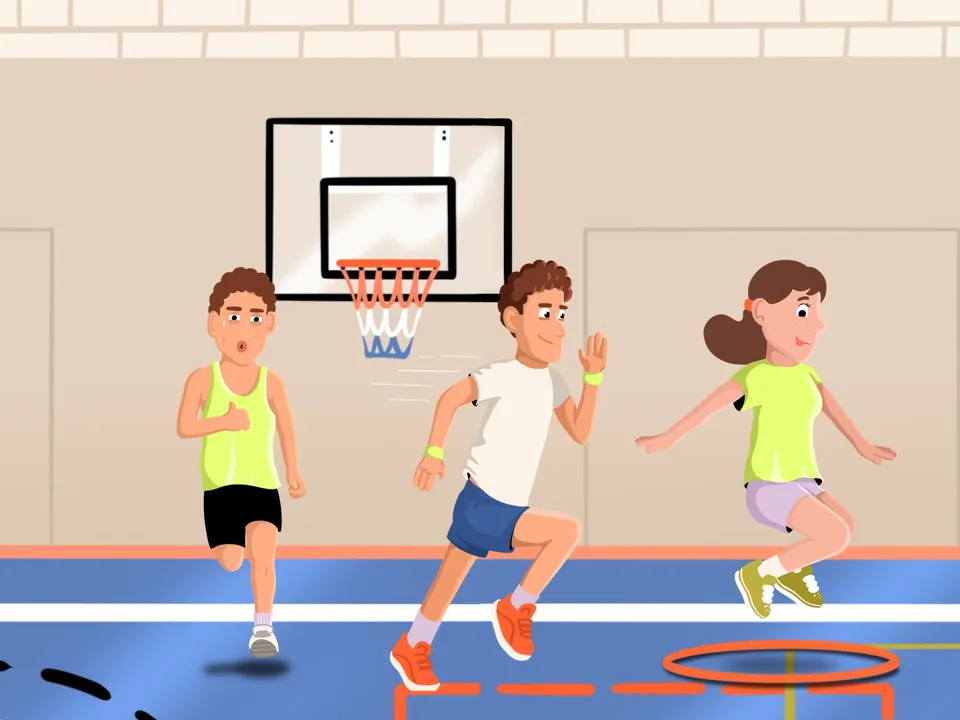
Hula Hoop Hop Showdown puts two lines of 3 to 4 players on each lane of 10 to 12 hoops, and each side tries to reach the other team's cone. Use the same hoops later for other hula hoop games for PE.
Four-Base Cones Relay is an individual race for laps around a square of cones. The same 4-cone square works for other cone games for PE class.
Jump poses and plank holds add short strength and balance work to a pair duel. For ages 6 through 17, the Physical Activity Guidelines for Americans (HHS, 2018) call for 60 minutes or more of moderate-to-vigorous activity daily, including muscle- and bone-strengthening activity on at least three days a week.
In Full-Body Jump Duel, the first partner to 3 points takes the series. For more chance-based fitness work, try dice games for PE in Grades K–12.
Each Plank and Balance Duel matchup goes to 5 points.
A rock paper scissors brain break takes about 2 to 4 minutes beside the desks or around the room, and both versions here are silent. For more ideas, see these classroom brain breaks for Grades K–5 or add reading practice with sight word brain breaks for Grades K–3.
In Desk-Side Split Step, partners throw with their feet.
The goal of Line Leader Walk-and-Freeze is to lead the longest quiet walking line.
Set up the space and the throwing count before the first duel. Leave about 10 feet between running areas and walls or bleachers, check for tied shoelaces and a dry, swept floor, and use hoops that lie flat without sliding. Tags are two light fingers on the shoulder, with eyes up. Supervise from a spot where you can see every pair.
Skip punishment burpees for lost throws. A 2021 SHAPE America position statement calls using exercise as punishment, or withholding PE or recess, inappropriate. Send both players into new duels or give everyone an active role.
| Mistake | Cause | Floor Fix |
|---|---|---|
| Late "shadow" throws | Uneven counting speed | Keep hands behind backs until "shoot" on a four-beat count |
| Long hoop queues | Class split into two lines | Run parallel lanes of 3–4 players per line |
| Sprint Tag collisions | A new chase starts while others walk back | Throw only after everyone has reset |
| Stuck with one partner | No rotation cue | Call a switch after each series (3 or 5 points, or 5 throws) |
Let students choose how to show a sign: fingers, arm poses (fists at the chest for Rock, arms wide for Paper, arms in a V for Scissors), or the spoken word if crutches occupy their hands. Give relay paths about 8 feet of width, let these students travel beside the hoops, match partners by travel speed, use gentle pool-noodle tags, and follow each IEP or 504 plan.
Post a three-arrow picture chart at eye level and practice slowly before adding movement. The chart shows that Rock crushes Scissors, Scissors cuts Paper, and Paper covers Rock. Have Grades K–1 partners say their sign aloud after "shoot." About 2 minutes of slow rounds is a good start.
About 4 to 8 high-visibility cones are enough for any one cone game here. Sprint Tag, Four-Corner Tail Tag, and Four-Base Cones Relay use 4 each, and the hoop relay needs 2 per lane. Walk the grass for holes first. On uneven turf, swap hoops for flat spot markers a short step apart and have students jog.
Set one rule before the first duel: any disputed or late throw is simply replayed, with no teacher ruling needed. Have partners hold their hands behind their backs until "shoot" and count together on four beats. Students who argue twice in a row switch to a new partner. Most disputes then end in a few seconds.
Elementary PE teachers, classroom teachers without a PE background, middle school coaches, and substitutes can run these tag games for…
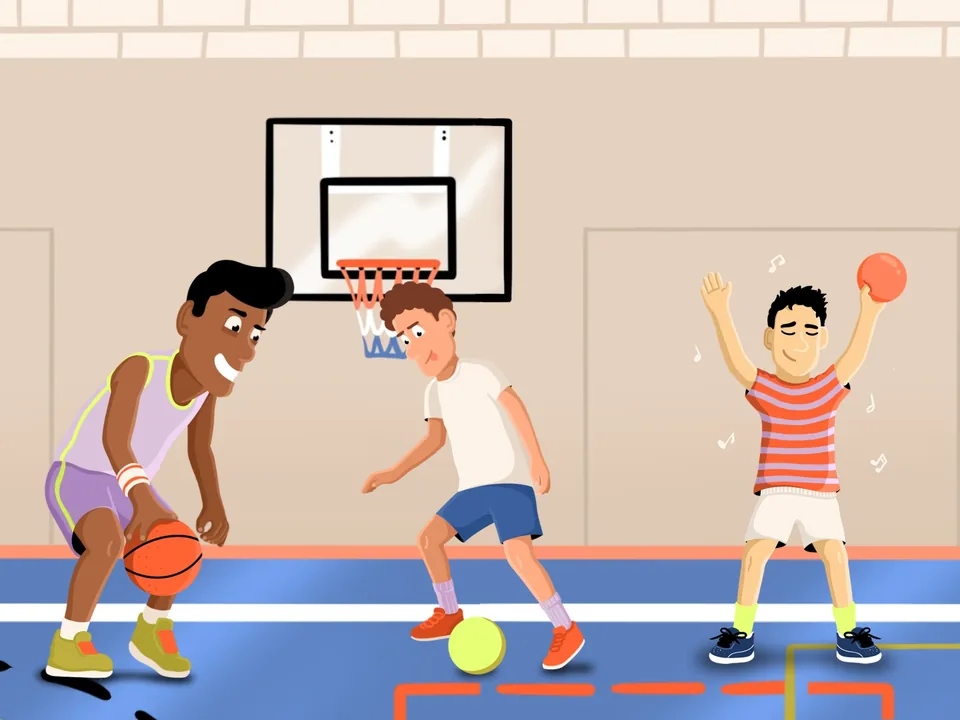
A good brain break needs a clear stop signal, a bubble of space for each child, and a game students can learn fast.
These games are for PE specialists, substitutes, and classroom teachers who need a low-prep activity in the gym or classroom.

Each game comes with grades, group size, hoop count and a full rule set, followed by safety rules, fixes for common problems and ways to…
Download the free PhysEdPrep app for iOS and Android and open 3 free units without an account, including Classroom Brain Breaks with 13 movement breaks. For 40+ unit plans, 240+ lessons, and 6 gym tools across Grades K–12, start a 7-day free trial on a yearly or 12-month plan and see current prices in the app.
App for iPhone, iPad and Android.