
Games & warm-ups
Brain Breaks for Grades K–5
A good brain break needs a clear stop signal, a bubble of space for each child, and a game students can learn fast.
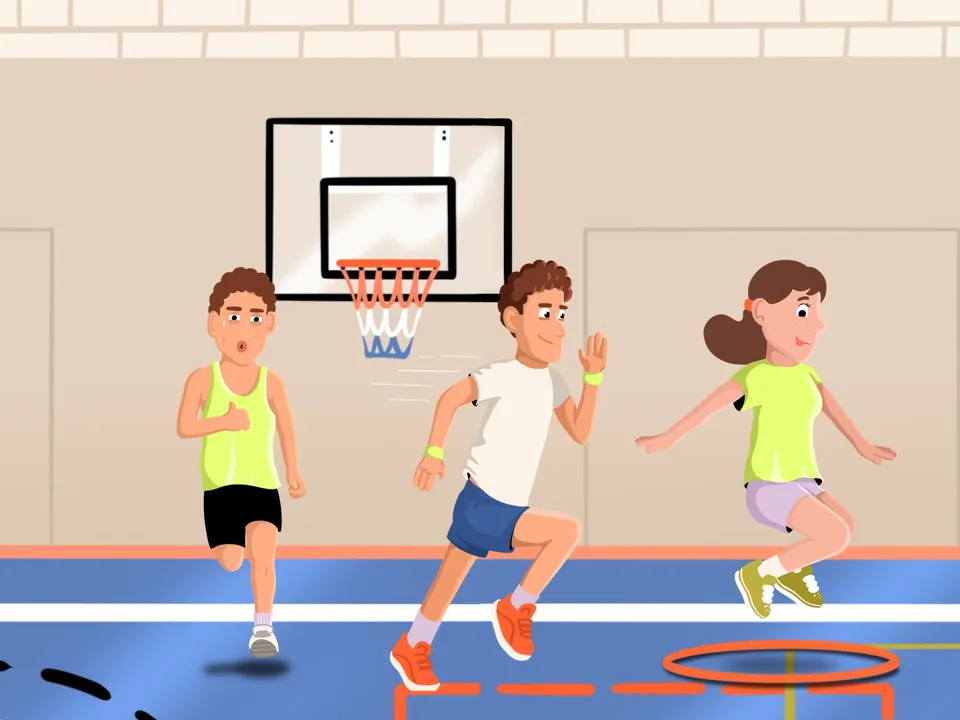
You can fill February 2 with 10 Groundhog Day games and brain breaks that take about 3 to 10 minutes each. Burrow games, fitness challenges and two shadow games work in the gym, and two short breaks fit beside desks. Classic shadow tag needs sunshine; indoors, play the partner game Sticky Shadows.
These Groundhog Day PE games suit K–5 specialists and homeroom teachers, and several of them stretch to older grades. You get complete rules, changes by grade band, a burrow setup sketch and fixes for cloudy skies, sliding hoops and collisions.
Choose by weather and space: classic shadow tag needs sun, two brain breaks work beside desks, and most other games need open floor. The theme comes from the legend that a groundhog seeing its shadow on February 2 signals six more weeks of winter; no shadow means an early spring. The best-known forecaster is Punxsutawney Phil in Pennsylvania. In 2027, that date is a Tuesday.
| Game | Grades | Group | Minutes (about) | Gear |
|---|---|---|---|---|
| 1. Shadow Tag | K–5 | 10–30 | 6–8 | pinnies, cones, sunshine |
| 2. Sticky Shadows | K–8 | pairs | 5 | none |
| 3. Shadow or No Shadow | K–3 | whole class | 5 | cones |
| 4. Hoop Burrow Tag | K–5 | 12–30 | 8 | hoops, pinnies, cones |
| 5. Groundhog in the Burrow | 1–5 | 10 or more | 6 | none |
| 6. Sleeping Groundhogs | K–3 | whole class | 3–5 | mats |
| 7. Forecast Flip | 2–8 | whole class | 8 | coin, cones |
| 8. Six Weeks of Winter | 3–12 | teams of 4 | 10 | 6 signs, bean bags, hoops |
| 9. Groundhog Peek | K–2 | whole class | 3 | none |
| 10. Hibernation Wake-Up | K–5 | whole class | 3 | none |
In classic shadow tag, taggers catch runners by stepping on their shadows, so you need sun. The other two shadow games work indoors.
Grades K–5 · 10–30 players · about 6–8 minutes · pinnies, cones, sunshine
Use a flat, dry, ice-free area with clear boundaries. About 1 tagger per 6–8 runners carries a pinnie, and everyone walks the first round. A tagger who steps on a runner's shadow (never a foot) hands that runner the pinnie. The new tagger counts to three and can't tag straight back. Players who bump or leave the area stop, count to three and rejoin. After about 90 seconds, everyone without a pinnie scores a point, and a new round starts.
Grades K–8 · pairs · about 5 minutes · no equipment
On clear floor, a leader walks, skips or gallops while the “shadow” copies from about two big steps behind. On your whistle, both freeze. If the shadow can take one step and tap the leader's shoulder with two fingers, it earns a point. Pairs that bump or lose each other regroup without a point. Swap roles after five whistles and end after ten.
Grades K–3 · whole class · about 5 minutes · cones
Mark start and finish lines, keeping the finish at least 5 feet from the wall. A student playing Punxsutawney Phil stands beside the finish, back turned, and calls “No shadow!” while the class walks forward. When Phil calls “Shadow!” and turns around, players crouch and freeze. Anyone caught moving takes five steps back. The first across becomes Phil, and all restart. After two minutes without a winner, pick another Phil.
Hoop Burrow Tag uses hoops, Sleeping Groundhogs uses mats, and Groundhog in the Burrow needs only students.
Grades K–5 · 12–30 players · about 8 minutes · hoops, pinnies, cones
On a dry floor, set the boundary cones about 5 feet inside the walls and lay one flat burrow hoop per three students. About 1 fox per 6–8 players carries a pinnie. Groundhogs are safe with both feet in a hoop while counting to five aloud, then must leave. One fits at a time: a newcomer calls “Back door!” and the occupant moves out. Foxes stay two steps from hoops. A two-finger tag between shoulders and waist swaps roles, and the new fox counts to three with no tag-back. Players past the cones walk back in. In each round of about 90 seconds, groundhogs earn a point per new burrow.
Grades 1–5 · 10 or more players · about 6 minutes · no equipment
Two students touch palms overhead to make a burrow around a third. A leftover player calls first; if nobody is left over, break up one trio. On “Groundhog!” the groundhogs walk to new burrows and extras claim one. On “Burrow!” pairs split, walk to new partners and re-form around a standing groundhog. “Thaw!” sends everyone walking into new trios. Whoever is left over makes the next call. Play about 6 minutes; nobody keeps score.
Grades K–3 · whole class · about 3–5 minutes · mats
Students curl up on flat, spaced mats and “hibernate.” Two watchers walk between mats and try to draw a giggle or wiggle with jokes and silly sounds, never touching. A groundhog who moves joins the watchers. After about a minute, remaining sleepers score a point, and new watchers start another round.
Forecast Flip and Six Weeks of Winter keep everyone moving, with no extra reps for wrong guesses or slow finishes. SHAPE America's position statement calls exercise as punishment inappropriate.
Grades 2–8 · whole class · about 8 minutes · coin, cones
Mark a center line with cones. Players guess by stepping left of the line for winter or right for spring, then spread out with room to hop sideways. Flip the coin: heads means shadow (winter) and 20 seconds of skater steps; tails means spring and 20 seconds of squat reaches. Everyone moves. Only right guesses earn a point, and all return to the line. After 10 flips, compare with the real Punxsutawney Phil: NOAA's January 2026 update says he was right 30% of the time over the previous 10 years. Four or more correct guesses beat that rate.
Grades 3–12 · teams of 4 · about 10 minutes · 6 signs, bean bags, hoops
Space out six “week” signs: 10 squats, 10 step jacks, 10 skater steps, 5 inchworms, 10 slow mountain climbers and a 20-second wall sit against a clear wall. Leave one bean bag per team at each sign and give each team a home hoop. Teams walk to the signs in any order, and students choose the full or half count. When the whole team finishes with control, one player carries a bag to the team hoop; a bag grabbed early goes back. Each bag scores a point. Teams with all six have survived winter and cheer on the rest until time ends.
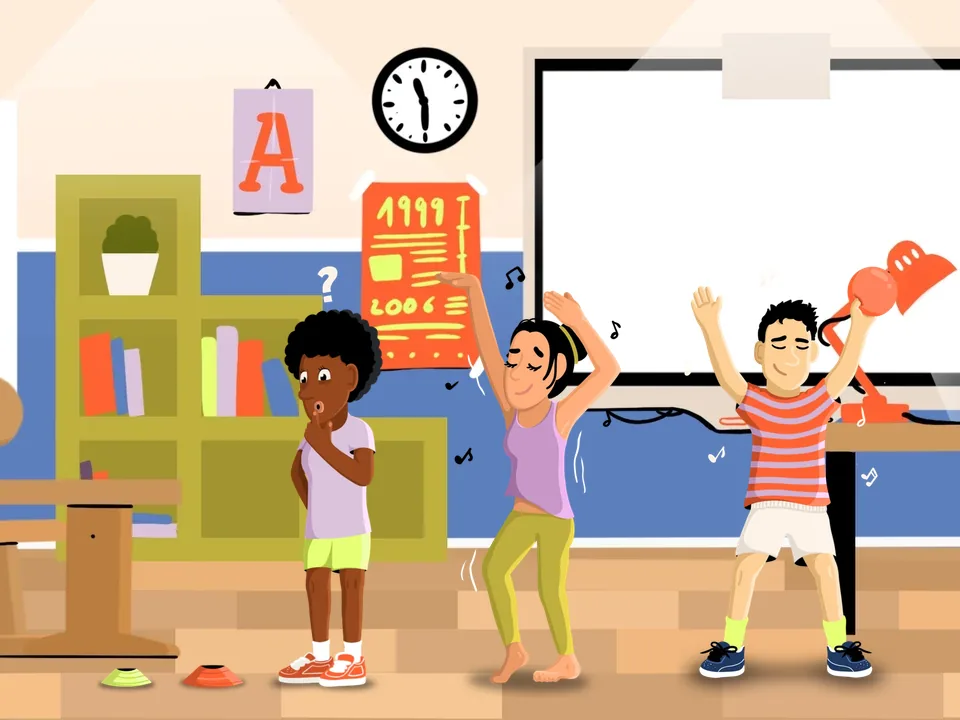
Groundhog Peek and Hibernation Wake-Up are quick Groundhog Day activities for kids. Each takes about 3 minutes beside desks. Push chairs in and move bags off the floor first.
Grades K–2 · whole class · about 3 minutes · no equipment
On “Cloudy!” students stand tall and reach up. On “Sunny!” they squat into the burrow. One clap is the alarm, and everyone looks left and right. Real woodchucks often let out a sharp whistle as an alarm call (Pennsylvania Game Commission). The class counts correct cues in a row; a mix-up restarts the count, and nobody sits out. Speed up gradually and stop at about 3 minutes.
Grades K–5 · whole class · about 3 minutes · no equipment
Students rest their heads on folded arms while you narrate spring: wiggle fingers, roll shoulders, reach up, lean gently to each side, then stand and march. Volunteers add slow waking moves for everyone to copy. After about six student moves, shake out and sit. There is no score, and the break also works seated.
For more, see brain breaks for grades K–5 or winter brain breaks. The free Classroom Brain Breaks sample opens without an account.
Younger classes need one new rule at a time and shorter rounds, while older students can run calls, track results and design challenges.
| Grades | Change | Try it with |
|---|---|---|
| K–2 | Walk first, show each rule, cut tag rounds to about 60 seconds | Shadow Tag |
| 3–5 | Cut the safe count from five to three and let students run the whistle | Hoop Burrow Tag |
| 6–8 | Turn correct guesses into a percentage | Forecast Flip |
| 9–12 | Teams design six moves and name the fitness component each trains | Six Weeks of Winter |
For a student who uses a wheelchair, put a cone beside one hoop and count that spot as a safe burrow. In Sticky Shadows, leaders can roll and turn. Offer seated punches or arm circles instead of squats, and ask your adapted PE teacher which accommodations the student needs.
Most trouble comes from weather, spacing or unclear rules, so check those before the first whistle.
| Mistake | Cause | Fix |
|---|---|---|
| Shadow Tag stalls | Clouds hide the shadows | Switch to Sticky Shadows |
| Players collide | Eyes stay on the ground | Start at a walk and enlarge the area |
| Outdoor slips | Ice, wet patches or holes | Walk the surface first; if unsure, go inside |
| Kids camp in burrows | Nobody counts | Require the safe count out loud |
| Hoops slide | Feet land on the rim | Step inside the ring and reset hoops between rounds |
Outdoors, have students dress for the cold, and stand where you can see everyone. For related ideas, see cone games for PE class, bean bag games for PE, tag games for PE and winter games for PE class. For more quick games that need no gear, try rock paper scissors PE games or dice games for PE.
Not as a running game, because a darkened gym invites trips and collisions. Seated partners can make hand shadows on a wall instead, keeping the beam out of eyes. For movement, leave the lights on and play Sticky Shadows.
About three gym games fit a 30-minute class when each runs 5 to 8 minutes. That leaves time for instructions and transitions, and games sharing hoops or cones save setup time.
Yes, if an adult supervises a flat, dry, open area and children walk at first. Teach one rule to start, stepping on shadows and never on feet, and shorten rounds to about 60 seconds.
Most of these games practice Standard 1 (motor skills) and Standard 3 (social skills) of the 2024 SHAPE America National PE Standards. Shadow and burrow tag train walking, skipping, dodging and stopping on cue, while partner games such as Sticky Shadows need cooperation. The 2024 edition has four standards, S1–S4, listed on shapeamerica.org/standards/pe/new-pe-standards/.
A good brain break needs a clear stop signal, a bubble of space for each child, and a game students can learn fast.
This list is for PE specialists and classroom teachers who run bean bag toss games for kids in Grades K–5, with a few options for Grades…
These games are for PE specialists and classroom teachers with a bag of cones and a full class.
January and February bring cold days and no holiday theme to lean on. These games are built for classes of 12 to 32 students in a standard…
Open the 3 free units without an account and try the Classroom Brain Breaks pack with your students. For membership options, see current prices in the app.
App for iPhone, iPad and Android.