
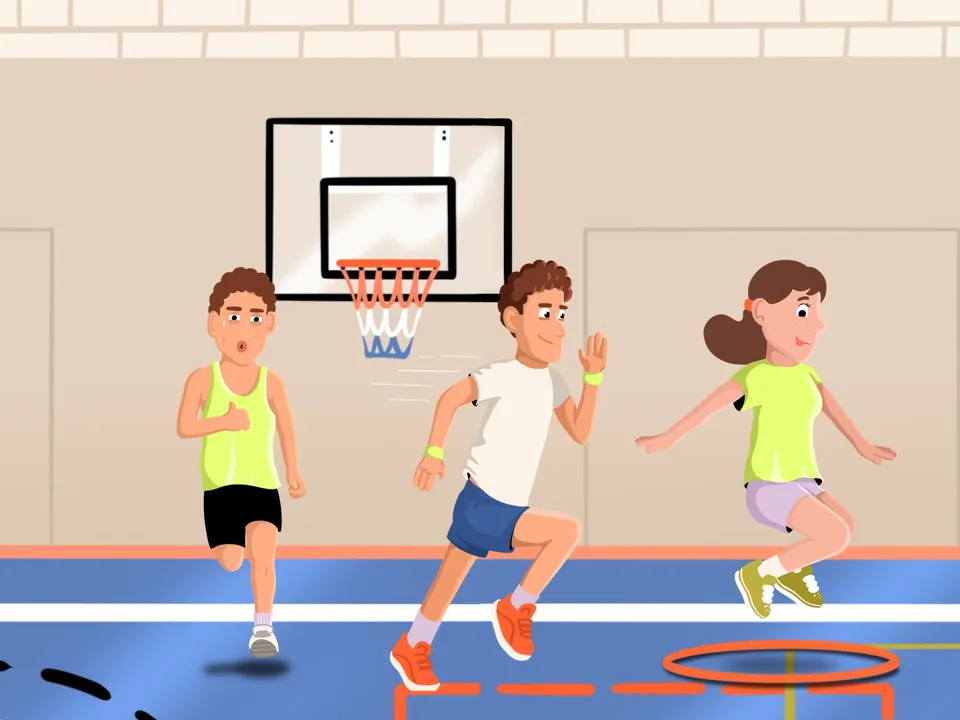
PE Teaching Philosophy Template and Examples
It compares the main PE philosophies, maps beliefs to the SHAPE America standards and ends with a fill-in template and three sample…
A good PE comment runs 2 to 3 sentences and names one skill or behavior, one thing you observed and one next step. The 10 samples below cover motor skills, effort, teamwork, students who are still developing and fitness knowledge. Swap in the student's name and your own evidence, then check your report card system's character limit.
PE report card comments take the longest when you have no evidence on hand. The ten samples suit PE specialists and classroom teachers who teach PE, from Grades K–5 through high school. You also get wording for students who are still developing, a note routine that speeds up writing and phrases to leave out.
A useful comment names one skill or behavior, one thing you saw and one next step. Parents can picture “passes to an open teammate during small-sided games” far more easily than “good effort.”
Build every comment in three parts: skill or behavior, evidence, next step. Measure the student against the unit goal and their own earlier work. Leave classmates out of it. The same frame works whether the student is ahead of the goal, on track or still developing. If you post learning targets for students, the guide to I can statements for PE gives you matching wording.
The table shows the evidence worth keeping for each of the ten comments below. In every sample, replace “Sam” with the student's name.
| Comment | Student | Evidence to keep |
|---|---|---|
| Throwing and catching | On track, K–5 | Two or three skill checks |
| Dribbling and ball control | Ahead of the goal | Notes from game play |
| Balance and body control | Developing, K–5 | A repeated balance check |
| Effort and participation | Steady effort | Running participation tally |
| Teamwork and fair play | Cooperative | Notes from small-group games |
| Winning and losing | Growth area | Dated incidents, what helped |
| A developing skill | Below the unit goal | Before-and-after check |
| Hesitant to join in | Sits out or waits | Dated observations |
| Fitness concepts | Explains the why | Exit questions |
| Personal goals | Sets and tracks goals | Goal sheet, start and end |
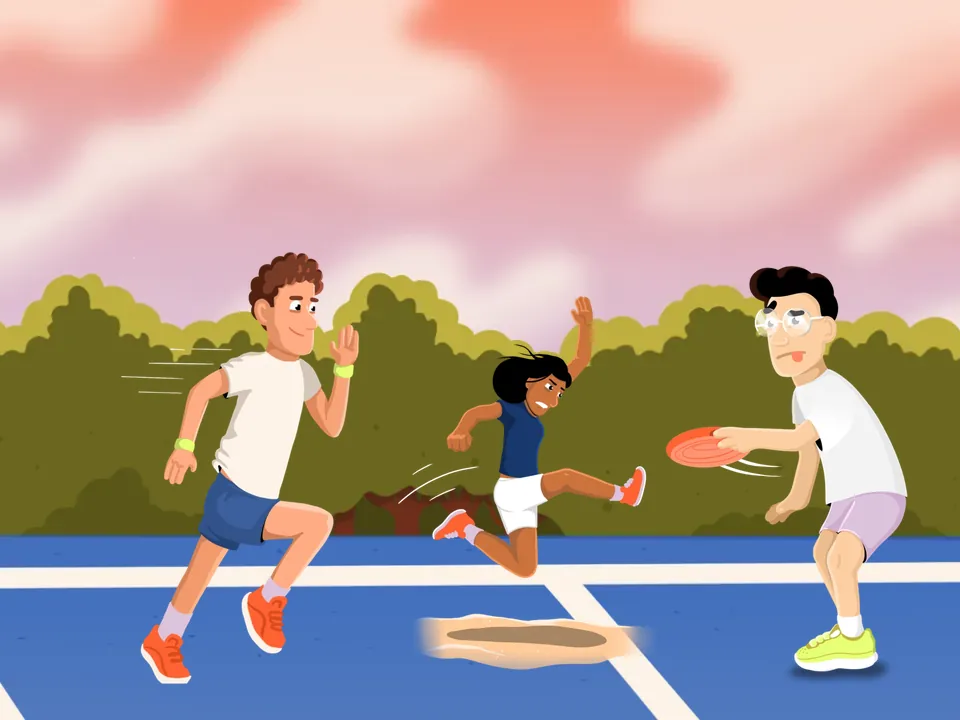
Comments on motor skills work best when they name the skill and one recent sign of progress.
For K–5 students who meet the unit goal. Keep two or three skill checks as evidence.
“Sam throws overhand with a step and a follow-through and catches a tossed ball with both hands most of the time. Next, Sam will practice catching while moving in partner games.”
For students ahead of the unit goal, from upper elementary to high school. Base it on notes from game play.
“Sam dribbles with either hand, eyes up, and keeps control under defensive pressure during games. Sam is ready for more demanding game situations and can help classmates with ball-handling progressions.”
For K–5 students who wobble at gymnastics or movement stations. Repeat one short balance check as evidence.
“Sam is building balance and body control and holds a one-foot stance longer than at the start of the unit. Practicing balance poses on a clear, flat floor at home will help, with an adult nearby for younger children.”
Comments on effort and teamwork hold up best when they rest on dated observations of what the student did.
For students who join in and stay on task. Evidence: a running tally of participation.
“Sam joins every activity right away, follows directions the first time and keeps trying new skills when they get hard. Steady effort shows in the progress Sam made this unit.”
For students who cooperate and include others. Support it with notes from small-group games.
“Sam encourages teammates, shares the ball and follows the rules without reminders. Sam's respect for classmates and equipment sets an example for the class.”
For students who get upset in competition. Record two or three dated incidents and what helped.
“Sam enjoys competitive games and is learning to stay calm after a loss or a call. We practice a short routine after each game: a handshake and one thing that went well. Talking about it at home will help.”
A comment for a student who is still developing describes what the student can do now and gives one specific next step.
For students below the unit goal. Compare a check from the start of the unit with a later one.
“Sam is developing the underhand throw and now steps with the opposite foot most of the time. Throwing a soft ball at a wall target in a cleared space at home will help, with an adult nearby for younger children.”
For students who sit out or wait at the edge. Write down what you tried and when.
“Sam is more comfortable in partner and small-group tasks than in full-class games and joins in more when directions are clear. We are building participation step by step, starting with partner tasks.”
Before you write, think through why a student sits out: unclear directions, a medical need, clothing or worry about being watched. For a student with an IEP or 504 plan, base the comment on the goals in that plan and check the wording with the special education team. The guide to building an adaptive PE curriculum covers the planning side.
Comments on fitness knowledge describe what the student can explain, and comments on goals name the goal the student set.
For students who can explain the reason behind an activity. Evidence: exit questions or a short quiz.
“Sam explains why we warm up, how heart rate changes during activity and which activities build endurance. Sam applies these ideas when choosing tasks at fitness stations.”
For students who set a goal and track it. Compare the goal sheet from the start and the end of the unit.
“Sam set a goal to jog a longer stretch without stopping, tracked progress every week and reached it. Next, Sam will choose a new goal for the next fitness unit.”
To end a fitness comment with a home suggestion, you can point families to the Physical Activity Guidelines for Americans, which recommend 60 minutes or more of moderate-to-vigorous physical activity daily for ages 6–17.
Physical education report card comments go faster when you build each one from a single dated line per student. The routine has four steps:
If your district's report card follows SHAPE America, sort your lines by the four standards of the 2024 National PE Standards: motor skills, movement and fitness concepts, social skills and personal skills. They replace the 2013 edition, which had five standards. For collecting evidence in class, see the quick PE assessment guide and the Head, Heart, Hands assessment. For turning evidence into a letter grade, see fair PE grading for report cards.
Avoid vague praise, comparisons with other children and labels about a child's body or talent.
| Phrase | Problem | Try instead |
|---|---|---|
| “Sam is a pleasure to have in class.” | Says nothing about PE learning | “Sam joins every activity right away and helps put equipment away.” |
| “Sam is not athletic.” | Labels the child and ignores progress | “Sam is developing the overhand throw and follows through most of the time.” |
| “Sam is slower than the others.” | Compares with classmates | “Sam's run time improved since the first check.” |
| “Sam needs to try harder.” | Judges without evidence | “Sam stays on task most of class. Next step: start right after directions.” |
| “Sam earned extra laps for talking.” | Exercise as punishment, which the SHAPE America position statement calls inappropriate | “Sam is working on listening during directions, and we use a quiet signal.” |
Two to three sentences, roughly 25 to 40 words, carry a skill, the evidence and a next step. Your grading system may set a character limit, so check it before you paste. If space is tight, keep the evidence and the next step and cut the general praise.
Name what your child did or learned. A parent can say, “My child came home explaining how to warm up before running,” or thank the teacher for a specific game, an adapted task or an encouraging note. Specific comments tell a teacher which parts of class are working.
Include the skill or behavior, the evidence you observed and a next step, across motor skills, fitness knowledge, social skills and personal skills. Add how the student progressed since the last report, so parents see growth over time.
Yes, you can reuse the frame and the unit description, as long as the evidence sentence is different for each student. A comment copied unchanged leaves out the one detail parents look for: what their own child did.
Copy the ten comments on this page into a document, replace the name and the evidence, and save the file as a PDF yourself. Sort them by area and by level (ahead, on track, still developing) so you can pick a match quickly.
It compares the main PE philosophies, maps beliefs to the SHAPE America standards and ends with a fill-in template and three sample…
An adaptive physical education curriculum connects your school's general K–12 movement scope and sequence with the motor goals in each…
Get the PhysEdPrep app for iOS & Android and add a private note per student after each class. The Yearly plan starts with a 7-day free trial, and you can see current prices in the app.
App for iPhone, iPad and Android.