Games & warm-ups
Spring Brain Breaks for Testing Season
Built for K–5 classroom teachers and PE specialists whose classes get restless once the weather warms and testing starts.
Effective summer brain breaks last about 3 to 5 minutes and pair low-sweat movement with about 30 seconds of slow breathing at the end. Desk-side freeze poses, live beach-or-camp choice prompts, and shaded outdoor passing games work without a projector in Grades K–5. When classroom temperatures climb above about 78 °F, replace jumping routines with standing balance or a 3-minute seated cooling reset.
By late May, projectors are often boxed up and classrooms are getting warm. K–5 classroom teachers, PE specialists, and summer camp leaders still need movement breaks that work without a screen: two screen-free games, a shaded outdoor toss game, mixed-age adaptations, and a five-day class countdown.
End-of-year classrooms need brief, low-sweat movement breaks, as a rule of thumb after about 25 to 30 minutes of seated work in Grades K–2 and about 35 to 45 minutes in Grades 3–5, because assemblies, award days, and warm afternoons disrupt normal recess routines. Keeping summer brain breaks to about 3 to 5 minutes resets focus without overheating the room.
Short classroom movement adds movement minutes when heat shortens outdoor play. Under the federal Physical Activity Guidelines for Americans, children and adolescents ages 6 through 17 should do 60 minutes or more of moderate-to-vigorous physical activity daily, with muscle- and bone-strengthening activity on at least three days a week. Three 5-minute breaks add 15 minutes of movement a day. Low-sweat prompts are often light effort, so only the brisker parts count toward the 60 minutes, and the breaks supplement recess and PE.
For the version that fits testing weeks, see spring brain breaks for testing season; when school starts again in August, fall brain breaks for K–5 classrooms pick up the routine. In June, fast routines such as freeze dances or races raise heart rates, so ending every break with about 30 seconds of slow nasal breathing helps students settle before seatwork resumes.
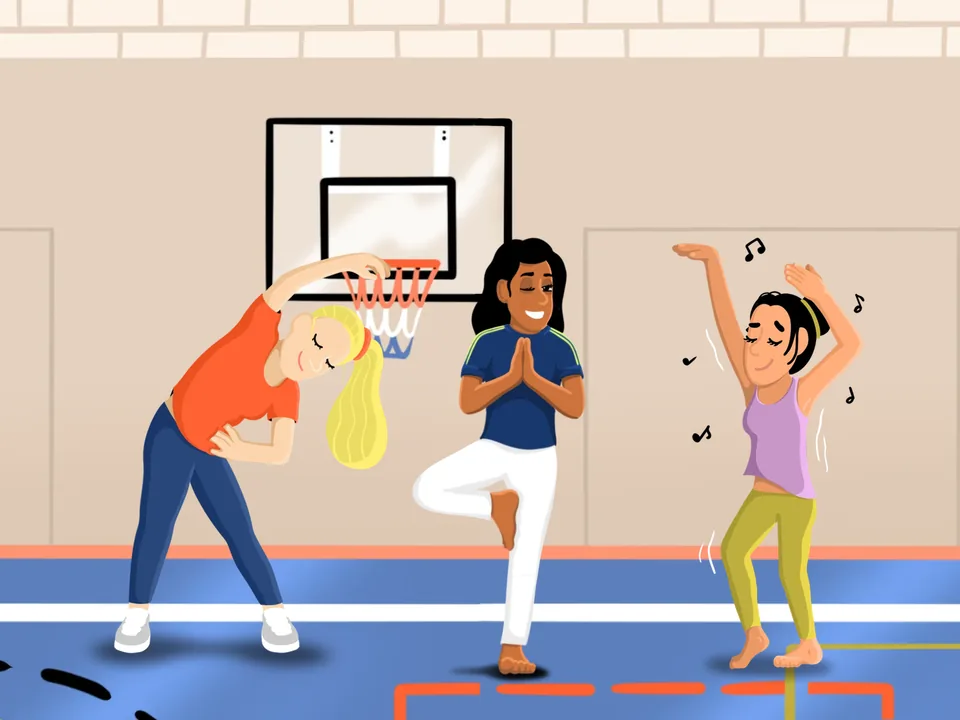
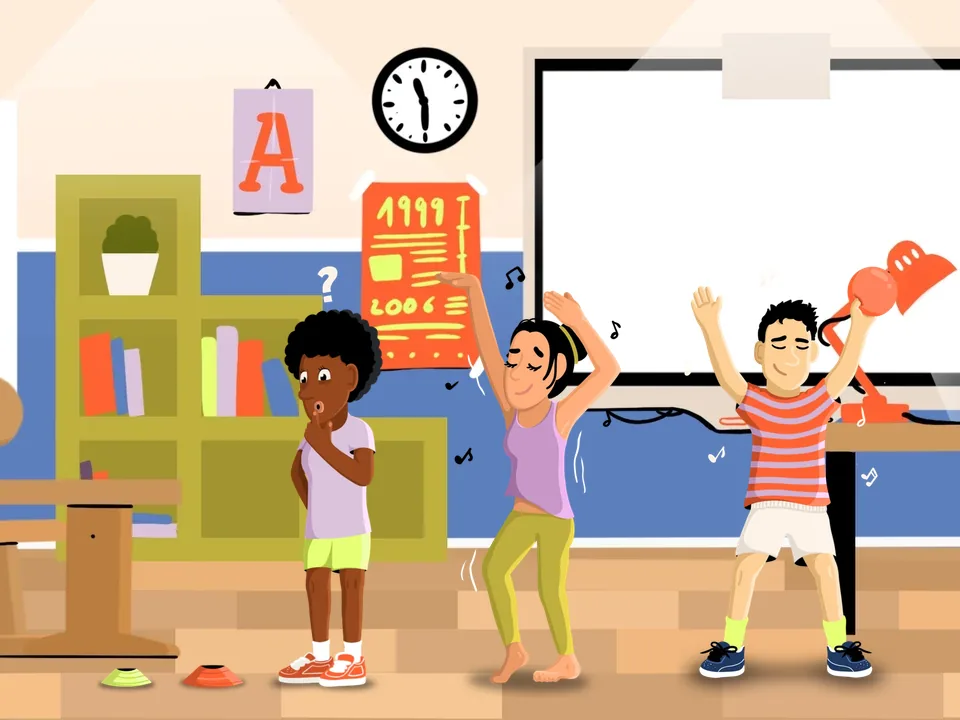
Teacher-led beach, pool, and camping prompts keep K–5 classes moving after the projectors go back to storage in June. Before playing, have students push chairs under desks, clear aisles, and check for an arm's length (about 3 feet) of dry floor space. You can combine these prompts with no-video dance brain breaks.
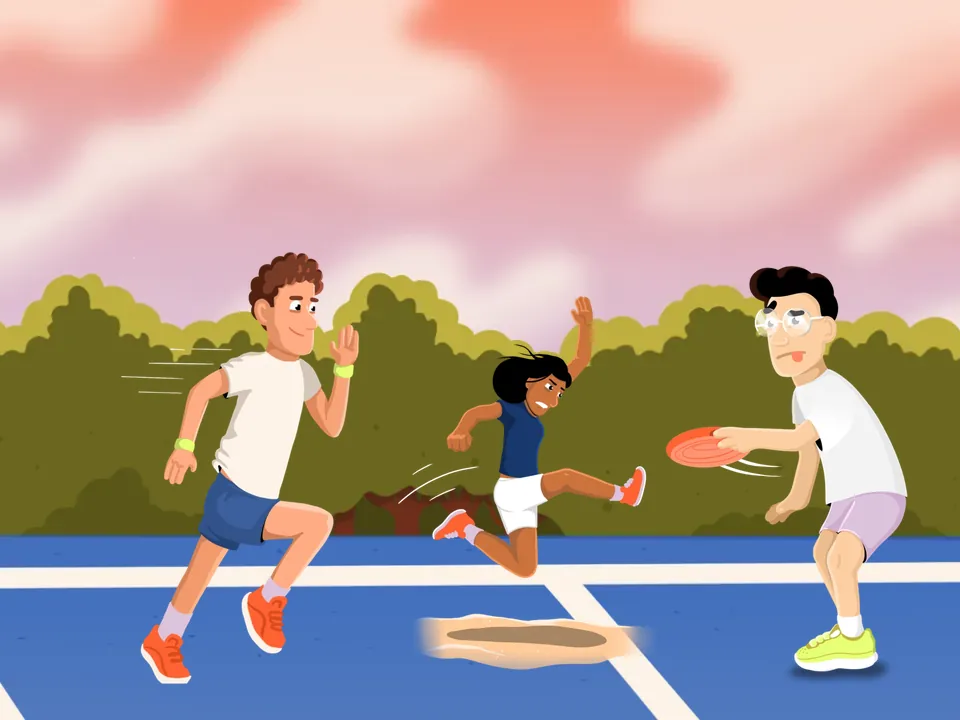
Outdoor warm-weather breaks stay refreshing when students stand in full building or tree shade for about 3 to 5 minutes and skip running on sunlit blacktop. Check any surface students might touch (blacktop, metal benches) with the back of your hand for about 5 seconds, since direct sun heats dark asphalt and metal quickly. Students stay standing in closed-toe sneakers, and on a heat-advisory day or when anyone looks flushed or dizzy, move the break indoors following your school's heat policy.
Set up Shade Pass in a shaded courtyard. Mark the shadow edge with a North Shade Cone and a South Shade Cone, form groups of about 6 to 8 students in Circle A and Circle B with an arm's length (about 3 feet) between players, and put a Water Bottle Station by the door. For longer recess blocks, try outdoor PE games when the gym is closed.
Summer school classrooms and day camps often group Grades K–5 together, so effective breaks pair simple base movements with optional balance upgrades. Younger campers can march in place while fourth and fifth graders hold slow stork stands beside a desk for support during the same 3-to-5-minute prompt, keeping older kids engaged without overwhelming kindergartners.
Mixed-school summer rosters also bring together children who just met. Partner mirrors and group rhythm counts practice the social and personal skills named in the four K–12 standards (S1–S4) of SHAPE America's 2024 National Physical Education Standards. When rooms warm above about 78 °F, swap fast video routines for calm classroom brain breaks lasting about 3 minutes.
| Break Format | Typical Duration | Room Temp Guide | Best Summer Moment |
|---|---|---|---|
| Video follow-alongs (freeze dance, races) | About 3 to 5 minutes | Up to about 78 °F | Cooled morning rooms with projector ready |
| Live teacher prompts (choice or mirror) | About 3 to 5 minutes | Any room; keep it low-sweat above about 78 °F | Mixed-age K–5 pods or screen-free days |
| Seated cooling resets (stretches, breathing) | About 3 minutes | Above about 78 °F | After hot recess, lunch, or field day |
A five-day cooperative movement countdown channels end-of-year energy: the class completes three 5-minute breaks a day, adding up to 15 movement minutes daily and 75 by Friday. Draw five summer islands on the whiteboard and advance a paper sailboat one island each afternoon the class finishes all three breaks.
Keep a five-day class countdown strictly cooperative without individual tallies. Never deduct progress, cancel a movement break, or assign squats or laps for noisy transitions; SHAPE America's 2021 position statement on physical activity and punishment states that using exercise as punishment, or withholding PE or recess as a consequence, is inappropriate.
During June weeks filled with field day stations and tournaments or an end-of-year PE tournament week, count gentle seated stretches toward your three daily slots. Three short daily breaks carry year-round K–5 classroom brain breaks through the final bell.
Warm-weather classroom breaks usually go sideways when teachers run high-impact jumping routines in warm rooms or stop play abruptly without a breathing transition. Checking room temperature, floor clearance, and your closing reset before starting cuts down on post-break chatter and keeps students more comfortable through June.
Classroom management also slips when teachers wait until students are already restless to improvise a game or stretch a quick break past 5 minutes. Writing three scheduled 3-to-5-minute slots on the daily board, and adding more after long seated stretches, sets clear expectations for when movement ends and seatwork resumes.
Packed-out cubbies and stacked book bins also narrow classroom walkways during the last week of school. Take 10 seconds before any standing prompt to slide bins aside and verify an arm's length (about 3 feet) of open floor per student.
| Mistake | Why It Happens | Classroom Fix |
|---|---|---|
| Fast jumping videos in warm rooms | Sweat spikes when rooms climb above about 78 °F | Use standing balance or a 3-minute seated cooling reset |
| Stopping right on a fast sprint or freeze | Students return to desks winded and chatty | End every break with about 30 seconds of nasal breathing |
| Skipping breaks when a class gets loud | Pent-up energy builds during disrupted June schedules | Keep the slot and run a silent slow-motion mirror prompt |
| Playing in direct sun on dark blacktop | Sunlit asphalt radiates heat and tires students fast | Mark shade with cones, check surfaces for about 5 seconds, stay standing |
Keep both feet planted on the floor and use zero-impact upper-body prompts so no stomping carries through classroom walls. Students stand with an arm's length (about 3 feet) of clearance and perform about 3 minutes of slow-motion underwater swimming, seashell balance reaches, or silent partner mirroring on hand signals, ending with about 30 seconds of seated nasal breathing.
Skip cartoon follow-alongs and run about 3 to 5 minutes of silent rhythm challenges, reaction-time cues, or desk-side choice prompts for Grades 5 and 6. Partners can stand about 3 feet apart to mirror slow surf stances or echo a four-beat clap pattern, resetting their count on a miss so coordination replaces pretend play.
On days without outdoor recess, schedule four to five short breaks of about 3 to 5 minutes instead of the usual three, plus one 10-to-15-minute low-impact indoor game during the missed recess block. That spacing adds roughly 22 to 40 minutes of movement, though only the moderate-to-vigorous parts count toward the federal 60-minute daily target for ages 6 through 17, so rotate standing coordination with 3-minute seated cooling resets.
Choose prompts with built-in upper-body cues and conversational intensity so everyone participates together for about 3 to 5 minutes. Announce arm and torso actions alongside footwork so students using wheelchairs or wearing summer casts score toward the same class points. Follow each student's IEP, 504 plan, or asthma action plan, and stop the break for anyone who coughs, wheezes, or says breathing feels hard.
Ice cream, fireworks, gardens, road trips and sports camps all work as low-sweat summer themes. Students can scoop and stack imaginary ice cream with slow squats, burst like fireworks from a crouch to a tall star and freeze, grow from seed to sunflower over 10 counts, or steer a road-trip car around imaginary curves. Keep each theme to about 3 to 5 minutes and end with about 30 seconds of slow breathing.
Built for K–5 classroom teachers and PE specialists whose classes get restless once the weather warms and testing starts.
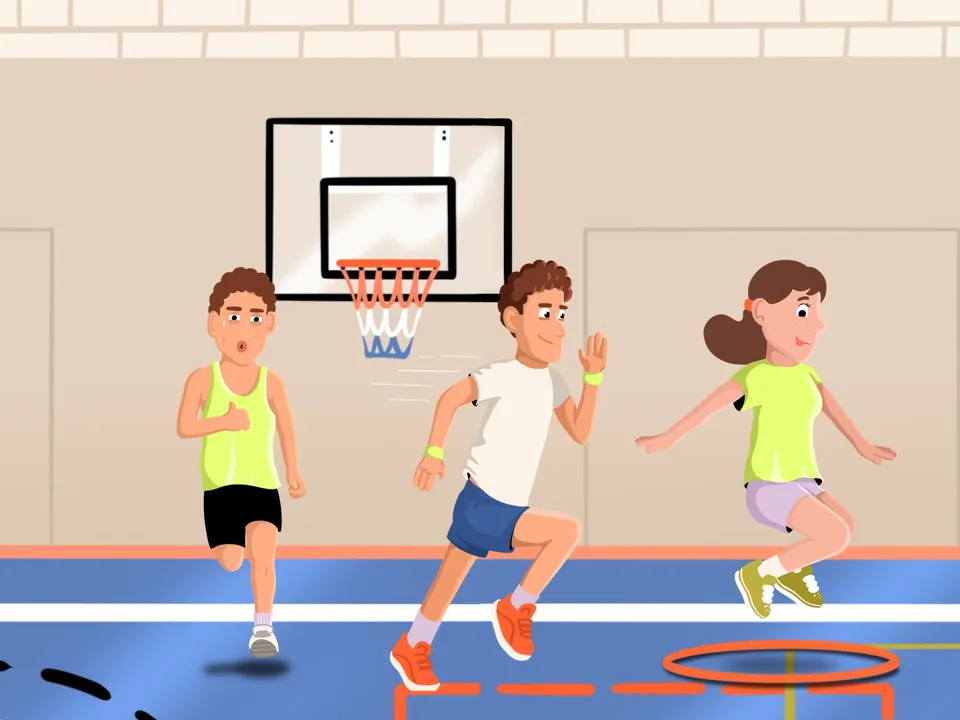
When students return from outdoor recess or a loud hallway transition with racing voices, jumping straight into a lesson rarely works.
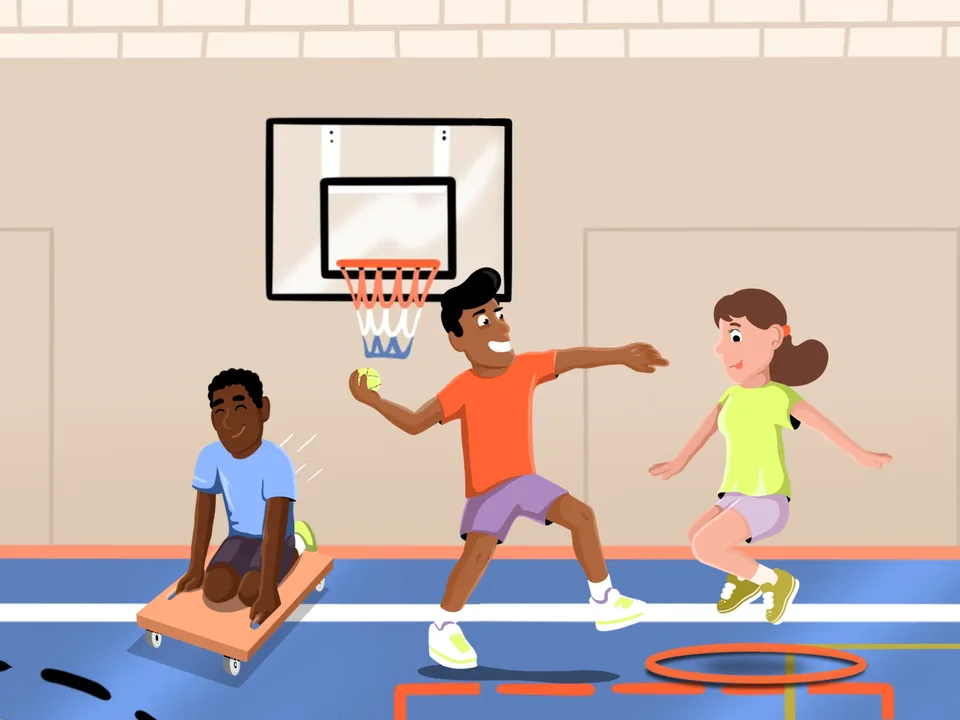
A good brain break needs a clear stop signal, a bubble of space for each child, and a game students can learn fast.
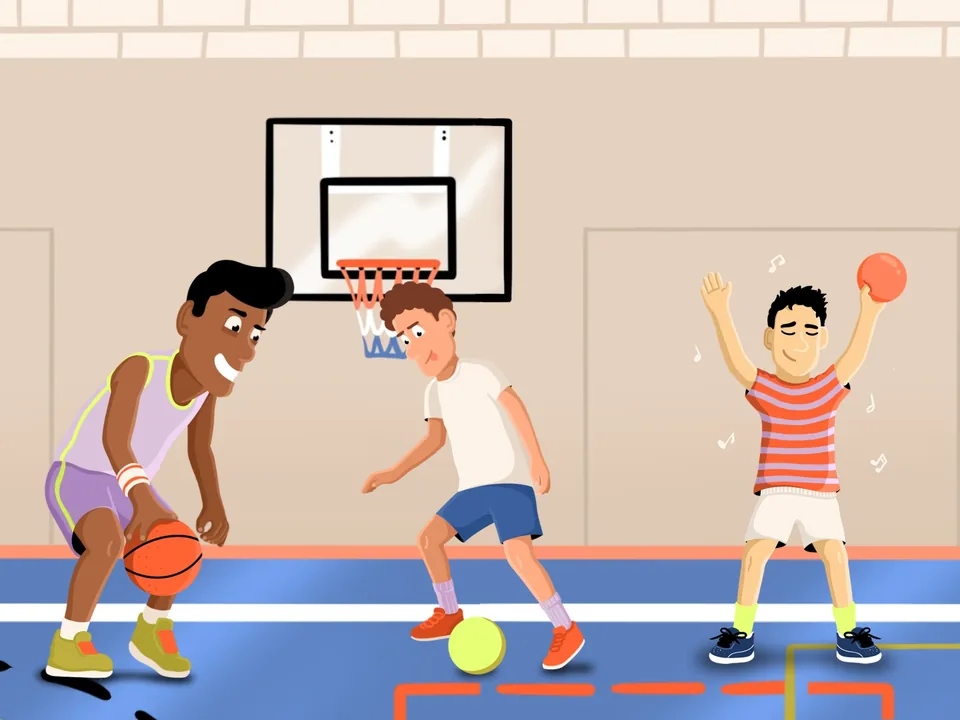
Loading a follow-along video on the projector can take longer than the movement break itself.
Download the free PhysEdPrep app for iOS & Android to try the 3 free units without an account, including the Classroom Brain Breaks pack with 13 movement breaks. Every plan covers all grades K–12: start a 7-day free trial on a yearly or 12-month plan (see current prices in the app) for 40+ unit plans, 240+ lessons, and all 6 gym tools.
App for iPhone, iPad and Android.