9 Classroom Movement Breaks for ADHD
Below are setup steps for each break, a classroom floor layout, IEP and 504 pointers, and a 4-step return-to-work routine.
Sensory movement breaks for school include heavy work like wall push-ups, hallway path stations, and counted routines, and each takes about 30 seconds to 5 minutes. For a student with an IEP or 504 plan, follow the plan and check new activities with the occupational therapist. Keep the breaks that help the student get back to the task.
This list is for classroom teachers, PE teachers, and aides who need a student or a whole class to reset and get back to work. Along with the activities, you get safety conditions for the room and hallway, questions to take to the occupational therapist, and a quick way to read how a student responds.
Choose slow pushing or squeezing when a student needs to settle, and brisker movement when energy is low. A sensory break is a short, planned activity that gives the body specific input, such as pressure, resistance, or balance, so a student can return to learning. In heavy work, the muscles push, pull, or carry against resistance. Students react differently, so treat each aim below as a starting guess. For quick whole-class energizers without a sensory goal, use the classroom movement breaks for grades K–12.
| Break | Where | Typical aim | About how long |
|---|---|---|---|
| Wall push-ups | Classroom or gym | Settle | 1 minute |
| Chair push-ups | At the desk | Settle | 1 minute |
| Delivery job | Hallway or gym | Settle with a purpose | 2–5 minutes |
| Animal walk lanes | Gym or cleared room | Wake up | 2–3 minutes |
| Wall push stop | Hallway path | Settle | 30 seconds |
| Tape line walk | Hallway path | Focus | 30–60 seconds |
| Hop dot trail | Hallway path | Wake up | 30–60 seconds |
| Jump, balance, push reset | Classroom or gym | Wake up, then settle | 2–3 minutes |
| March and freeze | Beside desks or open floor | Practice stopping | 2 minutes |
| Squeeze and release | Seated | Settle | 1 minute |
Four heavy work movement breaks need little gear: wall push-ups, chair push-ups, a delivery job, and animal walks. Keep an adult in charge, use dry floors, and check health information first for students with an injury or a joint, heart, or breathing concern.
For one student or a whole class, use a clear, solid wall and allow about 1 minute. With hands at shoulder height and feet a step back, students bend and straighten their elbows 8 to 10 times while keeping the body straight. They need shoes that grip and a spot away from doors, with space between neighbors.
This seated break suits one student or a full room and takes about 1 minute. Students grip the seat beside their hips, press down until they feel lighter, hold for about 5 seconds, and repeat 5 times. Use sturdy four-leg chairs without wheels, never folding chairs.
One student carries a bin of books or supplies to a named adult and back in about 2 to 5 minutes. Keep the bin light enough to carry in both hands and low enough to see over, and choose a stair-free route that follows your hall supervision rules. In the gym, a pair can move a light folding mat on a “ready, lift” count.
In a small group, students bear walk (hands and feet, hips high) down a lane about 10 steps long and walk back upright, for about 2 to 3 minutes. Clear the floor and start each student once the lane ahead is empty. Offer a slow march to anyone with sore wrists or shoulders.
Pick a quiet stretch of hall that an adult can see, get the principal's approval, and set three flat stations in a row. These hallway movement breaks are for one student at a time, with a lap of about 2 to 3 minutes. Use the path while the hall is empty, never during a crowded passing period.
Nothing on a hallway path may narrow the walkway or block doors and exits, so check fire rules with facilities staff before taping anything down.
Mark two handprints on a clear wall, away from doors and corners. The student presses into them for about 10 seconds, 3 times, so the stop takes about 30 seconds.
Stick flat floor tape down with no lifted edges. The student walks heel to toe with arms out for about 30 to 60 seconds, and after stepping off, simply carries on from that spot.
Space non-slip floor dots a short hop apart. The student jumps from dot to dot on two feet with bent knees, walks back beside them, and repeats for about 30 to 60 seconds, finishing at the far end. Skip this station on a wet or slick floor, or if the student has a jumping restriction.
End the hallway lap at a calm spot beside the classroom door: the student takes three slow breaths, walks in, and starts the posted task.
A structured break has a start signal, a set count or time, a clear finish, and a named task to return to. Say all four before anyone stands: “When my hand goes up, march for 20 claps, sit down, and open your math book.” The three structured movement breaks below fit that pattern.
A small group or class does 10 jumps in place, 10 slow heel-to-toe steps, and 5 wall push-ups in about 2 to 3 minutes. Space students an arm's length apart on a dry floor, and swap jumps for heel raises if needed. The lively-to-calm order borrows from Berkshire Healthcare NHS guidance on sensory circuits, a longer supervised routine of about 15 to 20 minutes.
With chairs pushed in, students march beside their desks to your steady clap. When the clapping stops and your hand goes up, everyone freezes for about 3 seconds, then the clap restarts the march. Nobody is out, and a student who kept moving just joins the next freeze. After about 6 freezes, slow the beat and have everyone sit. Plan on 2 minutes.
Seated students press their palms together for 5 seconds and relax, push down on their knees the same way, then give themselves a hug squeeze. Three rounds take about 1 minute. Ask for gentle pressure and normal breathing.
Ask the occupational therapist (OT) what the student should do, how much, and when to stop, then follow the IEP or 504 plan as written. Changes to a planned break go through the team responsible for the plan.
Take these questions to the OT:
Sensory strategies need checking student by student. A 2025 systematic review of 21 studies on sensory-based interventions found mixed evidence. Alternative seating such as stability balls showed no significant improvement in functional behavior, and one school study of weighted vests found no significant gain in attention. The review did not examine heavy work as its own category. Its authors advise matching interventions to each child's sensory needs, based on an assessment by a trained practitioner.
Never assign wall push-ups or laps as a consequence. SHAPE America's position on physical activity as punishment calls that practice inappropriate. For gym class, an adapted PE teacher can help apply the student's plan. For students with attention needs, see these classroom movement breaks for ADHD.
Watch the first few minutes after the break: a student who calms down and starts the task was probably helped, while one who gets louder, wilder, upset, or stuck likely needs a different activity or a smaller dose.
| What you see | Possible meaning | Try next |
|---|---|---|
| Starts the task with a calmer voice and body | The break fits | Keep the same dose and note it |
| Gets louder or silly, runs, or crashes into things | Too stimulating | Swap jumps for slow pushes and shorten it |
| Covers ears, pulls away, or gets tearful | Too much input or a disliked activity | Stop, offer a quiet spot and a choice |
| No visible change | Wrong timing or type | Move it earlier or try another activity |
| Stalls or won't come back | Unclear finish | Add a count and name the return task |
| Pain, dizziness, or trouble breathing | Possible health problem | Stop at once and follow school health procedures |
For about two weeks, write down the time, the break, what happened just before it, and how long the student took to start working. Ask the student for a thumbs up, sideways, or down. Bring the notes to the OT before changing a planned routine.
A sensory break is chosen for the body input a student needs, while a brain break is a quick change of activity, usually for the whole class. The same move can serve either purpose. A sensory break for one student often follows an occupational therapist's advice or a written plan.
Follow the schedule in the student's plan; without one, about 2 or 3 planned breaks a day is a reasonable starting point. Place them before the times that are usually hard, such as long seated work or a noisy transition. Then adjust with the occupational therapist based on your notes.
Offer a choice between two breaks or a quiet seat, and do not force the movement. Refusal can mean the activity feels unpleasant, the timing is wrong, or the student does not want to stand out. Note what happened, and tell the team if the break is written into a plan.
Chair push-ups, a delivery job, and squeeze and release are good first choices because they draw little attention. Let older students pick between two options and agree on a private signal for asking. Rename any activity whose title sounds childish to them.
Yes, wall push-ups, chair push-ups, march and freeze, and squeeze and release work for a full room in about 1 to 2 minutes. Keep an arm's length between students and use sturdy chairs without wheels. A student with an IEP or 504 plan still follows the activities and limits in that plan.
Below are setup steps for each break, a classroom floor layout, IEP and 504 pointers, and a 4-step return-to-work routine.
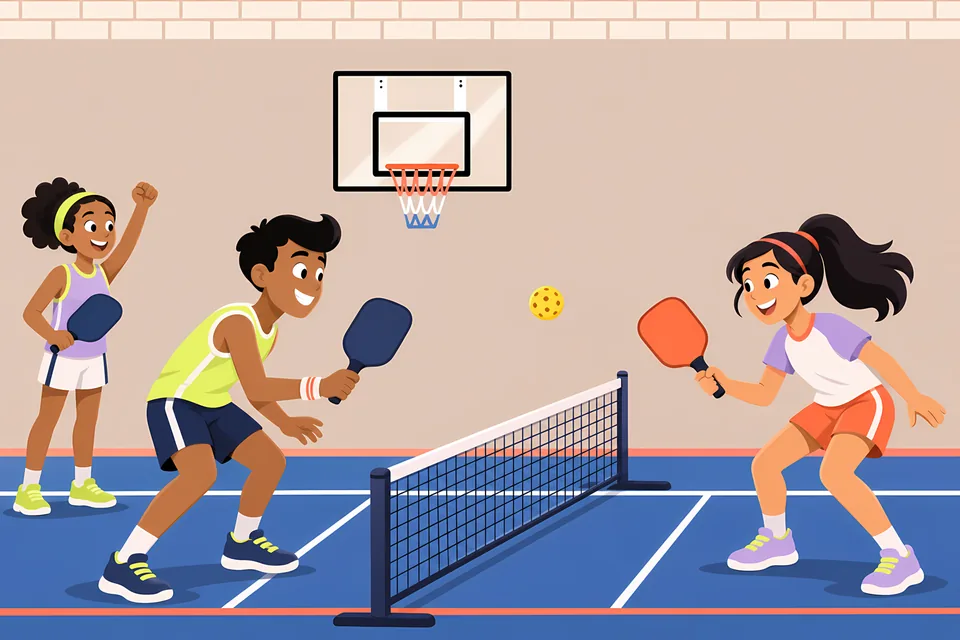
These ideas for movement breaks in the classroom suit teachers with a room full of desks and few spare minutes.
Classroom teachers with long seated blocks and PE specialists who help colleagues add activity often have to explain why students should…
When students return from outdoor recess or a loud hallway transition with racing voices, jumping straight into a lesson rarely works.
Try the 3 free units without an account, including the Classroom Brain Breaks pack, and pick the breaks that fit your student's plan. For more, get the PhysEdPrep app for iOS & Android and see current prices in the app.
App for iPhone, iPad and Android.