12 Classroom Movement Breaks, K–12
These ideas for movement breaks in the classroom suit teachers with a room full of desks and few spare minutes.
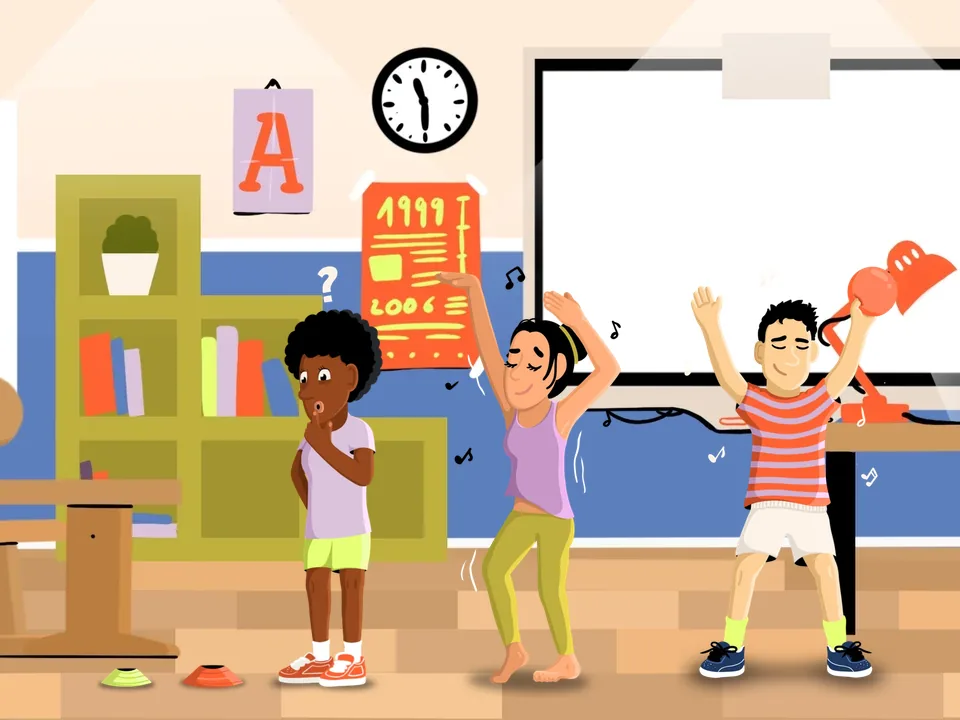
Practical movement breaks for ADHD in class last about 30 seconds to 3 minutes and match the student's energy level. Seated presses fit a student who fidgets during quiet work, and an invisible jump rope can wake up a sluggish K–8 class after lunch. For a self-conscious student, a 2-minute book delivery or 3-minute office walk keeps the break private.
Teachers and paraprofessionals in Grades K–12 often have one restless or zoned-out student to support while 25 classmates keep reading or testing. A loud game at that moment can pull the whole room off task. Below are setup steps for each break, a classroom floor layout, IEP and 504 pointers, and a 4-step return-to-work routine.
Pick the break that matches the student's current behavior and the space you have. The CDC page on ADHD in the classroom says to allow breaks and time to move and exercise, because paying attention takes extra effort for children with ADHD. It also notes that moving while learning can help or distract, depending on the child, so watch how each student returns to work.
Start a break before frustration peaks. These short resets break up sitting time and do not replace PE or recess. Children and teens ages 6 to 17 still need 60 minutes or more of moderate-to-vigorous activity a day, according to the HHS Physical Activity Guidelines for Americans. For the reasons behind regular breaks, see why movement breaks matter for students.
| Break | Who and Grades | Time and Setup | Best When Student Is |
|---|---|---|---|
| Seated Chair Lifts | Solo, Grades K–12 | About 30 seconds, sturdy four-legged chair | Fidgety during quiet work |
| Desk Palm Presses | Solo or whole class, Grades K–12 | About 30 seconds, student desk | Restless hands during tests |
| Seated Cross-Crawl Taps | Solo or whole class, Grades K–12 | 1 minute, no equipment | Drifting off mid-lesson |
| Wall Push-Offs | Solo or small group, Grades K–12 | 1 minute, clear wall space | Bouncing legs at desk |
| Slow Flamingo Balance | Solo or whole class, Grades K–12 | 1 minute, flat floor spot | Rushing through work |
| Invisible Jump Rope | Whole class, Grades K–8 | 1 minute, arm's-length floor space | Sluggish after lunch |
| Book Bin Delivery | 1 student, Grades K–12 | 2 minutes, 2–4 books the student can lift easily | Needing heavy work privately |
| Board and Marker Reset | 1–2 students, Grades K–12 | 2 minutes, whiteboard eraser | Restless between subjects |
| Office Folder Walk | 1 student, Grades 2–12 | 3 minutes, sealed errand folder | Near frustration, needing space |
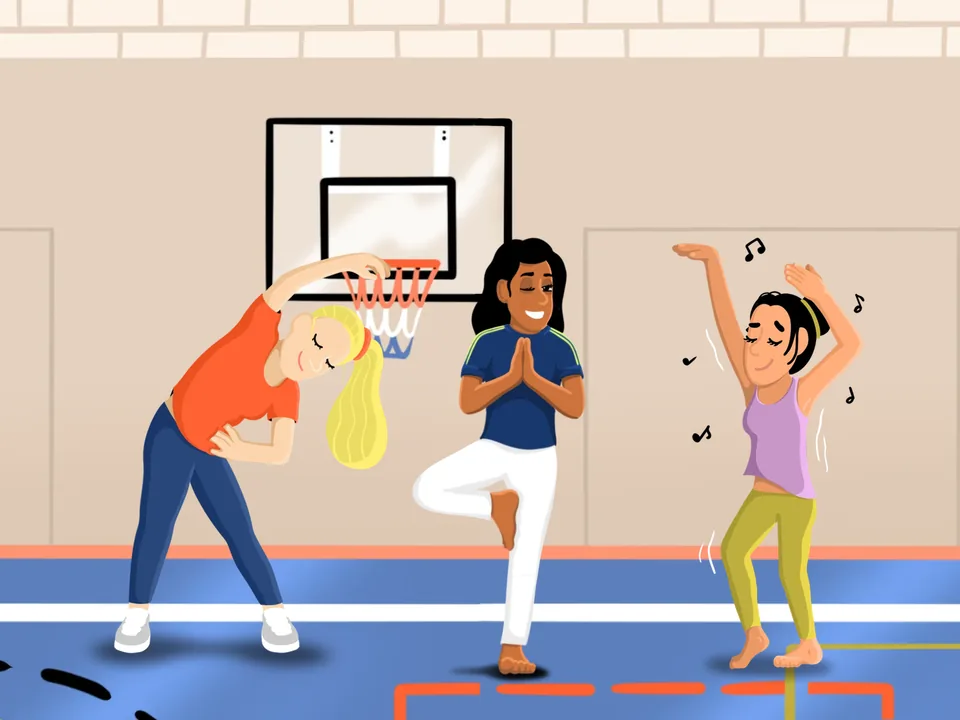
All three desk breaks keep the student at the seat and take about 30 seconds to 1 minute. Teach chair lifts only on sturdy four-legged chairs without casters, with all four legs on the floor.
The student plants both feet flat, grips the sides of the seat, and presses down to lift the hips 1 to 2 inches for up to 5 seconds before lowering quietly. Three to five slow reps fill about 30 seconds. Younger students can push without lifting. Skip this one if wrists or shoulders hurt, and stop if the chair shifts.
Students sit tall and press their palms together at chest height, or flat onto the desktop, for 6 seconds while breathing normally. Then they breathe out and relax for 4 seconds. Three silent rounds take about 30 seconds and can settle busy hands during a quiz.
Sitting upright with room beside their elbows, students raise the right knee to tap the left hand, then switch sides on a calm two-second count. Keep it going for about 1 minute and end with an eyes-front signal. It suits a class that is drifting mid-lesson. For more ideas, see these classroom movement breaks for Grades K–12.
Wall push-offs, a one-foot balance, and an invisible jump rope each take about 1 minute beside a desk or at a wall. Before anyone moves, have students push in chairs and clear backpacks and pencils off the floor. Check for stable shoes, a dry non-slip floor, and an arm's length of space around each student.
Pick wall space away from doors, glass, and staples. Students stand about an arm's length back, place their palms flat at shoulder height, bend their elbows on a slow 3-second count, and push back to standing. Up to 10 slow reps work the arms and shoulders before everyone sits down.
Students stand next to a sturdy desk, fix their eyes on one mark on the wall, and lift one foot to ankle height for about 20 seconds. They switch legs, then finish with a few slow heel raises. Fingertips can rest on the desk whenever balance wobbles.
Students turn imaginary rope handles at their sides and bounce softly on the balls of their feet, then slow to a march in place before the minute ends. Anyone who shouldn't jump can march the whole time. For younger classes, there are more brain breaks and active classroom games for Grades K–5.
A classroom job gives one or two students 2 to 3 minutes of walking, carrying, or wiping without naming ADHD in front of peers. Agree on routes and supervision ahead of time, and check your school's hall rules before anyone leaves the room.
One student carries 2–4 books or a small bin with both hands from a classroom shelf to a reading table or a partner teacher next door. The load must be easy to lift and low enough to see over, so give younger students thinner books. The student sets it down, walks straight back, and starts the circled item on the worksheet.
Between subjects, one or two students wipe a marked section of the board with an eraser and a damp cloth, using wide strokes from shoulder height down. They cap loose markers and return the eraser to the tray when the 2-minute timer ends.
When a student who reliably follows hallway routines is getting frustrated, hand over a sealed folder with a return-time card inside. Front-office or buddy-room staff, told about the routine in advance, initial the card and send the student straight back, for a trip of about 3 minutes. If the student is highly upset or has left supervised areas before, don't send them alone; follow their support plan.
Use both: class-wide pauses about every 15 to 30 minutes of seatwork can head off slumps, and silent break tokens cover the moments in between. Asking with a token also gives students with ADHD practice in noticing restlessness before it spills over.
Put two or three Velcro break tokens on the corner of the Student Desk for each instructional block. A fixed number keeps requests predictable and limits their use as an escape from hard work. When the student pulls off a token, they walk along the edge of the room to the Wall Push-Off Spot or to the Taped Floor Strip, which marks a place for the flamingo balance within reach of a wall or sturdy desk. They can also collect a delivery from the Book Bin Shelf and take it out through the Classroom Door. The center aisles stay clear.
Cap breaks at the wall spot and floor strip at 1 minute with a silent sand timer. Before the student leaves the desk, confirm which problem comes first on return.
A clear IEP or 504 entry names the trigger, duration, location, and return cue instead of saying "frequent breaks as needed." The CDC guidance for ADHD in the classroom lists breaks or time to move around among the accommodations these plans can offer. With vague wording, a substitute can't tell whether the student may leave the room five times a period or only stand beside the desk.
Bring these four details to the team meeting:
For gym class, add how noise and waiting are handled. These adaptive PE activities for K–12 include options for sensory needs. For classroom options aimed at students who seek or avoid sensory input, see these sensory movement breaks for school.
This is general information. The student's IEP or 504 team decides the formal accommodations.
Spend the last 15 seconds or so slowing the breathing and pointing to one concrete first task on the desk. A bare "Sit down and finish page four" right after a bouncing break leaves room for chatting and a long trip to the pencil sharpener.
| Mistake | Why It Backfires | What Works Instead |
|---|---|---|
| Waiting until a meltdown starts | The break can start to look like a reward for disruption | Schedule breaks about every 15 to 30 minutes before focus drops |
| Running competitive elimination games | Losing can spark frustration and arguments | Use non-competitive solo presses, balances, or errands |
| Leaving the next step vague | The student has to figure out where to restart | Circle one concrete starter item before the break begins |
| Taking away recess for slow work | Cuts movement for a student who may need it most | Keep recess intact and adjust task length or break timing |
They can, if the clip is short and has a clear end, but some students find it hard to stop when a fast-cut video is playing. An audio-only track is often easier to end: play about 60 seconds of music with the projector off, then fade the volume over the final 10 seconds as the cue to sit.
Switch from visible exercises to private errands or quiet seated pushes for older students in Grades 6–12. A walk to the front office with a sealed folder, a delivery of 2–4 books, or a silent palm press at the desk draws little attention from classmates. Agree on a subtle desk signal, such as placing a pen lengthwise at the top corner, so nobody hears a verbal prompt.
Ask for one quick starter item, such as writing their name or solving problem one, before the student uses a token, and keep the cap of two or three tokens per instructional block. If requests cluster in a single subject, check whether the assignment needs smaller chunks or extra help.
In a testing room, slow heavy work is usually the practical pick because it is quiet and nobody sits down out of breath. Try about 30 seconds of seated chair lifts or 1 minute of slow wall push-offs, then give students a moment to settle. Save the invisible jump rope for a sluggish stretch after lunch.
A workable starting point is a short break about every 15 to 30 minutes of seatwork. In a typical school day, that comes to roughly 6 to 10 breaks of 30 seconds to 3 minutes each. Use fewer when lessons are already active and more during long tests or reading blocks. Watch how fast the student gets back to work, and write the final number into the IEP or 504 plan.
These ideas for movement breaks in the classroom suit teachers with a room full of desks and few spare minutes.
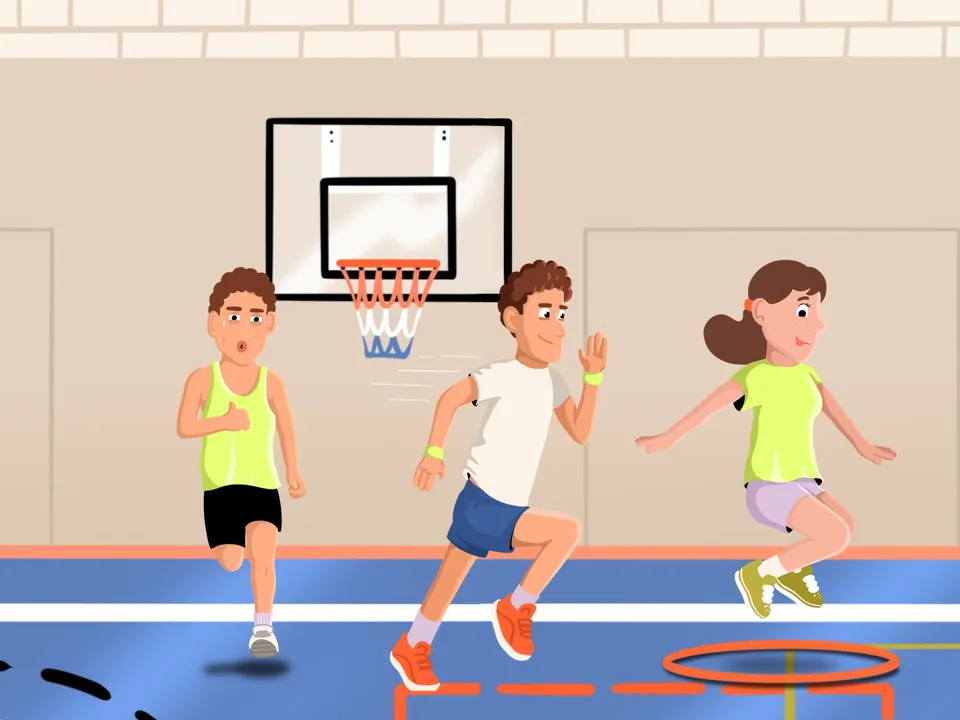
A good brain break needs a clear stop signal, a bubble of space for each child, and a game students can learn fast.
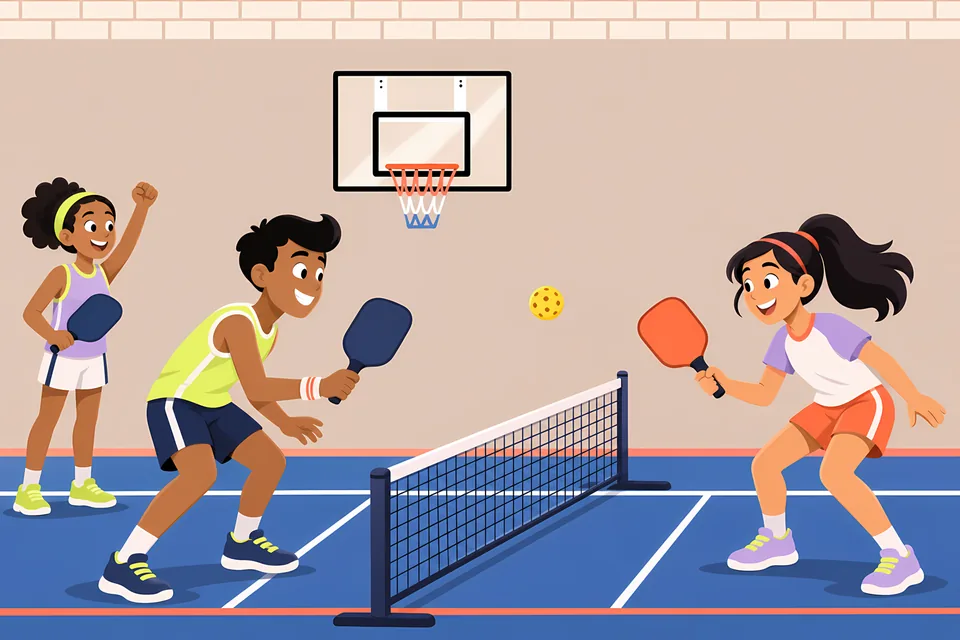
When students return from outdoor recess or a loud hallway transition with racing voices, jumping straight into a lesson rarely works.
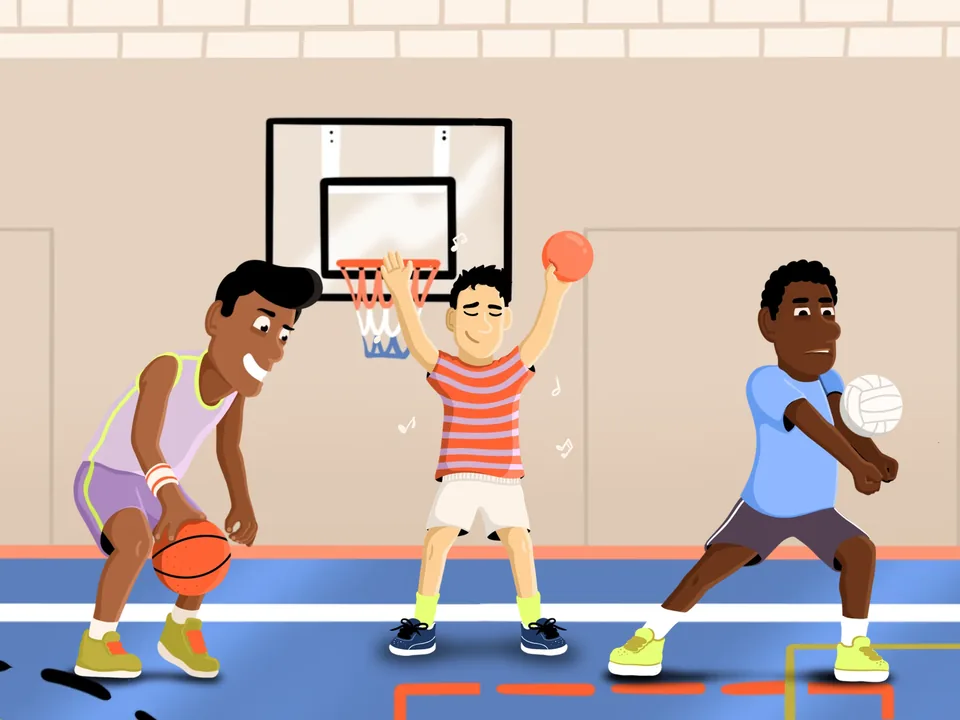
Elementary classroom teachers and reading specialists can use these routines whenever students start fidgeting during phonics or guided…
Download the free PhysEdPrep app for iOS and Android to try 3 free units without an account, including the Classroom Brain Breaks pack with 13 movement breaks. Yearly and 12-month plans start with a 7-day free trial covering 40+ unit plans, 240+ lessons, and all 6 gym tools across Grades K–12 (see current prices in the app).
App for iPhone, iPad and Android.