12 Classroom Movement Breaks, K–12
These ideas for movement breaks in the classroom suit teachers with a room full of desks and few spare minutes.
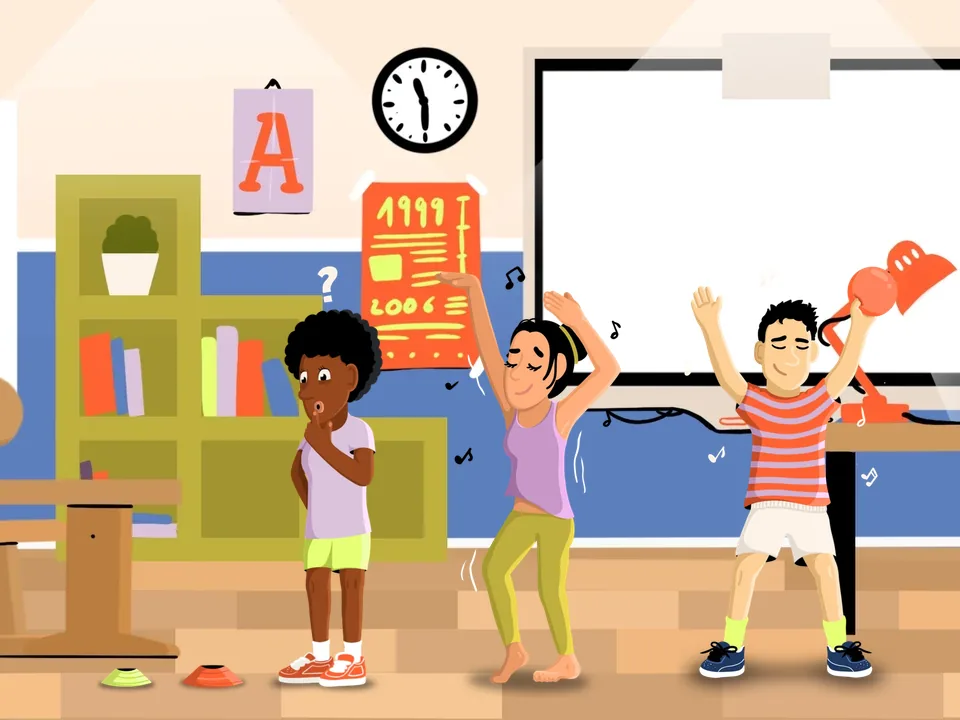
These 10 Earth Day movement breaks take about 2 to 5 minutes each, and five of them need no equipment. Three build on nature and energy, three on recycling, two on animals and habitats, and two head outside. Try Rotate and Orbit at desks or the Sort-It Relay when you have clear lanes.
This list helps classroom teachers and PE specialists mark April 22 without writing a new lesson. Each break has a grade range, a time estimate and short directions. You also get science and reading tie-ins, fixes for common mistakes and seated swaps.
In a tight room, choose Rotate and Orbit, Energy Switch, Planet Would You Rather, Three R Moves or Heron Stand: they need no equipment and only the space beside a desk. Earth Day is April 22, a Thursday in 2027. Treat the grades and times as starting points. Short breaks add up: the Physical Activity Guidelines for Americans recommend 60 minutes or more of moderate-to-vigorous activity a day for ages 6–17.
| Break | Grades | About | Space and materials |
|---|---|---|---|
| Rotate and Orbit | K–5 | 2 min | Beside desks, none |
| Energy Switch | 1–6 | 2 min | Beside desks, none |
| Planet Would You Rather | 3–12 | 3 min | Beside desks, none |
| Three R Moves | 2–8 | 3 min | Beside desks, none |
| Sort-It Relay | 2–8 | 5 min | Clear lanes, cards, boxes |
| Cleanup Crew | K–5 | 4 min | Open floor, paper balls, boxes |
| Habitat Hop | K–2 | 3 min | Beside desks, 4 signs |
| Heron Stand | K–5 | 2 min | Beside desks, none |
| Stop and Listen Walk | K–12 | 5 min | Outdoors, 4 cones, whistle |
| Texture Hunt | K–5 | 5 min | Outdoors, 4 cones |
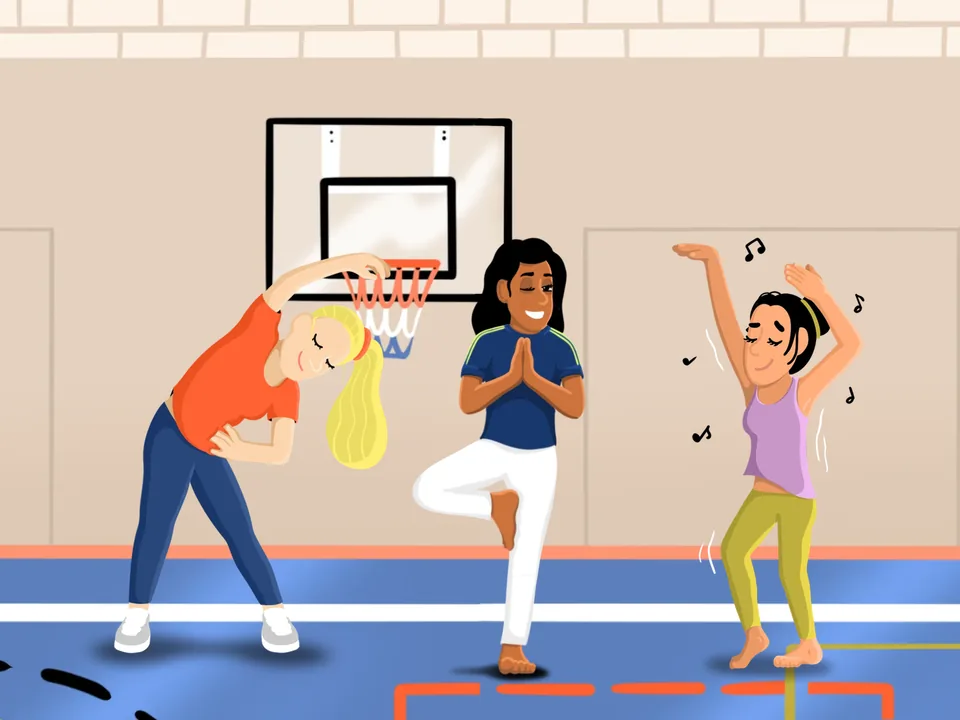
Rotate and Orbit, Energy Switch and Planet Would You Rather need about an arm's length of room around each student.
Grades K–5, whole class, about 2 minutes, no equipment
Push in chairs. On “rotate,” students turn once slowly in place, as Earth spins once a day. On “orbit,” they march one small circle around an imaginary Sun to show a year. On “tilt,” they lean gently sideways, like Earth's tilted axis. Mix about eight calls and keep spins slow to limit dizziness.
Grades 1–6, whole class, about 2 minutes, no equipment
Call an energy source and students show it: arm circles for a wind turbine, side-to-side waves for flowing water, an overhead reach for a solar panel. “Lights off” means freeze, arms down, until the next call. Speed up, slow down again and finish on “lights off.”
Grades 3–12, whole class, about 3 minutes, no equipment
Offer two earth-friendly choices with a move for each: overhead reaches for “plant a tree,” or sit-to-stands from a chair that can't roll for “clean up a park.” Students pick one and move for about 15 seconds. Continue with “walk or bike to school,” “grow vegetables or feed birds” and your own pairs. Every answer counts. Stop after about six pairs.
Three breaks turn reducing, reusing and recycling into movement.
Grades 2–8, whole class, about 3 minutes, no equipment
Teach three signals: a half squat for reduce, two overhead claps for reuse and rolling arms for recycle. Read a scene, such as saying no to a straw, drawing on the back of a used worksheet or a rinsed can becoming new metal. Students show the matching R on three. If answers split, a volunteer explains. Stop after about eight scenes.
Grades 2–8, teams of 4–6, about 5 minutes, picture cards and 3 boxes per team
Before class, give each team picture cards: paper, flat cardboard and an aluminum can (curbside), a battery, old phone and plastic grocery bag (drop-off), and a banana peel (compost or trash). The EPA guide to common recyclables says the drop-off items don't belong in curbside recycling. Check local rules too.
Teams line up behind their card stacks, facing boxes labeled curbside, drop-off and compost or trash at the end of a clear lane. One player at a time takes the top card, walks briskly over, drops it in a box and returns to tag the next teammate. A fallen card gets picked up first. When the last stack is empty, check the boxes together and score one point per correct card. Shuffle to replay.
Grades K–5, whole class, about 4 minutes, scrap-paper balls and a few boxes
Scatter paper balls over a cleared floor and set boxes at the edges. The goal is an empty floor: students walk, carry one ball at a time and place it in a box without throwing. Students pick up any ball they drop. Time the round, scatter the balls again and try to beat that time while everyone still walks.
Habitat Hop suits grades K–2, and Heron Stand adds a quiet balance for grades K–5.
Grades K–2, whole class, about 3 minutes, 4 picture signs
Hang pond, forest, desert and ocean signs on four walls. Name an animal, and students turn toward its home and imitate it on a clear patch of floor beside their desks: soft frog hops, heavy bear steps, a swaying camel walk or paddling sea turtle arms. If children face different signs, point to the right one together. Then take new animals from the class until each habitat has had two turns.
Grades K–5, whole class, about 2 minutes, no equipment
Students stand beside their desks and balance on one leg like a heron waiting for fish, with a hand on the desk whenever needed. Count slowly to ten on each leg, then do one more round. After a wobble, students touch down and try again. Eyes stay open, and steady students can stretch their arms out as wings. Try it right before quiet work.
Go outside when the weather is safe, an adult can see everyone and you've checked the ground for glass, holes and stinging insects. Mark the corners with four cones and agree on a whistle signal. If the sky looks threatening or you hear thunder, go inside right away. The National Weather Service lightning guidance says to wait 30 minutes after the last lightning or thunder before going back outside. Follow health plans for students with asthma or allergies.
Grades K–12, whole class, about 5 minutes, 4 cones and a whistle
Students walk inside the cones. On the whistle they freeze for about 20 seconds and count different sounds on their fingers, then walk again at the speed you call. After four stops, partners sort the sounds into those from nature and those from people.
Grades K–5, pairs, about 5 minutes, 4 cones
Call a texture such as rough or smooth. Each pair walks to a match inside the cones, points to it or gently touches an object you've approved, then comes back. Nothing gets picked, and unknown plants, animals and litter stay untouched. A pair at an off-limits item looks again. Stop after six calls.
One short question right after a break links the movement to science or reading.
For reading, pick three action verbs from a short nature read-aloud and give each a move that students perform when they hear the word. In grades 6–12, build Would You Rather pairs from an article and ask for evidence for each side. Our guide to literacy activities that get kids moving has more.
Agree on a stop signal, pick safe props and clear the floor before the first call.
| Mistake | What goes wrong | Fix |
|---|---|---|
| No stop signal | The break spills into the next task | Practice two claps and a freeze |
| Real trash as props | Sharp edges and germs | Use picture cards and clean scrap paper |
| Racing between desks | Trips and collisions | Move bags and require walking |
| Knockout rules | Eliminated students stop moving | Give another try and keep everyone in |
| Too many new games | Directions crowd out movement | Teach one and repeat it later |
Offer seated swaps: shoulder circles for “rotate,” one hand circling a fist for “orbit,” arm bounces for frog hops and one lifted foot for the heron. Any student can pick one, no reason needed. For lower-energy ideas, see calm brain breaks for classrooms. For students who need steady pressure or rhythm, try sensory movement breaks for school.
Yes, in a planned outdoor cleanup, if your school allows it, an adult supervises and students wear gloves. Glass, needles, sharp metal and anything unfamiliar stay where they are, and the student who spots them tells you. Everyone washes their hands afterward.
No, all ten breaks on this list run on your voice and a few simple props. If you prefer to project a video, watch it all the way through first, check for ads and content that doesn't suit your class, and confirm the moves fit between your desks.
Yes, sing these words to “Row, Row, Row Your Boat”: “Spin, spin, spin like Earth, slowly round and round. March around, march around, march around, march around, then we touch the ground.” With chairs pushed in, students turn slowly, march a small circle and finish by touching the floor or their knees.
Four breaks on this list reach grades 6 and up: Planet Would You Rather (3–12), Three R Moves (2–8), Sort-It Relay (2–8) and the Stop and Listen Walk (K–12). For older students, make the Would You Rather pairs harder, ask for a reason before the move and let a student lead the calls.
These ideas for movement breaks in the classroom suit teachers with a room full of desks and few spare minutes.
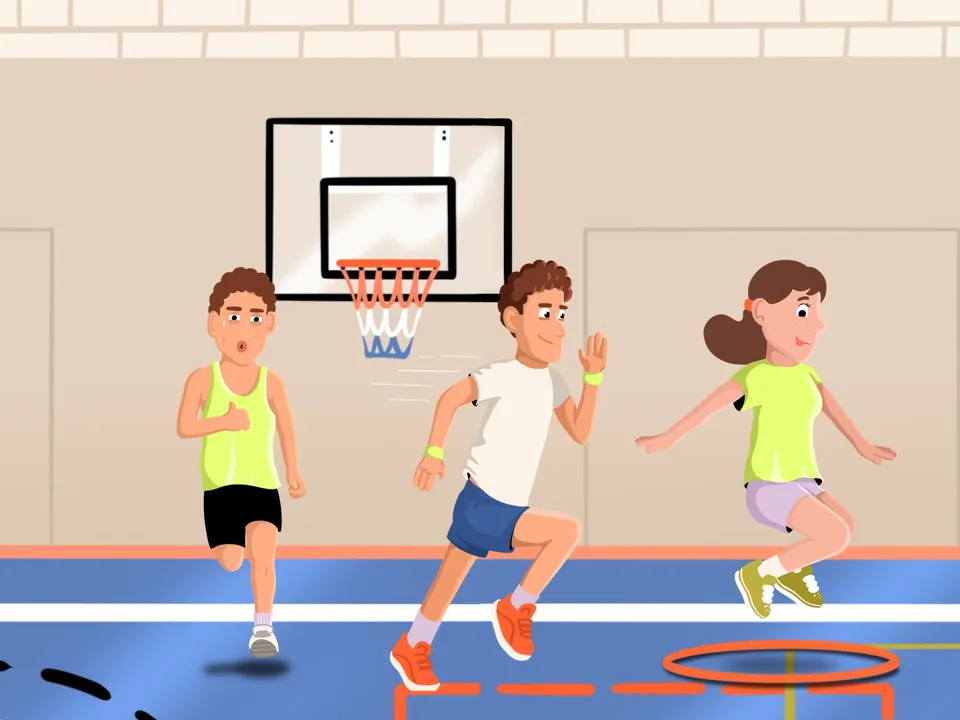
A good brain break needs a clear stop signal, a bubble of space for each child, and a game students can learn fast.
Below are setup steps for each break, a classroom floor layout, IEP and 504 pointers, and a 4-step return-to-work routine.
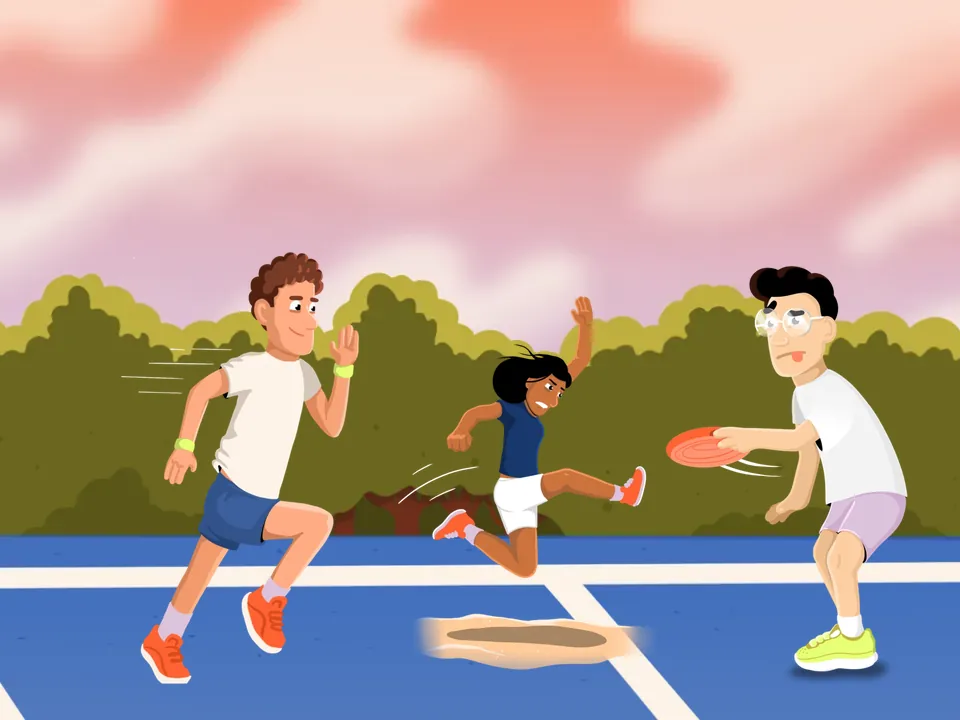
Built for K–5 classroom teachers and PE specialists whose classes get restless once the weather warms and testing starts.
Open the 3 free units without an account and try the Classroom Brain Breaks pack with your class. The iOS & Android app is a free download, and you can see current prices in the app.
App for iPhone, iPad and Android.